Bone tissue plays a critical role in maintaining body structure, supporting movement, and protecting vital organs. At the same time, it is a complex and dynamic tissue composed of a highly mineralized matrix and a sophisticated cellular environment (including osteocytes, osteoblasts, osteoclasts, etc.). With the continued advancement of research in bone health and bone-related diseases, bone tissue protein extraction has become a fundamental basis for elucidating mechanisms of bone remodeling, bone development, and diseases such as osteoporosis. However, compared with soft tissues, protein extraction from bone tissue faces numerous challenges, including high-density bone mass, abundant mineral components, and a rigid extracellular matrix. Traditional methods often require lengthy decalcification or multi-step chemical treatments, which can reduce the yield of target proteins and increase the risk of denaturation and degradation. In addition, the need for multiple reagent preparations and prolonged decalcification or pretreatment steps increases experimental error and time consumption, making it difficult to meet the requirements of high-throughput or reproducible workflows.
In view of the high difficulty and high demand of bone tissue protein extraction, MtoZ Biolabs has launched a bone tissue protein extraction kit based on in-depth research on bone tissue properties, the aim of this study is to provide an efficient and simplified protein extraction protocol for researchers and biomedical practitioners, which can maximize the protection of protein activity and conformation. The kit is suitable for fresh or decalcified animal bone samples, including compact bone, cancellous bone and cartilage tissue, and can complete cell lysis and demineralization steps under relatively mild conditions. It can also obtain high-purity total bone protein in a relatively short time (about 1 hour), which lays a solid foundation for subsequent functional and structural studies.
Product Overview
The bone tissue protein extraction kit from MtoZ Biolabs is specifically designed to address the challenges of protein extraction from bone and cartilage samples. Its core formulation incorporates a protease inhibitor cocktail that protects the native conformation of target proteins while fully lysing osteocytes, osteoblasts, osteoclasts, and other bone-associated cells, thereby ensuring the acquisition of high-purity, bioactive proteins. The kit is well-suited for both fresh and decalcified bone samples and can be applied to various bone types with different densities and structures, such as long bones, flat bones, and cartilage. The extraction protocol has been rigorously optimized to be completed within approximately one hour, and the simplified operation allows laboratory personnel to quickly become proficient.
During the extraction process, the mild lysis system helps to preserve protein functionality to the greatest extent possible and is suitable for downstream applications that require active proteins, such as enzyme activity assays and transcriptional activity analysis. In addition, the exacted protein samples obtained are compatible with a wide range of downstream experiments, including Western blotting, protein electrophoresis, immunoprecipitation, ELISA, transcriptional activity analysis, and other enzyme activity and signaling pathway studies, fully meeting the needs of advanced research in proteomics, signal transduction, and drug target discovery.
Product Notes
1. The bone tissue lysis buffer provided in the bone tissue protein extraction kit is suitable for routine bone tissue sample extraction.
2. Fresh protease inhibitor cocktail should be added to the lysis buffer prior to use.
3. Once sample preparation is complete, use the samples immediately or aliquot and store at -80°C.
4. All components should be fully thawed at room temperature before use. It is not recommended to use after its expiration date.
5. If each sample weighs 200 mg, up to 30 samples can be processed.
Product Details
|
Product Details |
Specification |
Storage Conditions |
|
Bone Tissue Lysis Buffer |
20 mL |
-20℃ |
|
Protease Inhibitor Cocktail (100×) |
200 µL |
-20℃ |
|
SDS-PAGE Protein Loading Buffer (5×) |
2 mL |
-20℃ |
|
Coomassie Brilliant Blue Staining Solution |
20 mL |
4℃ |
Protocol
The following is the general usage protocol for the bone tissue protein extraction kit, which can be adjusted based on specific experimental needs and bone tissue characteristics:
1. Sample Preprocessing
(1) Take an appropriately sized sample from fresh or frozen bone tissue. Soak and rinse briefly in physiological saline or PBS to remove blood and surface impurities.
(2) Rinse again with purified water to further reduce residual salts that may interfere with subsequent extraction.
(3) After rinsing, quickly freeze the bone tissue in liquid nitrogen to make it more brittle, facilitating subsequent mechanical grinding or disruption.
(4) Perform all operations at low temperatures whenever possible to minimize protein degradation.
2. Lysis Buffer Treatment
(1) Place the pre-crushed bone tissue into an appropriate volume of the bone tissue lysis buffer and mix thoroughly.
(2) Incubate with gentle shaking at low temperature (e.g., 4°C) for 30 minutes. For dense bone tissue, the incubation time may be extended to ensure complete solubilization.
3. Gentle Mechanical Processing
(1) Can be combined with ice bath ultrasound or further grinding, preferably to bone powder, to help the lysis solution penetrate the bone matrix. At the same time to avoid high intensity or excessive ultrasound, so as not to cause protein denaturation or degradation.
4. Centrifugation and Supernatant Collection
(1) Centrifuge at an appropriate speed and low temperature (typically 4°C, 12,000 ×g) for 10-15 minutes to pellet cell debris, bone fragments, and undissolved material.
(2) If protein yield is low, add fresh lysis buffer to the pellet, repeat the grinding and centrifugation steps, and combine the two supernatants.
(3) Carefully collect the supernatant, which contains the extracted bone tissue proteins. If necessary, perform a second centrifugation or use a membrane filter to remove fine debris.
5. Protein Quantification and Downstream Analysis
(1) Quantify protein concentration using methods such as BCA, and adjust protein concentration according to experimental needs.
(2) The extracted protein can be aliquoted and stored at -80°C for later use, or directly applied to various downstream assays including Western blotting, mass spectrometry, enzymatic activity assays, and immunological analyses.
Figures
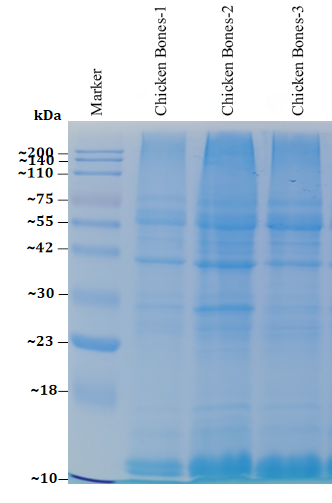
Figure 1. SDS-PAGE Gel Coomassie Brilliant Blue staining image. Gel Concentration: 12%; Sample Loading Amount: 30 µg.
Features and Benefits
1. Protein Degradation Inhibition
Contains a multi-component protease inhibitor cocktail and is operated entirely under low-temperature conditions, significantly reducing protein degradation during mechanical grinding and ensuring higher biological activity of the extracted proteins.
2. User-Friendly and Time-Efficient
The ready-to-use formulation eliminates the need for complex reagent preparation. It simultaneously fulfills lysis and protease inhibition requirements, minimizing handling errors and greatly shortening experimental time.
3. Broad Applicability
Suitable for a wide range of fresh or decalcified bone tissue samples, including cortical bone, trabecular bone, and cartilage, providing robust support for studies involving various animal models and clinical specimens.
4. High Data Reproducibility
A standardized core formulation and consistent operating procedures ensure greater consistency across experimental batches, enhancing the reproducibility of research outcomes and the accuracy of statistical analyses.
5. Multi-Scenario Compatibility
The extracted proteins are compatible with a variety of downstream applications, including Western blotting, immunoprecipitation, enzyme activity assays, LC-MS/MS, and tissue proteomics, fully meeting the needs of both basic and applied research.
Applications
1. Osteoporosis and Degenerative Bone Disease Research
Proteomic analysis of bone tissue helps elucidate the pathogenesis of common conditions such as osteoporosis and osteoarthritis, and enables the evaluation of therapeutic strategies for bone tissue repair.
2. Bone Regeneration and Tissue Engineering
In bone defect repair and the development of bone graft materials, extracting bone tissue proteins allows for monitoring osteoblast activity, matrix formation, and vascularization processes, providing a basis for optimizing tissue engineering strategies.
3. Bone Development and Signaling Pathway Investigation
Studying key molecules involved in skeletal development (such as growth factors, transcription factors, and bone morphogenetic proteins) helps uncover their regulatory mechanisms during embryonic development or bone healing.
4. Tumor Metastasis and the Bone Microenvironment
In bone tumors and cancer bone metastasis research, proteomics or quantitative protein analysis can reveal interactions between tumor cells and the bone microenvironment, aiding in the identification of potential therapeutic targets.
5. Drug Screening and Pharmacodynamic Evaluation
The development of new drugs targeting bone injury or skeletal metabolic disorders requires high-quality bone protein samples for activity testing and signaling pathway validation, as well as assessment of drug effects on bone remodeling processes.
MtoZ Biolabs' bone tissue protein extraction kit is specifically designed with the highly mineralized and rigid nature of bone tissue in mind. Through an optimized lysis strategy, it offers researchers an efficient, low-loss, and user-friendly method for bone protein extraction, which not only simplifies the experimental workflow but also effectively preserves the native conformation and activity of target proteins. It is widely applicable to both basic and applied research areas, including osteoporosis, bone regeneration, and tumor bone metastasis, providing strong support for understanding bone-related disease mechanisms and developing novel therapeutic strategies. With its excellent compatibility and high data reproducibility, the bone tissue protein Extraction kit serves as a reliable tool for researchers conducting bone protein analysis, helping to achieve more comprehensive and in-depth research outcomes.
Q1: Can All Types of Bone Tissue Be Extracted Using the Same Protocol?
A1: The bone tissue protein extraction kit is designed for a wide range of mammalian bone tissues. For samples with extremely high bone density or severe pathological changes, extraction efficiency can be improved by extending the incubation time or enhancing mechanical grinding.
Q2: How Is the Risk of Protein Degradation Controlled During Extraction?
A2: It is recommended to perform the entire procedure under low-temperature conditions. When used with the protease inhibitor cocktail provided in the kit, protein degradation risk can be effectively minimized. For highly active bone tissue samples, rapid freezing prior to disruption is also advised.
Q3: What Should I Do If the Extracted Protein Concentration Is Too Low?
A3: You may try increasing the sample amount, reducing the lysis buffer volume, or extending the incubation time to enhance protein yield. For higher sample requirements, multiple extractions can be performed and the supernatants combined.
Q4: Is Specialized Equipment Required?
A4: No expensive specialized equipment is necessary. Standard lab equipment such as tissue grinders, centrifuges, and refrigeration systems is sufficient. For large-scale or automated workflows, incubation and centrifugation parameters can be adjusted according to the platform used.
Q5: Are the Extracted Proteins Suitable for Mass Spectrometry and Enzyme Activity Studies?
A5: Yes, the bone tissue proteins extracted with this kit typically retain high purity and activity, making them suitable for LC-MS/MS and various enzyme activity assays. For applications requiring even higher purity, additional purification steps such as immunoaffinity or column chromatography can be applied.