Adipose tissue is not only a site of energy storage but also an essential endocrine organ, playing a significant role in obesity, diabetes, metabolic syndrome, cardiovascular disease, and related fields. As life sciences and medical research continue to advance, the extraction and analysis of adipose tissue proteins have become increasingly critical for investigating lipid metabolism, signal transduction, and disease mechanisms. However, adipose tissue is characterized by an extremely high lipid content and unique cellular structure, posing multiple challenges to efficient protein extraction:
1. High Lipid Content
The high concentration of lipids tends to form emulsions or lipid aggregates during lysis, interfering with protein solubilization and purification, and significantly reducing extraction efficiency.
2. Low Protein Content
Proteins account for less than 2% of total content in adipocytes, meaning that the actual yield of extractable protein is very limited.
3. Fragile Cellular Structure
Adipocytes are filled with large lipid droplets that compress most of the cytoplasmic and nuclear space, leading to more dispersed distribution of target proteins and greater extraction difficulty. Additionally, lipid droplets are prone to rupture under mechanical force or chemical reagents, forming residual lipids that can compromise downstream protein detection accuracy.
4. Risk of Degradation
Adipose tissue may contain elevated levels of proteases, which, if not promptly inhibited or properly handled, can degrade target proteins and lead to experimental bias.
5. Cumbersome Operation and Poor Reproducibility
Traditional extraction methods often involve multiple steps of organic solvent treatment or ultrasonic disruption, which are time-consuming and prone to introducing human error, thus reducing reproducibility.
To address the unique challenges in adipose tissue research, MtoZ Biolabs has launched the adipose tissue protein extraction kit can provide high-efficiency, mild, and reproducible protein extraction, enabling researchers to overcome the specific difficulties associated with adipose tissue protein analysis.
Product Overview
Adipose tissue protein extraction kit is specially optimized for the high lipid content and protein degradation-prone characteristics of adipose tissue, contains pre-formulated lysis buffer and protective additives, which can rapidly disrupt the structure of adipocytes under low-temperature and mild conditions, minimizing lipid interference and protein degradation, and ensuring that the extracted proteins are suitable for various downstream experiments. The formulation fully takes into account the characteristics of adipose tissue cell membranes and lipid droplets, incorporating appropriate detergents and protease inhibitors to effectively dissolve residual lipids and inhibit protease activity. The kit is configured with ready-to-use reagents to reduce the hassle of manual reagent preparation. Researchers can obtain high-purity proteins by following simple operational steps under standard laboratory conditions.
Product Notes
1. The lysis buffer provided in the kit is suitable for the routine extraction of adipose tissue samples.
2. Freshly prepared protease inhibitor cocktail should be added to the adipose lysis buffer prior to use.
3. After sample preparation, use immediately or aliquot and store at -80°C.
4. All components should be completely thawed at room temperature before use. It is not recommended to use after its expiration date.
5. If each sample contains 200 mg of adipose tissue, up to 30 samples can be processed.
Product Details
|
Product Details |
Specification |
Storage Conditions |
|
Adipose Lysis Buffer (RIPA) |
20 mL |
-20℃ |
|
Protease Inhibitor Cocktail (100×) |
200 µL |
-20℃ |
|
SDS-PAGE Protein Loading Buffer (5×) |
1 mL |
-20℃ |
|
Coomassie Brilliant Blue Staining Solution |
20 mL |
4℃ |
Protocol
The following procedure serves as a general guideline. Centrifugation conditions, incubation time, or buffer volume may be flexibly adjusted based on specific experimental needs:
1. Sample Preprocessing
(1) Harvest the required amount of fresh or frozen adipose tissue, removing visible blood vessels, connective tissue, and other impurities to maintain sample cleanliness.
(2) It is recommended to perform all operations at low temperature (e.g., on ice) to minimize protein degradation.
2. Addition of Lysis Buffer and Homogenization
(1) Place the tissue in an appropriate volume of lysis buffer (with protease inhibitors added).
(2) Homogenize the sample using a grinder, homogenizer, or scissors until a paste-like consistency is achieved. Gentle vortexing or agitation may be used to enhance lysis efficiency.
3. Short Incubation
(1) Incubate the homogenate at 4°C or on ice for 15-30 minutes. Mild agitation during incubation can help disperse lipids and facilitate membrane solubilization.
4. Centrifugation
(1) Centrifuge the mixture at 12,000 ×g for 10 minutes at 4°C to remove cell debris and undissolved lipid residues. Carefully collect the middle aqueous phase, which contains the extracted proteins.
5. Protein Quantification and Purity Check
(1) Determine the protein concentration using a standard quantification method such as the BCA assay.
(2) If needed, perform ultrafiltration or delipidation to further enhance protein purity.
6. Downstream Applications
(1) The extracted protein can be aliquoted and stored at -80°C for future use or applied directly to experiments such as Western blotting, enzyme activity assays, co-immunoprecipitation, or mass spectrometry analysis.
Figures
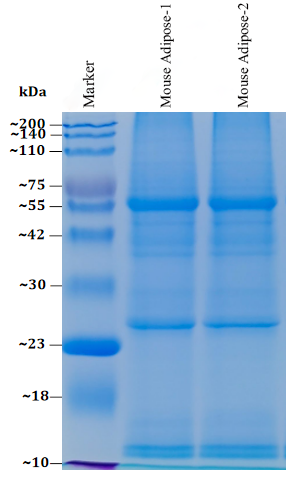
Figure 1. SDS-PAGE Gel Coomassie Brilliant Blue staining Image. Gel Concentration: 12%; Sample Loading Amount: 30 μg.
Features and Benefits
The adipose tissue protein extraction kit from MtoZ Biolabs demonstrates significant advantages in the following aspects:
1. High Extraction Efficiency
The optimized formulation enables thorough lysis, minimizes lipid interference, and improves the recovery rate of target proteins.
2. Gentle Operation
Protein extraction is conducted under low-temperature and mild mechanical conditions to preserve the native conformation and biological activity of proteins.
3. Protease Inhibition
The adipose tissue protein extraction kit contains multiple protease inhibitors that effectively suppress proteolytic activity commonly found in adipose tissue, protecting key proteins from degradation.
4. Compatibility with Various Applications
Extracted proteins are suitable for a wide range of downstream experiments such as Western blot, ELISA, LC-MS/MS, and enzymatic activity assays, supporting diverse research needs.
5. Simple Operation
The ready-to-use formulation eliminates the need for tedious preparation or additional additives, reducing handling complexity and error rates.
6. High-Throughput Capability
The simplified protocol supports parallel processing of multiple samples, making it ideal for large-scale adipose tissue analyses in standard laboratory settings.
7. Broad Applicability
Suitable for various adipose tissue types, including subcutaneous fat, visceral fat, and brown adipose tissue, it offers a robust solution for interdisciplinary research across basic medicine, pharmacology, and nutrition science.
Applications
The adipose tissue protein extraction kit holds broad application value in adipose tissue research and supports a wide range of disciplines and directions:
1. Obesity and Metabolic Syndrome Research
Enables the acquisition of high-purity adipose tissue proteins for investigating molecular mechanisms related to insulin resistance, lipid metabolism, and inflammatory pathways.
2. Adipocyte Differentiation and Development Studies
Facilitates monitoring of protein expression and post-translational modifications in adipocyte precursors under various induction conditions, providing new insights for stem cell and regenerative medicine.
3. Disease Mechanism Exploration
Supports differential proteomic analysis between healthy and diseased tissues, contributing to deeper understanding of conditions such as atherosclerosis and non-alcoholic fatty liver disease.
4. Drug Screening and Pharmacological Evaluation
Allows assessment of drug response and potential side effects in adipose tissue by detecting key signaling pathways influenced by therapeutic interventions.
5. Functional Proteins and Cell Signaling Pathways
Provides high-quality starting protein material for research on lipid metabolism-related pathways, including post-translational modifications (e.g., phosphorylation, acetylation), protein-protein interactions, and regulatory networks.
Q1: Is the Kit Applicable to All Types of Adipose Tissue?
A1: The adipose tissue protein extraction kit is suitable for various common types of adipose tissue, including subcutaneous fat, visceral fat, and brown adipose tissue. For extreme conditions, it is recommended to appropriately extend the homogenization time or increase the volume of lysis buffer.
Q2: What Should Be Done If a Visible Lipid Layer Is Still Observed after Operation?
A2: It is recommended to repeat low-temperature centrifugation and remove the upper lipid layer, or extend the homogenization and incubation time moderately to enhance lipid removal. Ultrafiltration or simple fractionation can also be used to obtain a more purified protein supernatant.
Q3: What Should Be Done If the Extracted Protein Concentration Is Too Low?
A3: You may reduce the volume of lysis buffer, increase the amount of tissue sample, and ensure thorough homogenization. If the yield is still insufficient, specific proteins can be enriched by immunoprecipitation or affinity purification.
Q4: Are Special Instruments or Equipment Required?
A4: Only standard laboratory equipment is needed, such as a homogenizer, centrifuge, shaker, pipette, and refrigerator. No additional expensive instruments are required to complete the main procedures.