Cellular proteins are essential executors and regulators of physiological activities, playing key roles in biological processes such as signal transduction, metabolic regulation, gene expression, and immune responses. Investigating protein expression levels, post-translational modifications, and protein-protein interactions is critical for understanding cellular function. Therefore, efficiently and reliably extracting cellular proteins to obtain high-quality protein samples is a foundational step in proteomics, cell biology, and biomedical research. However, cell protein extraction is not a simple procedure, it involves a delicate process encompassing cell lysis, protein release, impurity removal, and degradation prevention. Researchers often face the following challenges:
1. Cell membrane barrier: The cell membrane is the first obstacle to protein extraction. Its complex structure is not easily penetrated by conventional lysis buffers, potentially resulting in incomplete protein release. Additionally, organelle membranes may impair extraction efficiency.
2. Protein degradation and structural disruption: Activation of endogenous proteases and phosphatases during lysis, as well as physical shear forces from mechanical disruption methods such as sonication or freeze-thaw cycles, can cause target protein degradation or loss of post-translational modifications.
3. Impurity interference with downstream analysis: Released nucleic acids, polysaccharides, and lipids may bind to proteins, increasing sample viscosity. This can lead to issues such as smearing in electrophoresis or non-specific signals in immunodetection assays.
4. Low efficiency and poor stability: Traditional methods often exhibit low lysis efficiency for small-volume samples or resistant cell types (e.g., certain tumor cells). Furthermore, extracted proteins may aggregate or oxidize easily, making long-term preservation difficult.
5. Conflict between lysis systems and downstream applications: Although strong denaturants can improve protein solubility, they often disrupt native conformation, compromising functional assays (e.g., enzyme activity). Additional purification steps also increase time and cost.
Product Overview
MtoZ Biolabs has developed the cell protein extraction kit to provide an efficient and gentle solution for cellular protein extraction. The kit features an optimized lysis buffer system that enables effective cell disruption and target protein release while preserving the native conformation of proteins and inhibiting protease activity to prevent degradation. It is fully compatible with a wide range of downstream applications, including Western blotting, ELISA, LC-MS/MS, immunoprecipitation, and enzyme activity assays, ensuring both efficiency and stability in protein extraction. The ready-to-use design simplifies the workflow, eliminates the need for additional optimization, and significantly improves reproducibility and ease of use, offering a reliable foundation for protein research.
Product Notes
1. The cell lysis buffer provided in the kit is suitable for routine extraction of cellular samples.
2. Fresh protease inhibitor cocktail should be added to the lysis buffer prior to use.
3. Once sample preparation is complete, use the samples immediately or aliquot and store at -80 °C.
4. All components should be fully thawed at room temperature before use. It is not recommended to use after its expiration date.
5. If each sample contains 10 million cells, up to 30 samples can be processed.
Product Details
|
Product Details |
Specification |
Storage Conditions |
|
Cell Lysis Buffer |
10 ml |
-20℃ |
|
Protease Inhibitor Cocktail (100×) |
100 µl |
-20℃ |
|
SDS-PAGE Protein Loading Buffer (5×) |
1 ml |
-20℃ |
|
Coomassie Brilliant Blue Staining Solution |
10 ml |
4℃ |
Protocol
1. Cell Lysis
(1) Adherent Cells: Remove the culture medium, then wash cells with ice-cold PBS or an appropriate buffer. Add an appropriate volume of Cell Lysis Buffer, incubate on ice, and gently pipette up and down or shake to promote lysis.
(2) Suspension Cells: Collect the cells and centrifuge to remove the culture medium. Wash the pellet with ice-cold PBS or an appropriate buffer. Add Cell Lysis Buffer, mix thoroughly, and incubate on ice for 30 minutes, gently inverting every 10 minutes to ensure uniform lysis.
2. Ultrasonic Disruption
(1) Place the lysed protein samples on ice and sonicate at 100 W for 10 minutes (3 seconds on, 3 seconds off) to effectively shear nucleic acids.
3. Centriugation to Remove Debris
(1) Centrifuge at 12,000 ×g for 10 minutes at 4°C. Collect the supernatant to obtain total cellular protein extracts.
4. Protein Quantification and Downstream Applications
(1) Perform protein quantification using the BCA assay. Aliquot and store at -80°C, or proceed directly to downstream applications such as Western blotting, ELISA, or mass spectrometry analysis.
Figures
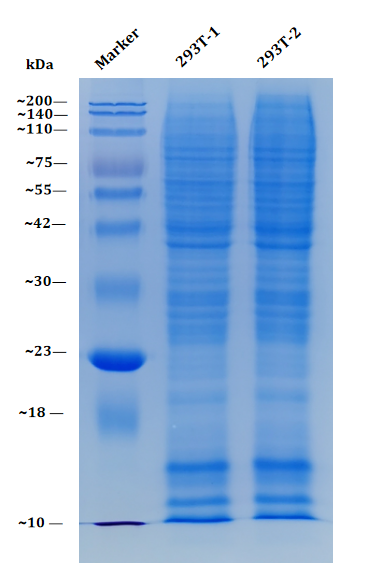
Figure 1. SDS-PAGE Gel Stained with Coomassie Brilliant Blue. Gel Concentration: 12%; Loading Amount: 50 µg.
Features and Benefits
MtoZ Biolabs' cell protein extraction kit offers an all-in-one protein extraction solution with the following key advantages over traditional methods and other commercially available kits:
1. Simple Operation
This ready-to-use kit requires no additional reagent preparation or complex optimization. Routine laboratory personnel can easily perform the procedure, significantly reducing error rates and time costs.
2. High Extraction Efficiency
The optimized lysis buffer system and protease inhibitor components effectively disrupt the cell membrane and release a high yield of target proteins, while preserving their native structure and biological activity.
3. High-Throughput Compatibility
Suitable for automated platforms or parallel processing of multiple samples, greatly enhancing experimental throughput, meeting the demands of large-scale screening and omics research.
4. Strong Reproducibility
With stable batch-to-batch consistency and standardized protocols, the variability caused by manual handling is minimized to the greatest extent possible, ensuring consistent data across different experiments.
5. Broad Compatibility
Applicable to various cell types and compatible with a wide range of downstream applications including Western blotting, ELISA, LC-MS/MS, and enzyme activity assays.
Applications
The cell protein extraction kit is widely applicable to research in proteomics, cell biology, and immunology, and supports the following application scenarios:
1. Protein-Protein Interaction (PPI) Studies
Investigating protein-protein interactions requires high-quality protein extracts. The cell protein extraction kit provides non-denatured whole-cell proteins suitable for co-immunoprecipitation (Co-IP), pull-down assays, GST affinity purification, and more. It preserves the integrity and activity of protein complexes, making it especially ideal for structural analysis, functional studies, and cross-linking mass spectrometry (XL-MS) that require proteins in their native state.
2. Proteomics Research
Protein extraction is the first step in proteomics workflows. The extracted proteins are suitable for downstream analysis via LC-MS/MS, Western blotting, and more, ensuring the removal of interfering substances while preserving protein integrity, enhancing the accuracy of proteomic analyses.
3. Disease Biomarker Discovery
Proteins serve as core biomarkers in many diseases. Cell protein extraction is a key step in proteomic studies of blood, urine, and tissue samples. The extracted proteins can be used to detect disease-related proteins in cancer, neurodegenerative diseases, autoimmune diseases, and others. Combined with techniques like Western blotting, LC-MS/MS, iTRAQ, or TMT, the potential biomarkers can be identified for early diagnosis, prognosis evaluation, and precision medicine.
4. Immunology Research
In immunological studies, extracted cellular proteins are essential for cytokine detection, antigen-antibody interaction analysis, and assays like Co-IP, Western blotting, and ELISA. The cell protein extraction kit ensures the stability of endogenous proteins and prevents degradation or denaturation, thereby improving the specificity and sensitivity of immunological assays. It is suitable for research in autoimmunity, infectious diseases, and tumor immunology.
5. Drug Development and Mechanism of Action Studies
The cell protein extraction kit allows researchers to efficiently extract target proteins for use in DARTS (Drug Affinity Responsive Target Stability), CETSA (Cellular Thermal Shift Assay), pull-down binding assays, and more to study drug mechanisms of action. The extracted proteins are also applicable in therapeutic antibody development and cancer immunotherapy research, providing strong support for the biopharmaceutical industry.
Q1: Is the Kit Compatible with All Cell Types?
A1: The cell protein extraction kit is suitable for most animal cell types, particularly for protein extraction from human, rat, and mouse cells.
Q2: What Should I Do If No Protein Is Detected after Cell Lysis?
A2: Possible causes include incomplete cell lysis, insufficient lysis buffer volume, or suboptimal centrifugation conditions. It is recommended to increase the lysis time, use sonication if necessary, and ensure the buffer fully covers the cell pellet.
Q3: Is It Necessary to Add Additional Protease Inhibitors?
A3: The kit contains optimized protease inhibitors. However, for samples with high endogenous protease activity (such as pancreatic tissue), additional inhibitor supplementation is recommended.
Q4: What Downstream Protein Experiments Are Compatible with the Extracted Proteins?
A4: The extracted proteins are suitable for most protein research applications, including Western blotting, ELISA, and mass spectrometry. For assays requiring special solvents or conditions, buffer optimization may be necessary.