Proteins are the fundamental functional units of life and play a vital role in biological research, drug development, disease mechanism studies, and industrial biotechnology. Bacterial protein extraction is a key step in protein research, particularly in applications such as protein expression analysis, proteomics, and functional studies, where the purity and yield of the extracted proteins directly affect the success rate of downstream experiments.
Due to the complex structure of bacterial cell walls, traditional mechanical disruption methods may lead to protein denaturation or inefficient release. Therefore, optimizing the protein extraction protocol is crucial. Bacterial protein extraction kit provides an efficient, gentle, and highly reproducible method for protein isolation without requiring expensive equipment, and is suitable for various bacteria such as Escherichia coli, Bacillus subtilis, and lactic acid bacteria, offering reliable technical support for protein research.
Product Overview
The bacterial protein extraction kit from MtoZ Biolabs utilizes an optimized chemical lysis buffer system that rapidly dissolves bacterial cell walls and releases intracellular proteins while avoiding structural damage caused by mechanical forces. The kit is suitable for extracting soluble proteins, membrane proteins, and cytoplasmic proteins, and is compatible with a wide range of downstream applications, including Western blotting, SDS-PAGE, electrophoresis, ELISA, and LC-MS/MS-based proteomics analysis.
Product Notes
1. The bacterial lysis buffer provided in the bacterial protein extraction kit is suitable for routine bacterial sample extraction.
2. Add freshly prepared protease inhibitor cocktail to the bacterial lysis buffer before use.
3. Use the prepared sample promptly or aliquot and store at -80°C.
4. All components should be completely thawed at room temperature before use. It is recommended not to use after its expiration date.
Product Details
|
Product Details |
Specification |
Storage Conditions |
|
Bacterial Lysis Buffer |
10 mL |
-20℃ |
|
Protease Inhibitor Cocktail (100×) |
100 µL |
-20℃ |
|
SDS-PAGE Protein Loading Buffer (5×) |
1 mL |
-20℃ |
|
Coomassie Brilliant Blue Staining Solution |
10 mL |
4℃ |
Protocol
The bacterial protein extraction kit has been optimized to employ a simple chemical lysis procedure that enables efficient and easy operation. It is suitable for various laboratory environments and experimental scales. The following is the recommended standard protocol, which can be adjusted based on actual needs.
1. Bacterial Culture and Collection
(1) Culture bacteria to the logarithmic growth phase (OD600 ≈ 0.6-0.8) to ensure active metabolism and enhance protein extraction efficiency.
(2) Centrifuge at 4°C, 5000 ×g for 10 minutes to remove the culture medium and collect the bacterial pellet.
2. Bacterial Lysis
(1) Add bacterial lysis buffer (provided in the bacterial protein extraction kit) at a volume ratio of 1:2 to the bacterial pellet and fully resuspend.
(2) Perform grinding or sonication at 4°C and incubate for 10-20 minutes to promote bacterial cell wall lysis.
3. Enzymatic Lysis (Optional Step)
(1) For certain hard-to-lyse bacteria, lysozyme may be added to enhance lysis efficiency. Incubate for 10 minutes.
4. Centrifugation to Remove Cell Debris
(1) Centrifuge the lysate at 4°C, 12,000 ×g for 10-15 minutes to remove incompletely lysed cell debris.
(2) Collect the supernatant, which contains the extracted protein and can be used directly for downstream experiments.
5. Protein Quantification and Storage
(1) Perform protein quantification using an appropriate assay to ensure that sample concentrations meet experimental requirements.
(2) Short-term storage (1-2 weeks): Store the protein extract at 4°C.
(3) Long-term storage (>2 weeks): It is recommended to add 10-50% glycerol and store at –80°C to prevent protein degradation.
The entire procedure can be completed within 30-40 minutes, requires no advanced equipment, improves experimental efficiency, and minimizes sample loss.
Figures
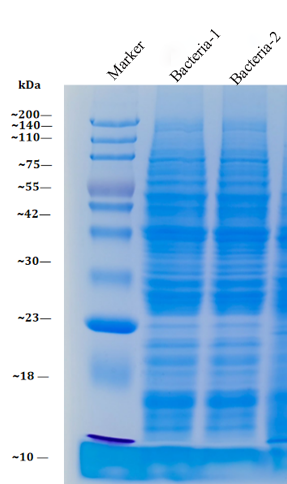
Figure 1. SDS-PAGE Gel Coomassie Brilliant Blue staining Image. Gel Concentration: 12% Resolving Gel; Loading Amount: 30 µg.
Features and Benefits
1. Efficient and Gentle Lysis
Utilizes an optimized chemical buffer system to avoid mechanical damage to proteins, minimizing denaturation and degradation.
2. High Reproducibility and Data Stability
The optimized standard lysis system ensures consistency and stability of results across different experimental batches.
3. Compatible with Various Bacterial Strains
Applicable to Gram-negative bacteria and certain Gram-positive strains; for hard-to-lyse species, lysozyme or other auxiliary lysis methods can be used to improve efficiency.
4. Compatible with Multiple Downstream Applications
The extracted proteins yield high recovery rates and are suitable for SDS-PAGE, Western Blot, ELISA, LC-MS/MS, and other applications.
5. Simple Operation
Ready-to-use reagents eliminate the need for tedious optimization, significantly reducing experimental time.
Applications
1. Proteomics Research
Used for LC-MS/MS mass spectrometry analysis to profile bacterial protein expression.
2. Western Blot & ELISA
Extracts high-quality proteins to detect the expression levels of target proteins.
3. Recombinant Protein Expression Analysis
Applicable for extracting host proteins from E. coli and other systems to optimize protein expression conditions.
4. Bacterial Physiology and Metabolism Studies
Investigates protein expression under different bacterial growth conditions.
Q1: Is the Kit Suitable for All Types of Bacteria?
A1: The bacterial protein extraction kit is suitable for most Gram-negative bacteria, such as Escherichia coli, Salmonella, and Pseudomonas aeruginosa. For some Gram-positive bacteria (e.g., Bacillus subtilis, lactic acid bacteria), the addition of lysozyme can enhance lysis efficiency through enzymatic assistance.
Q2: Are the Extracted Proteins Compatible with Mass Spectrometry Analysis?
A2: Yes, the buffer system used in this kit is compatible with LC-MS/MS mass spectrometry and does not contain interfering components such as SDS or strong denaturants that may affect protein identification.
Q3: How Can the Efficiency of Bacterial Lysis Be Improved?
A3: For bacteria that are difficult to lyse, consider extending the incubation time (up to 30 minutes) or adding lysozyme (1 mg/mL) to the lysis buffer to promote cell wall degradation.
Q4: Are the Extracted Proteins Suitable for Functional Activity Assays?
A4: Yes, the bacterial protein extraction kit uses a mild lysis method that preserves protein activity, making it suitable for functional studies such as enzyme activity assays and protein interaction experiments (e.g., pull-down, co-immunoprecipitation).
Q5: Does the Kit Contain Nucleic Acid Removal Components?
A5: No, the kit does not contain nucleases. If downstream applications require DNA/RNA removal, DNase I or RNase A can be added during the lysis process.