During plant growth and reproduction, seeds not only serve as vital carriers of genetic information but also store a wide range of nutrients. The protein components within seeds play a crucial role in seed germination and seedling development. With the advancement of plant functional genomics, proteomics, and molecular breeding, researchers are increasingly in need of reliable methods to efficiently extract and analyze seed proteins in order to elucidate their molecular roles in seed development, nutrient storage, and stress resistance.
However, seed protein extraction presents multiple challenges. Seeds often possess a hard seed coat or thick outer shell, making mechanical disruption difficult. Internally, Seeds are rich in secondary metabolites such as starch, lipids, and polyphenols, causing an increase in experimental background impurities. In addition, seed proteins are typically highly aggregated and cannot be easily solubilized under mild conditions. To address these issues, MtoZ Biolabs has developed the plant seed protein extraction kit based on a specially formulated lysis buffer and protease inhibition system that can rapidly destroy seeds and effectively release proteins under mild conditions, while minimizing interference from starch, lipids, and polyphenols.
Product Overview
The plant seed protein extraction kit is designed to address the major challenges in seed protein extraction, especially those posed by tough seed coats, high starch and lipid content, and interfering polyphenols. The lysis buffer included in the kit has been extensively optimized to effectively break or soften hard seed coats under mild conditions, enhancing protein release efficiency. Additionally, specific chemical components have been adjusted to reduce interference from starch and oils, while a broad-spectrum protease inhibitor system protects target proteins from degradation.
With a ready-to-use design, the plant seed protein extraction kit greatly simplifies the workflow from grinding to supernatant collection in a short time, providing a stable and convenient solution for obtaining high-purity seed proteins. It is suitable for a wide range of seed types, including cereal crops (such as wheat, rice, maize, and soybean), economic crops (such as rapeseed, peanut, and sesame), and seeds from special plant species. The kit enables efficient protein extraction while preserving native conformation and activity, laying a solid foundation for various downstream analyses such as Western blotting, ELISA, mass spectrometry, and enzymatic activity assays.
Product Details
|
Product Details |
Size |
Storage Conditions |
|
Plant Seed Lysis Buffer |
40 mL |
4℃ |
|
Protease Inhibitor (100×) |
0.5 mL |
-20℃ |
Protocol
The following steps describe the standard protocol for the plant seed protein extraction kit. Researchers may adjust based on different seed types and experimental needs:
1. Sample Pretreatment
(1) Select fresh or fully dried seed samples. Remove damaged or moldy seeds, and wash off any soil or other surface contaminants.
(2) If necessary, soak seeds, remove outer shells, or partially peel the seed coat to facilitate thorough grinding.
2. Grinding and Disruption
(1) Place seed samples into a mortar, add liquid nitrogen to rapidly brittle seeds, and grind them thoroughly into fine powder.
3. Lysis and Incubation
(1) Thaw the plant seed lysis buffer on ice. Add Protease Inhibitor (100×) at a 1:100 ratio (e.g., add 10 μL of inhibitor per 1 mL of buffer).
(2) Add 3-4 times the volume of lysis buffer to the sample powder. Incubate with shaking for 30-60 min or stand for 3-4 h at 4°C or in an ice bath.
Maintain low-temperature conditions to preserve native protein conformation.
4. Centrifugation and Supernatant Collection
(1) Centrifuge at 12,000-15,000 ×g for 15-20 min at 4°C to pellet large debris and cell residues.
(2) Carefully transfer the supernatant to pre-chilled tubes. This is the extracted plant seed protein solution.
Aliquot as needed and store at -80°C. If further clarification is required, repeat centrifugation or perform filtration.
5. Protein Precipitation and Purification (Optional)
(1) Add pre-chilled acetone or methanol and incubate at -20°C for at least 1 hour.
(2) Centrifuge at 12,000 ×g for 10-15 min at 4°C. Discard the supernatant and air-dry the pellet.
(3) Resuspend the pellet in chilled buffer. Store on ice for use.
6. Protein Quantification and Downstream Applications
(1) Quantify protein using the BCA assay or other standard methods. The extracted protein is compatible with Western blotting, mass spectrometry, enzyme activity assays, and other downstream applications.
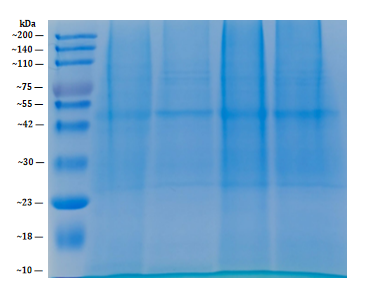
Figure 1. SDS-PAGE Gel Image of Plant Seed Extracted by the Kit.
Features and Benefits
1. High Specificity
Specially designed for seed protein extraction. Effectively addresses the challenges of hard seed coats and high starch/lipid content, ensuring high protein yield and quality.
2. Mild Extraction with Activity Preservation
Extraction is performed under mild, low-temperature conditions to prevent excessive shearing or chemical damage, maintaining native protein structure and functionality.
3. Comprehensive Protease Inhibition System
Built-in cocktail of protease inhibitors minimizes endogenous protease activity, helping to preserve the integrity of target proteins for accurate downstream analysis.
4. Simplified Operation, High Efficiency
The plant seed protein extraction kit's ready-to-use design simplifies workflow. Users can complete extraction in a short time without tedious buffer preparation.
5. Compatibility with Multiple Applications
The extracted proteins are suitable for Western blotting, ELISA, mass spectrometry, enzymatic assays, and other fields, providing support for a wide range of molecular, biochemical, and omics research.
6. Reproducibility and Stability
Rigorous production processes and standardized reagent formulation reduce batch-to-batch variation, enabling large-scale, parallel sample analysis with improved reliability and comparability.
Applications
1. Molecular Breeding and Genetic Research
By comparing protein expression profiles in different seed varieties or mutants, key proteins associated with traits, quality, or stress resistance can be identified, supporting marker-assisted molecular breeding.
2. Seed Development and Storage Mechanism Exploration
Monitoring changes in protein expression during different seed developmental stages or under various storage conditions helps reveal the molecular mechanisms of seed maturation and viability maintenance, providing a scientific basis for agricultural storage and seed quality evaluation.
3. Nutritional Component Analysis
Seeds are an important food source for humans and animals. By extracting proteins and conducting further functional analysis, researchers can assess the content and activity of high-quality nutritional factors in seeds, offering insights for food science and functional food development.
4. Crop Stress Resistance Mechanism Research
Investigating seed protein changes under stress conditions such as drought, high salinity, or extreme temperatures can uncover key regulatory proteins or pathways related to stress resistance, aiding in the improvement of crop resilience.
5. Enzyme Activity and Metabolic Pathway Research
In vitro activity assays and functional verification of specific seed enzyme proteins (e.g., proteases, lipases) can help elucidate regulatory mechanisms of metabolic networks at the seed level.
Q1: Can the Same Protocol Be Used for Different Plant Seeds (Such as Soybean and Rice)?
A1: In general, the standard protocol provided in the kit can be used for most seeds. However, based on differences in seed hardness and oil content, it is recommended to extend the grinding time appropriately or slightly adjust the volume of lysis buffer used.
Q2: Can the Extracted Proteins Be Used for Enzyme Activity Assays?
A2: Yes. The plant seed protein extraction kit is formulated to preserve protein activity and contains multiple protease inhibitors. If extraction is completed promptly and under low-temperature conditions, the resulting proteins usually retain their native conformation and enzymatic activity.
Q3: What Should I Do If the Extracted Proteins Show Severe Degradation or Denaturation?
A3: It is recommended to perform all operations at 4°C or on ice and shorten the grinding and lysis duration. If seed protease activity is extremely high, consider increasing the amount of inhibitor or using liquid nitrogen snap-freezing followed by rapid grinding to minimize degradation.
Q4: How Should Seeds with High Fat or Starch Content Be Handled?
A4: You may extend the grinding and incubation time moderately to ensure better mixing of detergents with the tissue. Additional centrifugation or filtration steps can also be used to remove excess lipids and starch aggregates.