






Huntington's Disease Exosome Research Service
Huntington's disease (HD) is a progressive autosomal dominant neurodegenerative disorder caused by CAG repeat expansion in the huntingtin (HTT) gene, resulting in mutant huntingtin (mHtt) protein aggregation, neuronal toxicity, and ultimately cell death. Despite significant research efforts, there remains no effective treatment, largely due to the inability of most drugs to cross the blood-brain barrier (BBB).
Exosomes—nano-sized extracellular vesicles enriched in miRNAs, lncRNAs, proteins, and metabolites—offer a promising alternative. Their intrinsic ability to cross the BBB and maintain structural integrity in circulation positions them as powerful tools for elucidating HD pathogenesis, discovering novel biomarkers, and enabling therapeutic delivery. Recent studies, including heterochronic parabiosis models, have revealed that circulating exosomes from young wild-type mice can reduce mHtt aggregation in HD mouse brains. Further in vitro validations confirmed that exosome fractions are more effective than whole serum in mitigating mHtt toxicity.
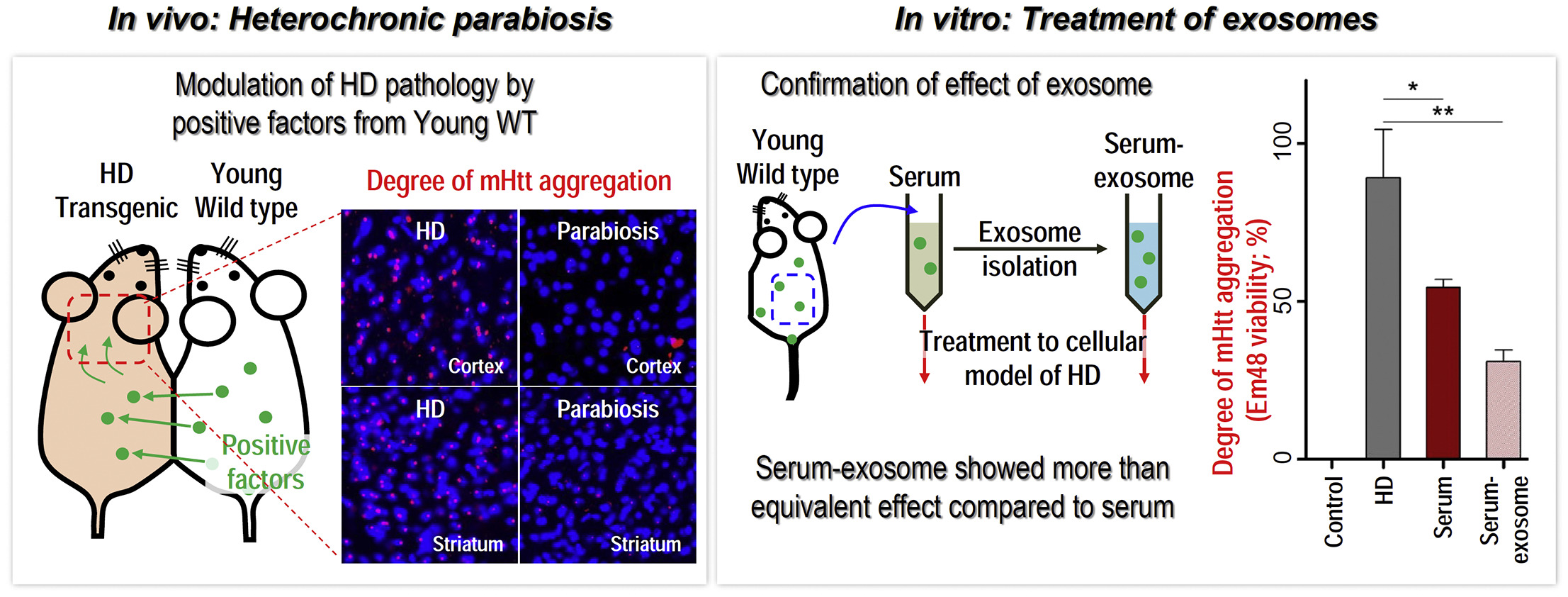
Lee, J. et al. Neurobiology of Disease. 2021.
Figure 1. Exosome-Mediated Reduction of mHtt Aggregation in HD Models
MtoZ Biolabs offers end-to-end Huntington's Disease Exosome Research Service that integrates advanced isolation techniques, high-resolution characterization, and multi-omics analysis. Built on deep expertise in extracellular vesicle research, this service supports the investigation of disease mechanisms, biomarker discovery, and the development of exosome-based therapeutic strategies with translational potential.
Services at MtoZ Biolabs
At MtoZ Biolabs, we offer a flexible, modular, and fully customizable pipeline for Huntington's disease exosome research. Our comprehensive Huntington's Disease Exosome Research Service includes but are not limited to:
|
Comprehensive Exosome Analysis Services by MtoZ Biolabs |
|||
|
Ultracentrifugation and Microfiltration based Exosome Purification |
Classical method for enriching exosomes from large-volume samples; suitable for preparative applications. |
||
|
Size Exclusion Chromatography (SEC) based Exosome Purification |
Gentle, size-based separation preserving exosome integrity; ideal for downstream functional studies. |
||
|
High-purity isolation targeting specific exosome surface markers using antibody-conjugated platforms. |
|||
|
Physical Characterization |
Measures particle size distribution and concentration; widely used for routine exosome quality assessment. |
||
|
Provides direct visualization of exosome morphology; considered the gold standard for structural validation. |
|||
|
Enables single-particle analysis of size, concentration, and zeta potential with high precision. |
|||
|
Confirms exosome identity and purity by detecting classical (e.g., CD63) and negative (e.g., Calnexin) markers. |
|||
|
Quantifies surface proteins and distinguishes subpopulations using fluorescent antibody labeling. |
|||
|
High-sensitivity single-particle analysis of exosome size, concentration, and surface marker expression. |
|||
|
Mass spectrometry-based profiling of exosomal proteins to reveal functional content and biomarkers. |
|||
|
Identifies low-molecular-weight metabolites in exosomes to explore their metabolic roles and signatures. |
|||
|
Comprehensive analysis of lipid species involved in membrane structure and signaling. |
|||
|
High-throughput sequencing of total RNA to reveal lncRNA, miRNA, and mRNA content. |
|||
|
Fluorescent or functional labeling for exosome tracking and uptake studies. |
|||
|
Custom engineering of exosomes for targeted delivery to disease-specific tissues or cells. |
|||
|
Incorporates therapeutic cargos such as RNA, proteins, or small molecules into exosomes. |
|||
|
Exosome-Associated Adeno-Associated Virus (AAV) Vector Production |
Combines exosomes with AAV vectors to enhance gene delivery and targeting efficiency. |
||
|
Assesses cellular-level effects such as proliferation, migration, and immune modulation. |
|||
|
Evaluates biodistribution and biological activity of exosomes in animal models. |
|||
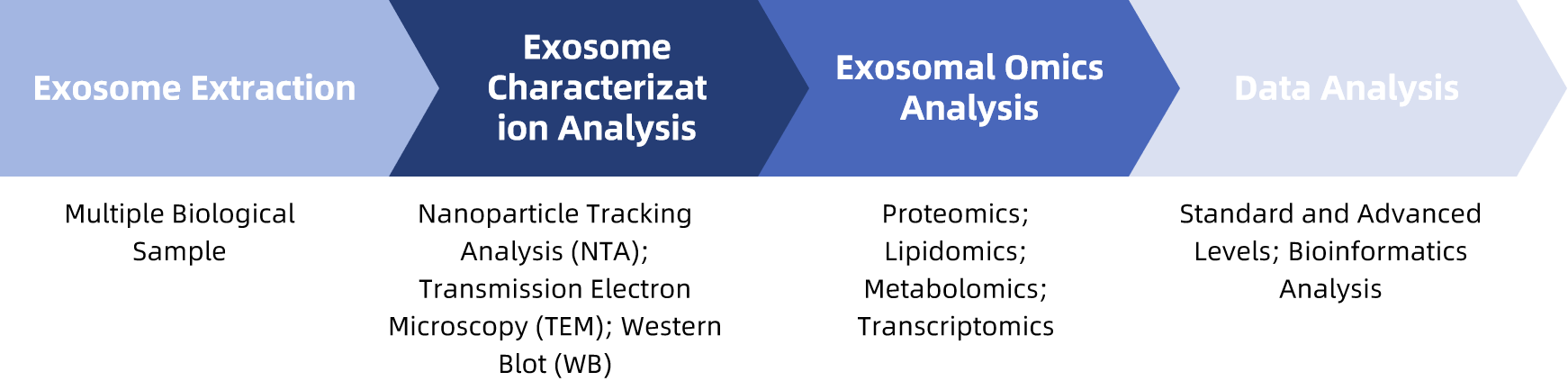
Analysis Workflow
Why Choose MtoZ Biolabs?
✅ High-Purity Exosome Preparation: Achieved via ultracentrifugation, SEC column chromatography, or immunoaffinity enrichment, supporting diverse sample types.
✅ Versatile Sample Compatibility: Supports a wide range of sample sources, including patient peripheral blood, cerebrospinal fluid, animal models, and cell lines.
✅ Integrated Multi-Omics Capability: Combines proteomics, RNA profiling, lipidomics, and metabolomics to reveal systemic changes in disease.
✅ Fully Customized Workflow: Tailored services from mechanistic studies to therapeutic target validation, depending on research objectives.
✅ One-Time-Charge: Our pricing is transparent, no hidden fees or additional costs.
Sample Submission Suggestions
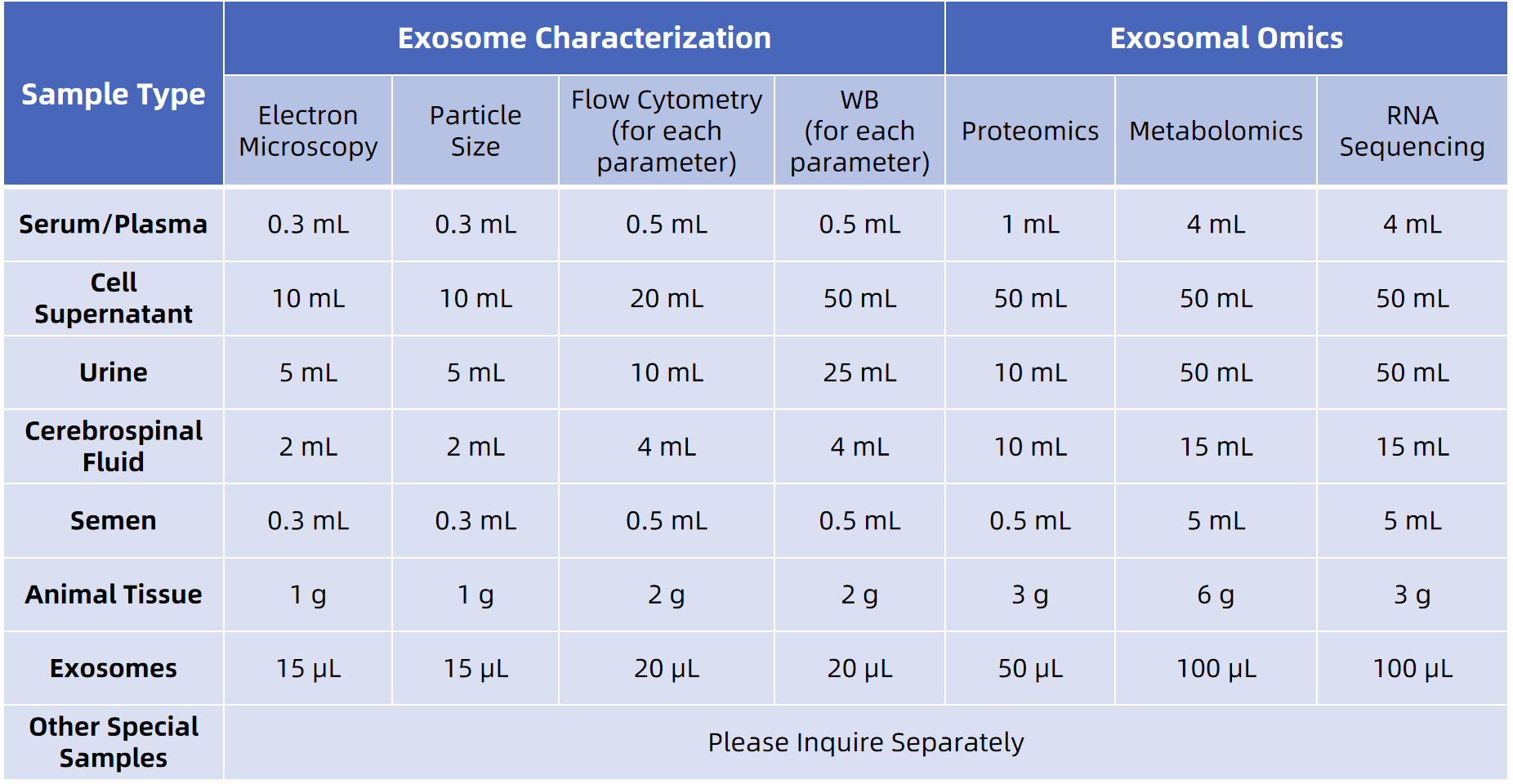
Note: Detailed SOPs for sample collection, storage, and shipment are available upon request. Please contact us to receive your customized sample handling kit.
MtoZ Biolabs specializes in exosome research services across a broad spectrum of diseases, including neurological diseases (e.g., Alzheimer's and Parkinson's disease), various cancers (e.g., breast and prostate), cardiovascular diseases, and infectious diseases. Our Huntington's Disease Exosome Research Service offers in-depth profiling based on HD models and supports a range of needs—from basic mechanism studies to translational research. Contact us to customize a solution that aligns with your research goals and advances your understanding of exosomes in disease biology.
FAQ
Q1: How to choose the most suitable exosome isolation method?
MtoZ Biolabs will recommend the optimal strategy based on your sample type (e.g., plasma, CSF, or culture supernatant) and downstream applications (e.g., omics or functional studies). Our protocols combine ultracentrifugation, density gradients, SEC, and immunomagnetic beads to ensure an ideal balance of purity and yield.
What Could be Included in the Report?
1. Comprehensive experimental details (materials, instruments, and methods)
2. Raw data
3. Processed omics data files
4. Quality control reports (NTA, Western blot, TEM images)
5. Functional assay results
6. Bioinformatics analysis
7. Customized report based on project requirements
Related Services
Tissue Regeneration and Repair Exosome Research Service
Infectious Disease Exosome Research Service
Cardiovascular Disease Exosome Research Service
Cancer Exosome Research Service
How to order?




