






Infectious Disease Exosome Research Service
In infectious disease research, exosomes have emerged as critical mediators bridging the communication between hosts and pathogens. Leveraging integrated multi-omics technologies and cutting-edge analytical platforms, MtoZ Biolabs proudly offers Infectious Disease Exosome Research Service to support researchers in comprehensively investigating the origin, composition, and functions of exosomes during infection. Our service provides robust tools for elucidating disease mechanisms, identifying early diagnostic markers, and exploring therapeutic interventions.
Exosomes are nano-sized extracellular vesicles derived from endosomal compartments and found in virtually all biological fluids. These vesicles carry proteins, lipids, mRNAs, non-coding RNAs, and pathogen-associated molecules, which reflect cellular status and participate in host–pathogen interactions. During infection, exosomes may contribute to pathogen dissemination and immune evasion, while also activating both innate and adaptive immune responses to counter infection. By conducting in-depth proteomic, lipidomic, metabolomic, and transcriptomic profiling of exosomes, researchers can gain a comprehensive understanding of their dual role in infections caused by viruses, bacteria, fungi, and protozoa. Moreover, exosomes hold promise as non-invasive biomarkers and delivery vehicles for therapeutic applications.
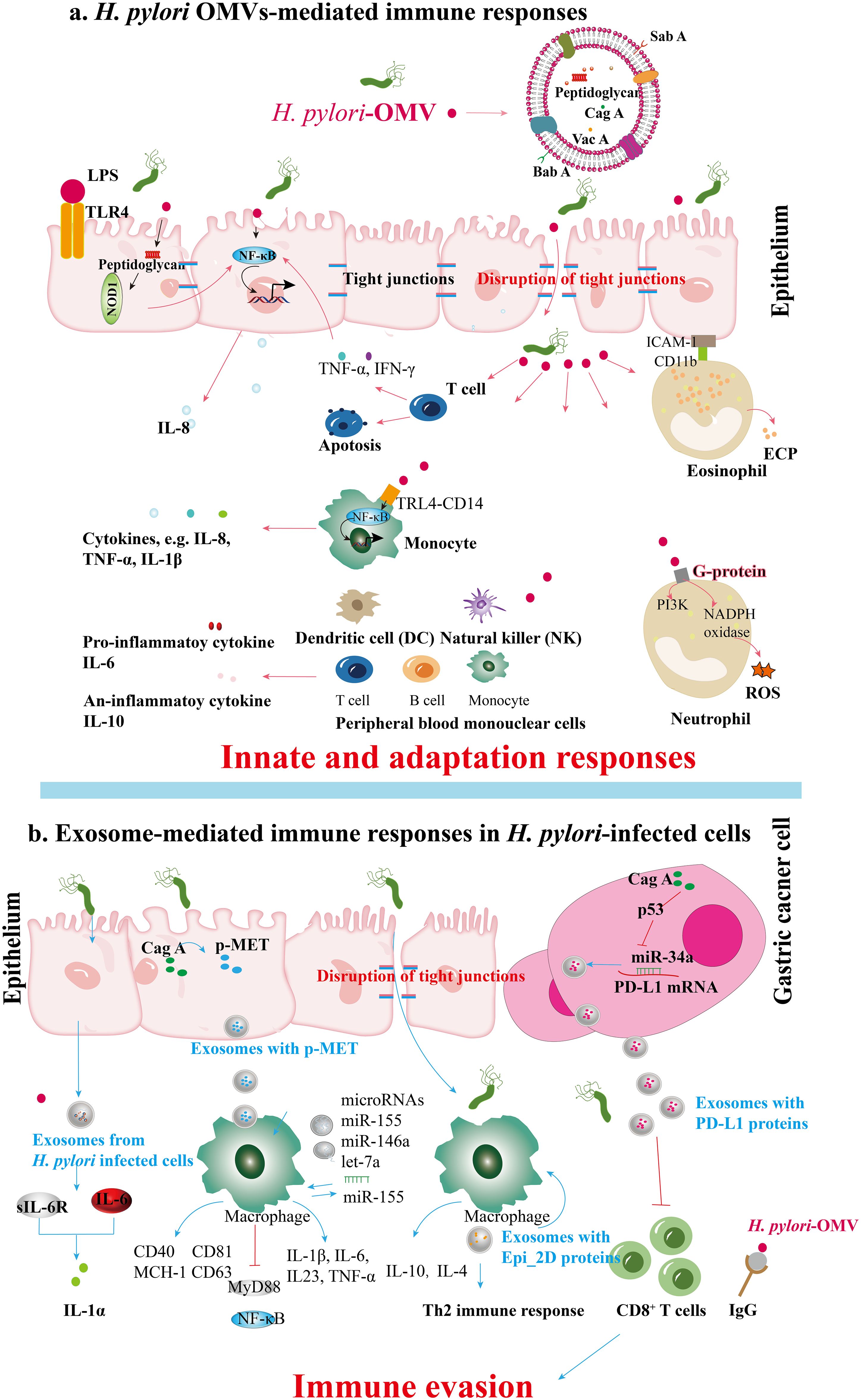
Wang, X. et al. Front Immunol. 2024.
Figure 1. Exosome-Mediated Immune Regulation in H. pylori Infection
Services at MtoZ Biolabs
MtoZ Biolabs provides comprehensive Infectious Disease Exosome Research Service that spans all stages of infectious disease progression. We support clients in uncovering the biological roles and application potential of exosomes in infectious disease research, including but not limited to the following areas:
|
Comprehensive Exosome Analysis Services by MtoZ Biolabs |
|||
|
Ultracentrifugation and Microfiltration based Exosome Purification |
Classical method for enriching exosomes from large-volume samples; suitable for preparative applications. |
||
|
Size Exclusion Chromatography (SEC) based Exosome Purification |
Gentle, size-based separation preserving exosome integrity; ideal for downstream functional studies. |
||
|
High-purity isolation targeting specific exosome surface markers using antibody-conjugated platforms. |
|||
|
Physical Characterization |
Measures particle size distribution and concentration; widely used for routine exosome quality assessment. |
||
|
Provides direct visualization of exosome morphology; considered the gold standard for structural validation. |
|||
|
Enables single-particle analysis of size, concentration, and zeta potential with high precision. |
|||
|
Confirms exosome identity and purity by detecting classical (e.g., CD63) and negative (e.g., Calnexin) markers. |
|||
|
Quantifies surface proteins and distinguishes subpopulations using fluorescent antibody labeling. |
|||
|
High-sensitivity single-particle analysis of exosome size, concentration, and surface marker expression. |
|||
|
Mass spectrometry-based profiling of exosomal proteins to reveal functional content and biomarkers. |
|||
|
Identifies low-molecular-weight metabolites in exosomes to explore their metabolic roles and signatures. |
|||
|
Comprehensive analysis of lipid species involved in membrane structure and signaling. |
|||
|
High-throughput sequencing of total RNA to reveal lncRNA, miRNA, and mRNA content. |
|||
|
Fluorescent or functional labeling for exosome tracking and uptake studies. |
|||
|
Custom engineering of exosomes for targeted delivery to disease-specific tissues or cells. |
|||
|
Incorporates therapeutic cargos such as RNA, proteins, or small molecules into exosomes. |
|||
|
Exosome-Associated Adeno-Associated Virus (AAV) Vector Production |
Combines exosomes with AAV vectors to enhance gene delivery and targeting efficiency. |
||
|
Assesses cellular-level effects such as proliferation, migration, and immune modulation. |
|||
|
Evaluates biodistribution and biological activity of exosomes in animal models. |
|||
Note: The above showcases only part of our service portfolio. For customized analytical solutions, please contact our technical team for expert consultation.
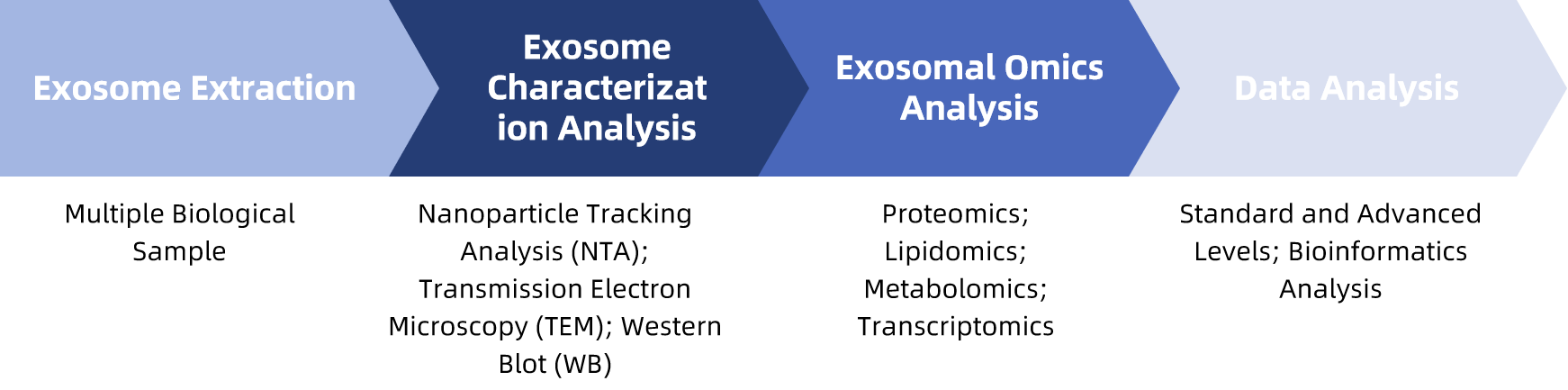
Analysis Workflow
Why Choose MtoZ Biolabs?
With a strong commitment to scientific excellence and technical reliability, MtoZ Biolabs delivers Infectious Disease Exosome Research Service with the following key advantages:
✅ Comprehensive Pathogen Coverage: Supports exosome-related studies involving viruses, bacteria, fungi, and protozoa.
✅ Integrated Multi-Omics Analysis Strategy: Combines proteomics, miRNA sequencing, lipidomics, and metabolomics to decode regulatory networks of exosomes during infection.
✅ High Compatibility with Liquid Biopsy Samples: Enables exosome detection in non-invasive samples such as plasma and saliva, facilitating clinical biomarker discovery.
✅ End-to-End Workflow: Offers complete solutions from sample pre-processing and multi-omics profiling to data interpretation, accelerating R&D timelines.
✅ One-Time-Charge: Our pricing is transparent, no hidden fees or additional costs.
Sample Submission Suggestions

Note: Detailed SOPs for sample collection, storage, and shipment are available upon request. Please contact us to receive your customized sample handling kit.
Applications
The Infectious Disease Exosome Research Service from MtoZ Biolabs is ideally suited for a wide range of research applications, including:
· Biomarker Discovery for Pathogen Infection Diagnosis
Investigating pathogen-derived RNAs or antigens within exosomes to assess their potential as non-invasive liquid biopsy biomarkers.
· Elucidating Host–Pathogen Interaction Mechanisms
Exploring the dual roles of exosomes in facilitating infection or enhancing host immune defense.
· Development of Anti-Infective Delivery Vehicles
Utilizing engineered exosomes to deliver antiviral miRNAs or immune-modulatory molecules to aid vaccine design and innovative therapies.
· Disease prognosis assessment and treatment monitoring
Tracking dynamic changes in exosome composition to evaluate infection progression and response to intervention.
What Could be Included in the Report?
1. Comprehensive experimental details (materials, instruments, and methods)
2. Raw data
3. Processed omics data files
4. Quality control reports (NTA, Western blot, TEM images)
5. Functional assay results
6. Bioinformatics analysis
7. Customized report based on project requirements
If you are interested in our Infectious Disease Exosome Research Service, we encourage you to contact MtoZ Biolabs. In addition to our focus on exosome profiling and functional analysis in infections caused by viruses, bacteria, fungi, and parasites, we also offer exosome research services in a wide spectrum of pathological conditions including neurological disorders, cardiovascular diseases, cancer, and autoimmune diseases.
Supported by advanced multi-omics platforms and a seasoned scientific team, MtoZ Biolabs is dedicated to delivering high-quality, customized exosome research solutions—empowering every step of disease mechanism exploration and biomarker development.
Related Services
Cancer Exosome Research Service
Neurological Disease Exosome Research Service
Stroke Exosome Research Service
How to order?




