






Neurological Disease Exosome Research Service
- Ultracentrifugation
- Microfluidic device
- Size exclusion chromatography (SEC)
- Polymer-based precipitation
- Immunoaffinity capture
- Nanoparticle tracking analysis (NTA)
- Transmission electron microscope (TEM)
- Western blotting
- Flow cytometry
- Fluorescent labeling
- Bioluminescence imaging (BLI)
- Magnetic resonance imaging (MRI)
- Computed tomography (CT)
- Animal models
- Genetic engineering
- Sample Types: CSF, serum, plasma, brain tissue lysate, cell culture media, or other biological samples
- Volume Requirements: Minimum 500 μL for fluids, or 50 mg for tissue samples
- Storage and Transport: Store samples at −80°C and ship on dry ice; avoid repeated freeze–thaw cycles
Neurological diseases such as Alzheimer's disease, Parkinson's disease, Huntington's disease, and stroke are among the most debilitating disorders worldwide. These conditions are associated with progressive damage to the central or peripheral nervous system, often involving synaptic dysfunction, mitochondrial impairment, neuroinflammation, and abnormal protein aggregation. Due to the complexity of the brain and the protective role of the blood-brain barrier, early diagnosis and mechanistic understanding of these disorders remain difficult.
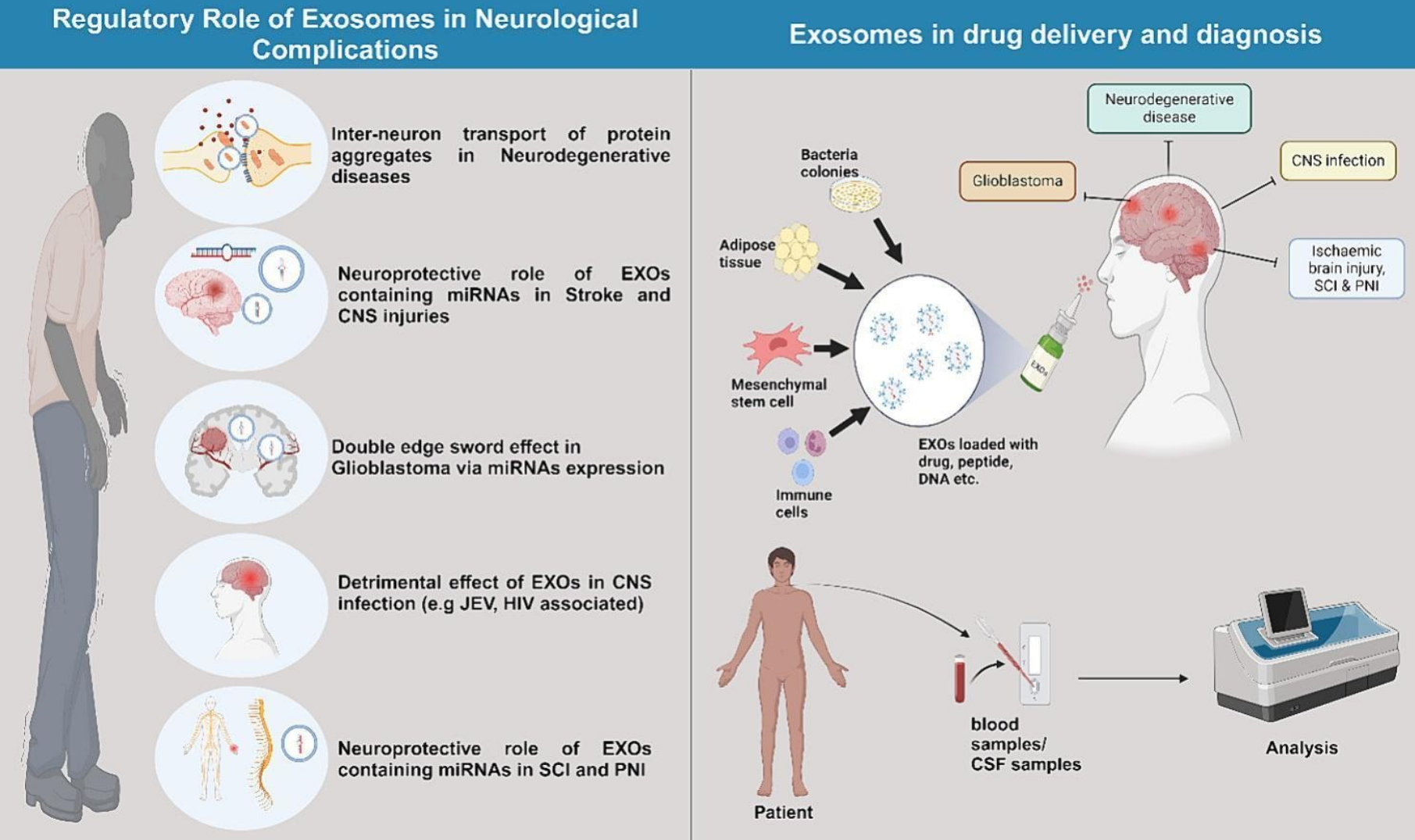
Exosomes released by neurons, glial cells, and other elements of the nervous system carry bioactive molecules such as proteins, lipids, and nucleic acids, which reflect the physiological or pathological status of their cells of origin. Importantly, brain-derived exosomes can cross the blood-brain barrier and be detected in blood, cerebrospinal fluid, and saliva, offering a valuable window into neurological processes. In neurological diseases, exosomes play dual roles. They contribute to the spread of pathological proteins such as amyloid-β, tau, and α-synuclein, but also mediate neuroprotection, immune modulation, and regenerative signaling. Moreover, their intrinsic biocompatibility and ability to cross biological barriers make exosomes promising candidates for drug delivery systems in the treatment of neurological disorders. As a result, exosome analysis is becoming a powerful tool for biomarker discovery, therapeutic monitoring, and mechanistic research.
Service at MtoZ Biolabs
MtoZ Biolabs offers a specialized Neurological Disease Exosome Research Service, supporting comprehensive exosome profiling using advanced isolation, characterization, and multi-omics platforms. Our solutions are tailored to help researchers investigate exosome functions, identify disease-associated signatures, and accelerate discovery across a wide range of neurological disorders. In addition to profiling and functional studies, we also provide customized services for exosome cargo loading and engineering, enabling the development of targeted delivery systems and functionalized vesicles for therapeutic or diagnostic applications.
Neurological Disease Exosome Research Solution at MtoZ Biolabs
🔺Alzheimer's Disease Exosome Research Service
Exosomes are central to the spread of neurotoxic proteins such as amyloid-β and phosphorylated tau in Alzheimer's disease. They also carry molecular signatures reflecting early disease stages, offering potential for non-invasive diagnosis.
🔺Parkinson's Disease Exosome Research Service
In Parkinson's disease, exosomes are involved in the intercellular transfer of α-synuclein and in neuroimmune modulation. Their detectable cargo in peripheral fluids offers valuable clues for diagnosis and disease monitoring.
🔺Huntington's Disease Exosome Research Service
In Huntington's disease, exosomes have been implicated in the propagation of mutant huntingtin protein and modulation of neuroinflammatory responses. These vesicles may serve as vehicles for disease biomarkers and therapeutic delivery.
🔺Stroke Exosome Research Service
Exosomes play a vital role in stroke pathophysiology by mediating intercellular communication between neurons, astrocytes, microglia, and endothelial cells. They participate in neuroinflammation, blood-brain barrier disruption, and post-ischemic tissue repair.
Comprehensive Exosome Analysis Services by MtoZ Biolabs
💠Exosome isolation and purification from CSF, serum, plasma, brain tissue, or neural cell models
💠Structural and molecular characterization of exosomes
💠Quantitative and qualitative analysis of exosomal cargo (proteins, miRNA, lncRNA, lipids, etc.)
💠Labeling and real-time tracking of exosomes
💠In vitro and in vivo functional assays to study the biological role of isolated exosomes in neuronal toxicity, synaptic transmission, or inflammatory modulation
Analysis Workflow

Service Advantages
✅ Advanced Analytical Platforms
We utilize state-of-the-art technologies including ultracentrifugation, size-exclusion chromatography, nanoparticle tracking analysis (NTA), transmission electron microscopy (TEM), and high-resolution mass spectrometry to ensure precise isolation, characterization, and cargo profiling of neurological exosomes.
✅ Customized Service Design
From early discovery to mechanistic exploration, we offer tailored workflows to match specific research goals, whether the research focuses on exosomal RNA, protein, lipid cargo, or engineered delivery systems.
✅ Disease-Focused Expertise
Our team possesses extensive experience in neurodegenerative and neuroinflammatory conditions, ensuring biologically relevant interpretation and integration of exosome data into disease contexts.
✅ Rigorous Quality Control
All steps—from sample processing to data delivery—are conducted under standardized protocols with stringent quality control metrics to ensure reproducibility and data integrity.
Applications
Our Neurological Disease Exosome Research Service supports a wide range of research applications:
1️⃣Biomarker Discovery: Identify circulating exosomal markers for early diagnosis and disease monitoring.
2️⃣Pathogenic Mechanism Elucidation: Explore intercellular transfer of pathological proteins (e.g., tau, α-synuclein, huntingtin) and their role in neurodegeneration.
3️⃣Therapeutic Response Assessment: Evaluate changes in exosomal content following drug treatment or gene therapy.
4️⃣Drug Delivery and Targeting: Investigate exosomes as natural carriers for CNS-targeted therapeutics.
Sample Submission Suggestions
To ensure optimal results, we recommend the following:
*Please consult us for tailored sample collection and storage protocols to maximize data quality.
Deliverables
1. Comprehensive experimental details (materials, instruments, and methods)
2. Raw data
3. Processed omics data files
4. Quality control reports (NTA, Western blot, TEM images)
5. Functional assay results
6. Bioinformatics analysis
7. Customized report based on project requirements
Exosome research is transforming the landscape of neurological disease studies by enabling minimally invasive access to the molecular complexity of the brain. MtoZ Biolabs offers comprehensive and customizable Neurological Disease Exosome Research Services to advance your understanding of neurodegeneration and therapeutic response. Contact us today to discuss your project needs.
Related Services
Exosomal Biogenesis and Identification Service
Exosomal Cargo and Loading Mechanism Service
Exosome-Based Drug Delivery Service
Exosome Antibody Development Service
How to order?




