






Alzheimer's Disease Exosome Research Service
- Ultracentrifugation
- Microfluidic device
- Size exclusion chromatography (SEC)
- Polymer-based precipitation
- Immunoaffinity capture
- Nanoparticle tracking analysis (NTA)
- Transmission electron microscope (TEM)
- Western blotting
- Flow cytometry
- Fluorescent labeling
- Bioluminescence imaging (BLI)
- Magnetic resonance imaging (MRI)
- Computed tomography (CT)
- Animal models
- Genetic engineering
- Biomarker Discovery: Identifying exosomal proteins and RNAs that distinguish AD patients from controls.
- Pathological Mechanism Investigation: Studying exosome-mediated propagation of Aβ and tau pathology.
- Neuroinflammation Research: Profiling exosomal cargo involved in glial activation and cytokine release.
- Therapeutic Evaluation: Assessing the effect of drugs or natural compounds on exosome release and content.
- Synaptic Dysfunction: Analyzing exosome influence on synaptic integrity and neurotransmission.
- Gene Regulation Studies: Examining how exosomal miRNAs and lncRNAs modulate neuronal gene expression.
- Sample Types: CSF, serum, plasma, brain tissue lysate, or cell culture media
- Volume Requirements: Minimum 500 μL for fluids, or 50 mg for tissue samples
- Storage and Transport: Store samples at −80°C and ship on dry ice; avoid repeated freeze–thaw cycles
Alzheimer's disease (AD) is a progressive neurodegenerative disorder characterized by memory loss, cognitive impairment, and behavioral disturbances. It affects millions worldwide and places a significant burden on healthcare systems and caregivers. Despite decades of research, the pathogenesis of Alzheimer's disease remains only partially understood, and effective disease-modifying therapies are still lacking.
Exosomes are critical mediators in intercellular communication within the central nervous system. In the context of Alzheimer's disease, these nano-sized extracellular vesicles, secreted by various cell types including neurons, astrocytes, and microglia, play key roles in neuronal homeostasis, inflammation, and protein aggregation. Exosomes are recognized as both biomarkers and functional agents involved in the progression and potential diagnosis of AD. Their ability to carry pathogenic proteins such as amyloid-β (Aβ) and tau, along with microRNAs and other signaling molecules, positions exosomes as central players in disease propagation and neurodegeneration. Conversely, exosomes also carry neuroprotective factors and may represent natural vehicles for brain repair.
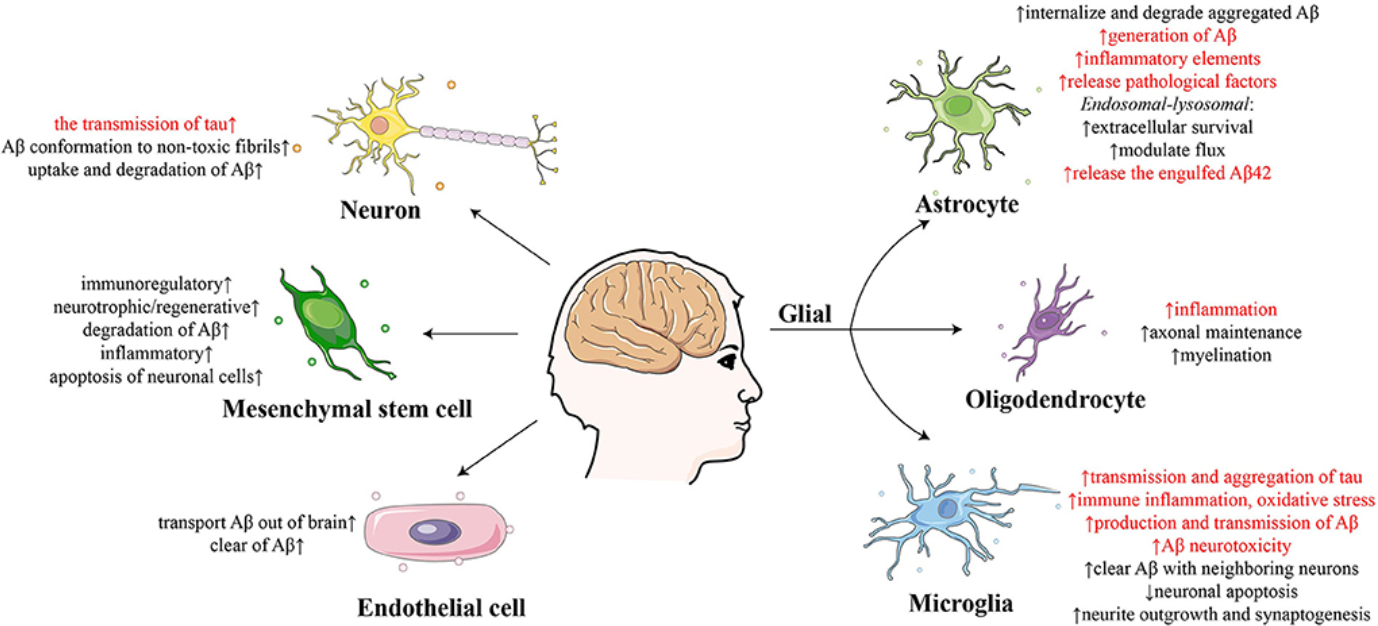
Figure 1. Summary of the Effect of Exosomes Ferived from Different Cells on the Development of Alzheimer's Disease
Service at MtoZ Biolabs
Studying exosomes derived from cerebrospinal fluid (CSF), blood, or neural cell cultures offers a minimally invasive strategy to probe the molecular landscape of Alzheimer's pathology. Multi-omics analyses of exosomal content, including proteomics, lipidomics, transcriptomics, and metabolomics, provide a comprehensive view of cellular alterations in AD. In addition, tracking the biogenesis, release, uptake, and function of exosomes can reveal novel mechanisms and therapeutic targets. MtoZ Biolabs offers a specialized Alzheimer's Disease Exosome Research Service that supports scientists in uncovering the molecular roles of exosomes in AD pathophysiology.
Our service portfolio includes:
💠Exosome isolation and purification from CSF, serum, plasma, brain tissue, or neural cell models
💠Structural and molecular characterization of exosomes
💠Quantitative and qualitative analysis of exosomal cargo (Aβ, tau, miRNA, lncRNA, lipids, etc.)
💠Labeling and real-time tracking of exosomes
💠In vitro and in vivo functional assays to study exosome-mediated neurotoxicity, synaptic loss, and immune responses
Analysis Workflow

Service Advantages
☑️Advanced Analysis Platform: MtoZ Biolabs established an advanced Alzheimer's Disease Exosome Research Service platform, guaranteeing reliable, fast, and highly accurate analysis service.
☑️Customizable Workflow Design: Offers flexible project design tailored to your experimental objectives, including biomarker discovery, liquid biopsy development, or mechanism elucidation.
☑️Expert Neuroscience Team: Projects are guided by a multidisciplinary team with expertise in neurobiology, proteomics, transcriptomics, and bioinformatics.
☑️Comprehensive Bioinformatics Support: Includes in-depth pathway analysis, molecular interaction networks, and visualization of exosomal data to facilitate biological interpretation.
Applications
Our Alzheimer's Disease Exosome Research Service can be applied to a broad range of scientific and translational research goals, including:
Sample Submission Suggestions
To ensure optimal results, we recommend the following:
*Please consult us for tailored collection and storage protocols to maximize data quality.
Deliverables
1. Comprehensive experimental details (materials, instruments, and methods)
2. Raw data
3. Processed omics data files
4. Quality control reports (NTA, Western blot, TEM images)
5. Functional assay results
6. Bioinformatics analysis
7. Customized report based on project requirements
Through our Alzheimer's Disease Exosome Research Service, researchers can unlock the potential of exosomal biology in understanding, diagnosing, and treating AD. We are committed to empowering your research with precision, flexibility, and scientific rigor. Free project evaluation, welcome to learn more details!
Related Services
Exosomal Biogenesis and Identification Service
Exosomal Cargo and Loading Mechanism Service
Exosome-Based Drug Delivery Service
Exosome Antibody Development Service
How to order?




