






Exosome-Based Drug Delivery Services
- Supplied drug candidates (e.g., siRNA, mRNA, proteins, small molecules)
- Donor cell lines or expression systems (MtoZ-recommended cell types also available)
- Project requirements including delivery goal, target molecule/tissue, delivery route, and intended application (in vitro or in vivo)
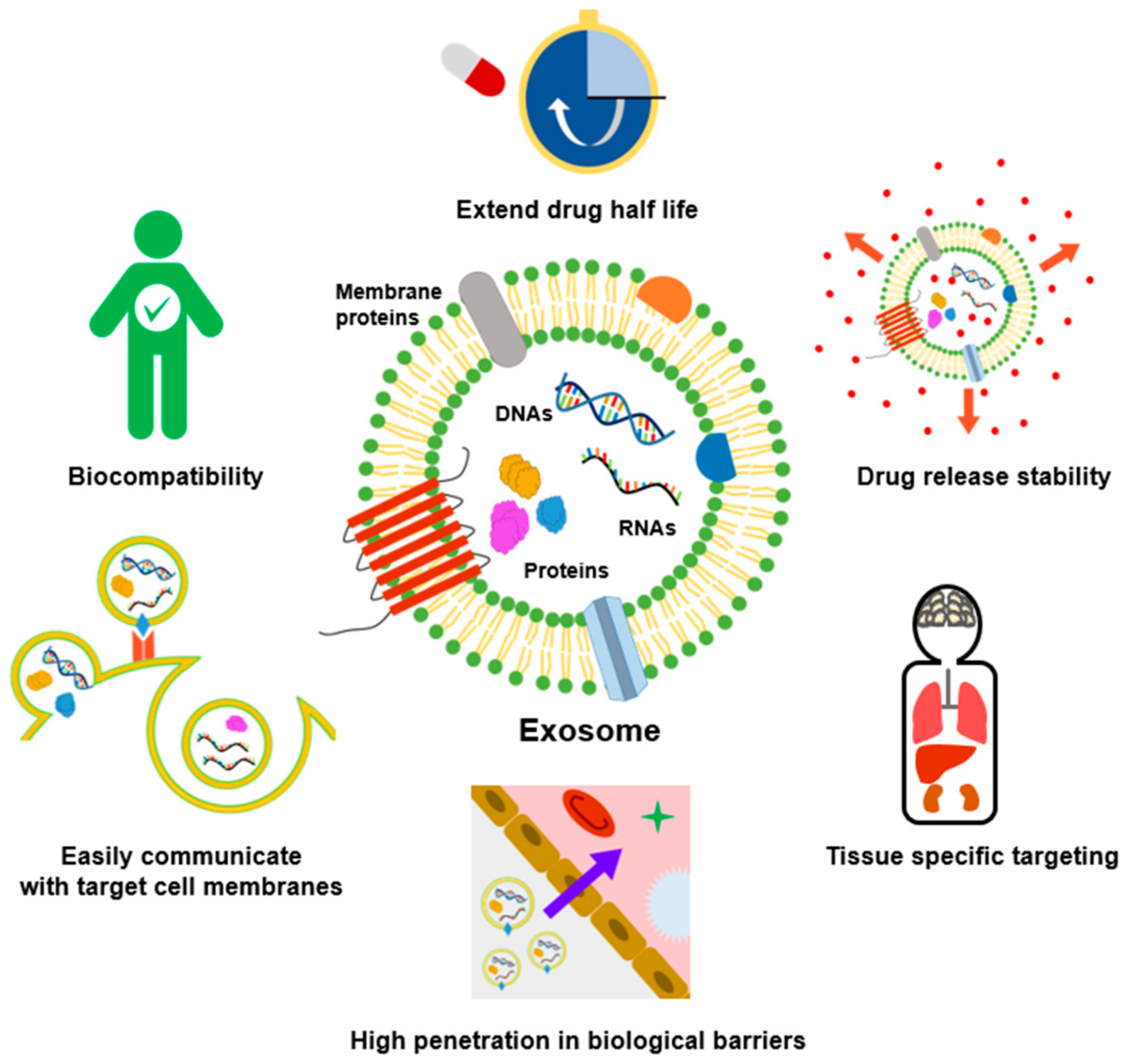
Exosomes are nanoscale membrane vesicles secreted by various cell types and are abundantly present in biological fluids such as blood, urine, and saliva. Characterized by inherent stability, excellent biocompatibility, low immunogenicity, and the ability to traverse biological barriers such as the blood-brain barrier, exosomes have emerged as promising vehicles for drug delivery. As a next-generation biopharmaceutical platform, exosomes can efficiently deliver small molecules, proteins, peptides, and a wide range of RNA species, including mRNA, siRNA, miRNA, circRNA, and antisense oligonucleotides (ASOs). This versatility makes them highly valuable for therapeutic development in oncology, neurology, and autoimmune diseases. Nevertheless, the field continues to face technical challenges such as large-scale exosome production, purification, and efficient cargo loading.
Kim, H. et al. Cancers. 2021.
Figure 1. Advantages of Exosomes in Cancer Treatment Compared to Other Nanoparticles
MtoZ Biolabs offers fully integrated Exosome-Based Drug Delivery Services leveraging its advanced exosome research infrastructure and deep expertise in drug delivery technologies. This solution encompasses drug screening, exosome cargo loading, delivery system optimization, and downstream functional validation, providing comprehensive support for both academic research and industrial translation.
Services at MtoZ Biolabs
MtoZ Biolabs offers comprehensive Exosome-Based Drug Delivery Services that integrate multiple delivery formats to support a variety of therapeutic strategies. Below are the key service modules available under this offering.
1. Exosome-Mediated Nucleic Acid Delivery
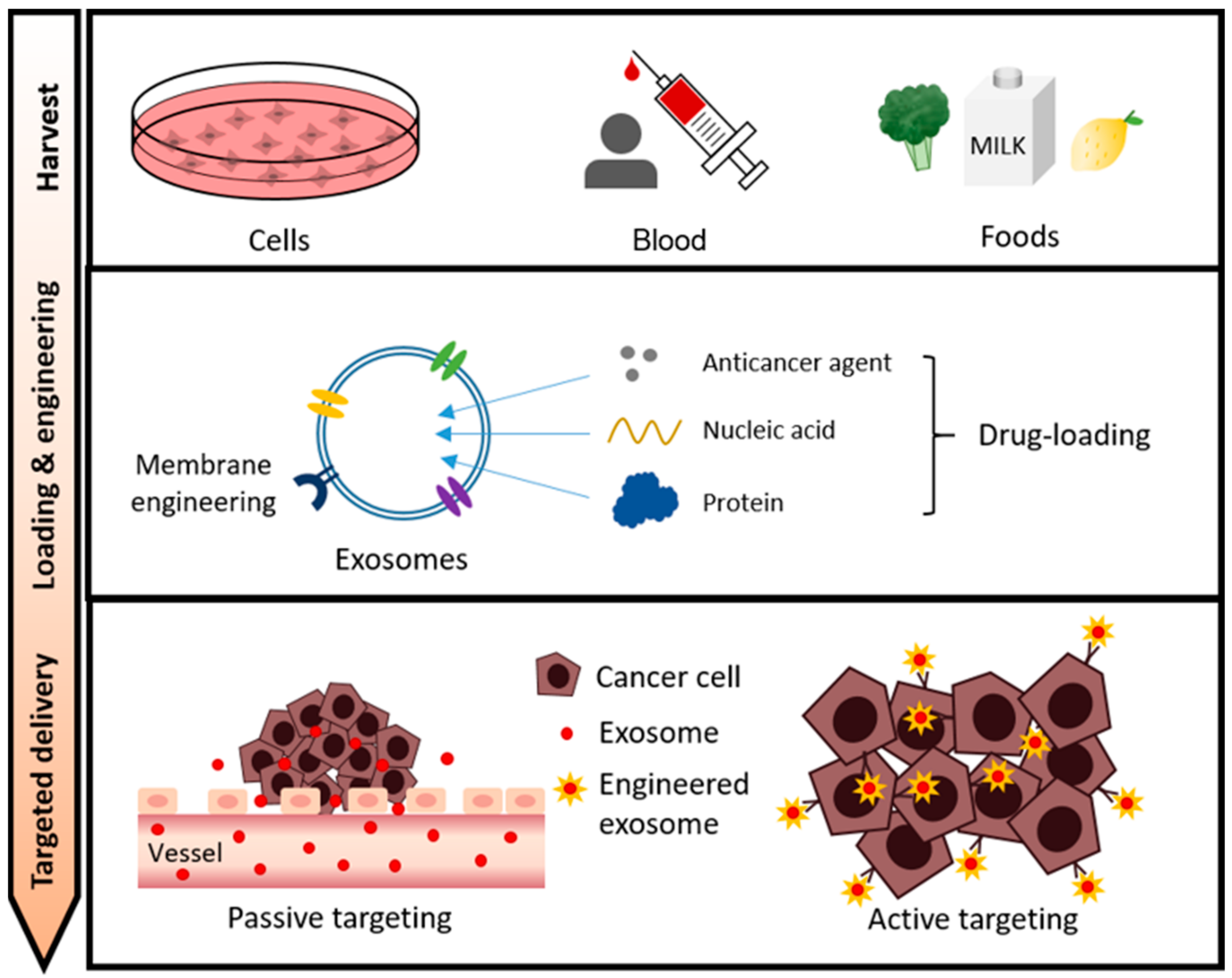
For nucleic acid-based therapeutics targeting gene expression, we provide optimized delivery solutions for multiple RNA modalities:
siRNA/miRNA Delivery: Enables efficient RNA interference and gene silencing for applications in cancer and genetic disease research.
ASO Delivery: Antisense oligonucleotides regulate specific RNA transcripts and are increasingly applied in correcting aberrant gene expression.
mRNA Delivery: Applicable in cancer immunotherapy, protein replacement therapy, and vaccine development, exosome-based mRNA delivery provides a non-viral alternative with improved safety.
circRNA Delivery: Due to their closed-loop structure, circRNAs exhibit high stability but are difficult to encapsulate. MtoZ Biolabs has developed specialized circularization vectors and delivery protocols to enhance expression efficiency.
2. Protein Delivery
We support the delivery of functional macromolecules such as enzymes, cytoskeletal proteins, and membrane proteins, enabling therapeutic applications in protein replacement and targeted modulation.
3. Small Molecule Delivery
Exosome-mediated transport enhances the bioavailability and reduces off-target toxicity of chemotherapeutic agents and natural bioactive compounds.
Kim, H. et al. Cancers. 2021.
Figure 2. The Overall Process of Exosome-Based Drug Delivery in Cancer Therapy
4. Full-Spectrum Exosome Platform Support
To address the diverse and evolving needs of our clients, MtoZ Biolabs provides end-to-end technical support, from exosome isolation and physicochemical characterization to multi-omics profiling and in vivo functional validation.
|
Comprehensive Exosome Analysis Services by MtoZ Biolabs |
|||
|
Ultracentrifugation and Microfiltration based Exosome Purification |
Classical method for enriching exosomes from large-volume samples; suitable for preparative applications. |
||
|
Size Exclusion Chromatography (SEC) based Exosome Purification |
Gentle, size-based separation preserving exosome integrity; ideal for downstream functional studies. |
||
|
High-purity isolation targeting specific exosome surface markers using antibody-conjugated platforms. |
|||
|
Physical Characterization |
Measures particle size distribution and concentration; widely used for routine exosome quality assessment. |
||
|
Provides direct visualization of exosome morphology; considered the gold standard for structural validation. |
|||
|
Enables single-particle analysis of size, concentration, and zeta potential with high precision. |
|||
|
Confirms exosome identity and purity by detecting classical (e.g., CD63) and negative (e.g., Calnexin) markers. |
|||
|
Quantifies surface proteins and distinguishes subpopulations using fluorescent antibody labeling. |
|||
|
High-sensitivity single-particle analysis of exosome size, concentration, and surface marker expression. |
|||
|
Mass spectrometry-based profiling of exosomal proteins to reveal functional content and biomarkers. |
|||
|
Identifies low-molecular-weight metabolites in exosomes to explore their metabolic roles and signatures. |
|||
|
Comprehensive analysis of lipid species involved in membrane structure and signaling. |
|||
|
High-throughput sequencing of total RNA to reveal lncRNA, miRNA, and mRNA content. |
|||
|
Fluorescent or functional labeling for exosome tracking and uptake studies. |
|||
|
Custom engineering of exosomes for targeted delivery to disease-specific tissues or cells. |
|||
|
Incorporates therapeutic cargos such as RNA, proteins, or small molecules into exosomes. |
|||
|
Exosome-Associated Adeno-Associated Virus (AAV) Vector Production |
Combines exosomes with AAV vectors to enhance gene delivery and targeting efficiency. |
||
|
Assesses cellular-level effects such as proliferation, migration, and immune modulation. |
|||
|
Evaluates biodistribution and biological activity of exosomes in animal models. |
|||
Why Choose MtoZ Biolabs?
✔ Biological Compatibility: As natural vesicles, exosomes offer superior biocompatibility and lower toxicity than synthetic nanoparticles, enabling long-term applications.
✔ Optimized Loading Efficiency: Delivery performance is enhanced through advanced strategies including electroporation, sonication, and co-incubation.
✔ High-Purity Preparation: Integration of ultracentrifugation, SEC, and immunoaffinity ensures exceptional exosome quality.
✔ Targeted Delivery Capability: Engineered surface markers allow precise delivery to target tissues or cell populations.
✔ Broad Payload Compatibility: Suitable for encapsulating RNA, proteins, and small-molecule drugs across therapeutic classes.
✔ Integrated Customization: We provide one-stop development from vesicle engineering to functional validation, supporting both basic research and translational development.
Sample Submission Suggestions
We welcome the following sample types and project requests:
Additionally, MtoZ Biolabs supports de novo system development, from exosome sourcing to therapeutic validation. A comprehensive sample submission guide is available upon request to ensure seamless project integration.
MtoZ Biolabs’ Exosome-Based Drug Delivery Services combine robust exosome production capabilities, flexible cargo-loading strategies, and validated delivery efficacy testing to empower researchers and biopharmaceutical developers in advancing next-generation therapeutics. Whether your focus is disease therapy, vaccine design, or translational drug research, we provide the tools and expertise needed to accelerate your innovation. Contact us today to design your customized exosome delivery solution.
FAQ
Q1: What are the most common therapeutic applications for exosome-based drug delivery?
Exosome delivery systems are particularly effective in oncology, neurological disorders, and immune modulation, especially for therapeutics requiring penetration of the blood-brain barrier.
Q2: How can I confirm whether my exosomes are successfully loaded with drugs?
MtoZ Biolabs provides multi-platform validation including TEM, Western blotting, NTA, and LC-MS/MS to confirm drug loading efficiency and stability.
Q3: What advantages do exosomes offer compared to traditional nanocarriers like liposomes?
Unlike synthetic nanoparticles, exosomes have native membrane structures, low immunogenicity, and high biocompatibility. They provide improved in vivo biodistribution, protect cargo from degradation, and allow surface marker-driven targeting.
Q4: Can exosome content be fully profiled to evaluate their potential as delivery vehicles?
Yes. MtoZ Biolabs offers multi-omics platforms (proteomics, lipidomics, metabolomics, transcriptomics) to comprehensively characterize exosomal content, enabling assessment of delivery potential and identification of functional molecules and biomarkers.
How to order?




