






Exosome-Mediated Small Molecule Delivery Service
- Detailed experimental reports outlining the methods and data analysis.
- Characterization results of exosome purity, size, and surface markers.
- Cargo loading efficiency and drug delivery analysis.
- Functional validation data from in vitro and in vivo assays.
- Custom reports tailored to your research needs and project goals.
Exosomes are nanoscale extracellular vesicles, naturally released by various cell types, including cancer cells, stem cells, and immune cells. These vesicles are involved in intercellular communication by transferring bioactive molecules such as proteins, lipids, mRNA, and small molecules, playing key roles in multiple physiological and pathological processes. One of the most exciting applications of exosomes is their potential as carriers for small molecule delivery. Their biocompatibility, ability to cross biological barriers, and targeted delivery capabilities make exosomes ideal vehicles for the therapeutic and diagnostic transport of small molecules.
In recent years, exosome-mediated delivery has become a powerful tool for small molecule drug delivery, enabling enhanced cellular uptake, stability, and precise targeting. This approach has garnered considerable attention for its potential in overcoming the challenges of conventional drug delivery systems, such as poor solubility, instability, and off-target effects. Exosome-based delivery offers a promising strategy for increasing the bioavailability of small molecules and enhancing therapeutic efficacy.
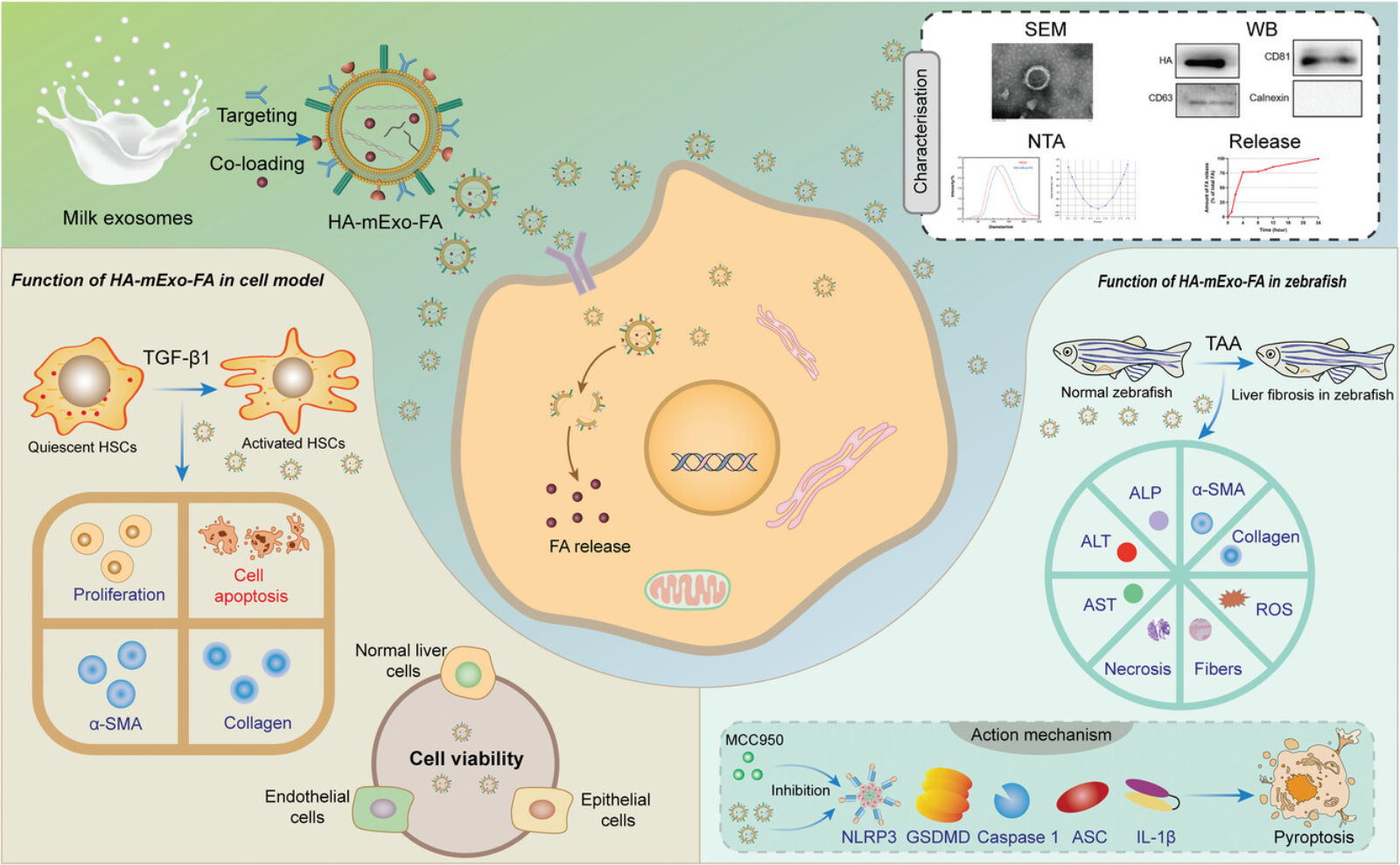
Figure 1. Schematic Representation of CD44 Targeting Drug Delivery System of Exosomes Loading FA for Treatment of Liver Fibrosis
Service at MtoZ Biolabs
MtoZ Biolabs offers Exosome-Mediated Small Molecule Delivery Service designed to optimize the use of exosomes as vehicles for targeted small molecule delivery. Our Exosome-Mediated Small Molecule Delivery Service utilizes advanced exosome isolation, cargo loading, and functionalization techniques. The service supports both basic and clinical research by providing high-quality, functionalized exosomes capable of efficiently delivering small molecule drugs, siRNAs, mRNAs, or other therapeutics directly to targeted cells or tissues.
Our service includes the following:
💠Exosome Isolation and Purification: We offer a range of isolation techniques, including ultracentrifugation, SEC, and immunoaffinity capture to ensure high-purity exosome preparations.
💠Exosome Characterization: Exosome quality and characterization are critical for ensuring the success of the delivery system. We utilize nanoparticle tracking analysis (NTA), transmission electron microscopy (TEM), and western blotting to confirm exosome size, integrity, and surface marker expression.
💠Small Molecule Loading: Our service includes the loading of small molecules such as chemotherapeutic agents, RNA therapies, and small molecules using state-of-the-art methods such as electroporation, sonication, or membrane fusion.
💠Exosome Functionalization: We modify exosome surfaces with ligands, peptides, or antibodies to enhance targeting specificity for desired tissues or cells. This is particularly useful for targeted therapies, including drug delivery to tumors or brain cells.
💠Therapeutic Validation: We conduct in vitro and in vivo functional assays to assess the efficacy and bioactivity of exosome-based delivery systems, including cell viability assays, migration assays, and drug sensitivity tests.
Service Advantages
✔️Advanced Analysis Platform
MtoZ Biolabs established an advanced Exosome-Mediated Small Molecule Delivery Service platform, guaranteeing reliable, fast, and highly accurate analysis service.
✔️Customizable Delivery Systems
Our service offers customizable exosome engineering, including surface functionalization with targeting ligands, peptides, or antibodies, to ensure that therapeutics are delivered precisely where needed.
✔️Scalable and Reproducible
MtoZ Biolabs uses optimized, scalable platforms for exosome production, ensuring that our services are suitable for both early-stage research and larger-scale therapeutic development.
✔️Comprehensive Analysis and Validation
Our service includes in-depth characterization, cargo loading efficiency assessments, and functional validation of exosome-based delivery systems, ensuring high-quality results and reliable therapeutic efficacy.
✔️Expert Scientific Support
Backed by a team of experts in exosome biology, molecular therapeutics, and drug delivery, MtoZ Biolabs offers personalized guidance and troubleshooting throughout the exosome-mediated small molecule delivery process.
Applications
1. Disease Treatment
Exosome-based small molecule delivery is used to target and treat various diseases, including cancer, neurological disorders, and cardiovascular diseases. By harnessing the natural targeting abilities of exosomes, this service ensures that therapeutic agents are delivered directly to affected tissues, improving treatment efficacy while minimizing side effects.
2. Tissue Regeneration
Exosomes play a critical role in promoting tissue repair and regeneration by delivering small molecules or growth factors to damaged tissues. This application is particularly valuable in regenerative medicine, where exosome-mediated delivery enhances wound healing, stimulates angiogenesis, and supports tissue repair after injury.
3. Immune Modulation
Exosomes can be engineered to deliver small molecules that regulate immune responses, making them effective in treating autoimmune diseases or modulating immune function in various therapies. This service allows for precise control over immune system activity by targeting specific immune cells with therapeutic agents carried by exosomes.
4. Drug Development
Exosome-mediated delivery systems are ideal for drug development and screening, offering researchers the ability to test new drug candidates in preclinical models. By delivering small molecule drugs via exosomes, researchers can evaluate their effectiveness in targeted drug delivery systems before moving on to clinical trials.
5. Metabolic Regulation
Exosomes are used to deliver small molecules that can regulate metabolic processes, offering potential treatments for metabolic disorders such as diabetes and obesity. Through exosome-mediated delivery, therapeutic agents can be directly transported to cells involved in metabolic regulation, improving treatment outcomes and targeting specific metabolic pathways.
Deliverables
MtoZ Biolabs' Exosome-Mediated Small Molecule Delivery Service offers an integrated solution, from exosome isolation and functionalization to detailed profiling and therapeutic validation. Our advanced platforms and expert team ensure high-quality and reproducible results that accelerate your research and clinical applications. For more information or to get started with our service, please contact us today to discuss your project’s specific requirements.
Related Services
|
Comprehensive Exosome Analysis Services by MtoZ Biolabs |
|||
|
Ultracentrifugation and Microfiltration based Exosome Purification |
Classical method for enriching exosomes from large-volume samples; suitable for preparative applications. |
||
|
Size Exclusion Chromatography (SEC) based Exosome Purification |
Gentle, size-based separation preserving exosome integrity; ideal for downstream functional studies. |
||
|
High-purity isolation targeting specific exosome surface markers using antibody-conjugated platforms. |
|||
|
Physical Characterization |
Measures particle size distribution and concentration; widely used for routine exosome quality assessment. |
||
|
Provides direct visualization of exosome morphology; considered the gold standard for structural validation. |
|||
|
Enables single-particle analysis of size, concentration, and zeta potential with high precision. |
|||
|
Confirms exosome identity and purity by detecting classical (e.g., CD63) and negative (e.g., Calnexin) markers. |
|||
|
Quantifies surface proteins and distinguishes subpopulations using fluorescent antibody labeling. |
|||
|
High-sensitivity single-particle analysis of exosome size, concentration, and surface marker expression. |
|||
|
Mass spectrometry-based profiling of exosomal proteins to reveal functional content and biomarkers. |
|||
|
Identifies low-molecular-weight metabolites in exosomes to explore their metabolic roles and signatures. |
|||
|
Comprehensive analysis of lipid species involved in membrane structure and signaling. |
|||
|
High-throughput sequencing of total RNA to reveal lncRNA, miRNA, and mRNA content. |
|||
|
Fluorescent or functional labeling for exosome tracking and uptake studies. |
|||
|
Custom engineering of exosomes for targeted delivery to disease-specific tissues or cells. |
|||
|
Incorporates therapeutic cargos such as RNA, proteins, or small molecules into exosomes. |
|||
|
Exosome-Associated Adeno-Associated Virus (AAV) Vector Production |
Combines exosomes with AAV vectors to enhance gene delivery and targeting efficiency. |
||
|
Assesses cellular-level effects such as proliferation, migration, and immune modulation. |
|||
|
Evaluates biodistribution and biological activity of exosomes in animal models. |
|||
How to order?




