






Starch Analysis Service
- Nutritional and Functional Roles: Starch affects food texture, digestibility, and caloric value. The amylose-to-amylopectin ratio determines gelatinization behavior and glycemic index.
- Industrial Processing: Structural characteristics influence starch performance in thickeners, emulsifiers, and coating materials.
- Plant Physiology: Studying starch biosynthesis and degradation helps explain plant metabolism and stress responses.
- Material Science Applications: Modified starches contribute to environmentally friendly biomaterials and packaging.
- Adenosine diphosphoglucose pyrophosphorylase (AGPG)
- Granule-bound starch synthase (GBSS)
- Soluble starch synthase (SSS)
- Starch branching enzyme (SBE)
- α-Amylase
- β-Amylase
- Acid sucrose invertase
- Neutral sucrose invertase
- Sucrose phosphate synthase (SPS)
- Saccharose synthase (SS)
- Starch Water Content Determination Service
- Starch Ash Content Determination Service
- Starch Crude Fat Content Determination Service
- Starch Crude Protein Content Determination Service
- Starch Digestibility Testing Service
- Starch Phosphorylation Level Determination Service
- Starch Gel Consistency Determination Service
- Starch Water Solubility Index Testing Service
- Starch Swelling Power Measurement Service
- Total Starch Content Analysis Service
- Amylose Content Determination Service
- Resistant Starch Content Determination Service
- Starch Molecular Weight Distribution Determination Service
- Starch Chain Length Distribution Determination Service
- Starch Branching Determination Service
- Starch Polymerization Degree Determination Service
- Starch X-ray Diffraction Analysis Service
- Starch Particle Size Distribution Determination Service
- Starch Crystal Structure Assay Service
- Starch Viscosity Determination Service
- Starch Gelatinization Temperature Determination Service
- Starch Thermal Stability Determination Service
- Starch Infrared Scanning Determination Service
- Starch Rheological Determination Service
- Starch Scanning Electron Microscopy Determination Service
- X-ray Diffraction Based Starch Analysis Service
- Raw data files (instrument-compatible)
- Excel or CSV data tables
- PDF report with figures and analysis
- High-resolution images (TIFF or PNG)
MtoZ Biolabs offers professional Starch Analysis Services that combine advanced biochemical, chromatographic, and physicochemical techniques to characterize starch composition, structure, enzyme activity, and functionality. Utilizing state-of-the-art analytical platforms, we provide comprehensive solutions for food science, agriculture, biomaterials, and pharmaceutical research, delivering high-precision, reproducible results to support quality control, formulation optimization, and fundamental starch research.
Background
Starch is a natural polysaccharide composed primarily of amylose and amylopectin, serving as the major energy reserve in plants. It is widely distributed in cereal grains, tubers, legumes, and roots. Beyond its nutritional role, starch is a key industrial raw material used in food processing, biodegradable plastics, adhesives, textiles, and pharmaceuticals.
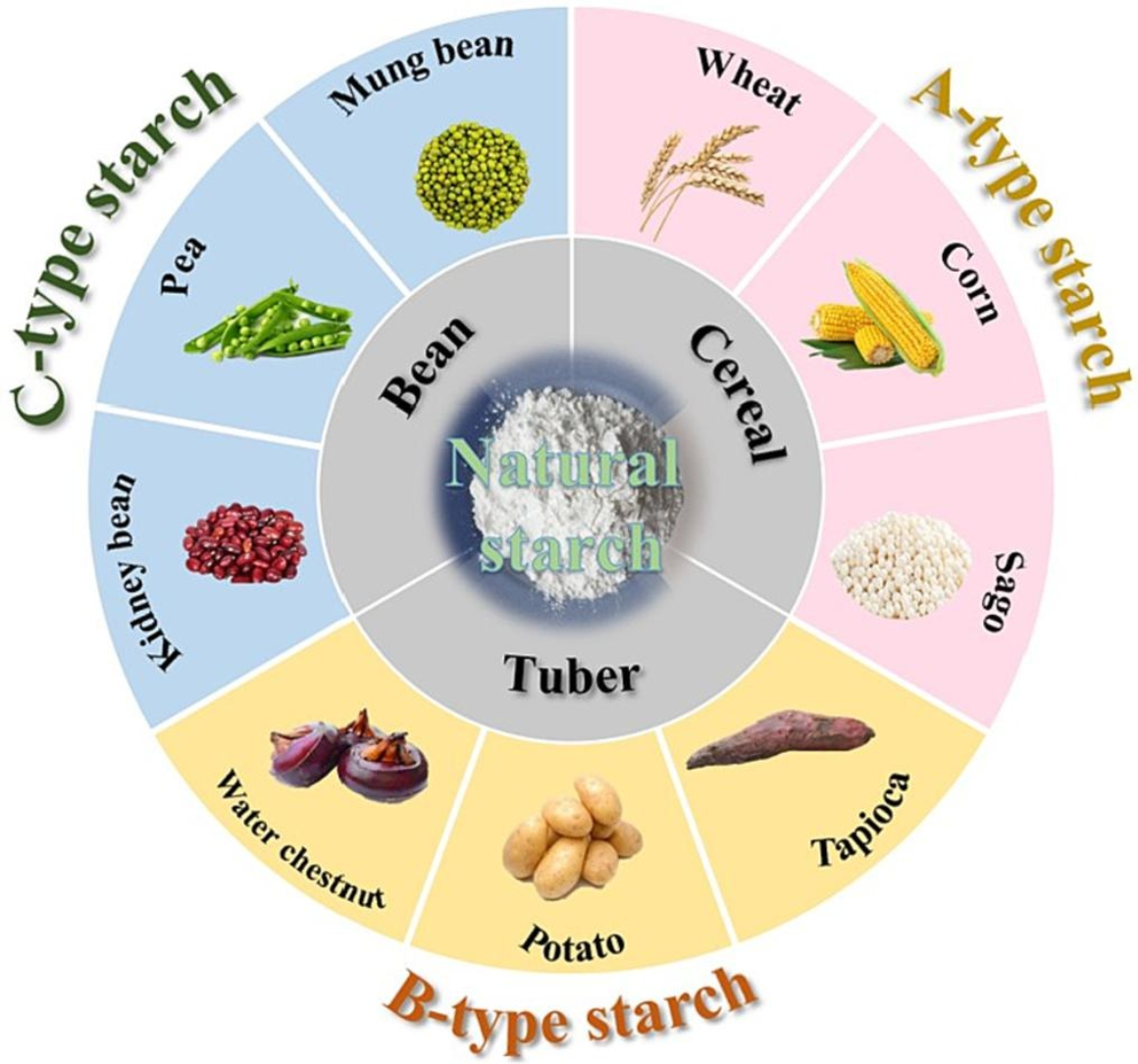
Zhu, J. et al. Food Chem X. 2024.
Figure 1. Starches and Their Crystal Types from Different Plant Sources
Understanding starch properties is essential because:
Comprehensive starch analysis provides the foundation for improving product quality, optimizing process efficiency, and advancing plant and industrial research.
Starch Analysis Service at MtoZ Biolabs
1. Starch Enzyme Activity Analysis Service
This service measures the activity of key enzymes involved in starch biosynthesis and degradation. Using spectrophotometric and chromatographic methods, we help assess enzymatic efficiency, reaction kinetics, and substrate specificity in both natural and modified starch systems. Our starch enzyme activity analysis covering, but not limited to, the following key enzymes:
2. Basic Starch Analysis Service
The Basic Starch Analysis Service focuses on the fundamental compositional and physicochemical parameters of starch. Through a combination of gravimetric, enzymatic, and spectrophotometric assays, we assess the key indicators that determine starch quality, nutritional value, and processing performance. This service provides the foundation for understanding starch’s basic characteristics and its suitability for various industrial or research applications.
Sub-services include:
3. Starch Structure Property Detection Service
This service characterizes starch molecular structure and granule morphology using high-performance liquid chromatography, mass spectrometry, X-ray diffraction, light scattering, and microscopic analysis. It provides insight into crystalline type, branching degree, and microstructural organization critical to starch performance and functionality.
Sub-services include:
4. Starch Physical And Chemical Properties Testing Service
The Starch Physical and Chemical Properties Testing Service evaluates how starch behaves under thermal, mechanical, and chemical conditions. By applying rheological, thermal, and imaging techniques, we assess starch stability, viscosity, gelatinization, and crystalline transitions. This service supports product development, quality control, and process optimization in food, biomaterial, and pharmaceutical industries.
Sub-services include:
Why Choose MtoZ Biolabs
✔️High Accuracy and Reproducibility: Supported by calibrated reference materials and strict quality control.
✔️Expert Technical Team: Specialists in carbohydrate chemistry, biochemistry, and material science.
✔️Customizable Analytical Solutions: Tailored workflows to match specific research or industrial needs.
✔️Fast Turnaround Time: Efficient project management ensuring timely data delivery.
Sample Submission Guidelines
1. Sample Types: Native or modified starches, starch-based products, and raw materials such as grains, tubers, or biopolymers.
2. Sample Quantity: At least 10 g of pure starch or 50 g of raw material for extraction.
3. Replicates: A minimum of three biological or technical replicates is recommended for reproducibility.
4. Packaging and Storage: Samples should be sealed in airtight containers, protected from moisture, and kept at ambient or refrigerated conditions as appropriate.
5. Shipping: Use dry ice or ice packs when necessary to maintain sample stability.
*Note: For samples with limited availability or specific handling requirements, please contact MtoZ Biolabs for customized submission instructions.
FAQ
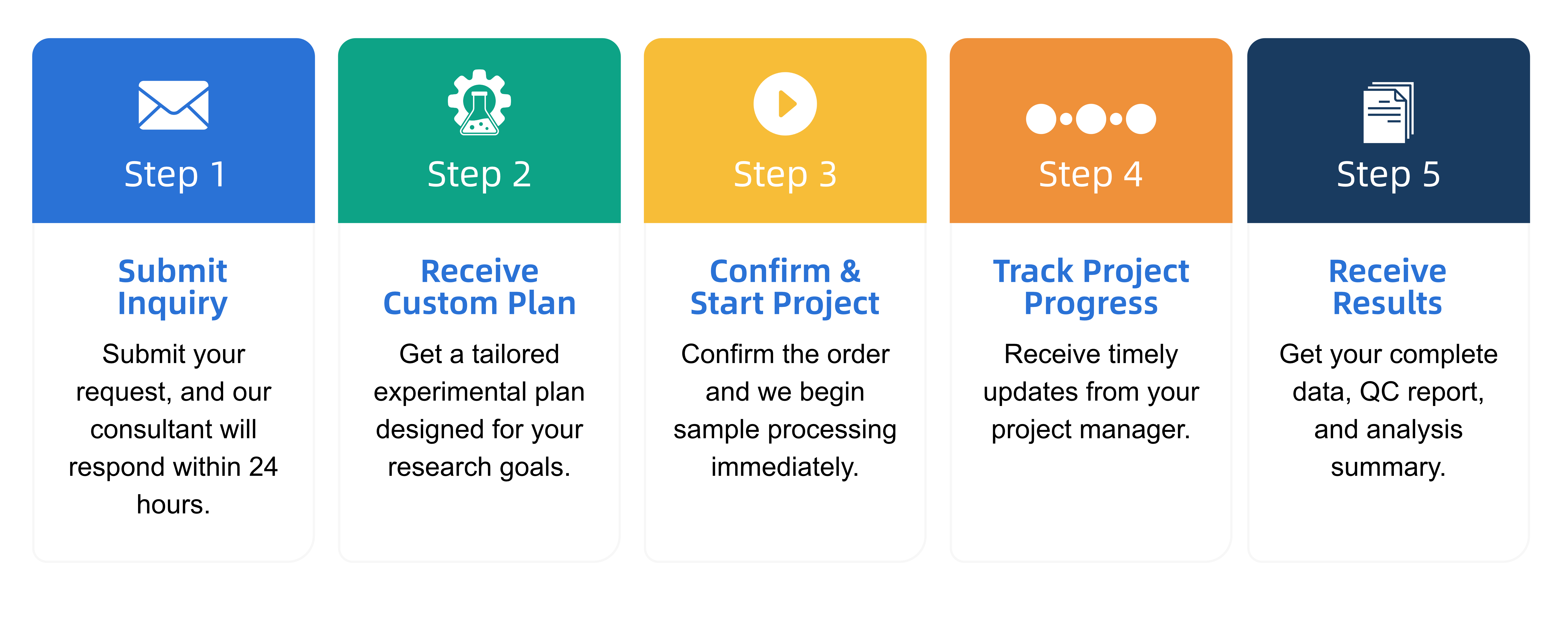
Q1: What is the service's general workflow?
Q2: What data formats are provided?
MtoZ Biolabs provides multiple standard data formats:
Q3: How should I prepare my samples?
1. Drying: Ensure samples are fully dried to remove moisture and prevent interference.
2. Grinding: Grind into a fine, uniform powder for improved homogeneity and solubility.
3. Packaging: Store in clean, sealed tubes labeled with sample ID.
4. Transport: Ship at room temperature or under cooling conditions to avoid moisture and sunlight exposure.
For more information, please refer to Sample Submission Guidelines for Proteomics and Sample Submission Guidelines for Metabolomics
Start Your Project with MtoZ Biolabs
Contact us to discuss your experimental design or request a quote. Our technical specialists are available to provide a free business assessment.
How to order?




