






Starch Structure Property Detection Service
- Dry and grind samples for uniformity
- Select enzymatic, dissolution, or dispersion treatment based on test requirements
- Choose appropriate chromatographic, diffraction, light scattering, or spectroscopic methods
- Acquire analytical data under optimized conditions
- Integrate chromatographic and spectroscopic results
- Calculate structural parameters and visualize data
- Evaluate relationships between starch structure, digestibility, and glycemic index
- Optimize formulations to improve texture and shelf stability
- Compare starch structural variations among cultivars or treatments
- Support breeding of high-amylose or high-resistant starch crops
- Study starch structure in drug release systems or biodegradable materials
- Improve crystallinity and mechanical properties of modified starch materials
- Monitor structural consistency of modified starch products
- Support formulation refinement in paper, textile, and adhesive industries
- Complete analytical report including testing conditions and methodology
- Chromatographic and spectroscopic results (XRD, HPAEC-PAD, GPC, etc.)
- Quantitative data tables and statistical analysis
- Visualized graphs and structural interpretation
- Raw data files (instrument-compatible)
- Excel or CSV data tables
- PDF report with figures and analysis
- High-resolution images (TIFF or PNG)
MtoZ Biolabs provides starch structure property detection service using multiple analytical techniques, including high-performance liquid chromatography, mass spectrometry, X-ray diffraction, light scattering, and microscopic analysis. This service systematically characterizes the structural and physicochemical properties of starch samples from different sources and modification methods. It is widely applied in food science, crop breeding, biomaterials, and pharmaceutical research, helping clients comprehensively understand starch molecular structure, aggregation behavior, and functional performance. The results provide reliable data support for product development, quality improvement, and scientific research.
Through an integrated analytical platform, MtoZ Biolabs helps clients:
● Quantitatively analyze starch composition and structural features
● Reveal the effects of processing or modification on starch structure and performance
● Evaluate starch functionality in food processing, nutrient absorption, and material applications
What Is the Starch Structure Property
Starch structure property refers to the combined characteristics of starch molecular composition, chemical structure, and physical behavior. These properties determine gelatinization, solubility, and viscosity, directly influencing starch performance in food processing, energy metabolism, and biomaterial development.
The structural properties of starch mainly depend on the ratio of amylose to amylopectin, molecular weight distribution, chain length, and branching degree. Variations in these parameters cause changes in crystallinity, particle size, and resistant starch content, affecting digestibility, physical stability, and textural quality. Systematic measurement of these features provides insight into starch functionality and potential applications.
Starch Structure Property Detection Service at MtoZ Biolabs
MtoZ Biolabs integrates multiple analytical platforms to provide a comprehensive starch structure and property detection service. The analysis includes but is not limited to the following items:
Workflow of Starch Structure Property Detection Service
1. Sample Preparation and Pretreatment
2. Multi-platform Detection
3. Data Processing and Calculation
4. Report Compilation
Deliver a comprehensive report with figures, tables, and detailed interpretations
Why Choose MtoZ Biolabs
1. Comprehensive analytical platform
Integration of chromatographic, mass spectrometric, diffraction, and optical techniques for complete starch analysis.
2. High accuracy and reproducibility
Equipped with international standard instruments ensuring sensitivity and precision.
3. Experienced scientific team
Specialists in carbohydrate structural characterization with in-depth knowledge of starch analysis.
4. Flexible customized solutions
Tailored detection strategies based on sample type and research objectives.
5. Rigorous quality control
All experiments follow standardized protocols ensuring reliable and traceable data.
Applications of Starch Structure Property Detection Service
1. Food Science and Nutrition Research
2. Agricultural and Crop Breeding Research
3. Pharmaceutical and Biomaterial Research
4. Industrial and Process Optimization
Sample Submission Guidelines
| Sample Type | Native starch samples | Modified starch samples | Composite or blended starch materials | Fermentation or bio-based starch samples |
| Recommended Amount | ≥ 2 g dry powder | ≥ 2 g dry powder | ≥ 3 g dry powder | ≥ 2 g dry powder |
Sample Requirements: Samples must be dry, uniform, and free from impurities. Clearly label each sample with ID, source, and treatment details. Use dry ice or ice packs during transportation to maintain sample stability.
Deliverables
FAQs
Q1: What types of samples are suitable?
MtoZ Biolabs accepts starch samples from plant, food, or industrial sources, including native starch, modified starch, fermentation products, and composites. Samples should be dry powders or clear solutions free from impurities.
Q2: What is the service's general workflow?
Q3: What data formats are provided?
MtoZ Biolabs provides multiple standard data formats:
Q4: How should I prepare my samples?
1. Drying: Ensure samples are fully dried to remove moisture and prevent interference.
2. Grinding: Grind into a fine, uniform powder for improved homogeneity and solubility.
3. Purity: Avoid contamination from lipids, proteins, or salts.
4. Packaging: Store in clean, sealed tubes labeled with sample ID.
5. Transport: Ship at room temperature or under cooling conditions to avoid moisture and sunlight exposure.
For more information, please refer to Sample Submission Guidelines for Proteomics and Sample Submission Guidelines for Metabolomics
Start Your Project with MtoZ Biolabs
The structural properties of starch determine its physicochemical characteristics and functional applications. With advanced analytical platforms and a professional technical team, MtoZ Biolabs provides precise and comprehensive starch structure property detection services for research and industry clients. For more information or a customized quotation, please contact us.
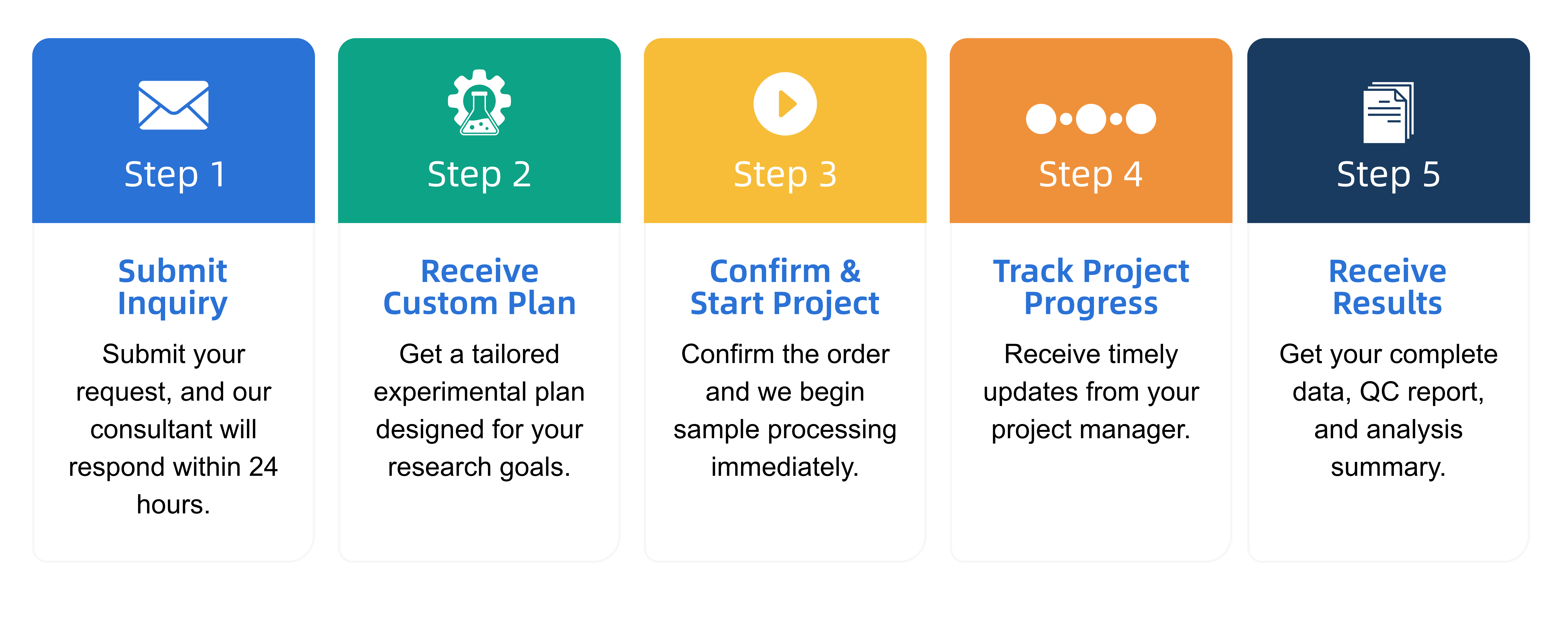
How to order?




