






Amylose Content Determination Service
Amylose is a linear glucose polymer mainly connected by α-1,4 glycosidic bonds. Its content and structural characteristics directly affect starch properties such as gelatinization, gel strength, viscosity, digestion rate, and the texture and stability of final products. The amylose content is not only a key indicator for evaluating starch characteristics but also a critical parameter for assessing food texture, pharmaceutical excipient performance, and the processability of biomaterials.
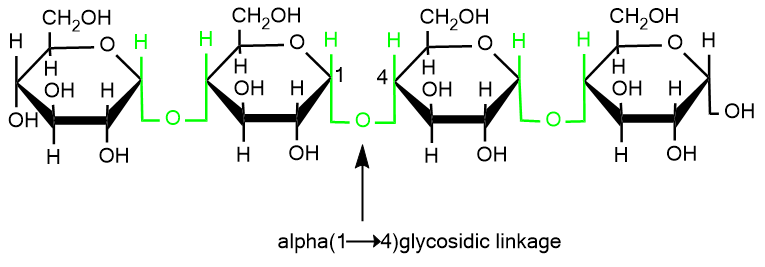
Figure1. Structure of Amylose
In the food industry, the ratio of amylose is closely related to rice texture, noodle elasticity, and gel formation. In pharmaceutics, it influences tablet disintegration and drug release. In biodegradable plastics, amylose structure determines material plasticity and mechanical strength. Therefore, accurate determination of amylose content is essential for research, formulation development, and quality control.
Based on advanced spectroscopic and enzymatic analysis platforms, MtoZ Biolabs has established an internationally standardized Amylose Content Determination Service offering accurate and reproducible amylose quantification through integrated colorimetric, spectrophotometric, and enzymatic methods to support reliable evaluation and optimization across the food, pharmaceutical, and biomaterials industries.
Services at MtoZ Biolabs
MtoZ Biolabs provides amylose content determination service based on the iodine colorimetric method combined with modern spectroscopic detection. Our service covers both raw materials and finished products, ensuring accurate data at all stages of R&D and production. If you are interested in our service, please contact us at any time.
Analysis Workflow
1. Sample Pretreatment and Extraction
Samples such as grain powder, plant tissue, modified starch, and composites are homogenized and defatted to remove proteins, lipids, and other interfering substances, ensuring a stable and clean reaction system.
2. Starch Separation and Dissolution
Heat or alkali treatment is applied to fully dissolve starch granules, allowing amylose and iodine molecules to form inclusion complexes for complete reaction measurement.
3. Iodine-Amylose Complex Formation
Amylose combines with iodine molecules to form a blue complex. The absorbance intensity is proportional to the amylose concentration and can be used for quantitative determination at specific wavelengths.
4. Spectrophotometric Measurement
The absorbance of the blue complex is measured at 620 nm or 680 nm using a spectrophotometer, and the amylose content is calculated from the standard curve.
5. Result Calculation and Correction
A calibration curve is established using standard starch samples, and the final amylose percentage is calculated considering factors such as moisture, blanks, and sample dry weight.
Service Advantages
1. Internationally Standardized Methodology
MtoZ Biolabs strictly follows AOAC and AACC international standards, combining iodine colorimetry and enzymatic assistance for quantitative analysis. By using standard curves and multiple replicates, we ensure traceable and reproducible data that meet global quality requirements.
2. Broad Sample Compatibility
Our amylose content determination service accommodates a wide range of samples including cereal flour, plant roots, food ingredients, pharmaceutical excipients, and biodegradable materials. Whether the starch is native, modified, or part of a composite matrix, we select the most suitable analytical approach.
3. High Sensitivity and Precision
Using high-performance spectrophotometry and refined enzymatic reaction systems, our method achieves microgram-level amylose quantification. Optimized extraction and reaction conditions reduce background noise and minimize interference, ensuring accurate and consistent results.
Applications
✔️ Food Industry: Evaluate amylose-to-amylopectin ratios in rice, wheat, corn, and starch products to optimize texture and processing characteristics.
✔️ Agricultural and Breeding Studies: Compare amylose accumulation and quality traits among different crop varieties or genetic lines.
FAQs
Q1. What is the difference between amylose content and total starch content?
Total starch represents the entire starch content in a sample, while amylose refers to the linear fraction of starch, typically accounting for 10% to 35% of the total. Its ratio determines starch gelatinization behavior and physical properties.
Q2. How long does the testing process take?
Standard analysis typically takes three to five working days. Bulk or special samples may require additional time.
Q3. What factors affect the measurement results?
Sample moisture, protein residues, lipid content, and extraction temperature may influence color intensity. We optimize the pretreatment process based on sample type to minimize these effects.
Q4. Can the results be used for regulatory submission or publication?
Yes. All reports comply with international laboratory standards and can be used for product registration, scientific publication, or quality certification.
Sample Submission Suggestions
1. Provide at least 5 grams of dry powdered sample. Liquid samples may also be accepted when applicable.
2. Samples should be sealed and protected from humidity and heat during storage and shipment.
3. Include sample information such as source, type, and intended application.
4. For complex or unknown samples, a preliminary evaluation may be performed.
5. All samples are registered, stored, and processed according to standardized GLP-compliant workflows.
Deliverables
1. Description of analytical methods and testing conditions
2. Standard curve and raw spectral data
3. Calculated amylose content (dry and as-is basis)
4. Quality control and repeatability validation results
5. Data analysis and interpretation
6. PDF and Excel report files for research, registration, or quality documentation
Contact MtoZ Biolabs to learn more about our amylose content determination service and let our team become your trusted partner in research and quality assessment.
How to order?




