






Starch Molecular Weight Distribution Determination Service
Starch is one of the most abundant storage polysaccharides in nature, widely found in cereals, tubers, and legumes. It serves as an important raw material in food, pharmaceutical carriers, packaging materials, and biodegradable polymers. The physicochemical properties of starch, such as viscosity, gelatinization behavior, stability, and processability, are closely related to its molecular structure. Among these, molecular weight and its distribution are key indicators reflecting the complexity of starch structure, degree of branching, and polymerization characteristics.
The molecular weight distribution of starch determines its behavior under thermal, enzymatic, and mechanical processing conditions and directly affects its functional and nutritional properties. For instance, high-molecular-weight fractions enhance gel strength and retrogradation resistance, while low-molecular-weight fractions influence solubility and gelatinization rate. Therefore, accurate determination of starch molecular weight distribution is essential for understanding structure–property relationships, optimizing starch modification processes, and developing functional starch-based products.
MtoZ Biolabs provides professional Starch Molecular Weight Distribution Determination Service based on advanced chromatographic and molecular weight analysis platforms. Through precise molecular weight measurements, we help clients reveal structural variations and functional characteristics of starch samples, providing reliable data support for food science, agricultural breeding, and material development.
Technical Principles
MtoZ Biolabs performs starch molecular weight distribution determination service using Gel Permeation Chromatography (GPC) or Size Exclusion Chromatography (SEC). This method is based on the physical size exclusion principle, separating molecules according to their ability to enter the pores of the chromatographic packing material. When the sample solution passes through a column packed with porous gel particles, large molecular weight molecules are excluded from the pores and elute earlier, whereas smaller molecules can penetrate the pores more deeply and elute later.
By recording the elution volume and signal intensity of each fraction and comparing them to calibration curves established with known molecular weight standards, the weight-average molecular weight (Mw), number-average molecular weight (Mn), and polydispersity index (PDI = Mw/Mn) can be calculated. These parameters characterize the degree of polymerization and molecular homogeneity of the starch sample.
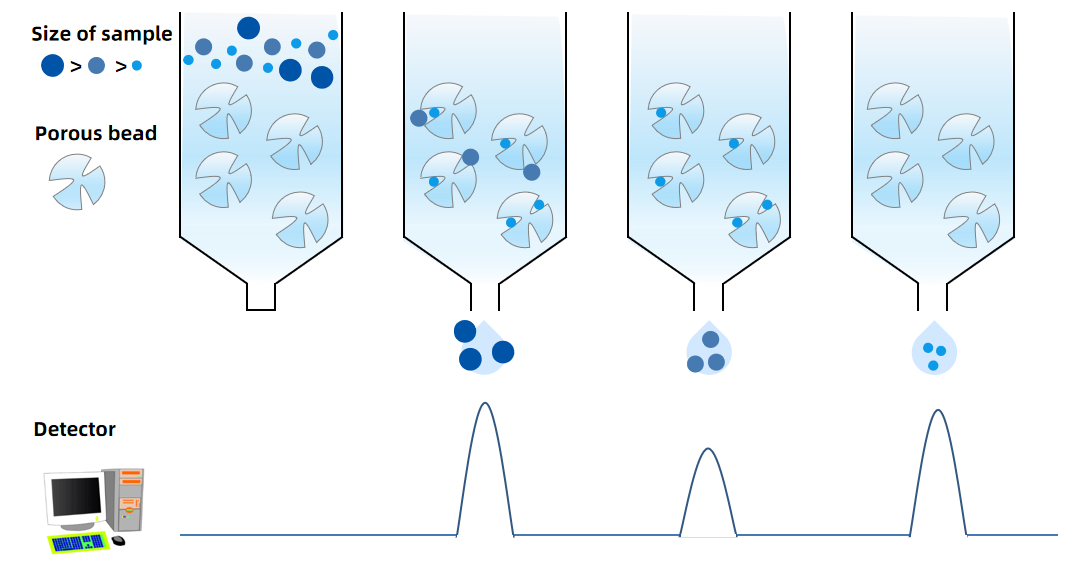
Figure 1. Starch Molecular Weight Distribution Determination by GPC
MtoZ Biolabs employs a high-resolution chromatographic system equipped with a Refractive Index Detector (RI) and a Multi-Angle Light Scattering Detector (MALS). This configuration enables absolute molecular weight quantification without damaging the molecular structure of the sample.
Services at MtoZ Biolabs
MtoZ Biolabs provides a comprehensive starch molecular weight distribution determination service covering all stages from sample preparation to data reporting. Our main services include:
1. Molecular weight distribution determination: Accurate quantification of Mw, Mn, and PDI using GPC/SEC and generation of molecular weight distribution curves.
2. Amylose and amylopectin ratio estimation: Interpretation of the proportion of linear and branched starch components based on dissolution behavior and chromatographic peak patterns.
3. Comparative analysis between samples: Evaluation of molecular weight variations among starches from different plant sources or processing conditions.
4. Modification efficiency assessment: Verification of structural changes induced by chemical, physical, or enzymatic modification of starch.
Analysis Workflow
1. Sample Preparation
Homogenize the sample and perform gelatinization and dissolution to ensure full molecular unfolding.
2. Filtration
Remove insoluble impurities to maintain solution clarity and system stability.
3. Chromatographic Separation
Use a dedicated GPC/SEC column to separate molecules according to hydrodynamic volume differences.
4. Signal Detection
Record the elution profiles using RI and MALS detectors to obtain concentration and molecular weight data.
5. Data Processing and Analysis
Establish calibration curves and calculate Mw, Mn, and PDI to generate distribution curves and statistical summaries.
Service Advantages
1. High-Precision Measurement
MtoZ Biolabs utilizes high-resolution GPC systems coupled with multi-angle light scattering (MALS) detection to achieve absolute molecular weight quantification without relying on empirical standards. The system offers high sensitivity and a wide linear range, ensuring accurate and comparable results across diverse samples.
2. Non-Destructive Analysis
GPC/SEC is based purely on physical size exclusion rather than chemical reactions or ion exchange, preserving the natural structure of starch molecules. This non-destructive approach ensures that the measured data accurately reflect the native molecular architecture.
3. Excellent Reproducibility
From sample preparation to chromatographic operation, each analytical step follows standardized procedures. Strict control of analytical parameters ensures high reproducibility and consistency across different batches, with complete quality control documentation provided.
4. Broad Applicability
The starch molecular weight distribution determination service is suitable for native starch, amylose, amylopectin, and various modified starches. It accommodates samples from cereals, tubers, legumes, and chemically or enzymatically treated starches, delivering reliable and precise analytical outcomes.
Applications
✔️ Food Science Research: Evaluate starch structural changes and their effects on gelatinization and gel formation under different processing conditions.
✔️ Agricultural Breeding and Raw Material Screening: Compare molecular weight characteristics among starches from different cultivars or species.
✔️ Modified Starch Development: Assess the impact of chemical or enzymatic modification on molecular weight distribution and functional properties.
✔️ Biomaterial Research: Study the relationship between starch-based biodegradable material structure and mechanical properties.
✔️ Quality Control: Support batch consistency evaluation and process monitoring in starch production.
Sample Submission Suggestions
|
Item |
Requirement |
|
Sample Type |
Clients may submit purified starch samples or raw materials (such as grains, tubers, or legumes). Starch extraction can be performed by MtoZ Biolabs as an additional paid service. |
|
Biological Replicates |
Each sample should include at least three biological replicates to ensure statistical reliability. |
|
Sample Amount |
Starch sample: ≥ 1 g Raw material: ≥ 50 g (for starch extraction) |
|
Sample Preparation |
Place samples in tightly sealed tubes labeled with sample name, concentration, and preparation date. Seal the tube with Parafilm to prevent leakage. Secure tubes within 50 mL centrifuge tubes and seal them inside protective bags for transport. |
|
Storage and Transportation |
Ship samples on dry ice or ice packs and avoid repeated freeze-thaw cycles. Samples should be protected from heat, moisture, and vibration to maintain structural integrity and analytical accuracy. |
Deliverables
1. Molecular weight distribution curves of starch samples
2. Quantitative parameters including Mw, Mn, and PDI
3. Calibration curves and quality control documentation
4. Analytical report including experimental conditions, methodology, and result interpretation
5. Optional data comparison and visualization charts between samples
Contact us to learn more about MtoZ Biolabs' starch molecular weight distribution determination service and discover how precise molecular characterization can accelerate your research and innovation.
How to order?




