






Starch Polymerization Degree Determination Service
- Accurately determine the polymerization degree and chain length distribution of amylose and amylopectin
- Compare molecular structural changes under different processing and modification conditions
- Evaluate the relationship between starch structure and its nutritional, gelatinization, and digestibility properties
- Amylose: A linear polysaccharide formed by α-1,4 glycosidic bonds
- Amylopectin: A branched polysaccharide formed by α-1,4 and α-1,6 glycosidic bonds
- Suitable for detecting short- and medium-chain amylopectin with a measurable DP range of 6–76
- Particularly effective for analyzing branch-length distribution
- Covers a DP range from several tens to several thousand
- Suitable for analyzing the overall distribution of both amylose and amylopectin
- Raw chromatographic data files (instrument-compatible)
- Excel or CSV data tables
- PDF report with figures and interpretation
- High-resolution images in TIFF or PNG formats
- Drying: Fully dry samples to remove moisture. Wet samples may affect chromatographic separation and signal accuracy.
- Grinding: Grind samples to fine powder for uniformity and better dissolution.
- Purity: Avoid contamination from lipids, salts, or proteins.
- Packaging: Store in clean tubes or bottles with sealed caps and proper labeling.
- Storage and Transport: Keep samples dry and protected from light. Ship at ambient temperature or with cooling packs if necessary.
MtoZ Biolabs provides starch polymerization degree determination service using multiple analytical platforms, including high-performance anion exchange chromatography (HPAEC-PAD/ICS) and gel permeation chromatography (GPC/SEC). This service analyzes the degree of polymerization (DP) and chain length distribution of starch samples from various sources and treatment conditions. It is widely applicable in food science, crop breeding, biomaterials, and pharmaceutical research, helping clients to understand starch molecular structure characteristics and their influence on physicochemical properties. The results support product development, quality control, and functional optimization with reliable structural data.
Through systematic molecular characterization, MtoZ Biolabs helps clients:
What Is Starch Polymerization Degree
The starch polymerization degree (DP) refers to the number of glucose units that make up a starch molecule, representing its chain length and structural complexity. Depending on the linkage type between glucose residues, starch can be classified as:
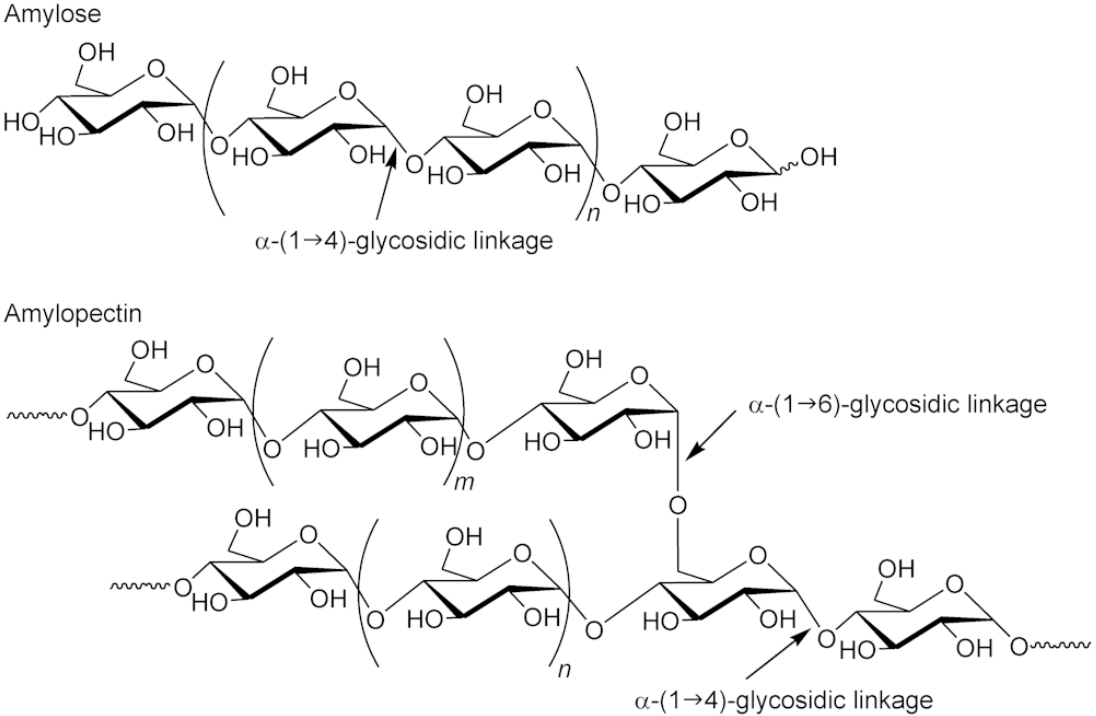 Kadokawa, JI. et al. Polymers. 2012.
Figure 1. The Structure of Amylose and Amylopectin
The degree of polymerization directly affects starch crystallinity, gelatinization properties, and digestion rate. Measuring DP provides insight into molecular structure and distribution, serving as a foundation for studying starch processability, nutritional functionality, and material performance.
Starch Polymerization Degree Determination Service at MtoZ Biolabs
MtoZ Biolabs employs a dual-platform analytical strategy combining enzymatic hydrolysis, chromatographic separation, and multidimensional data modeling to achieve precise molecular characterization of starch.
1. High-Performance Anion Exchange Chromatography (HPAEC-PAD or ICS)
2. Gel Permeation Chromatography (GPC or SEC)
By integrating these complementary techniques, MtoZ Biolabs provides complete and reliable starch molecular structure information, including both amylopectin branch length and amylose polymerization profiles.
Workflow of Starch Polymerization Degree Determination Service
1. Sample Preparation and Pretreatment
2. Chromatographic Separation
3. Data Analysis and Calculation
4. Report Generation
Why Choose MtoZ Biolabs
1. Dual-Platform Analytical Capability
Combines HPAEC-PAD and GPC technologies for comprehensive short- and long-chain detection
2. High Sensitivity and Resolution
Ensures precise signal detection and clear peak separation
3. Experienced Analytical Team
Experts in polysaccharide and carbohydrate structure analysis ensure accurate data interpretation
4. Customized Analytical Solutions
Flexible parameter settings to meet diverse research and industrial needs
Applications of Starch Polymerization Degree Determination Service
1. Food Science and Nutrition Research
2. Crop Genetics and Breeding Research
3. Plant Metabolism and Physiology
4. Pharmaceutical and Material Science
5. Industrial and Applied Research
Sample Submission Guidelines

Deliverables
1. Complete experimental report
2. Polymerization degree distribution and chain-length profile charts
3. Quantitative data tables
4. Visualized plots and structural interpretation
5. Optional comparative and interpretation report
FAQs
Q1: What Types of Samples Are Suitable?
MtoZ Biolabs accepts a variety of starch sources, including plant-derived starch, modified industrial starch, fermentation products, and starch-containing composites. Samples should be dry powder or solution without interfering substances.
Q2: What Is the Service's General Workflow?
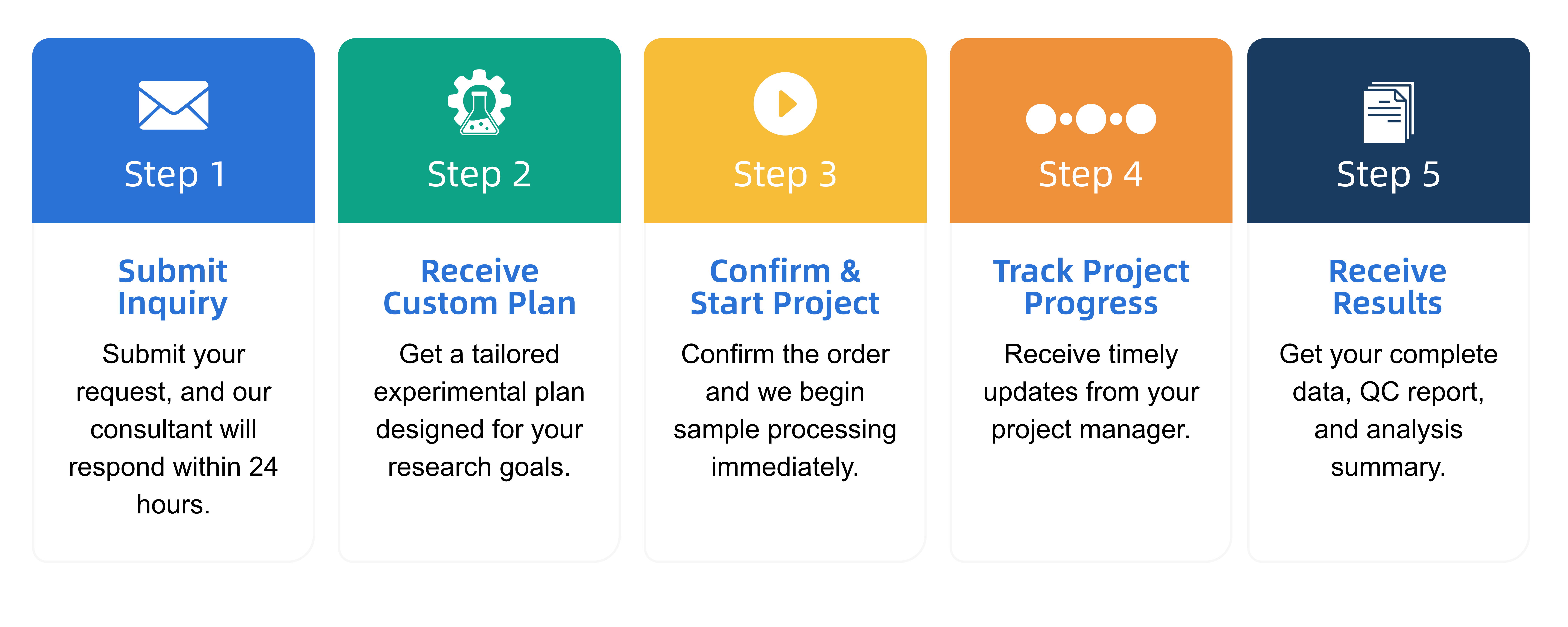
Q3: What Data Formats Are Provided?
MtoZ Biolabs provides results in standard formats, including:
Q4: How Should I Prepare My Samples?
To ensure accurate and reproducible results, follow these guidelines:
For more information, please refer to Sample Submission Guidelines for Proteomics and Sample Submission Guidelines for Metabolomics
If you are unsure about your sample preparation, our technical team can provide personalized pre-analysis consultation and a sample submission guide to help you optimize preparation and shipping conditions.
Start Your Project with MtoZ Biolabs
The polymerization degree of starch is a key factor influencing its physicochemical properties, processing performance, and bioavailability. With advanced chromatographic platforms and a professional analytical team, MtoZ Biolabs provides precise and reproducible starch polymerization degree determination services for research institutions and industrial clients. For more details or customized quotations, please contact us.
How to order?




