






Starch Crude Protein Content Determination Service
- Experimental Details: Methodology, instrumentation, and analytical conditions.
- Raw Data Files: Nitrogen determination records, titration data, or chromatograms, among others.
- Graphical Outputs: Comparative protein content charts, calibration curves, and statistical summaries.
- Final Analytical Report: Detailed results with interpretation, purity assessment, and recommendations for process optimization.
Starch is one of the most important natural biopolymers, serving as a versatile raw material across food, pharmaceutical, and biomaterial industries. Although starch is primarily composed of amylose and amylopectin, it naturally contains trace amounts of non-carbohydrate components such as proteins, lipids, and minerals. Among these, crude protein plays a crucial role in determining the physicochemical characteristics, purity, and functional behavior of starch.
The crude protein content of starch refers to the total proteins, peptides, and other nitrogen-containing compounds that are physically entrapped or chemically bound within the starch granule matrix. These proteins may originate from residual enzymes, granule-bound proteins, or storage proteins associated with the starch source. Their presence can significantly influence the thermal, rheological, and functional properties of starch, affecting gelatinization, retrogradation, viscosity, and film formation. Accurate determination of starch crude protein content is essential for evaluating starch purity, understanding the relationship between structure and function, and ensuring compliance with food and industrial quality standards.
Service at MtoZ Biolabs
MtoZ Biolabs provides a precise and standardized Starch Crude Protein Content Determination Service that is designed to quantify total nitrogen and calculate protein concentration using validated analytical methods. Combining classical techniques such as the Kjeldahl and Dumas combustion methods with advanced detection systems, our service offers high accuracy, reproducibility, and comprehensive data interpretation tailored to diverse research and production needs.
Technical Principles
The determination of crude protein content in starch is based on the measurement of nitrogen content, as proteins are the main nitrogen-containing compounds in biological materials. Two main analytical principles are applied depending on the sample type and analytical goal.
💠Kjeldahl Method (Wet Digestion and Titration)
This classical technique involves three steps: digestion, distillation, and titration. The starch sample is digested with concentrated sulfuric acid and catalysts, converting nitrogen into ammonium sulfate. After neutralization and distillation, the released ammonia is absorbed and quantified by titration. The total nitrogen content is then multiplied by a conversion factor (commonly 6.25 for starch) to determine crude protein content.

Source: Wikipedia
Figure 1. Schematic Diagram of the Kjeldahl Method
💠Dumas Combustion Method (Nitrogen Gas Analysis)
The sample is combusted at high temperature in the presence of oxygen, converting all nitrogen into nitrogen gas (N2). The gas is then measured using a thermal conductivity detector. This method is rapid, solvent-free, and suitable for high-throughput or automated analysis.
Both methods yield reliable results, with the choice depending on precision requirements, sample amount, and application field. MtoZ Biolabs employs both systems to ensure analytical flexibility and accuracy.
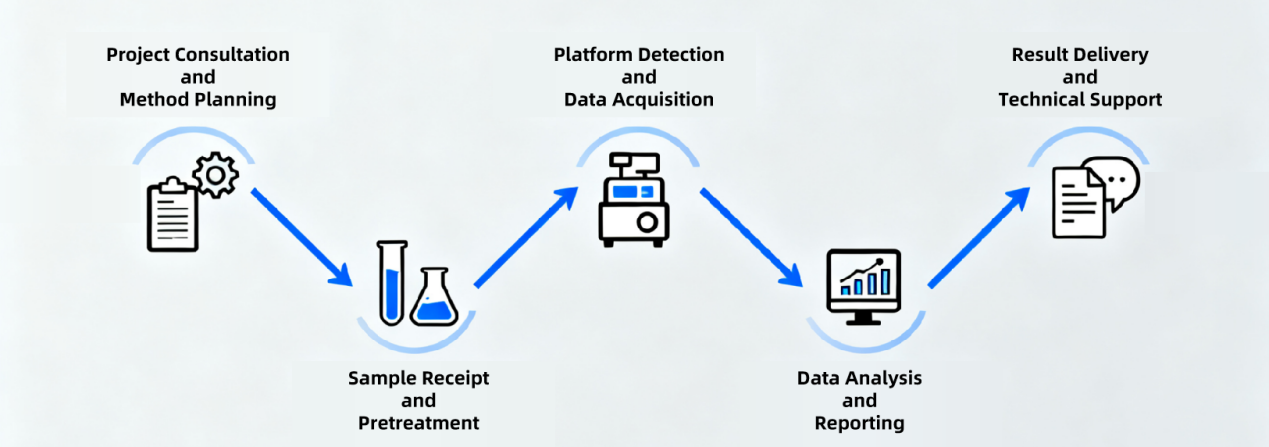
Analysis Workflow
Service Advantages
☑️High Accuracy and Reproducibility: Each analysis follows strict calibration, blank correction, and multi-replicate verification to ensure data reliability.
☑️Comprehensive Data Output: Quantitative results, comparative charts, and correlation analysis with starch quality indicators.
☑️Expert Data Interpretation: Our specialists in carbohydrate chemistry and analytical biochemistry provide insightful analysis of how protein content influences starch properties.
☑️Customizable Workflows: Analysis conditions and reporting formats are tailored to client-specific starch sources, modification methods, and research objectives.
Applications
The Starch Crude Protein Content Determination Service supports research and industrial projects across multiple disciplines:
1. Food Industry
Assessment of starch purity for use in thickeners, coatings, and texturizing agents; evaluation of residual protein levels that may influence product stability or allergenicity.
2. Pharmaceuticals
Characterization of starch excipients used in drug formulations, where residual proteins may affect disintegration rate, tablet binding strength, or drug release behavior.
3. Biomaterials
Optimization of starch-based films, adhesives, and bioplastics where protein residues impact mechanical strength and hydrophilicity.
4. Starch Modification Research
Monitoring the impact of enzymatic, physical, or chemical modifications on protein content and associated functional properties.
5. Quality Control and Compliance
Ensuring that starch raw materials and processed products meet purity standards required by regulatory agencies and industrial specifications.
Sample Submission Suggestions
1. Sample Type: Acceptable materials include starch powders or starch-containing raw materials from plants, microorganisms, or other biological sources. If raw materials are provided, starch extraction will be performed by MtoZ Biolabs before analysis.
2. Sample Quantity: At least 10 g of starch or 60 g of fresh raw material is recommended; actual requirements depend on starch purity and nitrogen content.
3. Replicates: At least three biological replicates are recommended for statistical reliability.
4. Storage and Transport: Samples should be sealed in airtight containers and shipped with dry ice or ice packs to prevent microbial growth or degradation. Avoid repeated freeze–thaw cycles.
Note: For samples with limited availability or specific handling requirements, please contact MtoZ Biolabs for customized submission instructions.
Deliverables
How to order?




