






Starch Rheological Determination Service
The rheological behavior of starch plays a critical role in determining its performance across food, pharmaceutical, and biomaterial applications. As a natural polysaccharide composed of amylose and amylopectin, starch exhibits complex flow and deformation properties that change significantly during gelatinization, pasting, and retrogradation. Understanding starch rheology provides insight into its molecular interactions, gel structure formation, and overall processability under varying thermal and mechanical conditions.
Starch rheological characterization involves the measurement of its viscoelastic properties, including viscosity, storage modulus, loss modulus, and shear behavior. These parameters are essential for evaluating the textural, stability, and thickening characteristics of starch-based systems. The rheological response of starch is influenced by multiple factors such as botanical origin, molecular structure, degree of modification, and environmental conditions (temperature, pH, and shear rate).
MtoZ Biolabs provides a comprehensive Starch Rheological Determination Service that integrates advanced rheological instrumentation and precise experimental control to characterize the dynamic behavior of starch in both native and modified forms. By quantifying key viscoelastic parameters, we help our clients optimize formulation performance, improve processing stability, and better interpret starch structure–function relationships.
Technical Principles
Starch rheological determination is based on the principles of viscoelasticity, describing materials that exhibit both elastic solid-like and viscous liquid-like behavior. When a shear force is applied, the response of the starch system depends on its structural organization, degree of hydration, and thermal treatment.
A rheometer measures the torque and angular displacement of a rotating plate or cone in contact with the sample. The collected data are converted into fundamental rheological parameters such as shear stress, shear rate, and viscosity. Oscillatory tests further provide information about the storage and loss moduli, reflecting the energy stored and dissipated during deformation.
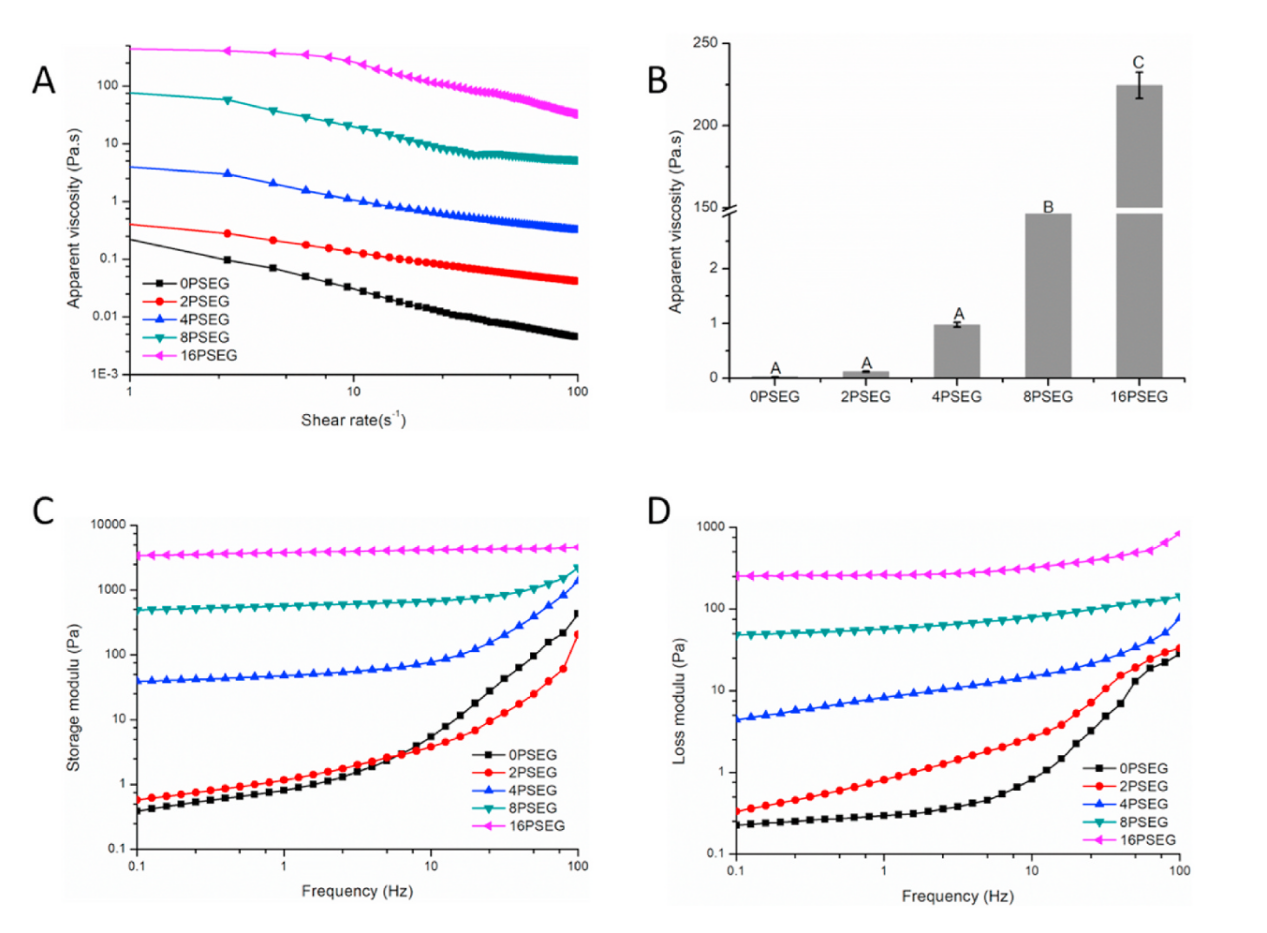
Hu, Y. et al. Food Hydrocoll. 2022.
Figure 1. Impact of Starch Concentration on the Rheology of Potato Starch-Based Emulsion Gels (PSEGs): (A) Apparent Shear Viscosity Versus Shear Rate; (B) Apparent Shear Viscosity at a Fixed Shear Rate (10 s-1 ); (C) Storage Modulus and (D) Loss Modulus in Frequency Sweep
Service at MtoZ Biolabs
MtoZ Biolabs offers professional rheological analysis for a wide range of starch types and starch-based formulations. We utilize controlled-stress and controlled-strain rheometers to evaluate viscosity, elasticity, and flow properties under different shear and thermal conditions. Our service includes:
💠Steady Shear Testing: Measurement of apparent viscosity and shear-thinning behavior to characterize flow properties under continuous deformation.
💠Dynamic Oscillatory Testing: Determination of storage modulus (G') and loss modulus (G'') to assess viscoelastic properties and gel structure.
💠Temperature Sweep Analysis: Evaluation of temperature-dependent viscosity and modulus changes during gelatinization and retrogradation.
💠Frequency Sweep Analysis: Quantification of viscoelastic spectra to understand molecular network dynamics and cross-linking behavior.
💠Creep and Recovery Testing: Measurement of time-dependent deformation to evaluate elasticity and long-term structural stability.
💠Thixotropy Assessment: Analysis of reversible structure breakdown and rebuilding under shear to understand flow recovery properties.
💠Yield Stress Measurement: Determination of the minimum stress required to initiate flow in concentrated or gel-like starch systems.
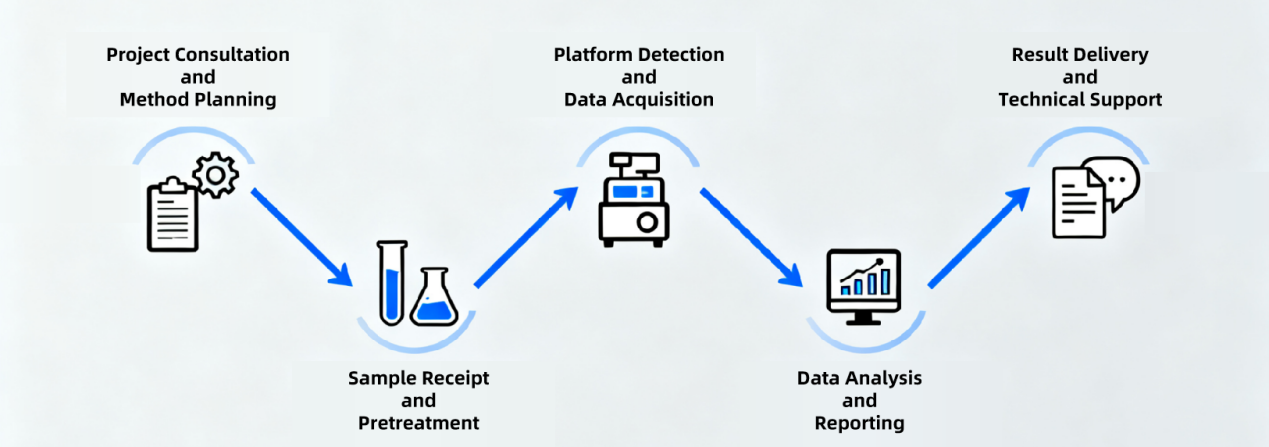
Analysis Workflow
Service Advantages
☑️Advanced rheometers capable of precise control over temperature, shear rate, and oscillation frequency.
☑️High reproducibility and sensitivity in detecting subtle changes in starch molecular organization and viscosity.
☑️Customized testing protocols to accommodate native, modified, or processed starch samples.
☑️Experienced analysts with expertise in starch chemistry and rheological data interpretation.
☑️Rapid reporting turnaround with detailed graphical representation and expert insights.
Applications
1. Food Industry
Evaluates thickening, gelling, and stability performance of starch in sauces, puddings, bakery fillings, and instant foods.
2. Pharmaceutical Formulations
Assesses starch-based excipients used in tablet binders, disintegrants, and controlled-release systems.
3. Biomaterial Development
Supports research on starch-based hydrogels, biodegradable films, and polymer composites with targeted mechanical properties.
4. Crop and Genetic Research
Characterizes starch rheology from different botanical sources or genetically modified varieties to understand structural diversity.
5. Industrial Processing
Optimizes starch processing parameters such as extrusion, drying, and retrogradation for better texture and consistency.
6. Quality Control
Ensures product consistency across batches by monitoring viscosity and gel formation profiles.
Sample Submission Suggestions
1. Sample Type: Purified starch powders or raw materials containing starch from plant, microbial, or synthetic sources. If raw materials are provided, starch extraction will be performed by MtoZ Biolabs prior to analysis.
2. Sample Quantity: At least 10 g of starch or 50 g of fresh raw material; actual requirements depend on starch purity and experimental conditions.
3. Replicates: We recommend three or more biological replicates to ensure statistical reliability.
4. Packaging and Transport: Samples should be sealed in airtight containers, protected from moisture and contamination.
Note: For samples with limited availability or specific handling requirements, please contact MtoZ Biolabs for customized submission instructions.
How to order?




