






Disaccharide Analysis Service
- Raw and processed data files (Excel or CSV)
- Chromatograms and spectra (TIFF or PNG)
- Comprehensive analytical report (PDF) summarizing experimental methods, quantitative results, and interpretations
- Quality control summary with reproducibility and validation data
MtoZ Biolabs provides comprehensive Disaccharide Analysis Services designed to accurately identify, quantify, and characterize, disaccharides across biological, food, and industrial samples. Utilizing advanced chromatographic, spectrometric, and spectroscopic platforms including HILIC, PGC, MS/MS, NMR, and FTIR, our services deliver precise and reproducible results to support research in carbohydrate chemistry, metabolic regulation, and bioprocess optimization.
What Is Disaccharide?
Disaccharides are carbohydrates composed of two monosaccharides linked by a glycosidic bond, such as sucrose, lactose, maltose, trehalose, and cellobiose. These molecules serve essential biological and industrial functions, acting as energy sources, osmolytes, structural intermediates, and biochemical regulators.
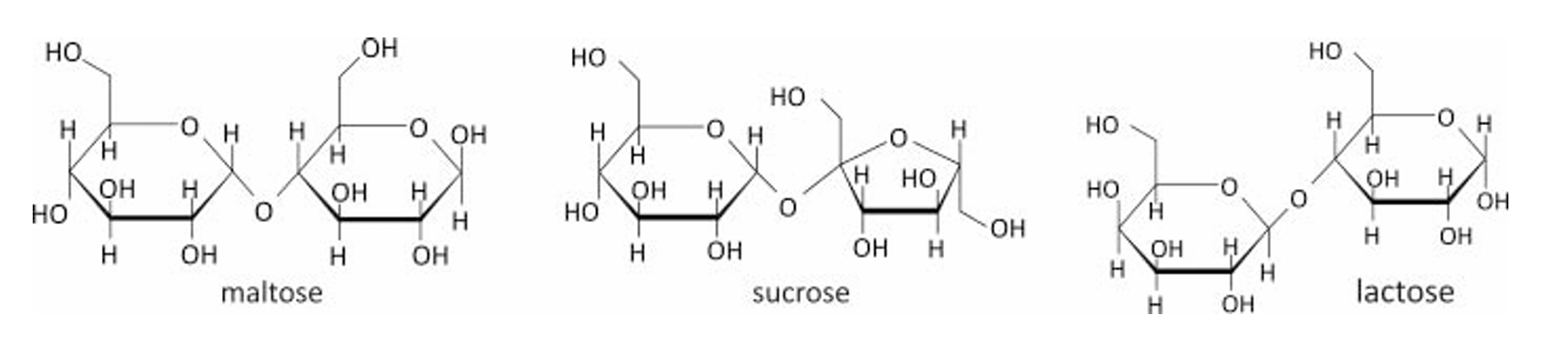
Pokrzywnicka, M. et al. Crit Rev Anal Chem. 2018.
Figure 1. Structures of Three Common Disaccharides: Sucrose, Maltose and Lactose
The significance of disaccharide analysis lies in its broad impact:
🔸Biological Insight: Understanding disaccharide composition and metabolism helps elucidate energy utilization and carbohydrate processing in animals, plants, and microorganisms.
🔸Food and Nutrition Research: Quantitative and qualitative analysis of sugars determines sweetness profiles, nutritional value, and food authenticity.
🔸Pharmaceutical and Biomedical Applications: Disaccharides stabilize protein formulations, act as excipients, and serve as biomarkers for metabolic and enzymatic disorders.
🔸Industrial Biotechnology: Monitoring disaccharide content supports fermentation efficiency and product quality control in biofuel and enzyme production.
Accurate disaccharide analysis provides vital data for improving formulations, optimizing production processes, and deepening our understanding of carbohydrate-related biology.
Analytical Platforms at MtoZ Biolabs
1. Hydrophilic Interaction Liquid Chromatography (HILIC)
2. Porous Graphitized Carbon Chromatography (PGC)
3. Tandem Mass Spectrometry (MS/MS)
4. Nuclear Magnetic Resonance (NMR)
5. Fourier Transform Infrared Spectroscopy (FTIR)
Disaccharide Analysis Service at MtoZ Biolabs
Our Analytical Capabilities Include:
💠Qualitative and Quantitative Analysis
Using HILIC and LC-MS/MS, we accurately identify and quantify various disaccharides in biological, food, and industrial samples with high sensitivity and reproducibility.
💠Glycosidic Bond Characterization
Employing PGC chromatography and MS/MS fragmentation, we determine glycosidic linkage positions (e.g., α-1,4; β-1,6) and anomeric configurations to distinguish isomeric disaccharides.
Combining NMR and FTIR spectroscopy with mass spectrometry, we analyze molecular structures, confirm linkage types, and assess conformational stability.
Through targeted and untargeted LC-MS/MS approaches, we investigate disaccharide metabolism in animals, plants, and microorganisms, mapping conversion routes and enzyme-specific reactions.
Specific Services Offered by MtoZ Biolabs Include:
Workflow of Disaccharide Analysis Service

Why Choose MtoZ Biolabs
✔️High Sensitivity and Specificity for detecting trace disaccharides in complex matrices.
✔️Customizable Workflows suitable for food, biological, and pharmaceutical samples.
✔️Experienced Technical Team with expertise in carbohydrate chemistry and glycomics.
✔️Reliable and Reproducible Results validated through internal quality control standards.
Sample Submission Guidelines
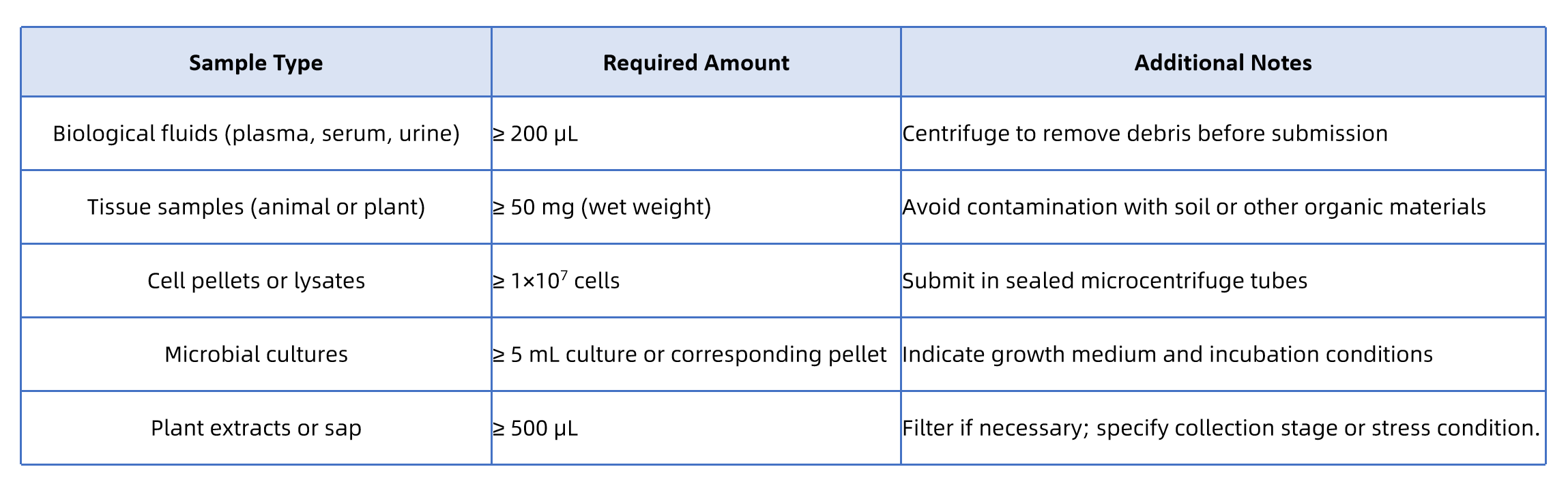
FAQ
Q1: What data formats are provided?
MtoZ Biolabs provides analytical results in multiple standard formats to ensure ease of use and compatibility:
Additional data formats can be provided upon request.
Q2: How should I prepare my samples?
To ensure accurate and stable analysis results:
1. Liquid samples (e.g., fermentation broth, extract): Filter or centrifuge to remove particulates and store at –20°C or 4°C depending on stability.
2. Solid or powdered samples: Seal in airtight, moisture-proof containers and store at room temperature in a dry environment.
3. Biological materials: Freeze immediately after collection and store at –80°C until shipment.
All samples should be clearly labeled and shipped on dry ice or with ice packs.
For more information, please refer to Sample Submission Guidelines for Proteomics and Sample Submission Guidelines for Metabolomics
Start Your Project with MtoZ Biolabs
Contact us to discuss your experimental design or request a quote. Our technical specialists are available to provide a free business assessment.
How to order?




