






Lactose Analysis Service
- Tissues: Animal tissues rich in carbohydrate or metabolic content.
- Feces: For studies on lactose digestion, absorption, or gut microbiota metabolism.
- Body Fluids: Such as serum, plasma, urine, or intestinal fluid.
- Milk and Dairy Products: Including milk, cheese, yogurt, whey, and other lactose-containing products.
- Samples should be collected under clean and contamination-free conditions.
- Fresh biological materials should be snap-frozen in liquid nitrogen immediately after collection and stored at –80°C.
- Liquid samples such as milk or body fluids should be kept refrigerated and shipped on ice packs or dry ice.
- Avoid repeated freeze–thaw cycles to preserve sample integrity.
Lactose, a naturally occurring disaccharide composed of glucose and galactose, is the principal carbohydrate found in milk and dairy-derived products. Beyond its nutritional significance as an energy source, lactose plays a crucial role in the flavor, texture, and functional properties of foods, pharmaceuticals, and biotechnological formulations. The analysis of lactose content and structure is vital for understanding product composition, ensuring labeling accuracy, controlling manufacturing quality, and supporting research in metabolism and health.
To meet these diverse analytical demands, MtoZ Biolabs provides a comprehensive Lactose Analysis Service that offers precise, reproducible, and high-resolution characterization of lactose in a wide range of matrices. Our Lactose Analysis Services include lactose content determination, purity assessment, structural elucidation, stability evaluation, and metabolic analysis. With advanced chromatographic and spectrometric platforms, MtoZ Biolabs delivers reliable data and scientific insights that support product development, nutritional evaluation, and regulatory compliance.
Service at MtoZ Biolabs
💠Lactose Content Determination: Accurate quantification of lactose concentration in food, dairy, pharmaceutical, and biological samples using HPLC, LC-MS, or enzymatic assays.
💠Purity Analysis: Detection and quantification of lactose-related sugars such as glucose, galactose, and oligosaccharides to evaluate product purity.
💠Structural Characterization: Analysis of molecular structure and linkage configuration (α- or β-lactose) using NMR, spectroscopic, and chromatographic techniques.
💠Stability Evaluation: Assessment of lactose stability under various conditions such as pH, heat, or storage, and identification of degradation products.
💠Metabolic and Conversion Studies: Investigation of lactose metabolism and enzymatic hydrolysis pathways in biological systems or fermentation processes.
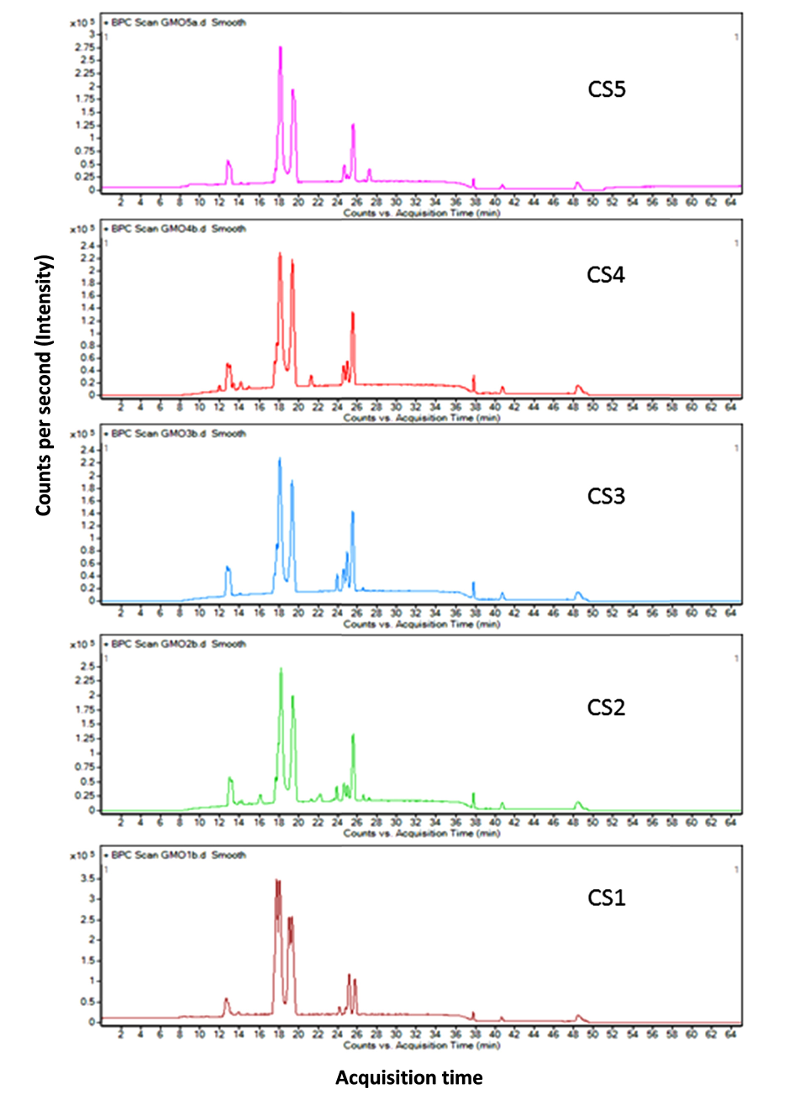
Martín-Ortiz, A. et al. J Chromatogr A. 2016.
Figure 1. Nano-LC-Chip-Q-TOF MS Profiles of Goat Colostrum Oligosaccharides
Analytical Platforms
🔸High-Performance Liquid Chromatography (HPLC): Separates lactose and related sugars based on polarity and molecular size, allowing accurate quantification and purity evaluation through RI or ELSD detection.
🔸Mass Spectrometry (MS): Detects and identifies lactose molecules according to their mass-to-charge ratio, providing high sensitivity and specificity for structural confirmation and trace-level analysis.
🔸Enzymatic Analysis: Utilizes β-galactosidase to catalyze the hydrolysis of lactose into glucose and galactose, enabling rapid and selective determination of lactose concentration through spectrophotometric detection.
🔸Nuclear Magnetic Resonance (NMR): Analyzes atomic-level interactions in the lactose molecule, revealing detailed structural information such as linkage position, stereochemistry, and α/β anomeric forms.
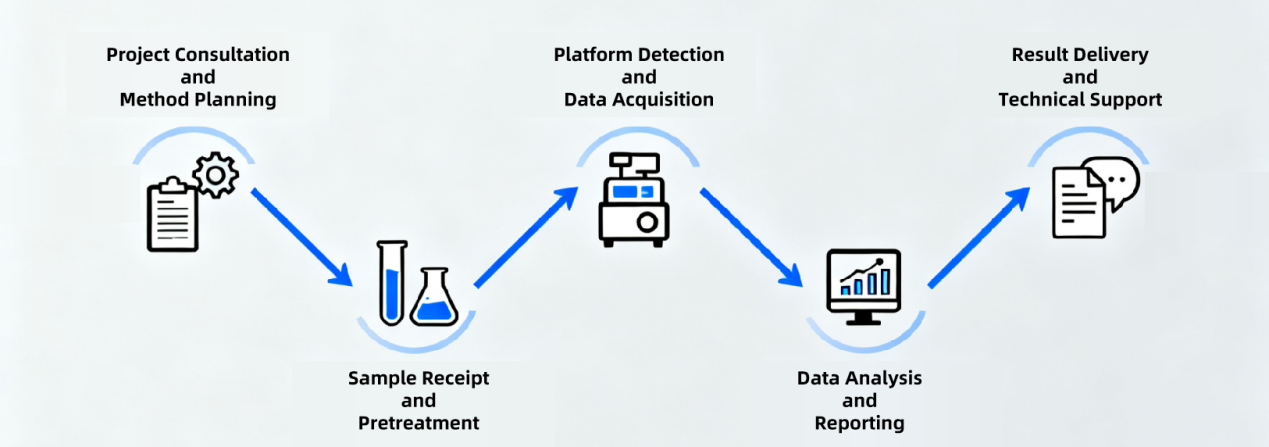
Analysis Workflow
Service Advantages
☑️Capability to analyze diverse matrices, including solid, liquid, and semi-solid samples.
☑️Experienced analysts specializing in carbohydrate chemistry and analytical biochemistry.
☑️Customizable analytical workflows tailored to research or industrial requirements.
☑️Rapid turnaround time with strict data quality assurance.
Applications
1. Food and Dairy Industry
Determination of lactose content for nutritional labeling, quality control, and formulation of lactose-free or reduced-lactose products.
2. Pharmaceutical Manufacturing
Monitoring lactose used as an excipient in tablets, capsules, and syrups for purity and stability testing.
3. Clinical and Nutritional Research
Evaluation of lactose metabolism, malabsorption, or intolerance in clinical studies.
4. Biotechnology and Fermentation
Tracking lactose utilization and conversion efficiency in microbial fermentation or enzymatic hydrolysis.
5. Animal Science
Analysis of lactose composition in milk from different animal species for breeding and nutritional studies.
Sample Submission Suggestions
1. Sample Types
We accept a wide range of biological and food-related materials, including but not limited to:
2. Storage and Transport Conditions
*Note: For other sample types, please contact us for customized guidance.
Deliverables
1. Comprehensive Experimental Details
2. Materials, Instruments, and Methods
3. Total Ion Chromatogram & Quality Control Assessment (project-dependent)
4. Data Analysis, Preprocessing, and Estimation (project-dependent)
5. Bioinformatics Analysis
6. Raw Data Files
Contact MtoZ Biolabs today to learn how our lactose analysis solutions can help you achieve precise measurement, quality assurance, and scientific insight for your research or production needs. Our technical specialists are available to provide a free business assessment.
How to order?




