






Disaccharide Metabolism Analysis Service
- The metabolic roles and processing pathways of key disaccharides
- Disaccharide metabolism under normal and pathological conditions
- Key enzymes involved in disaccharide catabolism and their activity levels
- Shifts in disaccharide processing in disease models and therapeutic interventions
- Raw data files from LC-MS, GC-MS, or NMR platforms
- Processed data tables (CSV or Excel format) containing identified and quantified disaccharides and metabolites
- Summary reports in PDF format, including analytical methods, quality control results, and key findings
- Figures and chromatograms in high-resolution image formats (TIFF or PNG)
MtoZ Biolabs offers comprehensive Disaccharide Metabolism Analysis Services using advanced techniques like LC-MS, GC-MS, and NMR. Our solutions provide detailed qualitative and quantitative analysis of disaccharides and their metabolites, tracking the degradation and conversion of disaccharides in both animal and plant systems. The Disaccharide Metabolism Analysis Service helps uncover:
Our analysis offers a comprehensive understanding of disaccharide metabolism, enabling in-depth exploration of its role in energy storage, metabolic regulation, disease progression, and biopharmaceutical development.
What Is Disaccharide Metabolism and Why Does It Matter?
Disaccharides are complex carbohydrates composed of two monosaccharide units linked by a glycosidic bond. Common examples include sucrose, lactose, and maltose. These sugars act as essential energy carriers and intermediates in both animal and plant metabolic networks. Disaccharide metabolism involves the enzymatic breakdown of these sugars into simpler sugars, which are then absorbed and utilized by the body.
Understanding disaccharide metabolism is crucial because it underpins numerous physiological and biochemical processes across species.
🔸Energy Supply and Regulation: Hydrolyzed monosaccharides act as direct energy sources, maintaining glucose homeostasis and supporting cellular respiration.
🔸Digestive Efficiency and Health: Impairments in disaccharide hydrolysis or absorption, such as lactose intolerance, lead to digestive disorders and metabolic imbalances.
🔸Plant Physiology: In plants, disaccharide breakdown (mainly sucrose hydrolysis) regulates sugar transport, osmotic balance, and responses to stress conditions.
🔸Metabolic and Clinical Research: Monitoring disaccharide metabolism helps elucidate disease mechanisms, evaluate drug effects, and optimize nutritional or metabolic therapies.
By precisely analyzing disaccharide catabolism, researchers gain essential insights into how organisms extract, distribute, and utilize energy from dietary or endogenous carbohydrate sources.
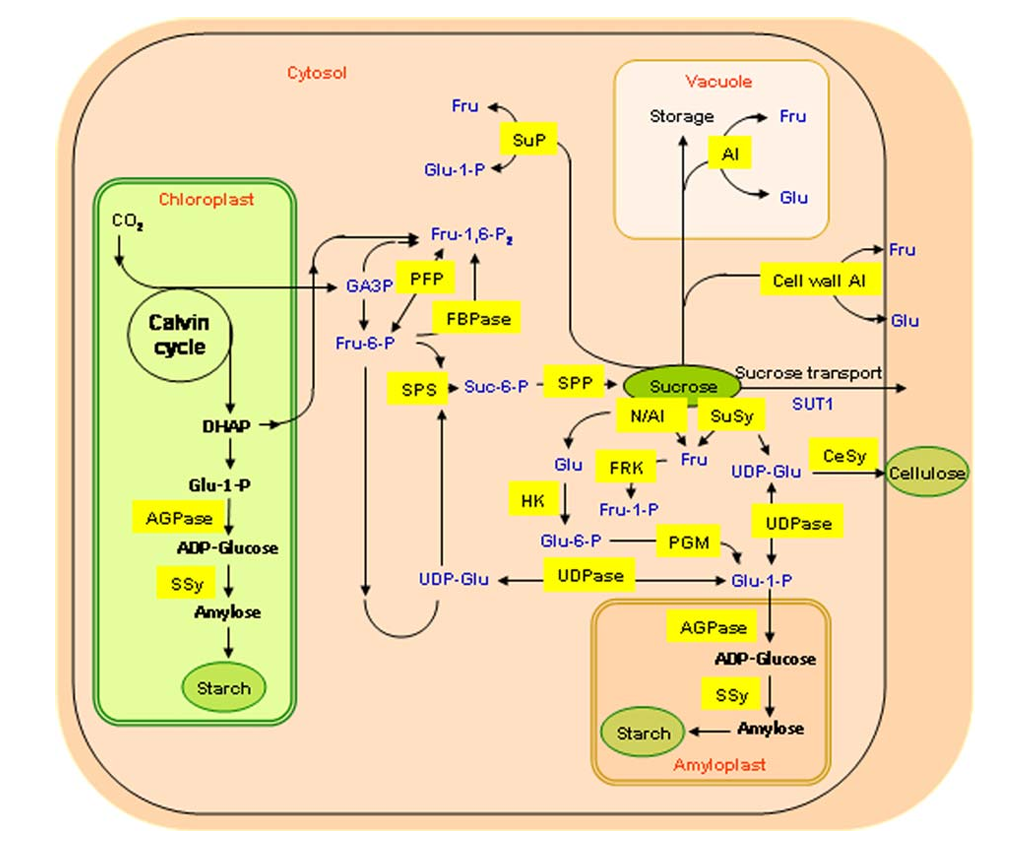
Nookaraju, A. et al. Sci Hortic. 2010.
Figure 1. Schematic Diagram Showing Sucrose Metabolism in Higher Plants
Principle of Disaccharide Metabolism Analysis
The analysis of Disaccharide Metabolism is based on advanced chromatographic and mass spectrometric techniques that enable precise detection, identification, and quantification of disaccharides and their catabolic products in biological samples. The core principle involves monitoring enzymatic hydrolysis, monosaccharide formation, and metabolic conversion using high-resolution analytical instruments.
1. Chromatographic Separation
Disaccharides and their metabolites are first separated using liquid chromatography (LC) or gas chromatography (GC) based on polarity and molecular properties. HILIC or ion-exchange LC columns are often applied for polar sugars, while GC is used for volatile derivatives.
2. Mass Spectrometry (MS) Detection
Coupling LC or GC with mass spectrometry (MS) enables simultaneous identification and quantification. Fragmentation patterns and accurate mass measurements reveal specific disaccharides and catabolic intermediates, even at trace levels.
3. Nuclear Magnetic Resonance (NMR) Analysis
NMR spectroscopy provides structural confirmation, detecting glycosidic linkage types and anomeric configurations of disaccharides and their hydrolysis products, ensuring precise molecular characterization.
4. Enzymatic Activity Assessment
Enzymatic assays for sucrase, lactase, and maltase help evaluate hydrolysis efficiency and reaction kinetics, linking enzyme performance to observed metabolic profiles.
5. Data Integration and Pathway Mapping
Processed chromatographic and spectral data are analyzed using bioinformatics tools to map disaccharide breakdown, absorption, and utilization within metabolic networks, offering a clear view of carbohydrate catabolism dynamics.
MtoZ Biolabs Provides Professional Disaccharide Metabolism Analysis Service
💠Qualitative Analysis of Disaccharides and Metabolites
We use LC-MS, GC-MS, and NMR spectroscopy to qualitatively characterize disaccharides and their catabolic intermediates. These techniques enable precise identification of sugar species, linkage types, and structural conformations in samples derived from animals, plants, and microorganisms.
💠Quantitative Profiling of Disaccharides and Metabolites
For accurate quantification, tandem mass spectrometry (LC-MS/MS) or GC-MS are employed to determine disaccharide and metabolite concentrations in complex biological matrices. This allows researchers to monitor metabolic flux, evaluate digestive efficiency, or compare sugar utilization patterns under specific physiological or experimental conditions.
💠Custom Disaccharide Metabolism Analysis
We offer customized disaccharide metabolism analysis to examine the dynamic changes of disaccharides and their metabolites in plant and animal systems under various environmental or physiological conditions.
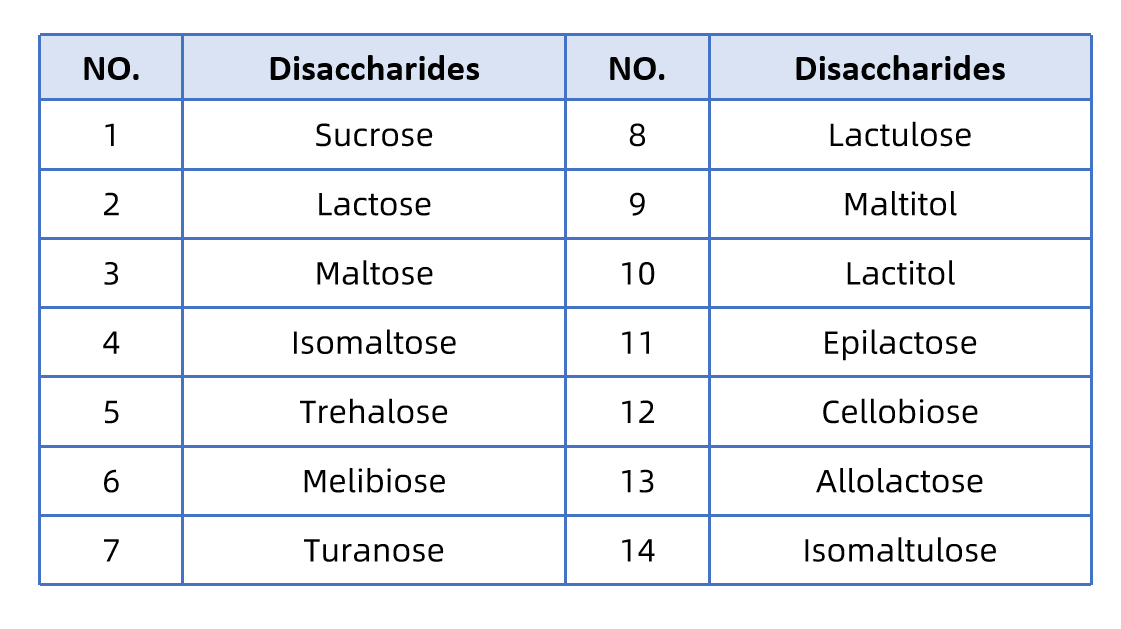
Our Disaccharide Metabolism Analysis Service covers a wide range of disaccharides, including but not limited to:
Workflow of Disaccharide Metabolism Analysis Service

Why Choose MtoZ Biolabs
☑️Advanced Analysis Platform: MtoZ Biolabs established an advanced Disaccharide Metabolism Analysis Service platform, guaranteeing reliable, fast, and highly accurate analysis service.
☑️High-Data-Quality: Deep data coverage with strict data quality control. AI-powered bioinformatics platform integrates all disaccharide metabolism analysis data, providing clients with a comprehensive data report.
☑️Tailored Solutions: We offer flexible, customized analysis services to meet the specific needs of each client.
☑️Experienced Team: Our team of experienced scientists and technicians is highly skilled in carbohydrate analysis and metabolism.
☑️One-Time-Charge: Our pricing is transparent, no hidden fees or additional costs.
Applications of Disaccharide Metabolism Analysis Service
MtoZ Biolabs' Disaccharide Metabolism Analysis Service is widely applicable across biological, agricultural, and industrial research fields.
1. Biomedical Research: Investigating carbohydrate digestion disorders, metabolic diseases, and nutritional metabolism.
2. Plant Science: Studying sucrose and maltose metabolism during photosynthesis, growth, and stress adaptation.
3. Food and Nutrition Industry: Assessing sugar composition, digestion efficiency, and metabolic effects of functional foods.
4. Pharmaceutical Development: Evaluating drug impacts on carbohydrate metabolism and energy regulation pathways.
5. Microbial Fermentation and Biotechnology: Monitoring disaccharide utilization in microbial or enzymatic production systems.
Sample Submission Guidelines
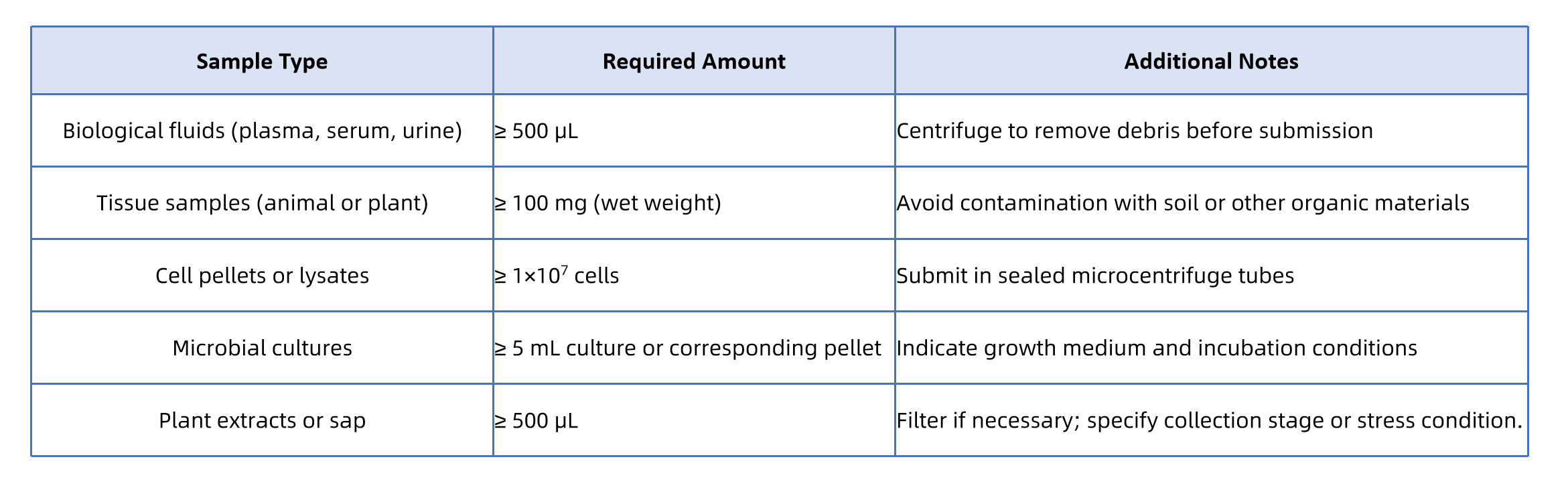
We recommend six or more biological replicates to ensure statistical reliability.
For other samples with limited availability or specific handling requirements, please contact MtoZ Biolabs for customized preparation instructions.
Deliverables
1. Comprehensive Experimental Details (Materials, Instruments, and Methods)
2. Raw Data Files
3. Total Ion Chromatogram & Quality Control Assessment
4. Data Analysis, Preprocessing, and Estimation (project-dependent)
5. Bioinformatics Analysis
6. Custom analytical reports
FAQ
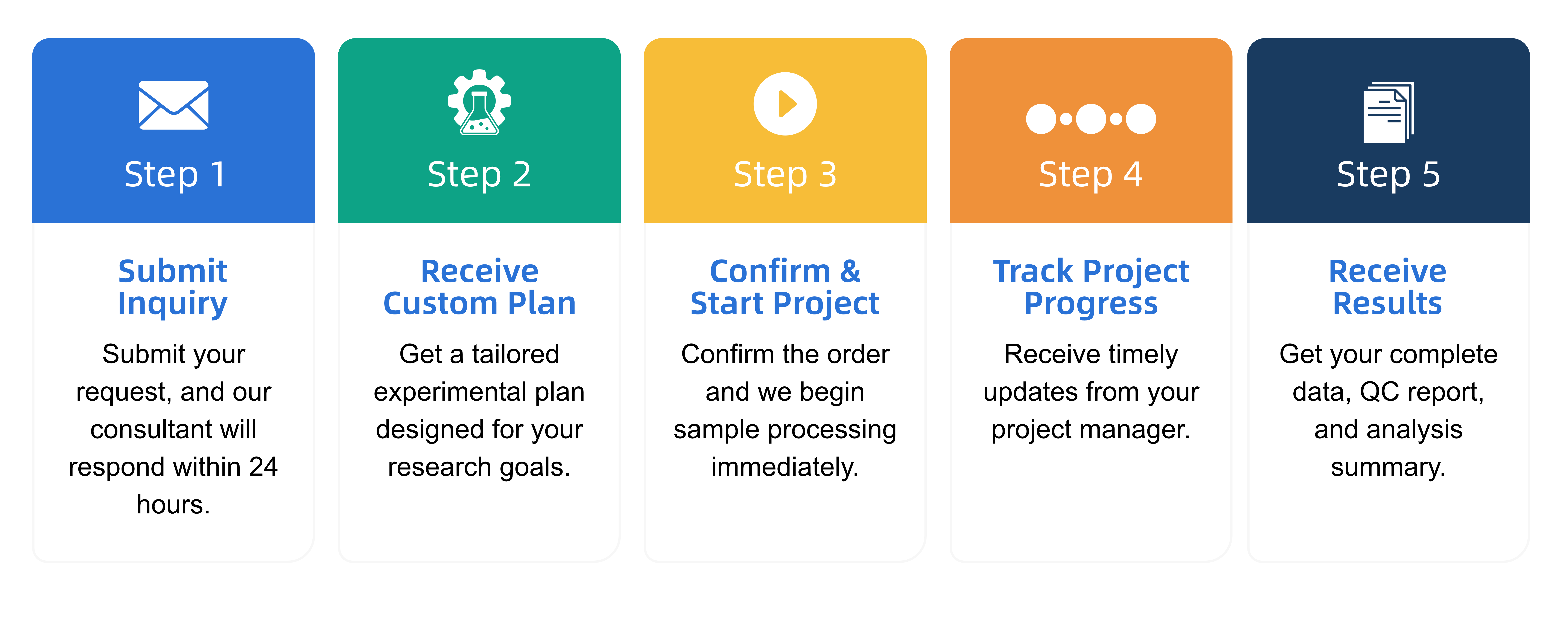
Q1: What Is the Service General Workflow?
Q2: What Data Formats Are Provided?
MtoZ Biolabs provides results in multiple standard formats to ensure compatibility with various analysis and visualization tools. Deliverables typically include:
Additional file formats or data structures can be provided upon request to meet specific research or publication requirements.
Q3: How Should I Prepare My Samples?
To ensure accurate and reproducible results for Disaccharide Metabolism Analysis Service, MtoZ Biolabs recommends preparing your samples according to the following guidelines:
1. Sample Type: We accept a wide range of biological samples, including plant extracts, cell lysates, serum, plasma, tissue, and purified standards.
2. Sample Purity: Samples should be free of particulates and high concentrations of salts, detergents, or organic solvents that could interfere with chromatographic separation or ionization in MS detection.
3. Volume Requirement: Please provide at least 500 μL of liquid sample or 100 mg of solid material. Additional volume may be required for replicate analyses.
4. Storage and Shipping: Store biological samples at −80°C. Ship samples on dry ice in leak-proof containers to maintain sample integrity.
5. Documentation: Include detailed information such as sample origin, preparation method, buffer composition, and desired analysis type.
For more information, please refer to Sample Submission Guidelines for Proteomics and Sample Submission Guidelines for Metabolomics
If you are unsure about your sample preparation, our technical team can provide personalized pre-analysis consultation and a sample submission guide to help you optimize preparation and shipping conditions.
Start Your Project with MtoZ Biolabs
Contact us to discuss your experimental design or request a quote. Whether you are exploring the role of disaccharides in disease, conducting drug discovery, or simply analyzing metabolic pathways, our team is equipped to support your research with tailored, precise solutions.
How to order?




