






Peptide Drug Safety Assessment Service
MtoZ Biolabs provides Peptide Drug Safety Assessment Service to support comprehensive evaluation of peptide candidates throughout discovery and early development. Assessing safety risks at early stages is essential for identifying potential adverse outcomes, guiding sequence optimization, and determining whether a peptide is suitable for advancement into nonclinical studies. Our platform integrates in vitro and in vivo evaluations, mechanistic analyses, and multi-endpoint cellular assays to deliver reliable data that enable informed decision-making.
Overview
Peptide drug safety assessment examines the potential adverse effects peptide candidates may produce during discovery and early development. Because peptides can modulate diverse biological pathways, safety risks may arise from cytotoxicity, immune activation, genotoxic events, mitochondrial dysfunction, or organ-specific injury. Identifying these liabilities early enables researchers to refine sequences, prioritize safer leads, and prevent late-stage attrition.
Modern safety evaluation relies on human-relevant in vitro systems, functional biochemical assays, high-content imaging technologies, and mechanistic analyses to detect biological changes with high sensitivity. By integrating multi-endpoint datasets, safety assessment provides a comprehensive understanding of how peptide candidates affect cellular and tissue responses, supporting data-driven decisions throughout development.
Peptide Drug Safety Assessment Service at MtoZ Biolabs
MtoZ Biolabs delivers a unified suite of peptide safety assessment offerings, including:
Peptide Drug In Vitro Cytotoxicity Assessment Service
Peptide Drug In Vivo Toxicity Assessment Service
Peptide Drug Genotoxicity Assessment Service
Peptide Drug Immunotoxicology Assessment Service
Peptide Drug Carcinogenicity Assessment Service
Peptide Drug Cardiotoxicity Assessment Service
Peptide Drug Mechanistic Toxicity Study Service
Peptide Drug Mitochondrial Toxicity Assessment Service
Peptide Drug In Vitro Hepatotoxicity Assessment Service
Why Choose MtoZ Biolabs?
✅ Comprehensive Safety Assessments
We evaluate every aspect of your drug's safety, including cytotoxicity, genotoxicity, immunotoxicity, and cardiotoxicity, ensuring thorough testing.
✅ Cutting-Edge Technology and Integrated Platforms
We employ high-resolution mass spectrometry, flow cytometry, and Next-Gen Sequencing to deliver precise, reliable results.
✅ Tailored Solutions
Whether you require standard testing or customized services, we offer solutions that are perfectly aligned with your specific needs.
✅ Extensive Biological Analysis Expertise
With years of expertise in peptide drug analysis, we provide accurate toxicity data, helping you identify risks early.
✅ Quick and Efficient Execution
We deliver fast, high-quality results to keep your project moving forward without delays.
Applications of Peptide Drug Safety Assessment Service
● New Drug Development: Pre-clinical safety testing to identify risks before clinical trials.
● Toxicology Studies: In-depth understanding of the drug’s toxicity mechanisms.
● Drug Optimization: Offering toxicity analysis for existing drugs, optimizing their structure or dosage to improve safety.
Start Your Project with MtoZ Biolabs
MtoZ Biolabs is committed to delivering comprehensive and accurate peptide drug safety assessments to help identify risks and ensure drug safety. Contact us for customized solutions tailored to your needs.
FAQ
Q1: What types of samples are suitable?
We accept synthetic peptides, peptide-drug conjugates, and peptide formulations intended for preclinical evaluation.
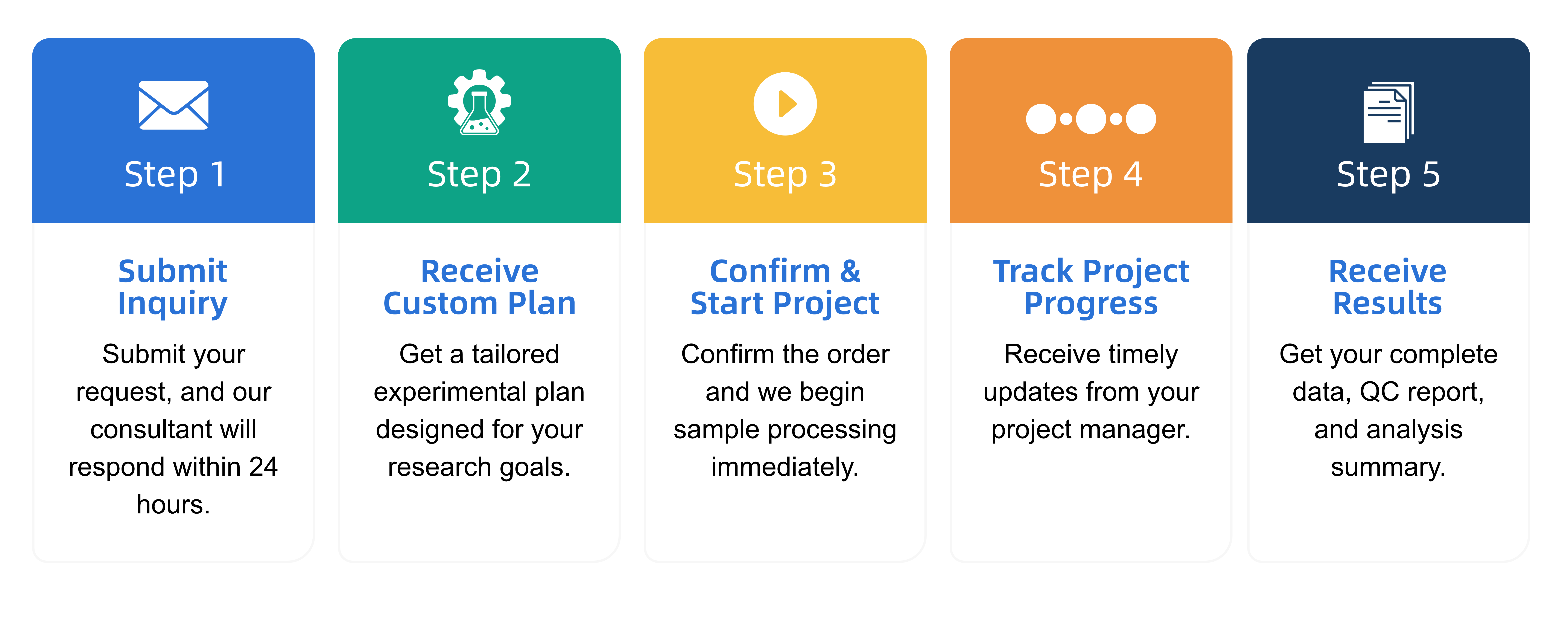
Q2: What is the service general workflow?
Q3: What data formats are provided?
We provide data in the following formats:
- Raw Data: Excel format, including all raw measurements and results.
- Processed Data: Excel or PDF format, with statistical analysis and key findings.
- Graphs and Visualizations: Graphs of data such as dose-response curves and toxicity profiles.
- Final Report: A PDF summary with experimental methods, findings, and recommendations.
These formats ensure easy access and interpretation of your results. Let us know if you have any specific data format preferences.
Q4: How should I prepare my samples
Peptide samples should have a purity of at least 90% and be provided in a suitable buffer or solvent at the required concentration. A typical submission amount is 1-2 mg to support complete testing. Please ensure proper labeling, packaging, and temperature control during shipment. If needed, we can provide detailed submission guidelines.
How to order?




