






Peptide Drug In Vitro Hepatotoxicity Assessment Service
MtoZ Biolabs provides specialized Peptide Drug In Vitro Hepatotoxicity Assessment Service designed to support data-driven decision-making in peptide drug development. Through validated, cell-based hepatotoxicity platforms and fluorescence- or luminescence-based analytical endpoints, we generate high-quality datasets that characterize hepatocellular risk profiles early in the development cycle.
This service enables rapid triage of peptide candidates, supports structure-activity optimization, and provides mechanistic insights essential for advancing programs through discovery and preclinical evaluation
Overview
In vitro hepatotoxicity assessment examines how peptide candidates interact with hepatocytes across critical functional domains, including metabolic capacity, redox balance, mitochondrial performance, and membrane stability. As the liver is responsible for handling the majority of systemic xenobiotic exposure, early detection of hepatocellular perturbations is an essential component of preclinical safety profiling. Drug-induced liver injury (DILI) can arise from diverse and intersecting mechanisms, such as oxidative stress, metabolic enzyme disruption, reactive intermediate formation, lipid dysregulation, and impaired bile acid transport. These complexities necessitate a multi-dimensional evaluation strategy that moves beyond single-parameter cytotoxicity screens.
Peptide Drug In Vitro Hepatotoxicity Assessment Service at MtoZ Biolabs
The Peptide Drug In Vitro Hepatotoxicity Assessment Service at MtoZ Biolabs is built around a versatile collection of validated assays designed to capture hepatocyte function from multiple perspectives. Our capabilities include:
Cell viability and membrane integrity evaluations
ATP output and hepatic mitochondrial performance assessment
Oxidative stress and redox pathway analysis
Cytochrome P450 metabolic activity profiling
Steatosis and phospholipidosis detection
High-content hepatotoxicity imaging and phenotype characterization
Custom hepatotoxicity panels tailored to compound class and development goals
Why Choose MtoZ Biolabs?
✔ Cutting-Edge Analytical Systems
High-content imaging, multi-parameter fluorescence platforms, and biochemical assays deliver sensitive and reproducible hepatotoxicity measurements.
✔ Mechanistic Interpretation Capabilities
Comprehensive analysis that links observed cellular effects to underlying mechanisms and peptide structural features.
✔ Flexible Study Architecture
Customizable assay panels, adjustable throughput, and adaptable workflows suitable for both rapid screening and mechanistic follow-up.
✔ Reliable Scientific Delivery
Clear reporting, consistent turnaround, and strong data integrity to support confident early-stage decision-making.
✔ One-Time-Charge
Our pricing is transparent, no hidden fees or additional costs.
Start Your Project with MtoZ Biolabs
Strengthen your peptide development pipeline with early liver safety insights. Our Peptide Drug In Vitro Hepatotoxicity Assessment Service delivers dependable data to guide candidate selection and reduce downstream risk. Contact MtoZ Biolabs to begin your assessment.
FAQ
Q1: What types of samples are suitable?
We accept synthetic peptides, peptide analogs, peptide-drug conjugates, natural peptides, and formulated peptide preparations that meet standard purity criteria.
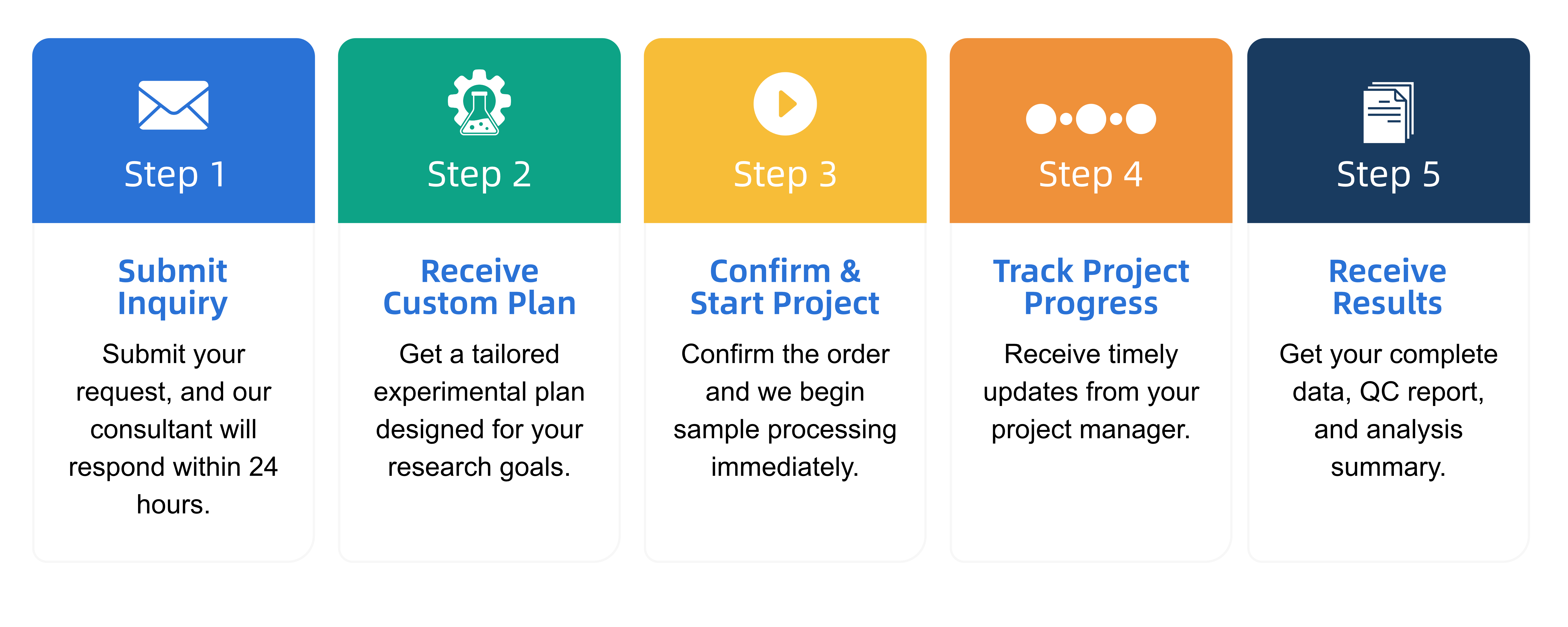
Q2: What is the service general workflow?
Q3: What data formats are provided?
Deliverables are available in multiple standard formats, including PDF reports, Excel files containing raw and analyzed data, high-resolution imaging files, fluorescence output files, and optional presentation-ready figures.
Q4: How should I prepare my samples?
· Provide peptides at suitable purity for cellular assays.
· Include detailed solubility and reconstitution instructions.
· Indicate any storage or stability considerations.
· Avoid additives that may interfere with enzyme activity or fluorescence detection.
If you are unsure about sample preparation, our team is available for consultation and can guide you through the process to ensure optimal results.
Related Services
How to order?




