




Serum Proteomics: Sample Preparation,Workflow Analysis, and Research Applications
Serum is the liquid fraction obtained after whole blood has clotted and the clot has been separated. It contains albumin, immunoglobulins, complement proteins, and many other circulating proteins. These proteins participate in molecular transport, immune defense, and the maintenance of physiological homeostasis. Their composition and abundance can change with physiological conditions, disease states, or experimental treatments. Serum samples are widely used in circulating-protein research because they can reflect aspects of systemic biological changes and can be studied alongside sampling times, treatment records, and other experimental observations. Serum proteomics provides a mass spectrometry-based approach to examining serum protein composition and abundance changes on a broader scale.
What Is Serum Proteomics?
Serum proteomics is the systematic identification and relative quantification of proteins in serum, commonly using liquid chromatography-tandem mass spectrometry (LC-MS/MS). In a typical analysis, serum proteins are digested into peptides. Peptide signals are acquired by mass spectrometry and matched against a protein sequence database to generate protein identification and relative quantification results. With predefined study groups, the resulting data can be used to investigate protein changes associated with different experimental conditions.
The serum proteome contains circulating proteins spanning a wide range of abundances. Signal differences between high- and low-abundance proteins, peptide detectability, and the completeness of species-specific sequence databases can all affect proteome coverage. Unlike an assay designed to measure one predefined protein, discovery serum proteomics surveys a broader protein profile. Protein identification is based on peptide-level mass spectrometric evidence, which is then assigned to corresponding proteins. A single analysis therefore represents the proteins identifiable under the analytical conditions, rather than a complete inventory of every protein in serum. The resulting protein intensity values are primarily used for relative abundance comparisons and do not directly represent absolute serum protein concentrations.
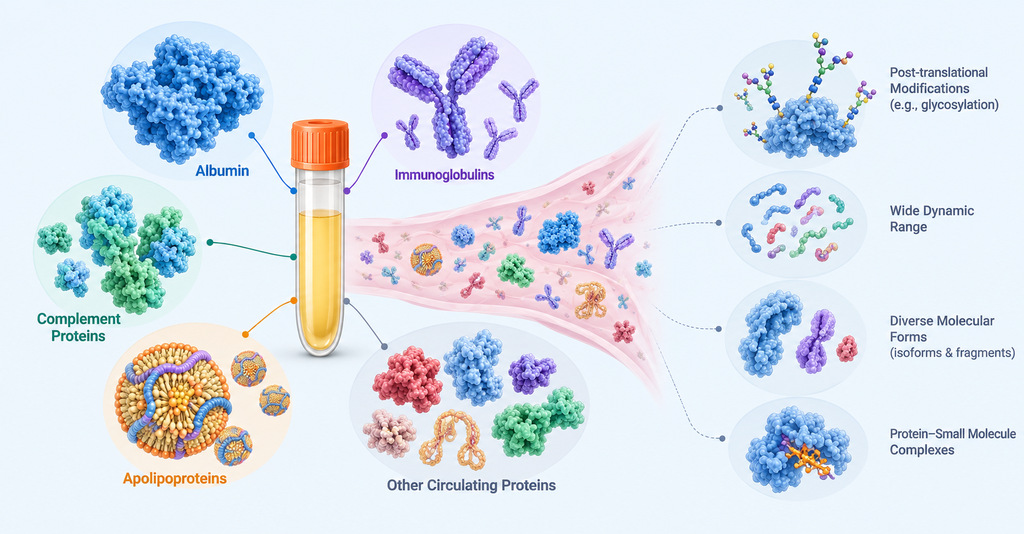
Figure 1. Composition and Molecular Complexity of the Serum Proteome.
What Can Serum Proteomics Reveal?
Serum protein profiling can provide research information at three complementary levels:
- Protein composition: Identify circulating proteins detectable in the study samples, including proteins involved in transport, immune defense, and complement activity, to establish a basis for subsequent comparisons.
- Between-group changes: Compare relative protein abundances across groups or time points to determine whether changes involve a few individual proteins or multiple proteins with related functions, and examine their association with the study conditions.
- Functional insights: Use protein annotations and pathway information to organize changing proteins into biological contexts such as immunity, coagulation, or metabolism and identify more focused questions for further research.
Serum proteomics can survey a relatively broad protein profile before individual targets have been selected. Researchers can examine both individual proteins and groups of related proteins that change under the same experimental conditions. Those observations can then be considered alongside independent experiments or phenotypic measurements to formulate follow-up questions. Protein composition, abundance differences, and functional associations provide research leads, but do not independently establish tissue of origin or prove a biological mechanism.
Serum Sample Preparation and Quality Considerations
Before serum samples enter proteomic analysis, their collection source, separation history, storage conditions, and available quantity should be documented. For comparative studies, sample handling should be kept as consistent as possible across groups, with collection records linked to individual sample identifiers.
|
Sample Item |
Basic Requirements |
|
Sample type |
Serum obtained after whole blood has clotted and the serum fraction has been separated. |
|
Collection and separation |
Use a no-anticoagulant serum collection tube. Keep clotting and centrifugation conditions consistent across samples. |
|
Sample condition |
Submit separated serum and minimize residual blood cells, clots, and visible precipitates. |
|
Proteomics sample input |
For routine or deep serum proteomics, at least 10 μL is recommended; samples as low as 5 μL may be assessed. The reference protein input is approximately 50 μg. |
|
Storage |
When sufficient sample is available, aliquot serum into 100-200 μL per tube. Snap-freeze in liquid nitrogen for 10 min, then store at −80°C. Liquid nitrogen storage is also acceptable. |
|
Freeze-thaw history |
Keep freeze-thaw cycles to no more than 2-3 where possible, and record the actual number. |
|
Shipping |
Ship on dry ice and maintain low-temperature conditions throughout transport. |
|
Sample quality |
Check for hemolysis, lipemia, abnormal yellow discoloration, clots, or degradation; evaluate samples with abnormalities. |
|
Sample information |
Provide sample ID, species, experimental group, treatment background, collection and storage records, and any observed abnormalities. |
|
Biosafety documentation |
Samples with infectious-disease or animal-source contamination risks require documentation confirming compliant inactivation before submission. |
Marked hemolysis, severe lipemia, abnormal yellow discoloration, residual clots, or protein degradation can affect protein identification and between-group comparisons. Samples showing these conditions should be evaluated in relation to the observed abnormality and the study objective.
For collection, aliquoting, and shipping details, see Serum Sample Preparation, Storage, and Handling for Proteomics. For the effects of sample abnormalities on proteomics results, see How Does Serum Sample Quality Affect Proteomics Results?.
Sample Selection and Study Design for Serum Proteomics
Sample type determines the biological material represented in the protein profile, while study design determines whether differences between groups can be compared meaningfully. The first decisions are therefore the sample type and the primary comparison.
1. Selecting the Sample Type
Serum is separated after blood clotting, whereas plasma is separated from anticoagulated blood. Coagulation-associated proteins and some platelet-derived proteins can differ in measurable abundance between these sample types. Existing serum collections can be assessed against the research objective. When either serum or plasma can be collected for a new project, plasma is generally preferred.
Further discussion of these differences and selection criteria is available in Serum vs. Plasma Proteomics: Key Differences and Sample Selection.
2. Study Design
Once the sample type has been established, the research question should be translated into a defined comparison. Key considerations include:
- Research objective: Specify the main comparison, such as different experimental states, before-versus-after drug treatment, or a disease model versus its corresponding control.
- Controls and replicates: Choose controls appropriate to the research question, include independent biological replicates, and preserve the identities of paired samples.
- Sample comparability: Review sampling times, separation and storage conditions, and analytical batches so that preanalytical differences are not confounded with study groups.
For detailed comparative study planning and feasibility assessment, see Comparative Serum Proteomics: Study Design for Differential Protein Analysis.
Workflow of Serum Proteomics Analysis
Serum proteomics typically proceeds from sample assessment to protein and peptide preparation, LC-MS/MS acquisition, and data processing. The workflow can be summarized in six stages.
1. Sample Receipt and Assessment
Verify sample identifiers, species, group assignments, and storage records, and examine samples for hemolysis, turbidity, or clots. This initial assessment establishes traceable sample information and documents conditions relevant to the subsequent analysis.
2. Serum Protein Preparation
Prepare serum proteins for downstream analysis. SP3 magnetic bead-assisted preparation may be used when appropriate to make the sample suitable for enzymatic digestion and reduce matrix-related interference with subsequent peptide detection.
3. Digestion and Peptide Preparation
Digest proteins into peptides suitable for tandem mass spectrometry and perform purification or desalting as needed. Consistent digestion and peptide recovery are important for protein identification and for comparing peptide signals between samples.
4. LC-MS/MS Data Acquisition
Liquid chromatography separates peptides in the complex mixture, while tandem mass spectrometry records precursor-ion and fragment-ion signals that support peptide identification. DIA, 4D-DIA, or DDA acquisition can be selected according to the research objective.
5. Protein Identification and Relative Quantification
Match peptide-level mass spectrometry evidence to UniProt or an appropriate FASTA protein sequence database to infer identifiable proteins. The corresponding signals are then organized across samples into a protein identification list and relative quantification matrix for the predefined comparisons.
6. Bioinformatics Analysis and Reporting
Use the predefined comparisons to assess data quality, identify differential proteins, and perform functional analyses. Organize the protein-level results into traceable data files and an analysis report. The specific bioinformatics modules depend on the agreed project plan.
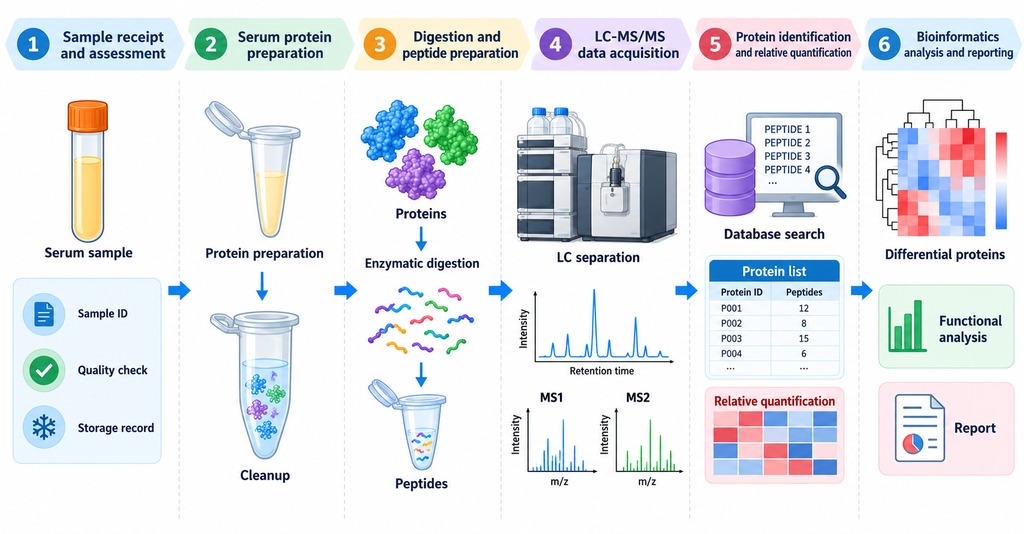
Figure 2. Overview of the LC-MS/MS-Based Serum Proteomics Workflow.
For analytical strategies and project-specific implementation requirements, see Serum Proteomics Service.
Serum Proteomics Results and Deliverables
|
Deliverable Module |
Main Results or Files |
|
Protein identification |
Identified protein list, protein-to-peptide information, and supporting identification data. |
|
Relative quantification |
Protein relative quantification matrix linked to individual sample IDs for comparisons across specified samples or groups. |
|
Differential proteins |
Differential protein list with corresponding changes and statistical results for the predefined comparisons. |
|
Data quality |
QC information such as peptide length and identification scores; sample correlations and other outputs as defined in the project plan. |
|
Bioinformatics analysis |
Correlation analysis, PCA, clustering, and GO, KEGG, Reactome, or PPI functional and association analyses, as included in the project plan. |
|
Project files |
Raw mass spectrometry data, corresponding analysis files, and the final analysis report. |
For guidance on interpreting quantitative results, quality metrics, and differential proteins, see How to Interpret Serum Proteomics Results and Quality Metrics.
Applications of Serum Proteomics
1. Biomarker Candidate Discovery
Differential protein analysis can identify potential biomarker candidates. Consistency of protein changes can help prioritize targets for follow-up studies, and selected proteins may be verified through PRM-based targeted quantification.
See Serum Proteomics for Biomarker Discovery: From Differential Proteins to Candidate Selection for candidate selection considerations.
2. Disease-Associated Changes and Drug Response
Serum protein profiles can be compared across disease models, disease states, or drug-treatment conditions to identify circulating-protein changes associated with the research variables. These findings can be considered alongside experimental phenotypes to develop research hypotheses.
See Serum Proteomics Applications in Disease and Drug Response Research for further examples.
3. Physiological States and Metabolic Research
Comparisons across nutritional states or metabolic conditions can reveal changes in serum protein composition and relative abundance, supporting investigations into their associations with independently measured physiological indicators.
4. Experimental Stimulation and Systemic Responses
During immune stimulation, stress exposure, or other experimental interventions, serum proteomics can be used to examine circulating-protein responses. Tissue-level findings or phenotypic measurements may provide additional context for interpreting systemic changes.
Frequently Asked Questions
Q1: Does failure to detect a target protein mean that the protein is absent from serum?
No. Low protein abundance, limited peptide detectability, and the coverage of the analytical method can all affect detection. For a predefined protein of interest, the feasibility of targeted analysis can be evaluated separately.
Q2: Can changes in serum proteins identify the organ from which a protein originates?
Not directly in most cases. Some circulating proteins may originate from multiple tissues or cell types. Tissue-expression information or other independent evidence is needed to investigate protein origin.
Q3: Can serum from non-model species be analyzed by proteomics?
Protein identification feasibility can be assessed using a sequence database for the species, a closely related species, or a customer-provided FASTA file. Database quality can also influence downstream functional annotation.
Q4: Can serum protein quantification data from different projects be pooled directly?
Direct pooling is generally not appropriate without further assessment. Differences in collection conditions, mass spectrometry acquisition, and data processing can affect relative protein intensities. Cross-project comparability should be evaluated before combined analysis.
Serum proteomics combines protein identification, relative quantification, and study-group comparisons to investigate changes in circulating proteins and their biological relevance. Once the sample type and research comparisons are defined, further details are available through Serum Proteomics Service.
How to order?