



Serum Proteomics Applications in Disease and Drug Response Research
Serum carries proteins released or shed by cells and tissues, together with proteins involved in immune, metabolic, and transport processes. As disease develops or treatment changes a biological state, the circulating protein profile may also shift. Serum proteomics allows researchers to compare these profiles across disease groups, disease states, and treatment conditions, revealing patterns that a single-protein measurement may miss.
The biological meaning of a protein change depends on the comparison and the study context. Differences between disease and control groups describe disease-associated variation; comparisons across disease states reveal variation within the disease population; and treatment comparisons characterize protein changes associated with drug exposure. These applications are connected: defining the disease-associated pattern provides a reference for interpreting changes observed across disease states and after treatment.
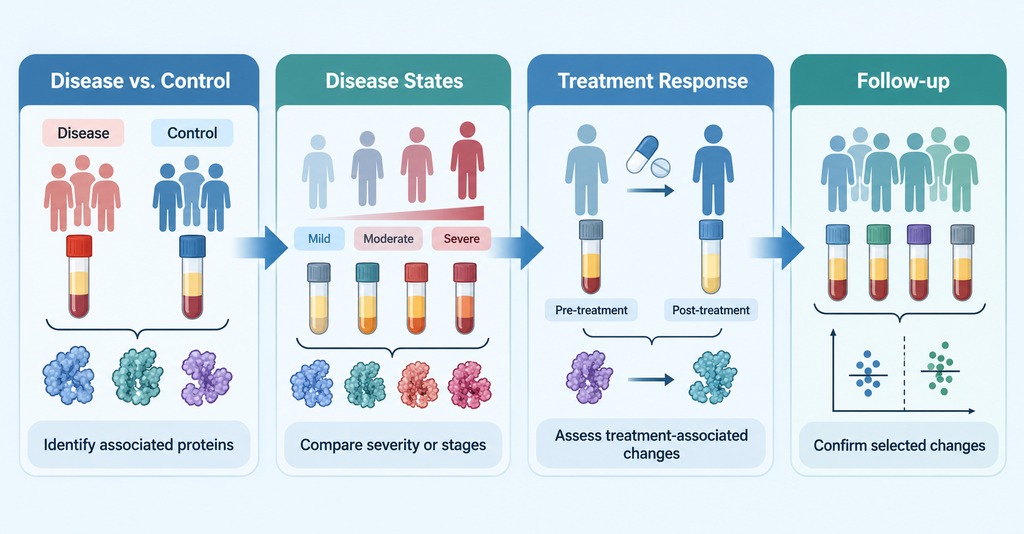
Figure 1. Serum Proteomics Disease Drug Response Research Pathway.
Disease-Associated Protein Patterns
1. Disease vs. Control
Comparing a disease group with an appropriate control group can reveal serum proteins whose relative abundance differs between the two conditions. For example, an inflammatory disease cohort may show coordinated changes in proteins associated with immune activity, complement, coagulation, or lipid transport. The overall pattern provides a view of circulating changes associated with the studied condition, rather than treating every altered protein as a separate explanation.
The next step is to consider whether the observed pattern fits the disease context. A change in inflammation-associated proteins may be consistent with an inflammatory phenotype, while a similar change in another cohort may reflect a different biological process. Disease features measured independently in the study help determine how the protein pattern should be interpreted.
2. Patterns Across Related Proteins
Complex diseases rarely produce one simple serum signal. Several proteins may change in related or opposing directions because immune, metabolic, tissue-remodeling, and transport processes overlap in circulation. Examining the pattern across related proteins can help researchers describe the biological changes associated with the disease group and identify observations that merit closer attention.
A coordinated shift across inflammatory proteins may support an interpretation involving systemic immune activity more strongly than an isolated change in one protein. The biological relevance of the pattern becomes clearer when considered alongside disease features and other evidence available for the study.
Changes Across Disease States
1. Severity and Stage
After describing a disease-associated profile, researchers can compare predefined disease stages, severity groups, or subgroups. These comparisons can show whether a protein changes across disease categories, remains relatively stable, or differs mainly in a particular subgroup. The focus moves from identifying disease-associated differences to understanding variation within the disease population.
The comparison is most informative when the categories reflect disease features defined independently of the protein data. If a protein changes progressively across mild, moderate, and severe groups, the pattern may track the classification used in the study. A change limited to one subgroup may instead reflect biological heterogeneity.
2. Linking Protein Patterns to Phenotypes
Serum protein profiles can be examined alongside independent measurements such as pathology, biochemical readouts, disease activity measures, or experimental-model phenotypes. In an animal model, for example, a serum protein pattern that varies with a tissue pathology score may help connect circulating changes with the observed model phenotype.
Agreement between a protein pattern and an independent phenotype strengthens the evidence for an association. When the two do not align, the difference may reflect biological heterogeneity or a process that the selected phenotype does not capture. The mismatch should be interpreted in the context of the study rather than dismissed automatically.
Drug Response Studies
1. Protein Changes After Treatment
Serum proteomics can also characterize protein changes associated with drug treatment. A treated-versus-untreated comparison can reveal proteins whose relative abundance differs in the treatment context. When suitable paired samples are available, a before-and-after comparison can show how the serum profile changes within the same subject over treatment.
A reduction in inflammation-associated proteins alongside improvement in an independently measured disease feature may be consistent with a treatment-associated biological response. The observed shift may reflect direct or indirect treatment-related processes, including changes in disease state or downstream responses elsewhere in the biological system.
2. When Protein and Phenotype Differ
Not every protein change follows the measured response. Some proteins may change before a phenotype improves, while others may remain altered after the measured outcome changes. A mismatch can still be informative, particularly when the protein reflects a biological process that is not captured by the selected response measure.
Interpretation should consider whether the protein and phenotype were measured at comparable time points and whether the response measure represents the process under investigation. This helps distinguish a protein change associated with treatment exposure from a change that tracks the observed response.
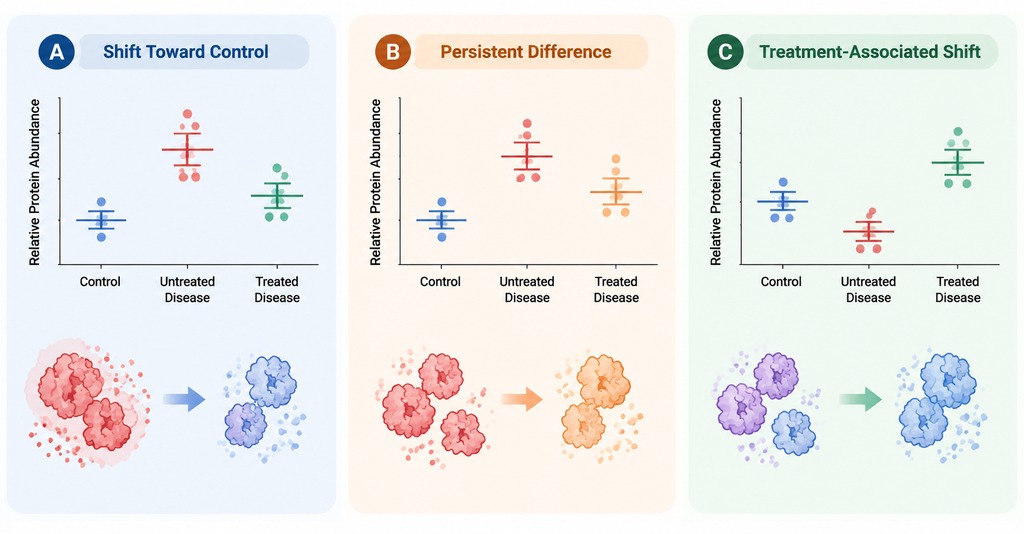
Figure 2. Patterns of Serum Protein Changes After Treatment.
Separating Disease and Treatment Effects
1. What Each Comparison Shows
Disease status and treatment exposure can both influence serum protein profiles. The same protein may therefore appear in more than one comparison, but the comparisons answer different questions. A control-versus-untreated-disease comparison describes disease-associated differences; an untreated-versus-treated-disease comparison examines changes associated with treatment in the disease context; and a control-versus-treated-disease comparison shows which differences remain between the treated group and controls.
|
Group comparison |
Main question |
Interpretation focus |
|
Control vs. untreated disease |
Which protein patterns differ with disease status? |
Disease-associated protein patterns |
|
Untreated vs. treated disease |
Which protein changes accompany treatment in the disease context? |
Treatment-associated shifts |
|
Control vs. treated disease |
Which differences remain relative to controls? |
Residual differences after treatment |
2. When Effects Overlap
A protein that is elevated in untreated disease and lower in the treated group shows a treatment-associated shift between the observed groups. The comparison with controls adds context: a profile closer to the control group may indicate a shift toward the control pattern, while remaining differences suggest that some disease-associated changes persist. Comparing the protein pattern with measured disease features and response indicators helps clarify how the shift relates to the observed outcome.
The comparison structure and timing of sample collection affect which question the data can answer. For more detailed guidance on planning interpretable group comparisons, see Comparative Serum Proteomics: Study Design for Differential Protein Analysis.
Verification of Serum Protein Changes
1. Confirming Selected Protein Changes
After a disease- or treatment-associated protein change has been identified, the same direction of change can be assessed in additional serum samples or an independent cohort, when available. Reproducing the pattern beyond the discovery dataset increases confidence that the observation is not specific to the initial sample set.
If the pattern differs in additional samples, compare cohort composition, treatment exposure, disease state, and sample timing before interpreting the discrepancy. This review helps determine whether the finding is consistent across the studied context or mainly reflects a more specific subgroup.
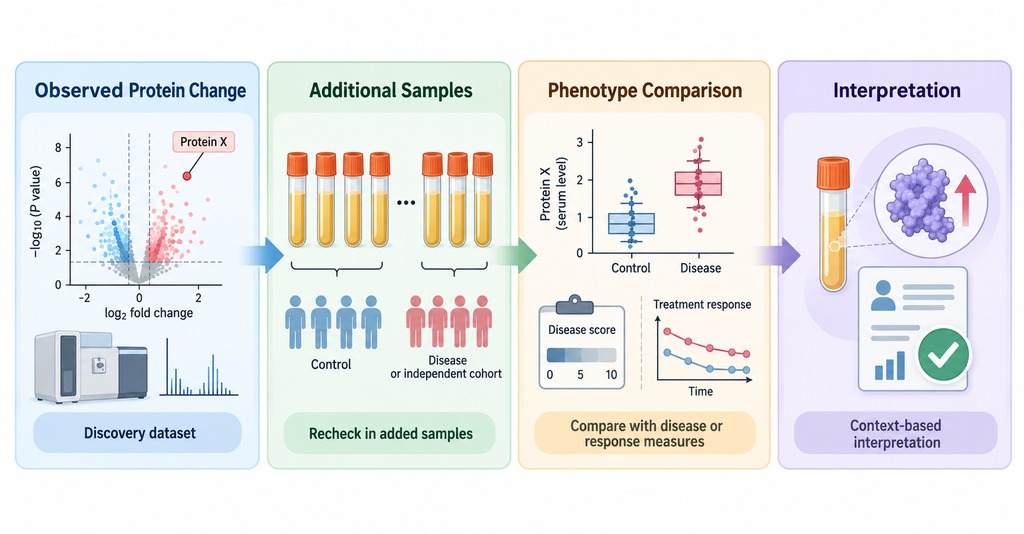
Figure 3. Serum Proteomics Follow Up of Selected Protein Changes.
2. Relating Verified Changes to Phenotypic Evidence
Once a selected change has been reproduced, compare the protein with the phenotype or response measure central to the study question. Disease studies may use pathology scores, biochemical measurements, or disease-activity indicators; treatment studies may use predefined response measures collected at relevant time points. Concordance supports the relevance of the protein change within the studied context.
A reproducible protein change that follows a different pattern from the selected phenotype may still describe a distinct biological feature. Review whether the phenotype definition, sampling time, and cohort characteristics capture the process represented by the protein. For studies moving from disease-associated changes to candidate biomarker prioritization, see Serum Proteomics for Biomarker Discovery: From Differential Proteins to Candidate Selection.
Frequently Asked Questions
1. Can serum proteomics be used without matched tissue samples?
Yes. Serum proteomics can characterize circulating protein profiles without matched tissue samples. However, serum measurements alone generally do not establish which tissue released a circulating protein; source attribution requires additional evidence.
2. Does a change in protein abundance mean that protein activity has changed?
No. Protein abundance and protein activity are different measurements. An abundance change identifies a difference in the amount of a protein detected, but additional evidence may be needed to determine whether its activity or function has changed.
3. Why does sample collection timing matter in drug-response studies?
Serum protein profiles can change over the course of treatment. Clearly defined collection time points help researchers distinguish early changes from later changes and relate the observed protein pattern to the response measure collected at the same stage.
4. How should findings from animal models be related to human disease?
Animal models can reveal protein patterns associated with a defined disease phenotype or treatment response. Applying those findings to human disease requires independent assessment because species, model biology, disease progression, and treatment context may differ from human cohorts.
5. Can the same serum protein vary across diseases?
Yes. A protein may reflect shared biological processes in several diseases or respond differently to distinct disease contexts. Interpretation depends on cohort characteristics and independently measured phenotypes, since the same protein may be associated with different biological processes across studies.
Conclusion
Serum proteomics can connect circulating protein patterns with disease state and treatment response when group comparisons are clearly defined and findings are considered alongside independent phenotype evidence. Moving from disease-associated patterns to treatment-related changes and verification of selected protein changes keeps the interpretation anchored to the study question.
For a broader overview of serum proteomics, see Serum Proteomics: Sample Preparation, Workflow Analysis, and Research Applications. Researchers with defined serum samples and study objectives can review Serum Proteomics Service for project-specific assessment.
How to order?