






Serum Proteomics for Biomarker Discovery: From Differential Proteins to Candidate Selection
Serum proteomics biomarker discovery can produce a long list of differential proteins, but statistical differences are only the starting point. Candidate selection focuses on proteins whose changes are consistent across samples, relevant to the research question, and measurable in follow-up work. The aim is to prioritize a focused set of candidates for evaluation in independent serum samples or by targeted PRM analysis.
Research Goals for Serum Biomarker Discovery
1. Biomarker Candidates for Disease–Control Comparisons
For disease–control studies, prioritize proteins whose group-associated changes are supported by multiple samples. Review the direction and spread of abundance values in both groups, especially whether the apparent difference depends on a few extreme observations. A useful candidate should address the intended biological contrast, not simply appear in a differential protein list.
2. Biomarker Candidates for Treatment-Associated Changes
For treatment-associated studies, candidate value depends on whether the protein change follows the comparison relevant to the research question. In paired pre- and post-treatment samples, within-subject changes can be more informative than group averages alone. When several sampling time points are included, interpret the protein pattern in relation to the planned observation time. Until follow-up evidence is available, describe the finding as treatment-associated rather than evidence of treatment efficacy or mechanism.
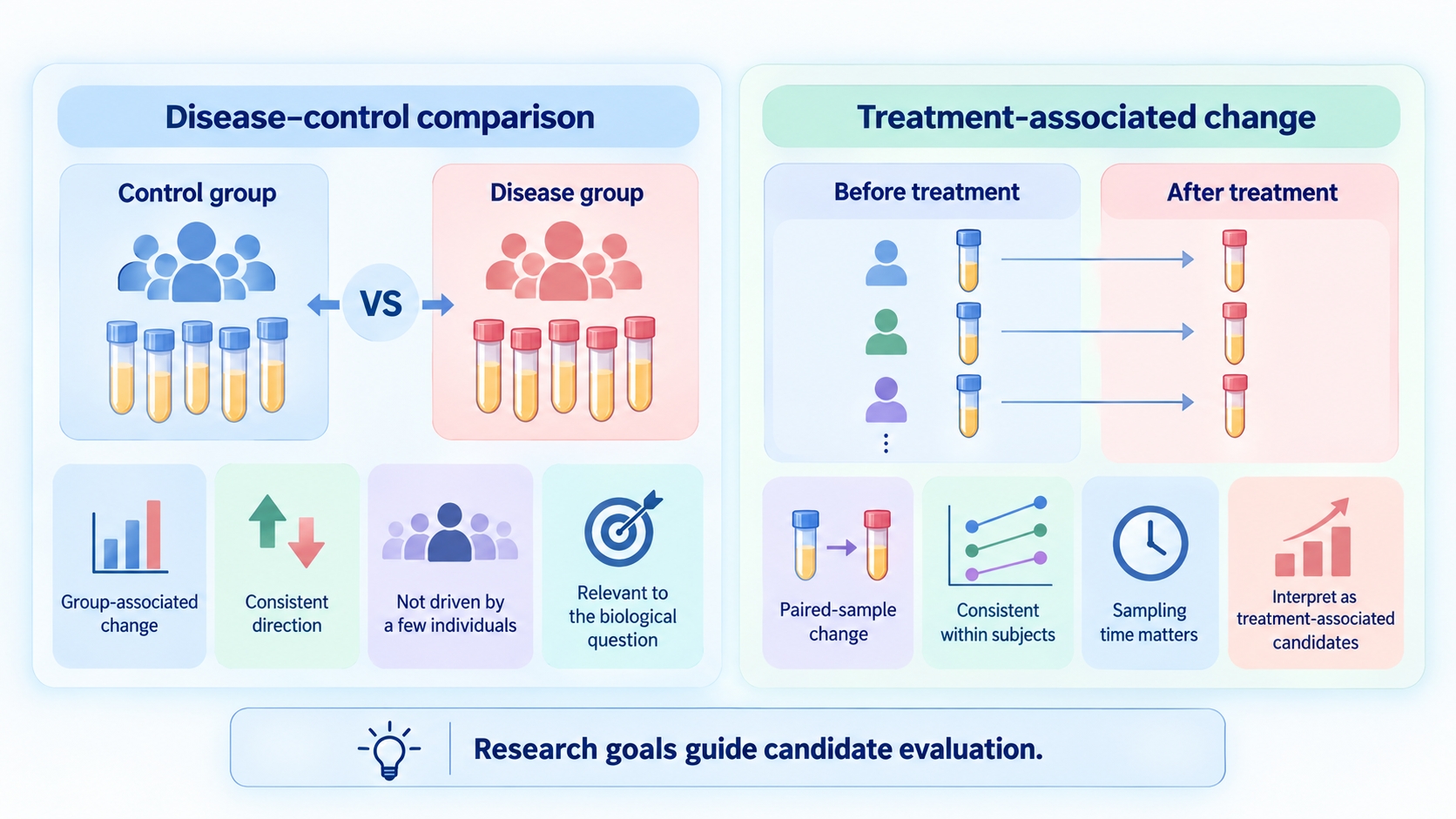
Figure 1. Candidate evaluation differs between disease–control and treatment-associated serum biomarker studies.
Identifying Biomarker Candidates from Differential Proteins
The differential protein list provides the screening pool; candidate selection determines which of those changes have enough evidence to move forward. If the differential protein results still need to be evaluated at the identification, quantification, and statistical levels, see How to Interpret Serum Proteomics Results and Quality Metrics before proceeding with candidate selection.
1. Check Protein Detection Across Samples
Review how broadly each candidate is detected or quantified in the samples from each group. A large estimated difference based on only a few detected specimens provides weaker support than a pattern represented across a broader portion of the comparison group. Missing values should be interpreted in the context of the detection pattern; missingness alone is not enough to retain or reject a candidate.
2. Evaluate Fold Change Together with Statistical Evidence
Compare Fold Change and statistical evidence with the sample-level abundance pattern. A large estimated change that depends on a few samples may be unstable, while statistical significance alone does not establish whether the change is useful for the biomarker question. Avoid ranking proteins by one metric or applying a universal cutoff. Prioritize candidates whose magnitude and direction of change are supported by a coherent pattern across samples.
2. Examine Within-Group Patterns and Individual Sample Dependence
Group-level statistics can hide whether a protein change is broadly represented or driven by a small number of samples. Review the individual abundance pattern to determine whether most samples support the reported direction of change. Candidates with pronounced within-group variability, extensive overlap, or strong dependence on isolated extreme values should receive lower priority during initial screening.
|
Screening dimension |
What to examine |
Reason for caution |
|
Detection pattern |
Presence and quantifiable signal across samples in each group |
A large difference based on only a few detected samples may be unstable |
|
Fold change |
Magnitude and direction of the group difference |
Large fold change alone does not establish candidate reliability |
|
Statistical evidence |
Significance of the observed group difference |
A low P-value does not indicate how large or consistent the change is |
|
Within-group pattern |
Variation, overlap, and dependence on individual samples |
A difference driven mainly by outliers may have limited candidate value |
These checks reduce the differential protein list to an initial set of candidates for reliability assessment.
Checking Candidate Protein Reliability
1. Check for Sample-Quality Confounding
After the initial shortlist is generated, check whether a candidate signal follows the biological comparison or instead tracks a sample-quality difference.
- Hemolysis-Related Signals
Erythrocyte-associated proteins deserve closer review when their strongest changes occur in visibly hemolyzed samples. The protein should not be discarded automatically, but hemolysis provides an alternative explanation that must be considered before prioritization.
- Clotting or Residual-Material Effects
Candidates associated with coagulation or blood-cell components should be reviewed when affected samples also contain clots, fibrin, or other documented abnormalities. The aim is to determine whether the candidate pattern follows the study group or the abnormal specimens.
- Handling and Storage Differences
Collection period, processing history, storage conditions, or freeze–thaw history may become confounding variables when they are unevenly distributed between study groups. A candidate whose signal closely follows one of these variables should be interpreted cautiously.
2. Decide Whether the Candidate Signal Remains Credible
These observations inform candidate ranking rather than acting as automatic exclusion rules. If the signal remains consistent across samples after relevant records are reviewed, the candidate can remain under consideration. If the signal closely follows abnormal specimens or preanalytical differences, lower its priority or flag the candidate for further verification.
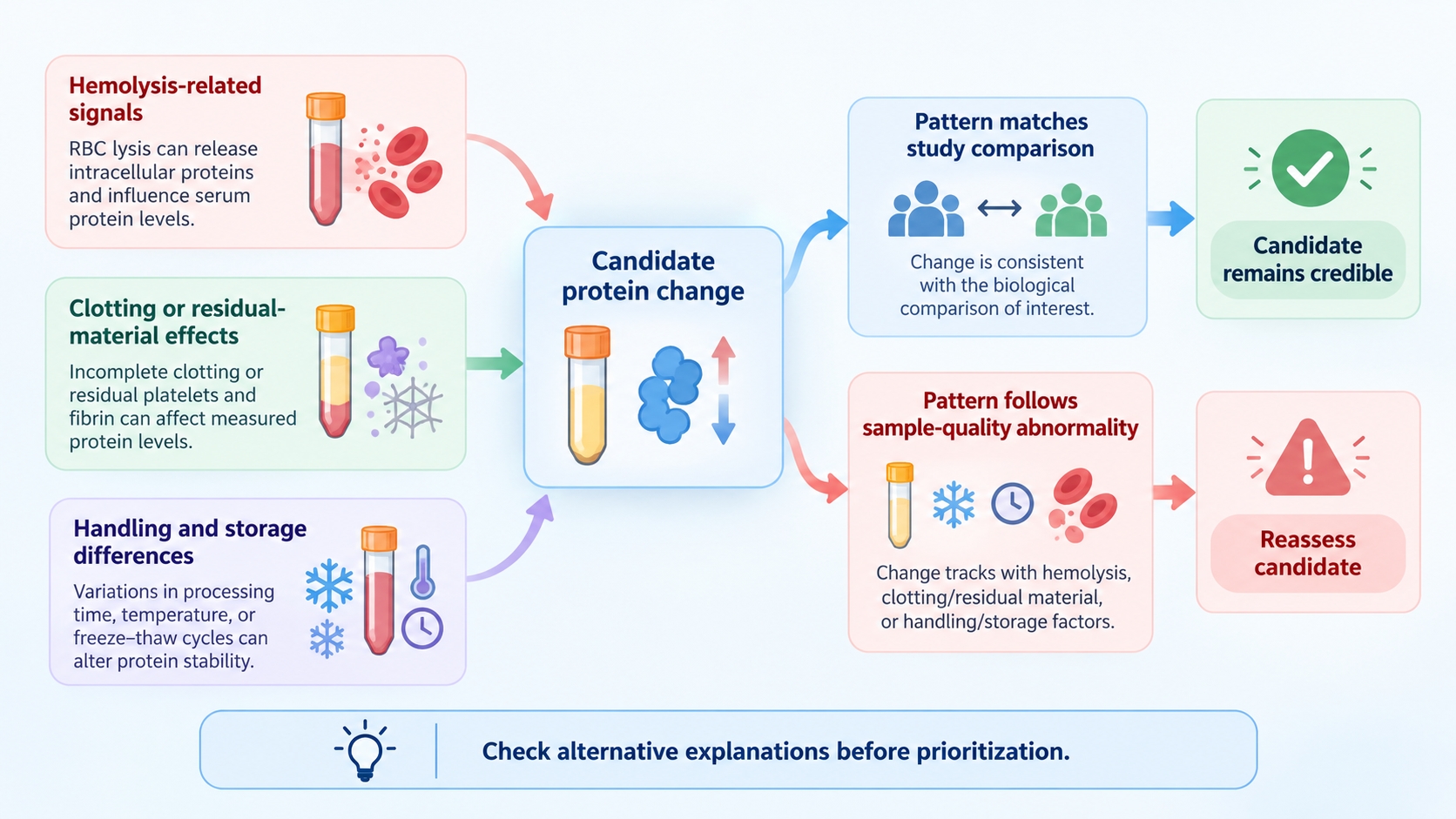
Figure 2. Assessing whether a serum biomarker candidate reflects the study comparison or sample-quality confounding.
Selecting Candidates for Validation
1. Research Relevance
Prioritize proteins that address the biomarker question defined for the study. Existing biological evidence can strengthen the rationale for follow-up, but the evidence should support rather than override the observed serum proteomics data. A familiar protein with an inconsistent discovery signal should not automatically outrank a less-characterized protein with stronger evidence in the current dataset.
2. Stability of the Observed Change
Among candidates that pass the reliability review, prioritize proteins with consistent detection and a stable direction of change across the relevant samples. A moderate but consistent difference may be more practical to verify than a larger change that depends on sporadic detection or a small subset of specimens.
3. Feasibility of Targeted Measurement
Candidate selection should also consider whether the protein can be measured by PRM. Review the availability of suitable specific peptides and sufficiently reliable peptide signals in serum. Analytical feasibility determines whether a discovery-stage candidate can be measured in follow-up work; it is separate from the candidate’s biological relevance.
Verifying Serum Biomarker Candidates
Verification tests whether a prioritized candidate retains the expected quantitative pattern beyond the original discovery results.
1. Verification in Independent Serum Samples
Independent serum samples help determine whether a candidate reproduces beyond the discovery dataset. Review whether the direction of change is retained and whether the sample-level pattern remains reasonably consistent. Effect sizes may differ between datasets because sample composition and biological variability differ. A major reversal in direction or loss of measurable signal calls for reassessment of the discovery-stage evidence.
2. Targeted Verification with PRM
PRM can provide targeted quantitative evidence for selected proteins. Before planning the analysis, define the target protein, suitable specific peptides, available serum material, and intended group comparison. The goal is to test whether the selected protein shows a measurable, reproducible difference for the comparison of interest, rather than to repeat the entire discovery proteome.
3. Reassessing Candidates When Verification Does Not Match Discovery
Discovery and verification results do not need to produce identical effect sizes or statistical outcomes. When the results disagree, first check whether the direction of change is retained and whether differences in sample composition or targeted peptide performance could explain the discrepancy. A weaker but directionally consistent effect may still support the candidate, whereas a reversed or unstable pattern weakens the original evidence. The appropriate response is to reassess the candidate rather than force agreement between the two stages.
|
Evidence stage |
Main question |
What the result supports |
|
Discovery |
Is the protein differentially represented in the original serum proteomics comparison? |
Identification of a potential biomarker candidate |
|
Candidate verification |
Does the candidate reproduce in independent serum samples or targeted PRM analysis? |
Stronger evidence that the protein change is reproducible |
|
Broader biomarker validation |
Does the candidate remain reliable across additional populations, analytical settings, and the intended application? |
Evidence toward a validated biomarker, requiring substantially broader confirmation |
Frequently Asked Questions
1. How many candidate proteins should be selected for verification?
There is no universal number. The size of the candidate set depends on the strength of the discovery evidence, the availability of independent serum samples, and the feasibility of targeted measurement. A focused list with a clear rationale is generally easier to evaluate than a large list containing weakly supported candidates.
2. Does PRM verification replace testing in independent serum samples?
The two approaches address related but distinct questions. PRM provides targeted quantitative evidence for selected peptides, while independent serum samples test whether a candidate change reproduces beyond the discovery set. PRM can be performed using independent samples when the study design and available material support both objectives.
3. Why do some candidates fail to reproduce in independent samples?
Discovery-stage differences can depend on biological heterogeneity, a small subset of samples, preanalytical variation, or an unstable quantitative signal. Independent cohorts can also differ from the discovery set. When replication is weak, the original sample-level evidence and the verification measurement should both be reviewed before the candidate is discarded.
4. Can low-abundance serum proteins be verified by PRM?
Potentially. Feasibility depends on whether suitable specific peptides can be detected and measured reliably in the relevant serum samples. Low protein abundance alone does not determine whether PRM verification will succeed, so feasibility should be assessed for the individual target.
Conclusion
Serum proteomics biomarker discovery should progress from differential proteins to a focused candidate shortlist rather than treating every statistically significant change as a potential biomarker. Candidate priority depends on whether the protein change is reproducible, relevant to the biomarker question, free from obvious sample-related confounding, and feasible to test in a subsequent targeted analysis.
Verification in independent serum samples or by targeted analysis can strengthen the evidence for a candidate, but it does not by itself establish a clinically validated biomarker. For a broader overview of serum proteomics workflows and applications, see Serum Proteomics: Sample Preparation, Workflow Analysis, and Research Applications. For projects with defined serum samples or selected proteins for follow-up, MtoZ Biolabs provides Serum Proteomics Service for discovery and targeted verification according to the agreed project scope.
How to order?