





Serum Sample Preparation, Storage, and Handling for Proteomics
Serum is the liquid fraction of blood obtained after coagulation and separation of the clot and blood cells. Rich in circulating proteins, serum provides valuable biological material for investigating protein abundance changes associated with different physiological conditions, disease states, and experimental treatments. In serum proteomics, sample preparation and handling are particularly important because collection and processing conditions can introduce variations before LC-MS/MS analysis. Proper serum separation, aliquoting, storage, and transportation help maintain sample integrity, while accurate handling records ensure sample traceability. This article outlines the key considerations for preparing, preserving, and submitting serum samples for proteomic analysis.
Serum Sample Collection for Proteomics
1. Blood Collection Tube Selection and Documentation
Collect blood using a vacuum blood collection tube without anticoagulant; a red-top tube is recommended. Other collection tubes require prior consultation and evaluation. Whole blood may also be collected into a clean centrifuge tube. Use consistent collection tubes and procedures across study samples whenever possible.
2. Collection Conditions and Sample Traceability
Record the blood collection date and time, collection site, and interval between collection and initial processing. For samples collected at multiple facilities, document any differences in tube type or processing procedures rather than assuming that collection conditions were identical. The study's collection and handling records should be linked to individual specimen identifiers.
For previously collected or archived serum, establish the sample source, collection date, original tube type, and whether the serum was separated before freezing. Include the available processing and storage history. If a collection detail is unavailable, mark the field as unknown rather than estimating a value. This distinction allows the project team to assess existing material without creating an inaccurate sample history.
For serum obtained from multiple facilities, identify the collection site and the site responsible for initial processing, when available. A collection date alone does not establish when serum separation or freezing occurred. Distinguishing collection, separation, and freezing records is particularly useful for archived specimens prepared under different local procedures.
Serum Separation and Initial Processing
1. Blood Clotting Prior to Serum Separation
After blood collection, gently invert the tube 8–10 times and leave the sample at 4°C for 30 min before centrifugation. Complete clot formation before separation, as incomplete clotting may leave residual fibrin in the recovered serum.
2. Centrifugation and Serum Recovery
After clot formation, centrifuge the sample at 4°C and 1,000 × g for 10 min. Record the separation time and centrifugation conditions. Document any additional clarification steps performed.
3. Transfer of the Serum Fraction
Transfer the upper pale-yellow serum into a clean centrifuge tube using a pipette, avoiding the underlying clot, blood cells, and visible particulate material. Mix the transferred serum and briefly centrifuge before aliquoting. Record any additional clarification performed.
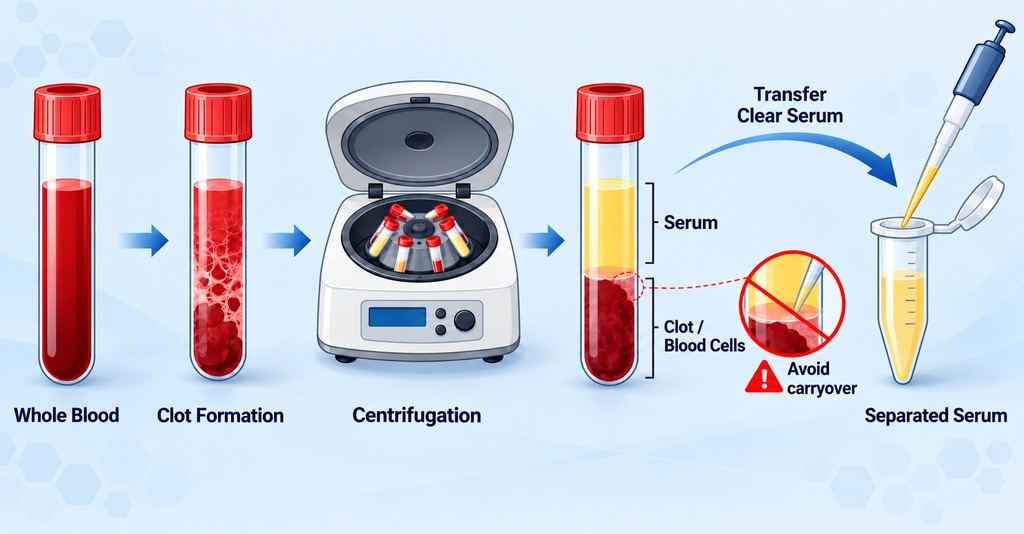
Figure 1. Serum formation and separation after blood clotting.
Serum Aliquoting, Freezing, and Storage
1. Aliquot Allocation for Proteomic Analysis
After serum separation and clarification, aliquot 100–200 μL per tube according to study needs. Prepare separate aliquots for planned analyses or repeat testing where sufficient material is available. Label each aliquot with a unique identifier linked to the original specimen.
An aliquot allocation record may include the original sample identifier, available serum volume, amount assigned to the primary proteomics analysis, reserve aliquots, and remaining material. Where one specimen cannot support every planned test, determine the order of analyses before aliquoting. Keep the allocation record with the sample manifest to distinguish material submitted to the laboratory from material retained at the collection site.
2. Serum Freezing and Storage Conditions
After aliquoting, snap-freeze serum in liquid nitrogen for 10 min and store at −80°C. Storage in liquid nitrogen is also acceptable. Under −80°C or liquid nitrogen storage without freeze-thaw exposure, the approximate storage window is 6 months to 2 years. Record the freezing date and storage history.
3. Freeze-Thaw Management and Retained Samples
Use separate aliquots when repeat testing is anticipated to avoid thawing the entire specimen repeatedly. Aim to limit freeze–thaw events to no more than two or three when practicable; record the actual number of events even if the recommended range has been exceeded. An aliquot inventory should identify the original specimen, tube identifier, storage location, remaining volume, and previous use.
Serum Sample Labeling and Shipping
1. Sample Identification and Manifest Documentation
Assign each specimen a unique identifier and give each aliquot its own distinguishable tube identifier. Use labels that remain legible under frozen storage, and match every tube to an entry in the shipment manifest. The manifest should connect the tube identifier to the specimen source, species, study group, collection date, and available handling records. Where multiple aliquots belong to one specimen, retain the link to the original specimen identifier without treating the aliquots as separate biological samples.
2. Frozen Shipment and Receipt Documentation
Ship frozen serum on dry ice in securely closed tubes and protective packaging suitable for frozen biological materials. Provide sufficient dry ice for the planned transit and potential delays in accordance with the shipping provider's requirements. Before dispatch, verify the tube count, manifest, container integrity, and label legibility. Document any observed thawing, packaging damage, or temperature excursion during transit or receipt, and disclose known collection or storage deviations with the shipment.
For samples distributed across multiple shipping containers or dispatched on different dates, record the originating sample IDs, package identification, and tube counts for each shipment. Use the same original specimen identifier across all manifests, including reserve aliquots sent later. The receiving laboratory should be able to distinguish a later delivery of an existing specimen from a new biological sample.
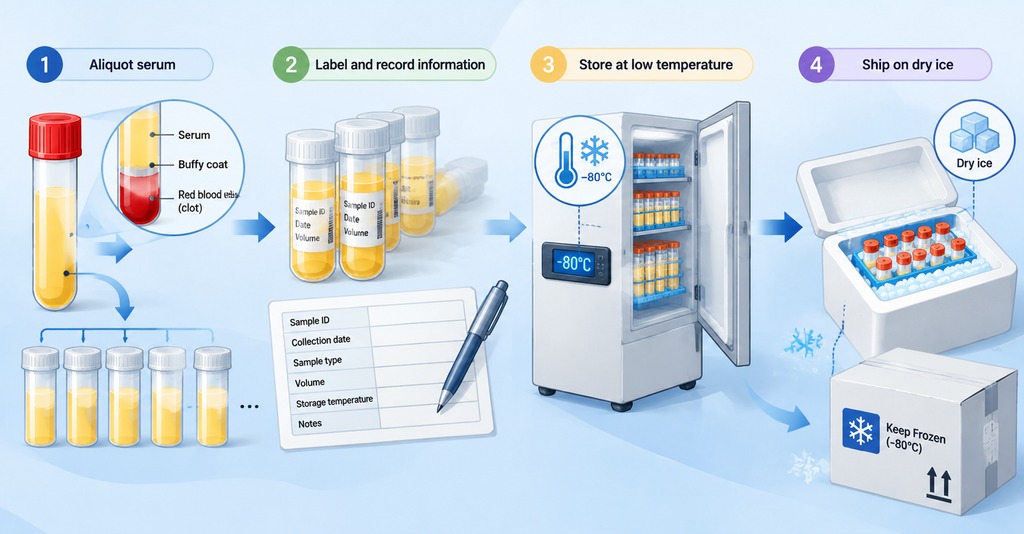
Figure 2. Serum aliquot identification, frozen storage, and dry ice shipment records.
Serum Proteomics Sample Requirements
|
Submission checkpoint |
Requirement / Information |
|
Sample format |
Separated serum in identifiable, intact, securely closed tubes |
|
Storage and transport |
−80 °C or liquid nitrogen storage; dry ice shipment |
|
Freeze–thaw record |
Preferably no more than 2–3 freeze–thaw events; report actual history |
|
Conventional/deep serum proteomics: minimum volume |
Minimum 5 μL for standard workflows; minimum 25 μL for workflows requiring specialized pre-treatment. |
|
Conventional/deep serum proteomics: recommended volume |
At least 10 μL for standard workflows; at least 50 μL for workflows requiring specialized pre-treatment. |
|
Conventional/deep serum proteomics: minimum protein input |
50 μg for standard workflows; 1 mg for workflows requiring specialized pre-treatment. |
|
PTM proteomics (phosphorylation/glycosylation) |
Recommended starting volume: 100 μL. |
|
PRM targeted validation |
Sample volume: minimum 20–50 μL; recommended 50–100 μL. Protein input: minimum 50 μg; recommended 100 μg. |
|
Sample records |
Species, project background, groups, sample IDs, and available handling records |
Before shipment, reconcile the sample manifest with the actual tubes and provide species, research background, study groups, and available collection and handling records. Identify missing historical information as unknown rather than using estimated values.
Clearly red or dark-red serum is not accepted. Disclose visible lipemia, deep yellow or yellow-brown discoloration, residual clots, or unexpected thawing before shipment. For details on how serum abnormalities affect protein identification and quantification, see How Does Serum Sample Quality Affect Proteomics Results?.
For conventional or deep serum proteomics, sample volume and protein input requirements depend on the intended analysis. Researchers with limited material can confirm submission conditions and project feasibility through Serum Proteomics Service before allocating or shipping their specimens.
Frequently Asked Questions
1. What species information is required for non-human serum samples?
Provide the scientific species name and, when relevant, the strain, breed, or other source details. A species-specific or related-species reference protein database may be used after suitability is evaluated. If the available sequence information is incomplete, identify the species before the project begins so that database availability can be assessed.
2. Can long-archived serum still be evaluated for proteomics?
Yes. Archived serum can be evaluated using the available collection records, storage conditions, known freeze–thaw history, and current sample condition. The storage period alone does not determine whether the specimen can be accepted. Missing historical details should be identified explicitly during project review.
3. Are special documents required for serum with infectious or animal-contamination risks?
Yes. Infectious risks or animal-source contamination risks must be disclosed in advance, together with compliant inactivation documentation. The laboratory assesses whether the material can be accepted under the applicable biosafety requirements before shipment.
4. Can serum from multiple specimens be pooled before submission?
Do not pool individual specimens by default. Pooling removes the ability to examine variation among the contributing specimens. If a pooled sample is part of the planned study, confirm the approach before submission and provide the original specimen identifiers, contributed volumes, and preparation records.
5. Can serum containing preservatives or reagents from previous assays be submitted?
Such samples require a compatibility review before shipment. Disclose any added preservatives, stabilizers, detergents, or reagents used in previous assays, including the reagent name and concentration when available. The suitability of the remaining serum depends on the sample treatment and intended proteomics analysis.
Conclusion
Serum preparation for proteomics is complete when the specimen has been separated, aliquoted, stored under appropriate conditions, and matched to reliable collection and shipping records. For a broader view of sample handling within serum proteomics, see Serum Proteomics: Sample Preparation, Workflow Analysis, and Research Applications. Projects with collected samples and defined research goals can proceed to a submission assessment through Serum Proteomics Service.
How to order?