






Main Types of Protein Glycosylation: N-Linked, O-Linked, and GPI Anchors Explained
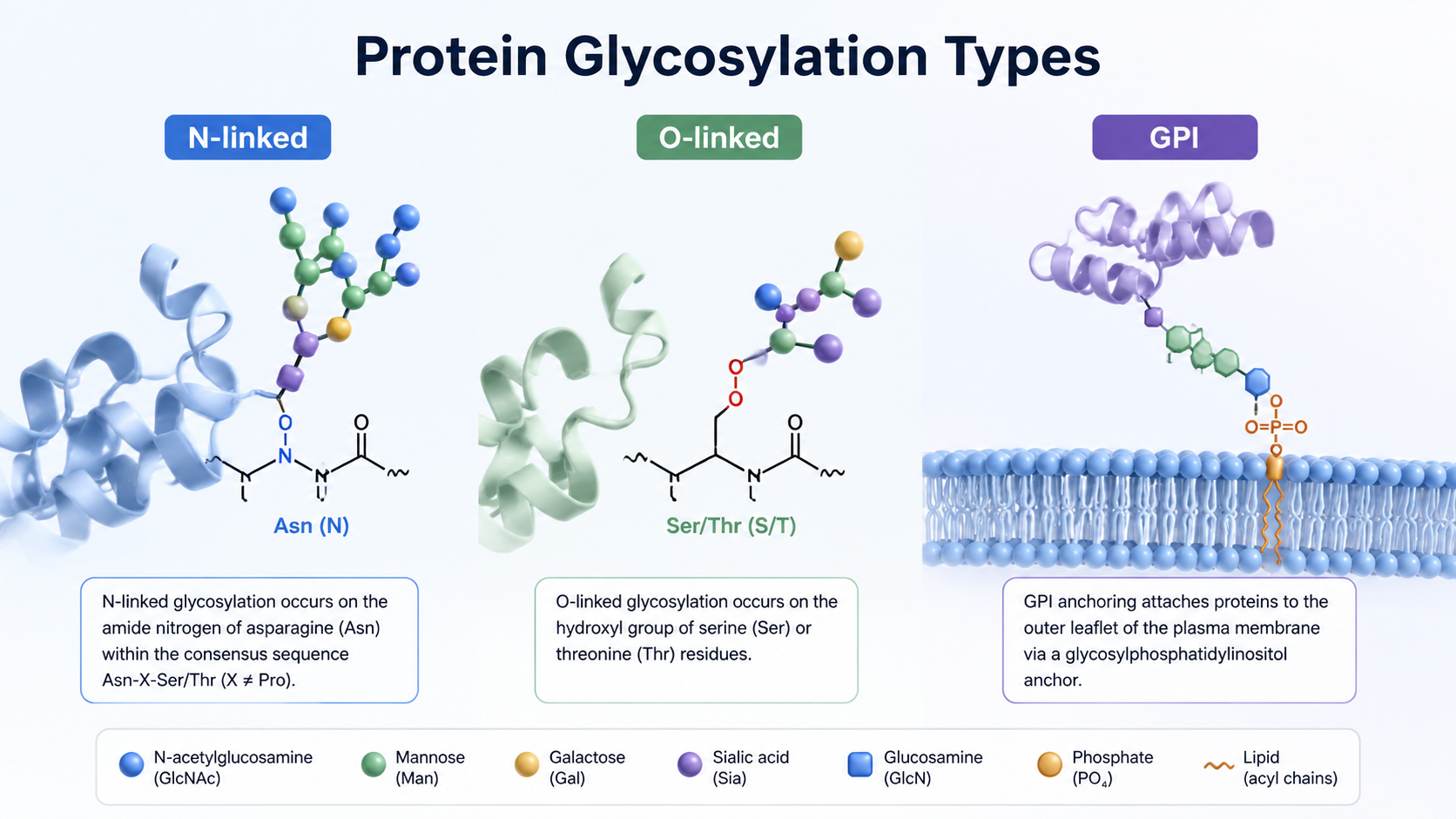
Protein glycosylation attaches sugar chains to proteins and changes folding, stability, trafficking, receptor binding, and immune recognition. The three major classes used in most proteomics and biopharmaceutical workflows are N-linked glycosylation, O-linked glycosylation, and glycosylphosphatidylinositol (GPI) anchors.
Key Takeaways
- N-linked glycans attach to asparagine in the consensus motif Asn-X-Ser/Thr and mature in the ER and Golgi.
- O-linked glycans attach to serine or threonine, often with Golgi-localized biosynthesis.
- GPI anchors tether proteins to the plasma membrane and can be released by phospholipases.
What is Protein Glycosylation?
Glycosylation is a post-translational modification in which oligosaccharides are covalently linked to amino acid side chains or to the protein C-terminus. Glycans exist as families of structures on the same site, which creates microheterogeneity that mass spectrometry must deconvolve.
Related Services
Glycosylation Site Analysis Service
Comprehensive Glycosylation Analysis Service
Biopharmaceutical Glycosylation Site Analysis Service
Glycosylation Protein Analysis Service
Antibody Drug Glycosylation Characterization Service
N-Linked Glycosylation
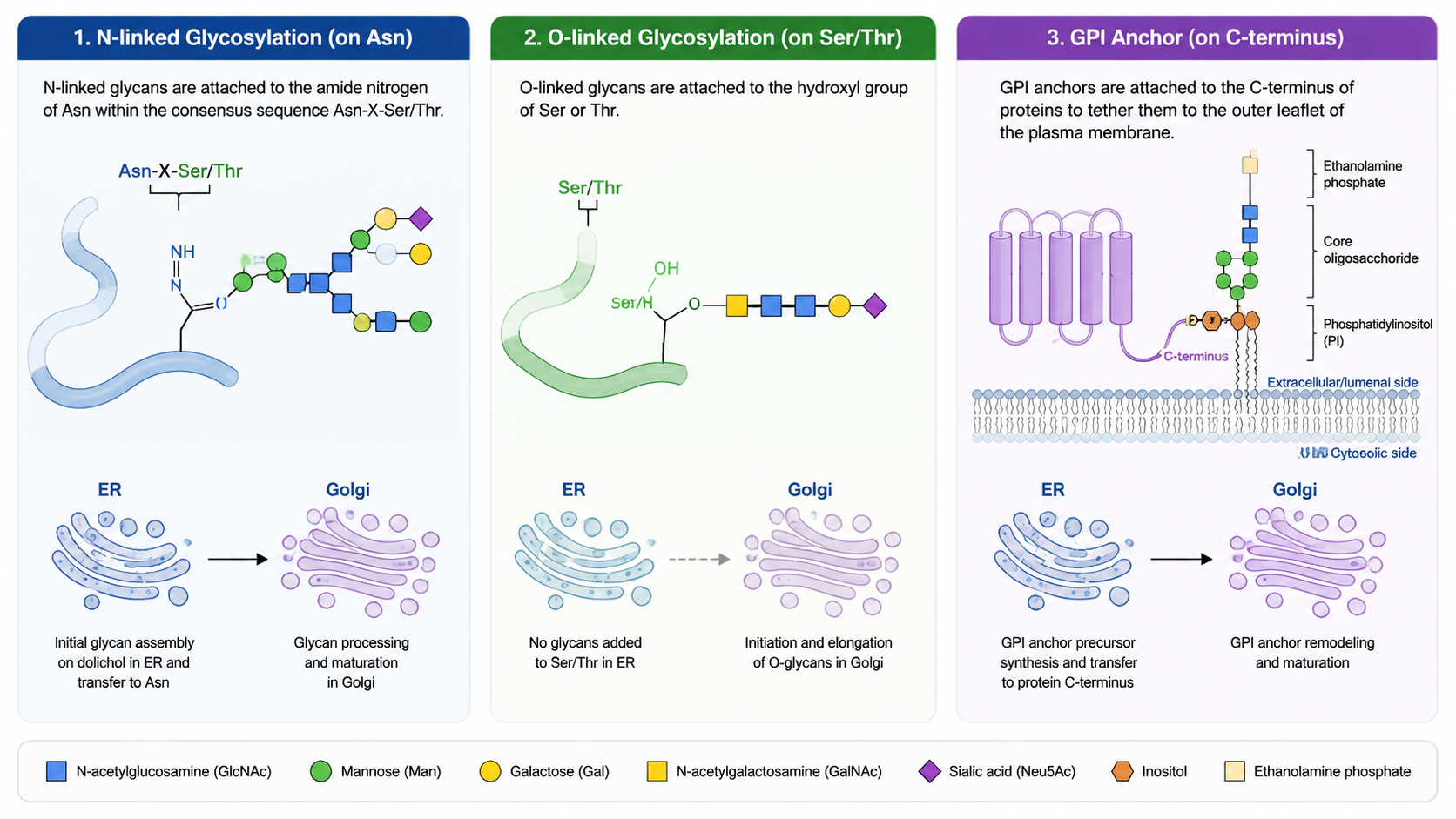
N-linked glycans attach to asparagine when the sequence matches Asn-X-Ser/Thr. Assembly starts in the ER with a high-mannose precursor, then matures in the Golgi to hybrid and complex types. In therapeutic antibodies, Fc N-glycans influence effector function.
O-Linked Glycosylation
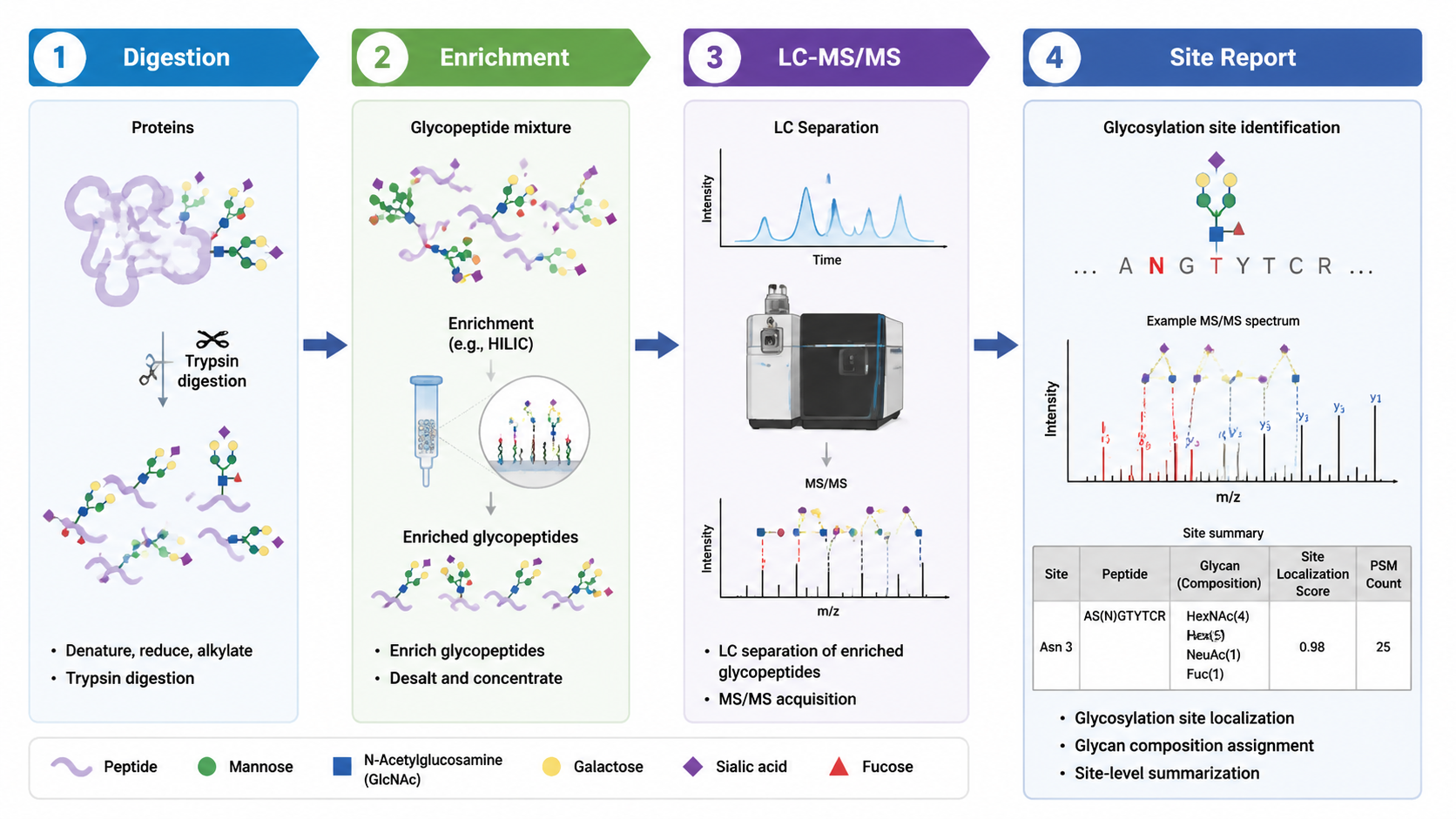
O-linked glycans attach to serine or threonine. Mucin-type O-GalNAc is common, but specialized O-linkages also exist. Site prediction is less motif-driven than N-linked rules, so MS site mapping is essential.
GPI Anchors
GPI anchors are glycolipid structures added to the C-terminus of membrane proteins. Phospholipase cleavage enables regulated release of GPI-anchored ectoenzymes and regulators.
How Glycosylation Types Are Analyzed by MS?
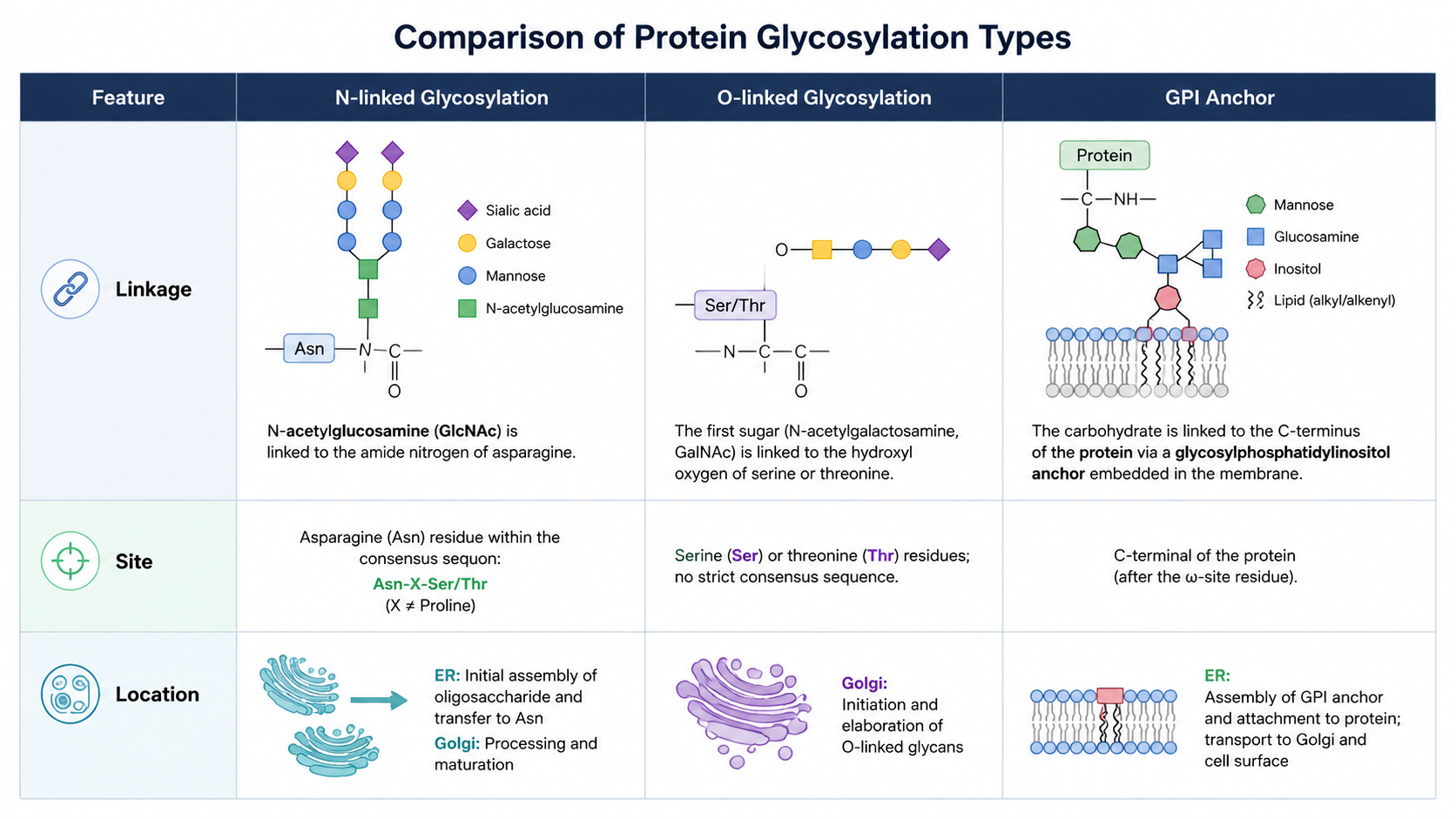
| Type | Linkage | Common MS strategy |
|---|---|---|
| N-linked | Asn | PNGase F, HILIC enrichment |
| O-linked | Ser/Thr | Lectin enrichment, site localization |
| GPI | C-terminal | Phospholipase release, lipidomics |
FAQ
1. What is the difference between N-linked and O-linked glycosylation?
N-linked glycans attach to asparagine in a consensus sequence; O-linked glycans attach to serine or threonine.
2. Why does glycosylation matter for biologics?
Glycans affect stability, pharmacokinetics, effector function, and immunogenicity.
Conclusion
N-linked, O-linked, and GPI anchor glycosylation cover most glycoprotein diversity in research and biopharmaceutical development. Matching the class to the right enrichment and MS workflow is the first step toward confident characterization.
How to order?




