






Exploring Histone Post-Translational Modifications
What Are Histone Modifications?
Histones are essential proteins that organize and package genomic DNA into chromatin within the nucleus. In eukaryotic cells, DNA wraps around histone proteins to form nucleosomes, the fundamental structural units of chromatin (Luger et al. 1997). This organization helps compact DNA while maintaining access to the genetic information required for cellular activities.
A typical nucleosome consists of an octamer containing two copies each of the core histones H2A, H2B, H3, and H4, around which approximately 147 base pairs of DNA are wrapped. Histone proteins also contain flexible terminal regions, commonly referred to as histone tails, which extend from the nucleosome and provide sites for various chemical modifications.
Histone modifications are chemical changes that occur on histone proteins after their synthesis. These modifications can affect histone charge, protein interactions, and chromatin organization, thereby influencing how DNA is packaged and accessed by cellular machinery. Histone modifications occur at different amino acid residues, particularly on lysine, arginine, serine, threonine, and other modification-sensitive residues. They include several types of post-translational modifications (PTMs), such as acetylation, methylation, phosphorylation, ubiquitination, and lactylation.
The distribution and combination of histone modifications provide molecular information about chromatin states and gene regulation. Consequently, analyzing histone modifications has become an important approach for investigating epigenetic regulation, cellular differentiation, disease-associated molecular changes, and responses to environmental stimuli. If you are exploring histone modifications in your research, you can learn more about our Histone Post-Translational Modification Analysis Service or contact our team to discuss your research interests and analytical needs.
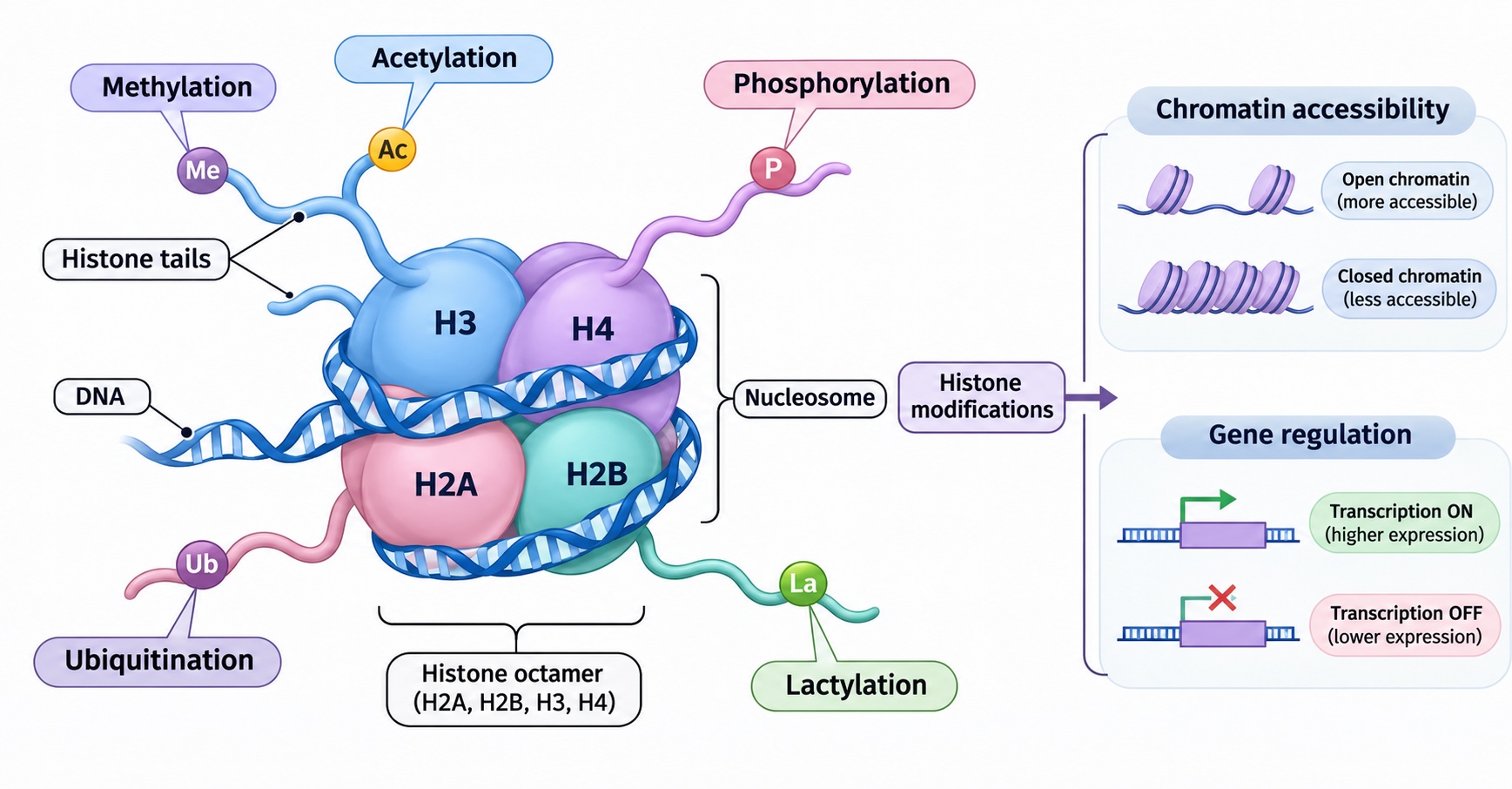
Figure 1. Histone Structure and Major Modification Types
What Are the Major Types of Histone Modifications?
Histones undergo multiple types of post-translational modifications, each involving different chemical groups, amino acid residues, and biological contexts. Some modifications are particularly well studied because of their associations with chromatin structure and transcriptional regulation. The following table summarizes major histone modification types and their representative research directions.
| Histone Modification | Main Modification Feature | Research Focus |
|---|---|---|
| Acetylation | Addition of acetyl groups, primarily to lysine residues | Chromatin accessibility, transcriptional regulation, and gene expression |
| Methylation | Addition of one, two, or three methyl groups to lysine residues, or methyl groups to arginine residues | Chromatin states, transcriptional regulation, and gene silencing |
| Lactylation | Addition of lactyl groups, commonly to lysine residues | Metabolic regulation, gene expression, and cellular responses |
| Phosphorylation | Addition of phosphate groups to amino acid residues | Chromosome dynamics, DNA damage responses, and cell signaling |
| Ubiquitination | Covalent attachment of ubiquitin to histone proteins | Chromatin organization, transcriptional regulation, and DNA repair |
| SUMOylation | Covalent attachment of small ubiquitin-like modifier (SUMO) proteins | Chromatin regulation, transcription, and genome stability |
| Crotonylation | Addition of crotonyl groups to lysine residues | Transcriptional regulation and chromatin activity |
| Succinylation | Addition of succinyl groups to lysine residues | Metabolic regulation and chromatin-associated processes |
| Butyrylation | Addition of butyryl groups to lysine residues | Chromatin regulation and transcription-associated processes |
| β-Hydroxybutyrylation | Addition of β-hydroxybutyryl groups to lysine residues | Metabolic regulation and gene expression |
Among these modifications, methylation, acetylation, and lactylation have received the most research attention in histone PTM studies.
Histone methylation involves different methylation states at specific lysine or arginine residues, providing information about distinct chromatin-associated regulatory patterns. For a closer look at the representative methylation marks and their analytical characterization, explore Histone Methylation: Site-Specific Marks and Proteomics Analysis.
Histone acetylation is closely associated with chromatin accessibility and transcriptional regulation. Its distribution across histone proteins and specific lysine residues provides useful information for studying gene expression. Learn more in Histone Acetylation: Key Sites, Marks, and Proteomics Analysis.
Histone lactylation has attracted increasing research interest because of its connection with cellular metabolism and gene regulation. Investigating lactylated histones provides another perspective on the relationship between metabolic conditions and chromatin-associated processes. Further information is available in Histone Lactylation: Site Identification and Proteomics Analysis.
How Do Histone Modifications Influence Chromatin Structure and Gene Regulation?
Histone modifications contribute to the regulation of chromatin structure and gene expression by influencing interactions among histones, DNA, and other chromatin-associated proteins.
Histone-Modifying Enzymes and Their Functions
Histone modification patterns are dynamically regulated by enzymes that add or remove chemical groups from histone proteins, as well as proteins that recognize specific modification marks.
These regulatory proteins are commonly classified into three functional groups:
- Writers: Enzymes that add modifications to histones, including histone acetyltransferases (HATs/KATs) and histone methyltransferases (HMTs).
- Erasers: Enzymes that remove histone modifications, such as histone deacetylases (HDACs) and histone demethylases (HDMs).
- Readers: Proteins that recognize specific histone modification marks and help recruit other regulatory factors to chromatin. Examples include bromodomain-containing and chromodomain-containing proteins.
The coordinated activities of these proteins contribute to dynamic changes in histone modification patterns and chromatin regulation. Studying these changes can help researchers investigate the molecular mechanisms underlying epigenetic regulation and gene expression.
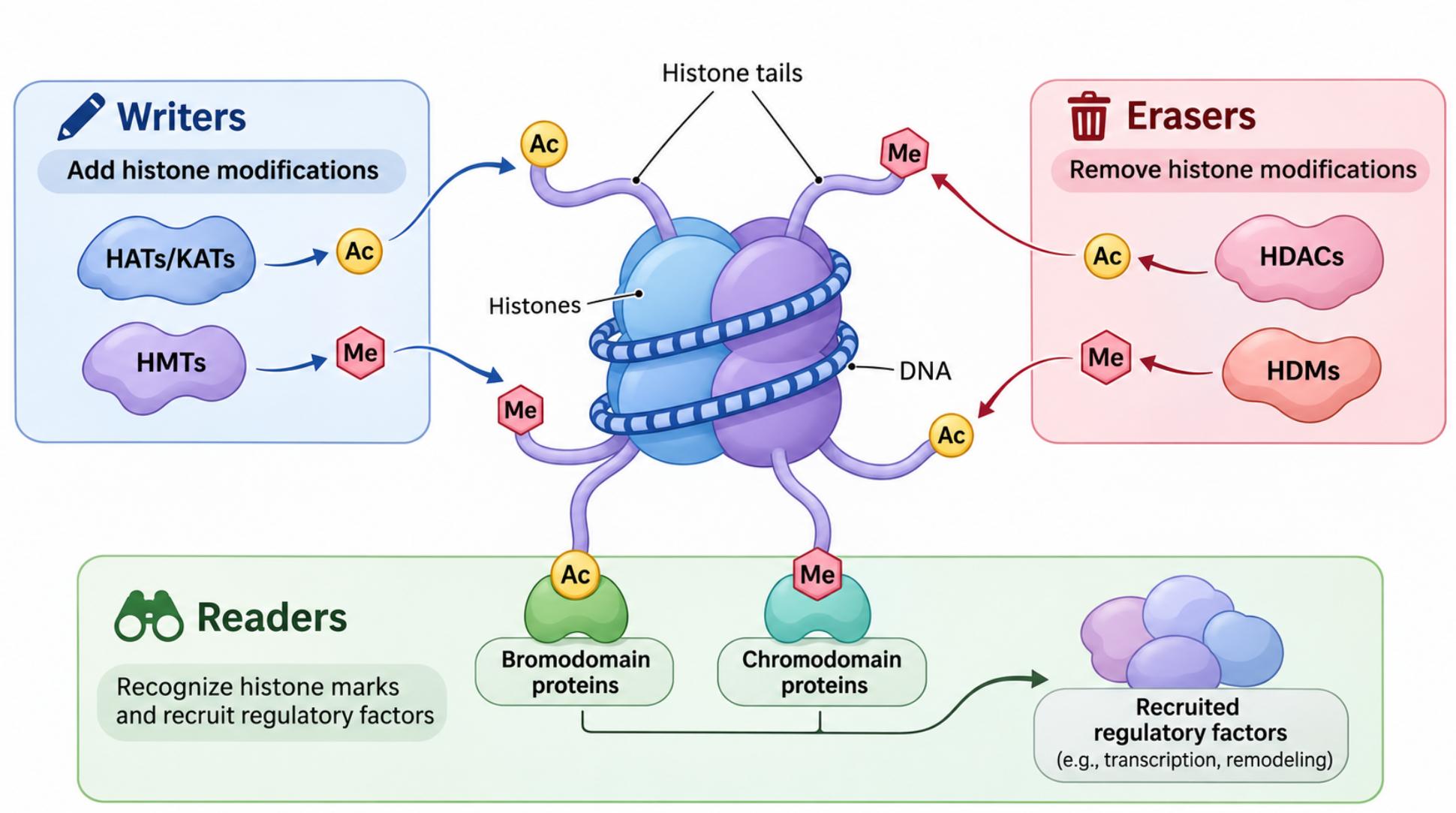
Figure 2. Histone Modification Dynamics: Roles of Writers, Erasers, and Readers
Chromatin Structure and Accessibility
DNA is negatively charged, while histone proteins contain positively charged regions that contribute to their interactions with DNA. Certain histone modifications can alter these interactions or recruit proteins that influence nucleosome organization.
For example, lysine acetylation neutralizes the positive charge of lysine side chains, potentially weakening electrostatic interactions between histones and DNA. This can contribute to changes in chromatin accessibility.
Other modifications can create binding sites for specific chromatin-associated proteins, which may influence nucleosome positioning, chromatin compaction, and the recruitment of regulatory complexes. (Kouzarides 2007)
Histone Modification Patterns and Transcriptional Regulation
Different histone modifications are associated with different transcriptional and chromatin states. Some representative examples include:
-
H3K4me3: Commonly associated with active promoters and transcription initiation.
-
H3K27ac: Frequently used as a marker of active promoters and enhancers.
-
H3K27me3: Commonly associated with Polycomb-mediated transcriptional repression.
-
H3K9me3: Associated with constitutive heterochromatin and transcriptional repression.
These associations help researchers investigate chromatin states and gene regulation. However, individual histone marks do not independently determine whether a gene is expressed or silenced. Their interpretation depends on genomic location, cellular context, co-occurring modifications, and other regulatory factors. Multiple histone modifications can also coexist or interact with one another. Such combinations may influence the recruitment of regulatory proteins and contribute to complex patterns of chromatin regulation.
Applications of Histone PTM Analysis in Biological Research
Histone PTM analysis provides molecular information for investigating how chromatin regulation changes during different biological processes. By examining modification patterns and their variations, researchers can explore epigenetic changes associated with cellular states, disease models, and environmental conditions.
Cell Differentiation and Development
During cell differentiation, cells acquire distinct gene expression profiles while retaining largely the same genomic DNA sequence. Histone modifications are involved in regulating chromatin states associated with cell identity and developmental transitions.
Analyzing histone PTMs can help investigate:
-
Changes in chromatin-associated regulatory marks during differentiation.
-
Histone modification patterns associated with stem cell maintenance and lineage commitment.
-
Epigenetic changes accompanying developmental transitions.
-
Differences in histone modification profiles between cell populations.
These findings can provide molecular evidence for studying how chromatin regulation contributes to cell differentiation and development.
Cancer and Disease-Related Research
Abnormal histone modification patterns have been reported in various diseases, particularly cancer. Changes in histone acetylation, methylation, and other PTMs may be associated with altered chromatin organization and gene expression in disease-related models.
Histone PTM analysis can support investigations into:
-
Differences in histone modification patterns between normal and disease-associated samples.
-
Altered histone marks associated with tumor development and progression.
-
Chromatin-related changes accompanying disease-associated gene expression.
-
Histone modification patterns associated with treatment responses.
Comparing histone modification profiles across disease models can help identify candidate molecular changes for further mechanistic investigation.
Metabolic and Cellular Responses
Cellular metabolism is closely connected to chromatin regulation. Metabolites can participate in biochemical reactions that influence the activity of enzymes responsible for adding or removing histone modifications.
Histone lactylation is one example of this relationship. Its study provides a way to investigate how metabolic conditions may be associated with changes in histone modification patterns and gene expression.
Histone PTM analysis can also support research into:
-
Histone modification changes under altered metabolic conditions.
-
Chromatin-associated responses to nutrient availability.
-
Epigenetic changes during cellular stress.
-
Relationships between metabolic states and inflammatory responses.
These studies help connect metabolic changes with chromatin-associated regulation at the molecular level.
What Can Mass Spectrometry-Based Histone PTM Analysis Reveal?
Mass spectrometry-based histone PTM analysis provides molecular information at the protein, peptide, and modification-site levels. It enables researchers to investigate histone modifications beyond the detection of individual known marks.
Identification of Histone Proteins and Modified Peptides
Mass spectrometry can identify histone proteins, including core histones and their variants, as well as peptides carrying specific modifications. This information helps characterize which histone proteins are present in a sample and which peptide sequences contain modification-associated evidence. Modified peptide identification provides a foundation for examining histone modification patterns and their distribution across different histone proteins.
Characterization of Modification Sites and Forms
Beyond identifying modified histone peptides, mass spectrometry can provide information about the specific amino acid residues carrying modifications. Depending on the analytical evidence, researchers can investigate different modification forms, such as lysine mono-, di-, and trimethylation, as well as peptides carrying one or multiple acetylation sites. This site-level information is useful for distinguishing different modification forms and investigating modification patterns within histone sequences.
Histone PTM Profiles and Abundance Information
Histone PTM profiling can provide information about multiple modification types within a sample. The resulting data may include modified peptides, identified sites, and different modification forms associated with histone proteins. When quantitative analysis is incorporated, mass spectrometry can also compare modification-associated peptide signals across experimental conditions. These results provide a broader view of histone modification patterns and can help identify candidate modifications associated with particular biological states. The interpretation of quantitative signals should consider the abundance of the corresponding histone proteins. Relative modified-peptide abundance does not automatically represent the proportion of histone molecules carrying a particular modification.
How to Choose a Histone PTM Analysis Strategy?
The appropriate histone PTM analysis strategy depends on what researchers already know about their target modifications and what information they expect to obtain. Three common research directions include focused analysis of known modifications, global histone PTM profiling, and quantitative comparison across experimental conditions.
Focused Analysis of Known Histone Modifications
When a study has a clearly defined modification target, focused analysis can investigate specific histone PTM types or candidate modification sites. For example, researchers interested in histone acetylation, methylation, or lactylation may focus on the corresponding modified peptides and site-level information. This approach is useful when previous studies, preliminary experiments, or a specific research hypothesis have identified the modifications of interest.
Global Histone PTM Profiling for Broader Discovery
When the target modifications have not been fully established, global histone PTM profiling can provide a broader view of modification patterns within a sample. Rather than focusing exclusively on one modification type, this approach aims to identify multiple histone modifications and explore their distribution across histone proteins and peptides. It can help researchers discover candidate modification types and identify directions for subsequent focused investigations. For a more detailed discussion, see Global Histone PTM Profiling: How to Identify Multiple Histone Modifications?.
Quantitative Comparison Across Experimental Conditions
When a study includes defined experimental groups, quantitative histone PTM analysis can help compare modification-associated signals across conditions. For example, researchers may investigate differences between control and treatment groups, different disease models, or samples collected at different time points. The analysis can provide relative abundance information for modified peptides and help identify histone modification changes associated with experimental conditions. The research objective, sample comparability, and expected quantitative outputs are important considerations when planning this type of analysis. Learn more in Quantitative Histone PTM Analysis: How to Compare Modification Changes Across Conditions?.
Planning a Histone PTM Study: Samples, Controls, and Replicates
A well-planned histone PTM study begins with a clearly defined research objective and an experimental design that supports reliable comparisons. Several factors should be considered before starting the analysis.
Defining Modification Targets and Analysis Scope
The research objective determines whether the study should focus on a specific histone modification or investigate a broader range of PTMs.
Before selecting an analysis strategy, researchers should clarify:
- Whether the target modification type is already known.
- Whether specific histone proteins or modification sites are of interest.
- Whether multiple histone modification types need to be investigated.
- Whether the study requires modification identification, quantitative comparison, or both.
- Whether preliminary results or known candidate sites are available.
Defining these objectives helps establish the appropriate analytical scope and expected results.
Histone Sample Sources and Preparation
Histones can be investigated using different biological materials, including cultured cells, tissues, and other samples containing nucleated cells. The sample source influences the requirements for histone extraction and subsequent analysis. Researchers should consider sample composition, protein integrity, and potential differences in histone abundance between biological materials. Consistent sample collection, storage, and processing are also important because changes during sample handling may affect protein integrity and modification patterns.
Experimental Groups and Biological Replicates
For comparative studies, experimental groups should be established according to the research hypothesis.
Important considerations include:
- Control and treatment groups: Define the conditions being compared, such as untreated and stimulated cells or normal and disease-associated samples.
- Biological replicates: Include independent biological replicates to characterize biological variation and support statistical comparisons.
- Consistent sample processing: Apply comparable preparation and analytical procedures across experimental groups.
- Sample comparability: Consider differences in cell composition, tissue characteristics, and histone input that may influence the interpretation of modification signals.
Frequently Asked Questions About Histone PTM Analysis
1. Can Mass Spectrometry Identify Multiple Histone Modifications in One Study?
Yes. Mass spectrometry can be used to identify multiple histone modification types within the same study. The modifications included in the analysis depend on sample preparation, analytical strategy, and database-search parameters. Global histone PTM profiling is particularly useful when researchers want to investigate a broader range of modifications rather than focusing on a single known target.
2. Do I Need to Know the Target Histone Modification Before Starting an Analysis?
Not necessarily. If the research objective is to explore a broad range of histone modifications, global profiling can help identify modification types and candidate sites. When a specific modification is already known, focused analysis may provide more detailed information about the target.
3. Can Mass Spectrometry Identify Specific Histone Modification Sites?
Yes. LC-MS/MS can provide peptide-level and site-level evidence for histone modifications. Fragmentation spectra help identify modified peptide sequences and support the localization of modifications to specific amino acid residues. The confidence of site assignment depends on the quality of the mass spectrometric evidence.
4. Can Histone PTM Analysis Reveal the Activity of Histone-Modifying Enzymes?
Histone PTM analysis can identify and quantify modification-associated changes, providing molecular evidence of altered histone modification patterns. However, these changes do not directly establish the activity of specific histone-modifying enzymes. Enzyme activity requires dedicated biochemical assays, while mass spectrometry-based PTM analysis can help investigate the downstream modification changes associated with enzyme-related regulation.
Start Your Project with MtoZ Biolabs
Histone modifications provide important insights into chromatin organization, gene regulation, cellular differentiation, and disease-associated biological changes. From investigating specific modification types to profiling multiple histone PTMs and comparing their relative abundance across experimental conditions, mass spectrometry-based analysis offers valuable molecular information for histone research.
MtoZ Biolabs provides mass spectrometry-based PTM analysis services supporting modification identification, site characterization, and relative quantitative analysis. The appropriate analytical approach depends on the target modification, sample characteristics, research objectives, and expected results.
Explore our Histone Post-Translational Modification Analysis Service to learn more about our PTM analysis capabilities. You are also welcome to contact our team for a free consultation to discuss your histone research objectives and analytical requirements.
Reference
- K. Luger, A.W. Mader, R.K. Richmond, D.F. Sargent, T.J. Richmond (1997). Crystal structure of the nucleosome core particle at 2.8 A resolution. Nature, 389, 251-260. https://doi.org/10.1038/38444
- T. Kouzarides (2007). Chromatin modifications and their function. Cell, 128, 693-705. https://doi.org/10.1016/j.cell.2007.02.005
- X. Zhang, et al. (2017). WERAM: A database of writers, erasers and readers of histone acetylation and methylation in eukaryotes. Nucleic Acids Research, 45(D1), D264–D270. https://doi.org/10.1093/nar/gkw1011
How to order?