






Di-Methyl Labeling Proteomics Analysis Service
Di-methyl labeling is an isotope-based chemical derivatization method. It relies on reductive amination with formaldehyde (CH₂O, CD₂O, or ¹³CD₂O) and sodium cyanoborohydride to introduce light, medium, or heavy di-methyl groups into peptide N-termini and lysine side chains. This modification generates distinguishable mass differences during mass spectrometry analysis, enabling relative quantification between different samples. As a chemical isotope labeling strategy, di-methyl labeling is simpler, more cost-effective, and less demanding than metabolic labeling methods such as SILAC or isobaric tag-based approaches like TMT and iTRAQ. It is widely applicable to complex biological samples for protein quantification.
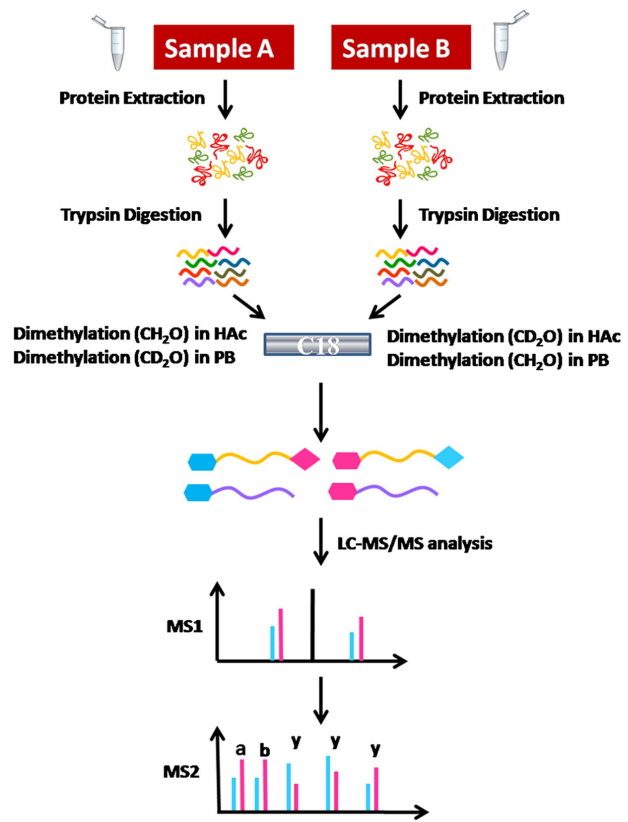
Zhang, S. et al. J Proteomics. 2015.
Figure 1. Workflow of Di-Methyl Labeling Proteomics
Di-Methyl Labeling Proteomics integrates this labeling approach with high-resolution mass spectrometry platforms to perform relative quantification across samples from different sources or experimental conditions. This approach provides critical insights into differential protein expression, biomarker discovery, signaling pathway analysis, and drug mechanism studies. Leveraging advanced LC–MS/MS instrumentation and standardized workflows, MtoZ Biolabs has established a comprehensive di-methyl labeling proteomics analysis service to support both academic and industrial research projects with cost-effective and reliable quantitative proteomics solutions.
Services at MtoZ Biolabs
MtoZ Biolabs’ di-methyl labeling proteomics analysis service combines isotope chemical labeling with cutting-edge LC–MS/MS platforms and professional data analysis workflows to deliver an end-to-end protein quantification solution. This service enables relative quantification across two to three experimental groups, making it well-suited for studies comparing drug-treated vs. control samples, physiological conditions, or experimental interventions.
Our service scope includes:
Dimethyl labeling Service: MtoZ Biolabs provides advanced dimethyl labeling workflows using state-of-the-art LC–MS systems, delivering reliable, high-throughput solutions tailored to protein quantification and modification analysis to support a wide spectrum of life science research.
SILAC/Dimethyl Quantitative Proteomics Service: We operate a dedicated platform equipped with Thermo Fisher Q Exactive HF, Orbitrap Fusion, and Orbitrap Fusion Lumos mass spectrometers combined with Nano-LC systems for SILAC and di-methyl proteomics. Our one-stop workflow covers cell culture, labeling, protein purification, enzymatic digestion, peptide separation, LC–MS/MS acquisition, and bioinformatics analysis. Clients only need to provide project objectives and submit cell samples, and MtoZ Biolabs completes the full downstream workflow.
In addition, we also offer other label-based proteomics solutions:
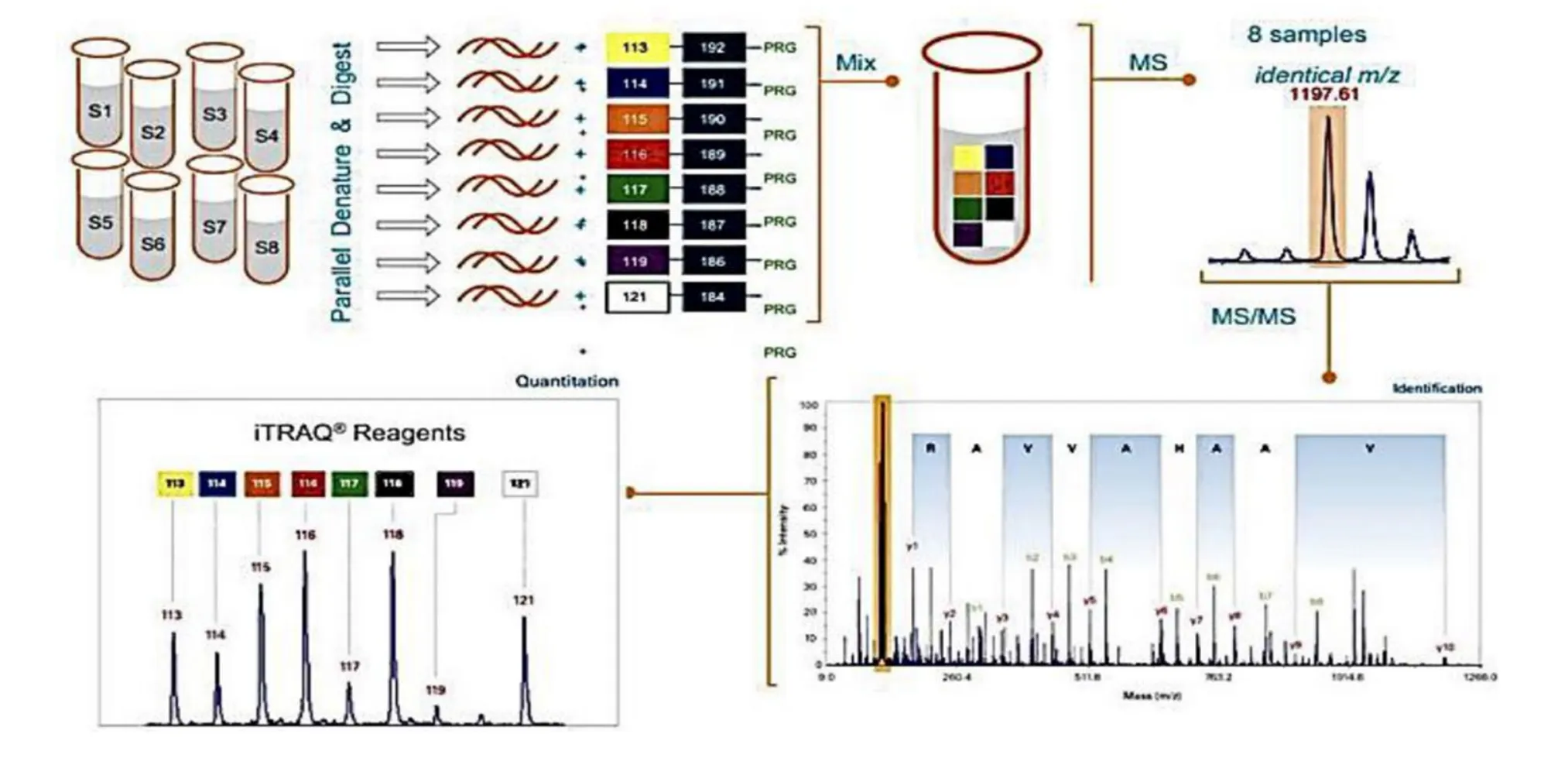
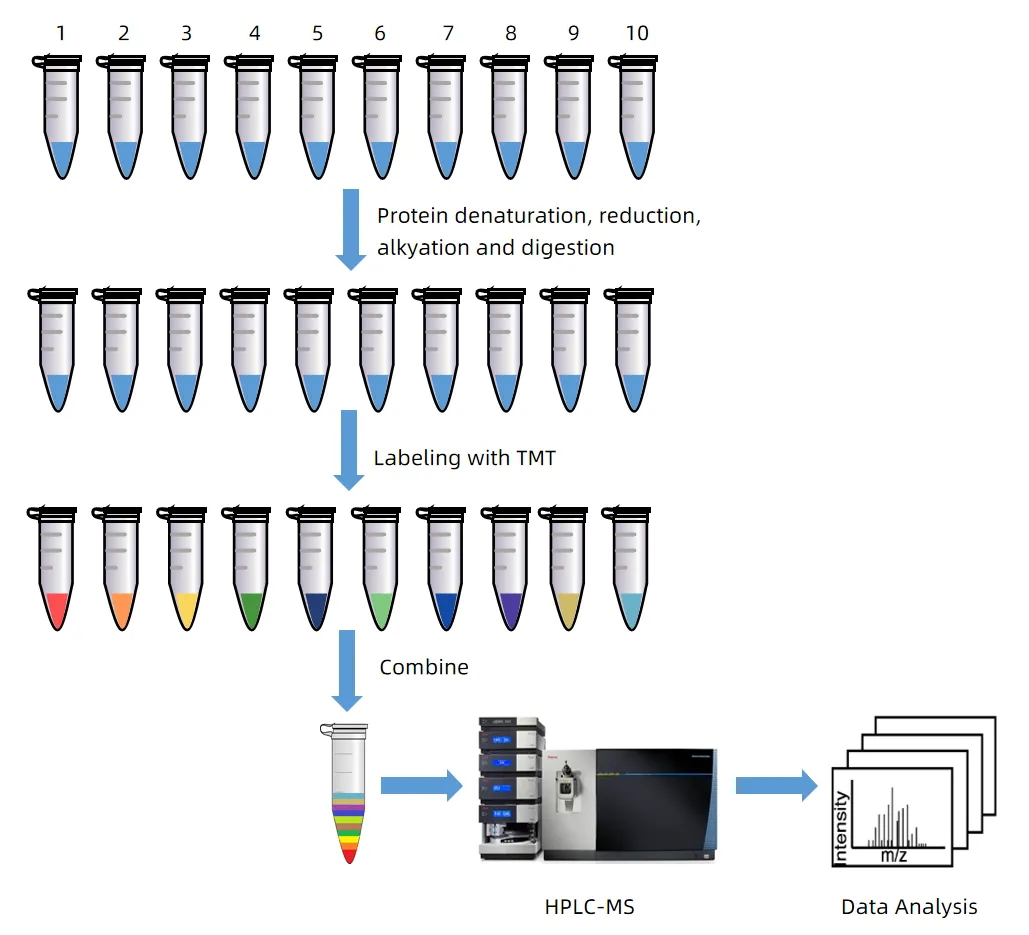
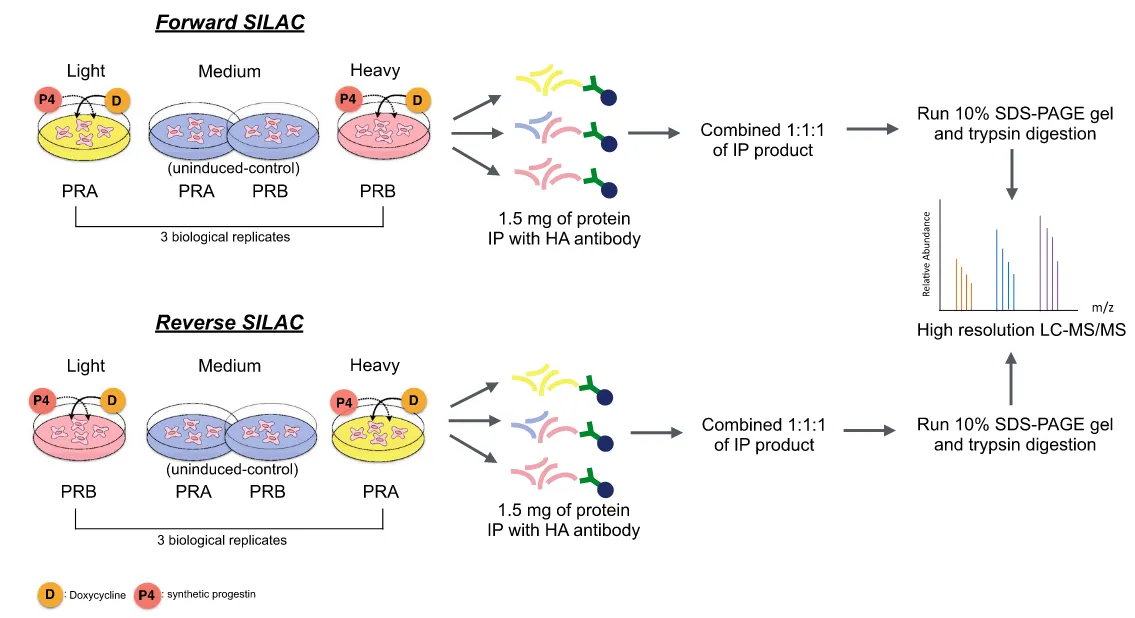
Analysis Workflow
1. Sample Receipt and Preparation: Receive protein, cell, or tissue lysates; perform protein extraction, quantification, and digestion.
2. Di-Methyl Labeling Reaction: Perform reductive amination with formaldehyde and sodium cyanoborohydride to generate light, medium, or heavy labeled peptides.
3. Sample Mixing and Cleanup: Mix labeled peptides at defined ratios and perform purification to reduce background interference.
4. Mass Spectrometry Analysis: Employ high-resolution LC–MS/MS platforms for peptide separation and detection, generating comprehensive proteomic datasets.
5. Data Processing and Statistical Analysis: Identify proteins via database searching, perform relative quantification, and conduct statistical and bioinformatics analysis.
6. Reporting: Deliver standardized reports including visualized quantitative results.
Service Advantages
1. Cost-Effective Quantification
Dimethyl labeling reagents are inexpensive and readily available. With mild reaction conditions, overall project costs are significantly lower than TMT or iTRAQ, making it ideal for projects requiring high-quality data on limited budgets.
2. Broad Applicability
Labeling efficiency approaches 100% and is compatible with diverse sample types including cells, tissues, biofluids, and recombinant proteins, ensuring reproducible and comparable results.
3. High-Resolution Mass Spectrometry Platforms
MtoZ Biolabs operates Orbitrap and Q-TOF mass spectrometry systems combined with nano-LC, enabling precise quantification even in complex biological matrices.
4. Flexible Labeling Strategies
Di-methyl labeling supports light, medium, and heavy tag combinations. We provide tailored di-methyl labeling proteomics analysis service to match experimental goals, ensuring accurate comparisons for projects of different scales.
5. Transparent One-Time-Charge
Applications
The di-methyl labeling proteomics analysis service is suitable for a broad range of applications, including:
1. Comparative proteomics between drug-treated and control samples
2. Protein dynamics analysis in disease models
3. Biomarker discovery and validation
4. Pathway and signaling network studies
5. Investigating cellular or tissue responses to environmental conditions
FAQs
Q1: How many samples can be compared with di-methyl labeling?
A1: Typically, two to three groups can be directly compared, covering most experimental designs in relative quantitative proteomics.
Q2: What are the advantages compared with TMT or iTRAQ?
A2: Di-methyl labeling is less costly and more straightforward, suitable for small-scale comparative studies, while TMT and iTRAQ are better suited for larger multi-group studies.
Q3: How long does the di-methyl labeling proteomics analysis service take?
A3: Projects are generally completed within 2–4 weeks after sample submission, depending on project scale and sample number.
Sample Submission Suggestions
1. Provide ≥100 µg of high-purity protein, free from salts, lipids, and nucleic acids.
2. Cell or tissue samples should be freshly prepared or flash frozen, avoiding repeated freeze–thaw cycles.
3. Ship samples on dry ice to maintain stability.
4. Detailed sample preparation and submission guidelines are available upon request.
Deliverables
1. Comprehensive protein identification list (including peptide coverage)
2. Protein quantification results (relative abundances and statistical analysis)
3. Functional annotation and pathway enrichment of differential proteins (optional)
4. Raw MS data files and processed data reports
5. Full documentation of experimental methods and QC procedures
Di-methyl labeling proteomics offers a cost-effective, stable, and flexible approach to quantitative proteomics, making it a valuable choice for a wide range of research applications. MtoZ Biolabs provides professional di-methyl labeling proteomics analysis service supported by advanced instrumentation and standardized workflows, empowering researchers to explore protein regulation mechanisms and disease-related biomarkers.
Contact us today to obtain a tailored solution that meets your research needs.
Related Services
Quantitative Proteomics Analysis Service
Quantitative Proteomics Profiling Service
How to order?




