



When targeted mass spectrometry outperforms discovery depends on list status and claim unit—not on a blanket claim that selective acquisition is always better. Targeted proteomics schedules closed proteotypic peptides by selected reaction monitoring (SRM), multiple reaction monitoring (MRM), or parallel reaction monitoring (PRM) on liquid chromatography-tandem mass spectrometry (LC-MS/MS) (Lange et al. 2008; Peterson et al. 2012). Discovery profiling—label-free quantification (LFQ), isobaric labeling such as tandem mass tags (TMT), or data-independent acquisition (DIA)—surveys an open or semi-open proteome before that panel is frozen (Gillet et al. 2012). In project language, targeted MS wins when the same predefined peptides must be measured reproducibly across a larger cohort, in a difficult matrix, or under assay-level quality control (QC). Discovery still wins when the protein list is open. The guide below maps comprehensive targeted-versus-discovery fit with workflow, locked parameters, and limits. It is not a biomarker or biopharmaceutical application catalog, and not a claim that PRM automatically beats every discovery matrix.
Unmatched prep breaks both routes (Bantscheff et al. 2012). Relative fold change and amount with stable isotope-labeled internal standard (SIS) peptides remain separate claim units (Gerber et al. 2003).
In MtoZ Biolabs quantitative offerings, route choice is scoped after list status, matrix, cohort intent, and report use are written in the brief. Targeted intake appears in Targeted Proteomics Service.
What Targeted Proteomics Must Cover Before It Can Outperform Discovery
Four layers belong in the brief and stay separated.
List-status layer freezes named proteins or peptides. If the list is still open, discovery remains the first job—even if an instrument can run MRM.
Claim layer names relative panel tracking versus SIS absolute concentration. Discovery intensities are not automatic absolute amounts.
Acquisition layer names MRM, PRM, or mixed monitoring after matrix pilots. Mode choice follows the closed panel; it does not create the panel.
Prep-and-QC layer names matched digests, blanks, and failed-target rules that discovery open searches do not standardize the same way.
Targeted MS outperforms discovery only after the panel is closed and matrix-compatible. Selective acquisition cannot invent unnamed proteins.
List-status framing versus untargeted DDA appears in Is DDA Considered as Untargeted Quantitative Proteomics?. This page stays on when targeted work should replace rediscovery.
When Targeted MS Usually Wins—and When Discovery Still Wins
Four dimensions often favor targeted MS on a fixed panel: selectivity for scheduled peptides, cohort reproducibility, instrument time spent on the panel rather than the full proteome, and assay-level QC for failed transitions or windows.
Discovery still outperforms targeted MS when biology is unknown, sample sets are small and breadth matters most, proteotypic surrogates are not yet proven in matrix, or the decision is a one-time screen without repeat panel measurement. Broader method contrast appears in Comparison of Mass Spectrometric MRM with Other Quantitative Methods in Proteomics. Discovery LFQ intake appears in Label-Free Quantitative Proteomics Service.
MRM versus PRM inside the targeted lane appears in Parallel Reaction Monitoring vs MRM: Which Fits?.
End-to-End Workflow: Discovery First, Targeted When It Outperforms
A practical staged spine usually runs as follows.
- Freeze whether the next decision needs open profiling or closed-panel quantitation.
- If the list is open, run discovery (LFQ, TMT, or DIA) with matched prep and QC.
- Nominate candidates; map proteotypic peptides and uniqueness rules.
- Pilot those peptides in the study matrix before locking a targeted method.
- Choose MRM, PRM, or mixed monitoring from interference evidence.
- Declare relative versus SIS absolute claim and deliverable depth.
- Acquire the validation-scale cohort with interleaved QC under the locked panel.
- Do not re-run full discovery on every batch solely to remonitor the same closed list.
- Re-open discovery only when new unnamed biology becomes the question again.
Steps 1 through 4 protect discovery value. Steps 5 through 9 capture where targeted MS outperforms rediscovery.

Figure 1. Targeted MS outperforms discovery after the panel is closed; discovery remains first while the list is open.
Parameters That Lock the Route Decision
Layer |
Parameter that must be declared |
Failure mode if ignored |
|---|---|---|
List status |
Open discovery vs closed panel |
Targeted build on unnamed targets |
Cohort intent |
One-time screen vs repeat panel |
Rediscovery of a fixed list |
Matrix |
Type and pilot plan |
Literature peptides fail in study matrix |
Platform |
MRM, PRM, LFQ/DIA/TMT |
Wrong selectivity or wasted breadth |
Claim unit |
Relative vs SIS absolute |
Discovery peaks as concentration |
Prep parity |
Matched digest and load |
Prep drift as route “failure” |
QC rules |
Failed-target and batch checks |
Undiagnosed panel dropouts |
Deliverables |
Discovery IDs vs panel tables |
Mismatched report for the decision |
Hand-off |
Candidate list version |
Moving targets mid validation |
Archive |
Method and list files |
Irreproducible remonitoring |
Limits follow the same table. Targeted MS does not outperform discovery when peptide choice or cycle-time overload is unresolved. Discovery does not replace assay-level QC once the panel is fixed. Application slogans need separate study design beyond the route table.
How to Choose Targeted MS Versus Discovery
Use list status, cohort need, matrix risk, and claim unit together.
Project need |
Route that often fits |
Recheck before committing |
|---|---|---|
Closed panel, expanding cohort |
Targeted MRM/PRM |
Repeat full discovery each batch |
Open proteome / unknown mechanism |
Discovery LFQ, DIA, or TMT |
Premature panel lock-in |
Fixed pathway tracking across arms |
Targeted panel |
Discovery rescans of the same list |
Absolute concentration on named peptides |
Targeted + SIS calibrators |
Extract “absolute” from discovery alone |
Small exploratory set, breadth first |
Discovery |
Full targeted build too early |
Matrix interference on closed peptides |
PRM subset or redesigned MRM |
Assume discovery will fix selectivity |
Surrogates unproven in matrix |
Matrix pilot or stay in discovery |
Targeted cohort without pilots |
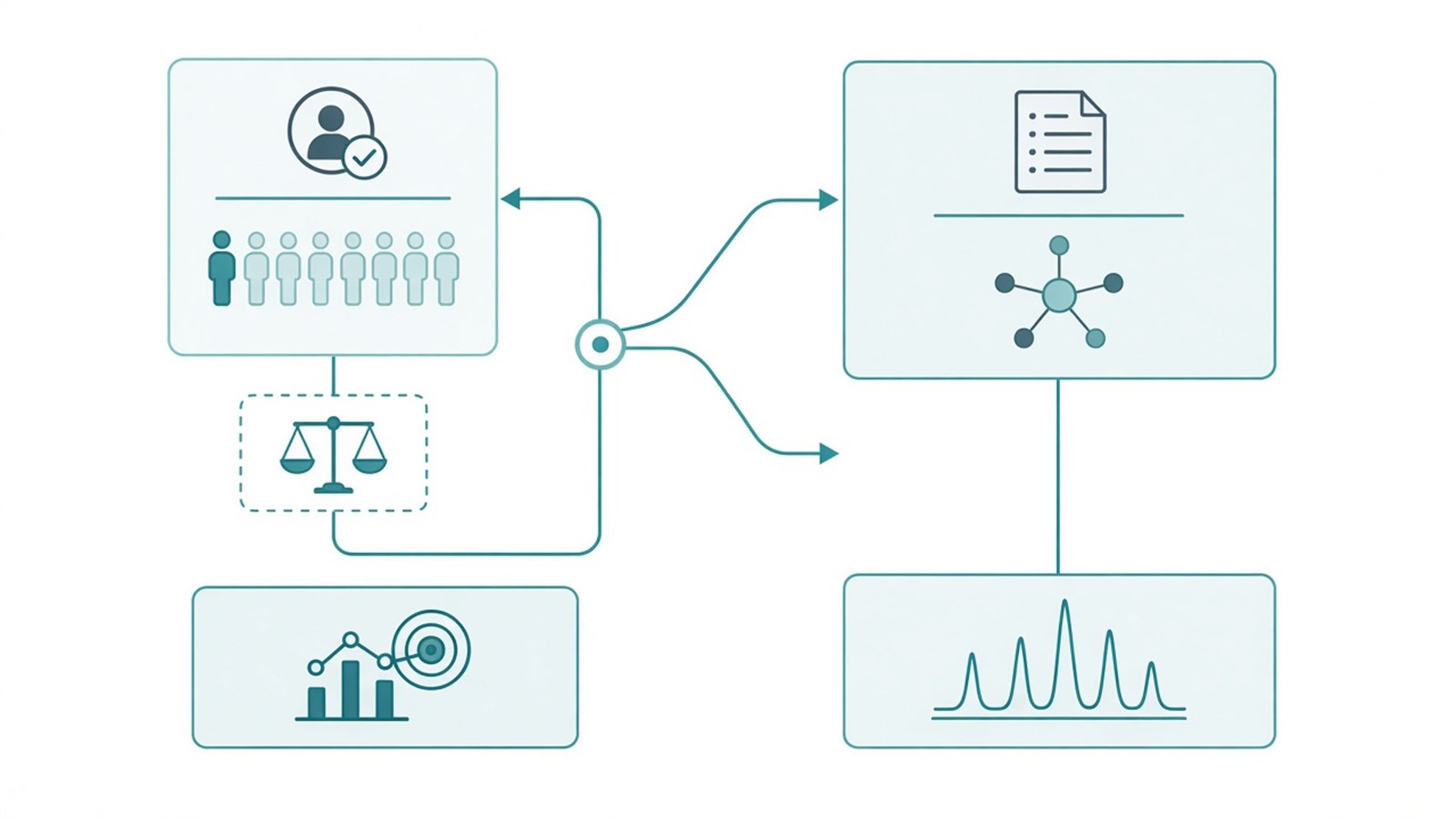
Figure 2. Choose targeted MS when the closed panel must be remonitored; keep discovery while candidates and breadth still dominate.
Teams with list status, matrix notes, and cohort plans can review MtoZ Biolabs targeted or label-free entries when those fields are declared in the project record.
Frequently Asked Questions
1. Does targeted mass spectrometry always outperform discovery?
No. Discovery remains stronger while the protein list is open and unbiased coverage is the primary need.
2. When is targeted MS most likely to outperform discovery?
When the panel is predefined, the same peptides must be measured across many samples, and assay-level QC or calibrated reporting is required.
3. Can one program use both routes?
Yes. Discovery nominates candidates; targeted MS remonitors the closed panel. Keep claim units and list versions separate.
4. Does PRM outperform discovery in every complex matrix?
Not automatically. PRM can improve selectivity for predefined peptides after matrix pilots; it does not replace an open discovery question.
5. How can teams avoid choosing the wrong next step?
Lock list status, reporting goal, and study stage before the next sample set is acquired.
MtoZ Biolabs can discuss when targeted mass spectrometry should replace rediscovery once panel status, matrix, and claim unit are documented.
If further evaluation of discovery-to-targeted hand-off or MRM versus PRM is needed, project details can be submitted for a feasibility review.
Reference
- V. Lange, P. Picotti, B. Domon, R. Aebersold (2008). Selected reaction monitoring for quantitative proteomics: a tutorial. Mol. Syst. Biol., 4, 222. https://doi.org/10.1038/msb.2008.61
- A.C. Peterson, J.D. Russell, A.A. Klammer, P.F. Doubleday, H. Liu, J.N. Anderson, M.J. MacCoss (2012). Parallel reaction monitoring for high resolution and high mass accuracy quantitative, targeted proteomics. Mol. Cell. Proteomics, 11, 1475-1488. https://doi.org/10.1074/mcp.O112.020271
- L.C. Gillet, P. Navarro, S. Tate, H. Röst, N. Selevsek, L. Reiter, R. Bonner, R. Aebersold (2012). Targeted data extraction of the MS/MS spectra generated by data-independent acquisition: a new concept for consistent and accurate proteome analysis. Mol. Cell. Proteomics, 11, O111.016717. https://doi.org/10.1074/mcp.O111.016717
- S.A. Gerber, J. Rush, O. Stemman, M.W. Kirschner, S.P. Gygi (2003). Absolute quantification of proteins and phosphoproteins from cell lysates by tandem MS. Proc. Natl. Acad. Sci. U.S.A., 100, 6940-6945. https://doi.org/10.1073/pnas.0832254100
- M. Bantscheff, S. Lemeer, H.U. Haab, B. Kuster (2012). Quantitative mass spectrometry in proteomics: a critical review. Anal. Bioanal. Chem., 404, 939-965. https://doi.org/10.1007/s00216-012-5892-4
