DIA based Protein Quantitative Service
MtoZ Biolabs provides DIA proteomics service using data-independent acquisition LC-MS/MS workflows for high-reproducibility protein identification and quantitative proteome comparison.
DIA acquisition enables consistent fragment ion collection across complex samples, supporting low-missing-value quantitative proteomics for large-scale biological studies.
- High-resolution DIA LC-MS/MS acquisition
- Reproducible quantitative proteomics for large cohorts
- Comprehensive protein identification and comparison
Overview
Data-independent acquisition (DIA) is an advanced LC-MS/MS acquisition strategy designed to improve quantitative consistency in large-scale proteomics studies.
Unlike data-dependent acquisition (DDA), which selects individual precursor ions for fragmentation based on real-time intensity, DIA systematically fragments ions within predefined mass windows and records comprehensive fragment information.
By reducing missing values and improving measurement consistency across multiple samples, DIA is particularly suitable for large-cohort studies, longitudinal experiments, and projects requiring reliable comparison between biological groups.
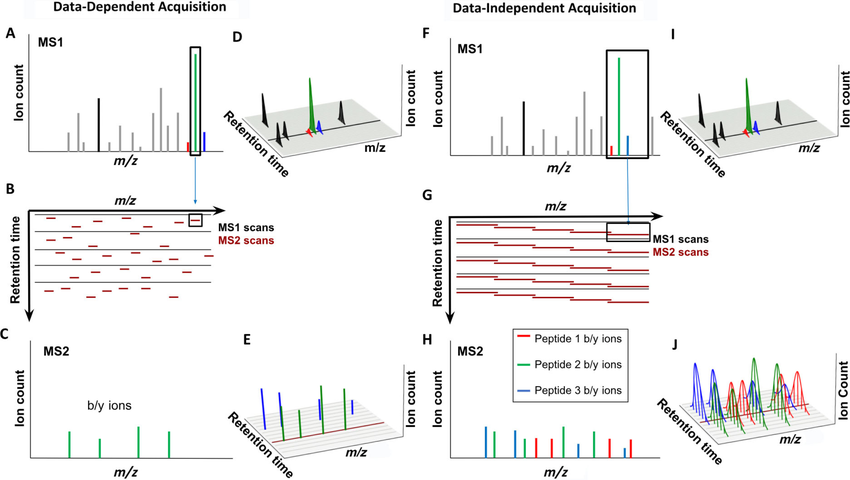
Pappireddi. N, et al. ChemBioChem. 2019.
Figure 1. Comparison of DDA and DIA approaches(A-E:DDA, F-J:DIA)
Service at MtoZ Biolabs
MtoZ Biolabs provides DIA proteomics workflows integrating sample preparation, LC-MS/MS acquisition, DIA data processing, quantitative analysis, and biological interpretation.
The DIA workflow is designed for projects requiring reproducible relative protein quantification, especially when large numbers of samples need to be compared under consistent analytical conditions.
DIA acquisition strategies are optimized according to sample characteristics, study design, sample number, and quantitative objectives.
The service supports:
1. Large-Scale Quantitative Proteomics
DIA enables consistent protein measurement across large sample cohorts by reducing missing values and improving quantitative reproducibility between samples.
2. Reproducible Multi-Sample Comparison
DIA workflows support comparison across multiple biological groups, experimental conditions, or historical sample sets where data consistency is critical.
3. Comprehensive Protein Identification and Quantification
DIA datasets are processed to generate protein identification and quantitative abundance information for downstream comparative proteomics studies.
Analysis Workflow
1. Experimental Design and Sample Assessment
Sample type, species, reference database availability, experimental groups, and quantitative objectives are evaluated before analysis.
2. Protein Extraction and Peptide Preparation
Proteins are extracted from biological samples and processed into peptides suitable for LC-MS/MS analysis. Sample preparation quality is optimized to minimize interference from salts, detergents, and other factors affecting MS performance.
3. DIA LC-MS/MS Acquisition
Peptide samples are analyzed using DIA acquisition mode. During acquisition, predefined isolation windows are used to systematically fragment precursor ions and collect comprehensive MS/MS information.
4. DIA Data Processing and Protein Quantification
DIA datasets are processed using DIA-NN for peptide identification, protein inference, quantitative signal extraction, normalization, and comparative analysis.
5. Bioinformatics Analysis
Based on project requirements and available database resources, quantitative proteomics data can be analyzed using:
- differential protein analysis;
- PCA and clustering analysis;
- GO annotation;
- KEGG pathway analysis;
- protein-protein interaction (PPI) analysis.
Applications
1. Disease Mechanism and Molecular Phenotyping Studies
Quantify protein abundance changes across disease models or experimental phenotypes to investigate molecular alterations associated with different biological states.
2. Drug Discovery and Treatment Response Studies
Evaluate proteome-wide protein changes following compound treatment, genetic perturbation, or other experimental interventions to investigate molecular responses.
3. Biomarker Candidate Discovery Studies
Compare protein abundance patterns between experimental groups to identify candidate proteins for further validation studies.
4. Functional Proteomics and Pathway Investigation
Analyze quantitative protein changes and integrate proteomics data with functional annotation to investigate biological processes and regulatory mechanisms.
5. Model Organism and Comparative Biology Studies
Compare protein expression patterns across tissues, developmental stages, species, or experimental conditions to explore biological regulation.
What Could be Included in the Report?
1. Experimental Details (Sample information, experimental design, and DIA acquisition strategy)
2. Materials, Instruments, and Methods (Sample preparation, LC-MS/MS acquisition, and data processing workflow)
3. Quality Control Assessment (MS performance, identification quality, and quantitative reproducibility assessment)
4. Protein Identification and Quantification Results (Protein identification tables, quantitative matrices, and abundance comparison)
5. Bioinformatics Analysis (Differential analysis, PCA, clustering, GO/KEGG annotation, and PPI analysis when applicable)
6. Raw Data Files (Raw MS files and processed quantitative datasets)
Sample Submission Suggestions
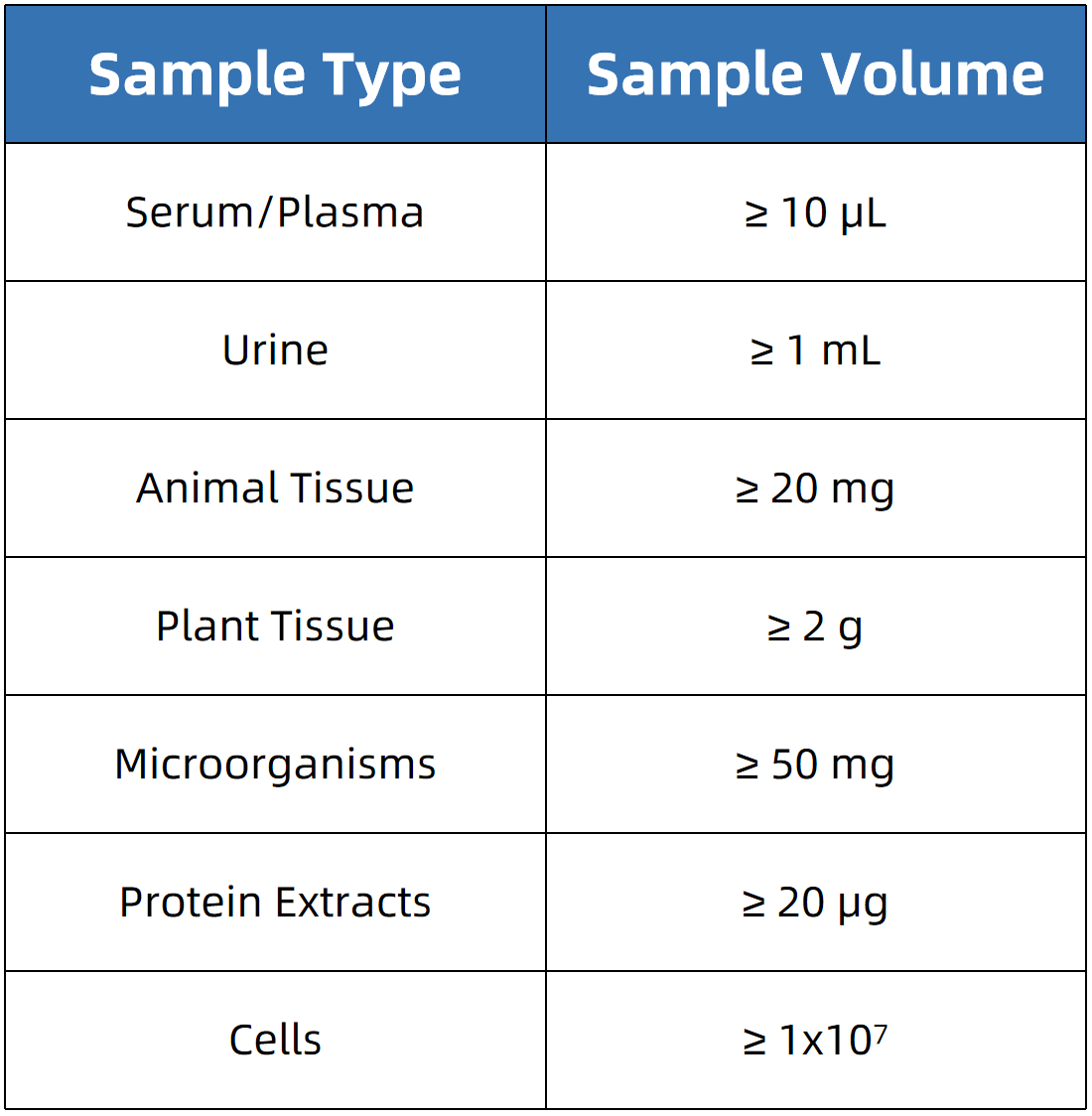
Please provide:
- species information;
- number of samples;
- experimental grouping;
- reference database availability.
Recommended sample requirements depend on sample type and project design.
Why Choose MtoZ Biolabs?
1. High-Resolution DIA LC-MS/MS Platform
Advanced high-resolution LC-MS/MS platforms support deep protein identification and reproducible DIA-based quantitative analysis.
2. Optimized DIA Workflow
Standardized DIA acquisition workflows are designed for large-scale quantitative proteomics studies requiring consistent measurement across multiple samples.
3. Reliable Quantitative Analysis
Integrated DIA acquisition, DIA-NN processing, quality control, and quantitative analysis workflows support high-confidence comparative proteomics.
4. Standardized Proteomics Service Support
MtoZ Biolabs provides integrated support from experimental design and sample preparation to LC-MS/MS acquisition, data processing, and reporting.
FAQ
Q1. What is DIA proteomics mainly used for?
DIA proteomics is mainly used for reproducible quantitative protein analysis, particularly in studies involving large sample cohorts or requiring consistent comparison across multiple biological groups.
Q2. What is the difference between DIA and DDA proteomics?
DIA and DDA are different LC-MS/MS acquisition strategies. DDA selects individual precursor ions for fragmentation based on acquisition criteria, while DIA systematically collects fragment ion information across predefined mass windows. DIA is often selected for studies requiring highly reproducible quantitative comparison across large numbers of samples.
Q3. Is DIA suitable for large numbers of samples?
Yes. DIA is particularly suitable for large-scale proteomics studies where reproducibility, low missing values, and consistent quantitative measurement are important.
Q4. Can DIA proteomics provide absolute protein concentration?
No. DIA proteomics provides relative protein abundance comparison between samples or experimental groups. Absolute protein quantification requires additional standards and targeted quantitative strategies.
Contact Us
Choosing the appropriate acquisition strategy depends on your sample characteristics, study scale, and quantitative objectives.
Share your sample information and experimental design with MtoZ Biolabs. Our team can help evaluate whether DIA is suitable for your project and design an LC-MS/MS workflow aligned with your quantitative requirements.
