






Cell Sequencing: Single-Cell and Population-Level Workflows, Applications, and Data Analysis
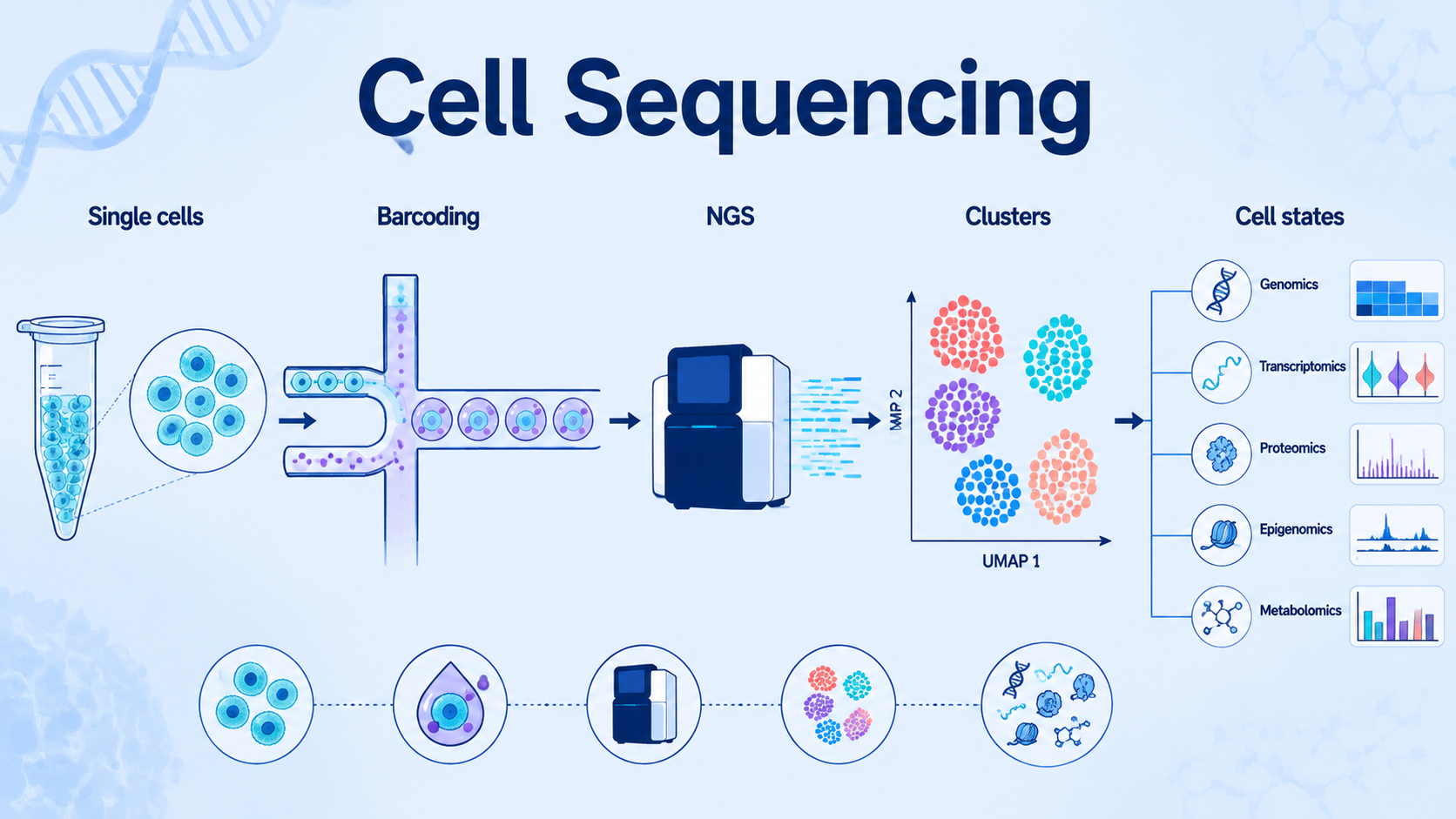
Cell sequencing uses high-throughput sequencing to profile genomes, transcriptomes, epigenomes, or related molecular features from individual cells or cell populations. Single-cell sequencing resolves cell-to-cell heterogeneity, rare subpopulations, lineage trajectories, and functional states, while population cell sequencing captures average genomic or transcriptomic patterns across bulk cell groups or tissues.
Key Takeaways
- Single-cell sequencing is best for heterogeneity, rare cells, clonal evolution, immune cell states, and developmental trajectories.
- Population cell sequencing is better for bulk mutation detection, copy number variation, molecular subtyping, and sample-level expression profiling.
- Single-cell workflows require cell isolation, nucleic acid amplification, library preparation, sequencing, and bioinformatics QC.
- Common isolation methods include droplet-based platforms, microfluidics, FACS, and well-based sorting.
What Cell Sequencing Measures?
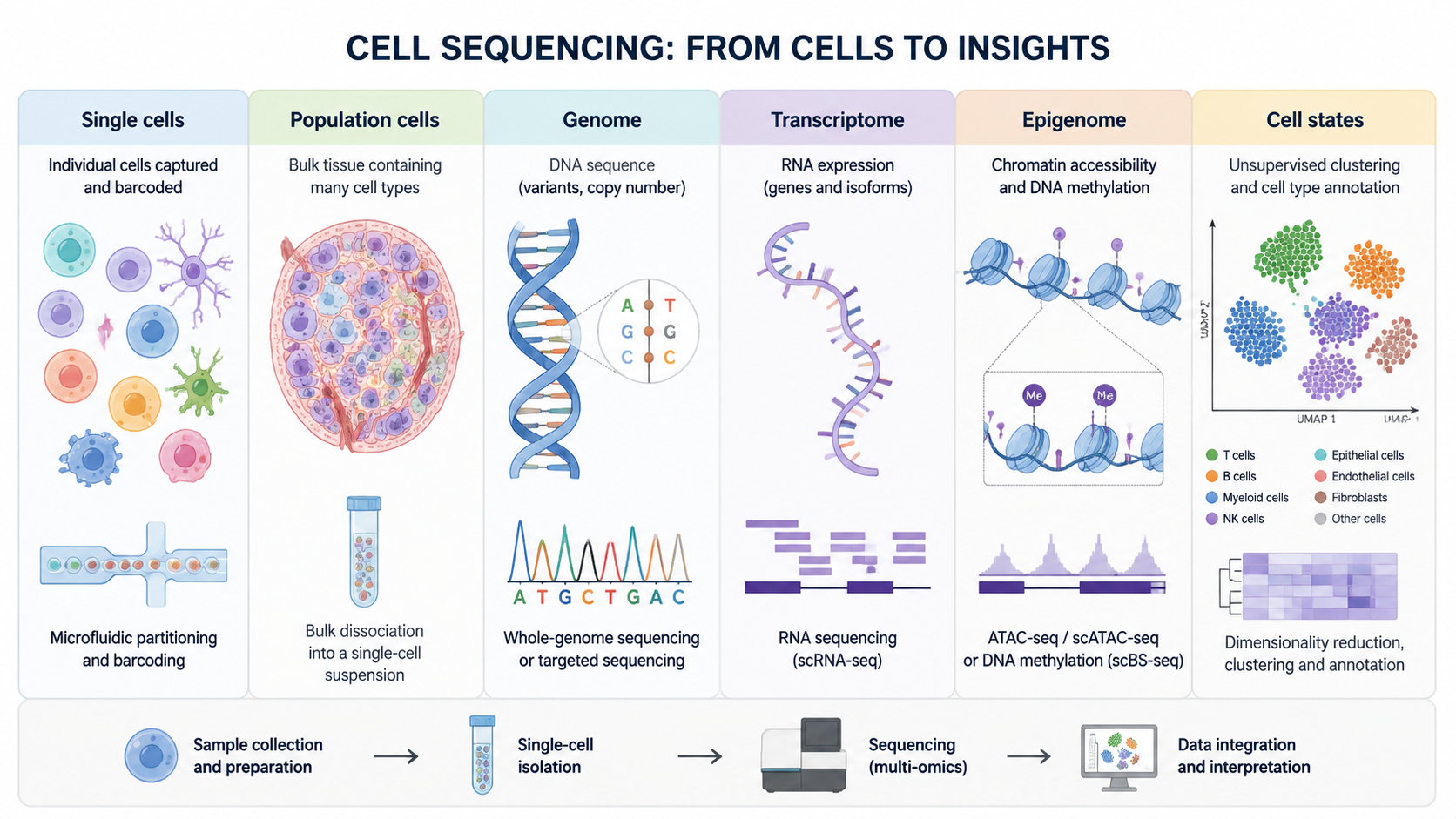
Cell sequencing can measure DNA variants, RNA expression, chromatin accessibility, methylation, or multi-omics features depending on the assay. In single-cell studies, each cell becomes an analytical unit. This makes it possible to distinguish tumor subclones, immune states, neuronal subtypes, stem cell differentiation paths, and rare disease-relevant populations that bulk assays may average away.
Related Services
10x Genomics Single Cell Sequencing Service
10x Single Cell Sequencing Service
Droplet-Based Single Cell Sequencing Service
Single-Cell Transcriptomics Service
Single-Cell Sequencing vs Population Cell Sequencing
| Feature | Single-cell sequencing | Population cell sequencing |
|---|---|---|
| Analytical unit | Individual cells | Bulk cells or tissue |
| Best for | Heterogeneity and rare populations | Sample-level molecular profiles |
| Main challenge | Low input and amplification bias | Loss of single-cell resolution |
| Data output | Cell-by-feature matrix | Sample-by-feature matrix |
Core Workflow
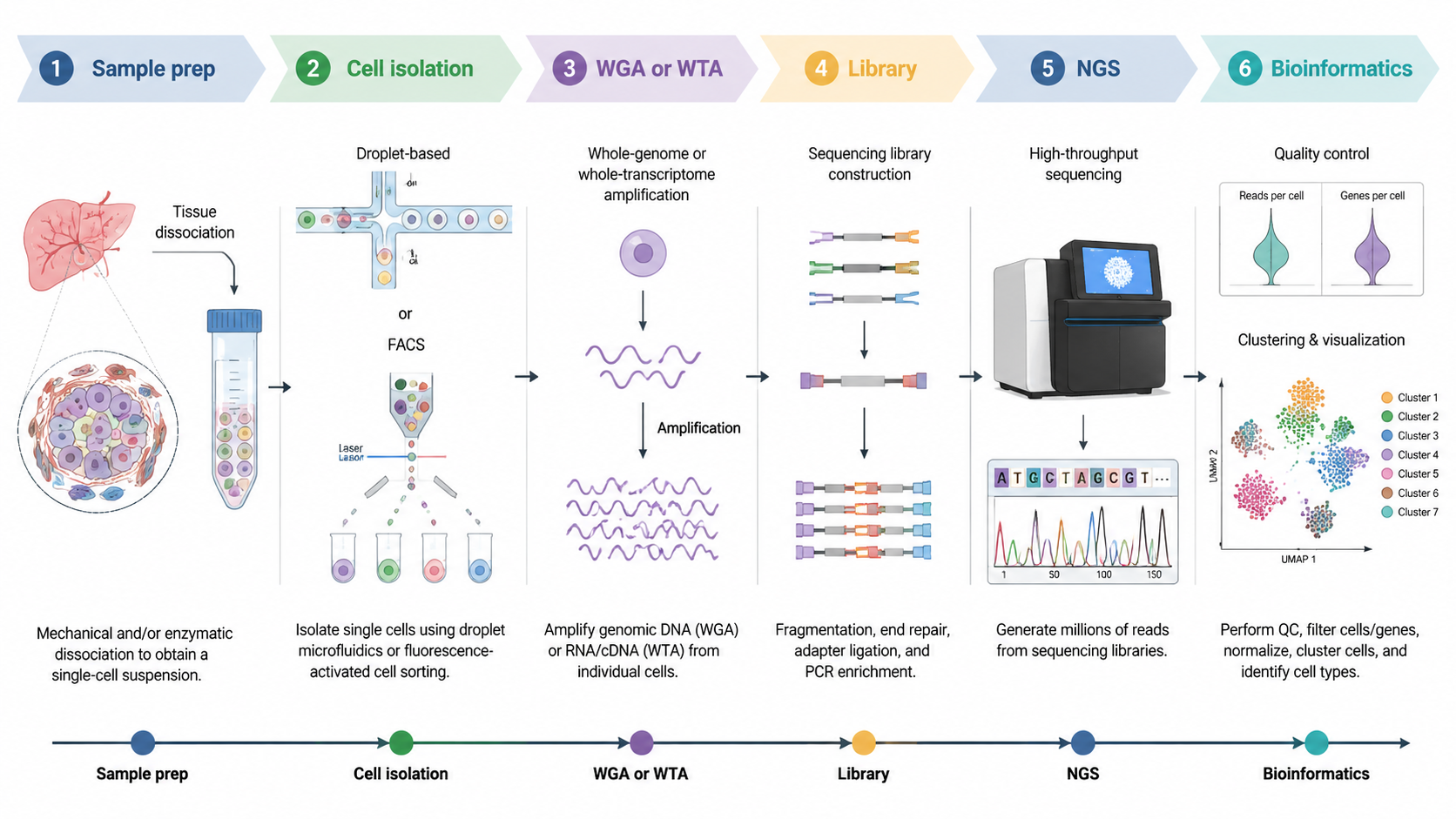
The single-cell sequencing workflow begins with sample dissociation and quality control. Cells are then isolated by droplets, microfluidics, FACS, or well-based methods. Because nucleic acid input is tiny, DNA or RNA is amplified by whole genome amplification (WGA), whole transcriptome amplification (WTA), or assay-specific chemistry before library construction and next-generation sequencing.
Data Analysis
Single-cell data analysis usually includes read QC, alignment, feature counting, cell-level filtering, normalization, batch correction, dimensionality reduction, clustering, marker gene analysis, annotation, trajectory inference, and differential expression. For single-cell DNA sequencing, analysis may focus on mutations, copy number changes, clonal structure, and phylogenetic relationships.
Applications
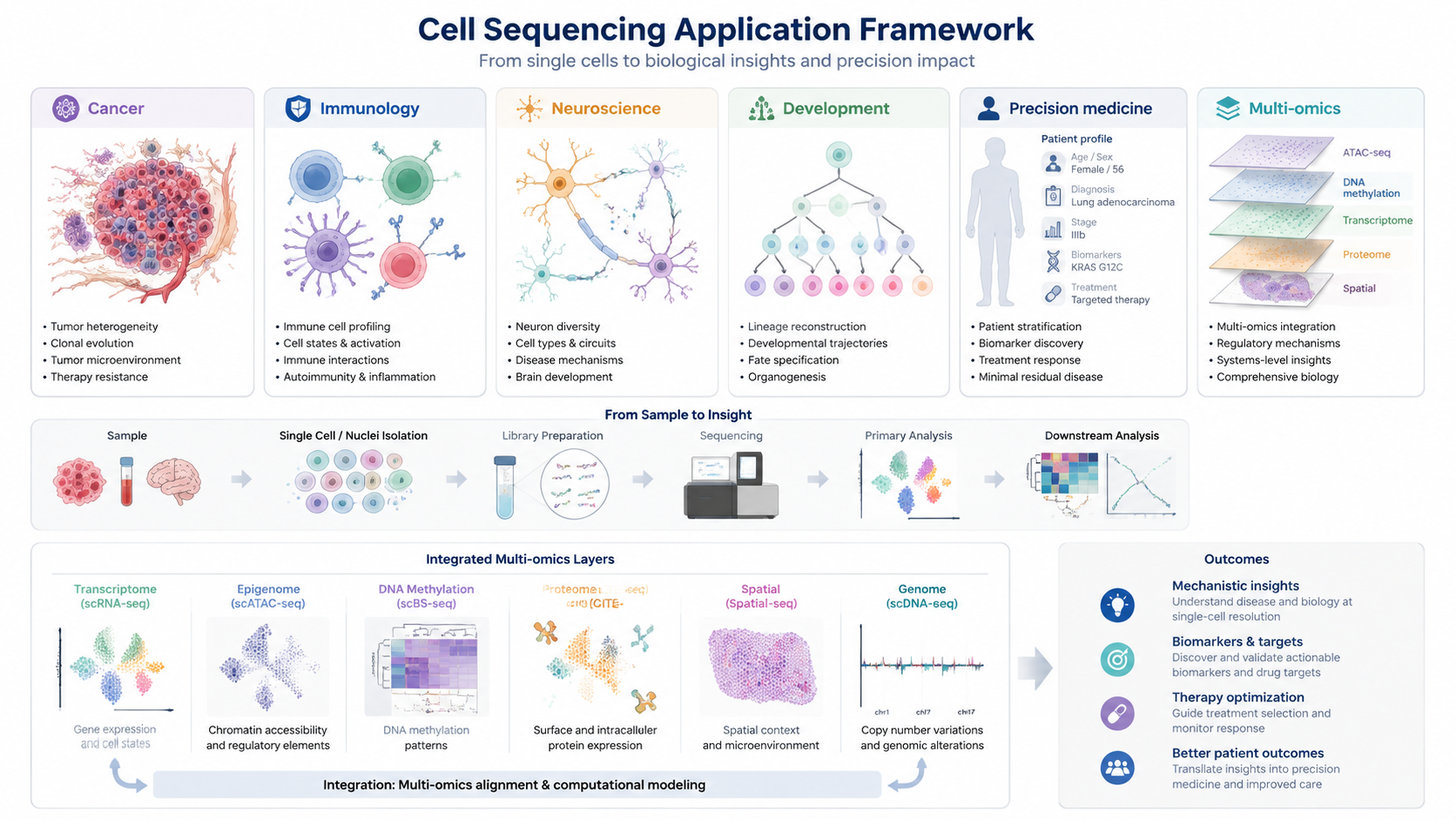
Cell sequencing supports cancer research, immunology, neuroscience, developmental biology, infectious disease, drug response, and precision medicine. In oncology, it can reveal resistant clones or immune-cell composition. In immunology, it can map activation and exhaustion states. In neuroscience, it can distinguish neuronal and glial subtypes. In development, it can reconstruct lineage trajectories.
Technical Limitations
Single-cell sequencing can introduce dissociation bias, doublets, dropout, amplification bias, batch effects, and cell viability artifacts. Population cell sequencing avoids some single-cell technical issues but loses cellular resolution. Study design should consider sample freshness, cell number, sequencing depth, biological replicates, and the downstream analysis plan.
FAQ
1. What is cell sequencing?
Cell sequencing is the use of high-throughput sequencing to analyze genomic, transcriptomic, epigenomic, or other molecular information from cells, either individually or as populations.
2. What is the difference between single-cell and bulk cell sequencing?
Single-cell sequencing profiles individual cells and reveals heterogeneity. Bulk or population cell sequencing profiles mixed cells and reports average signals across the sample.
3. When should single-cell sequencing be used?
Use single-cell sequencing when the study needs cell-type resolution, rare cell detection, clonal evolution, immune-state mapping, lineage reconstruction, or tumor microenvironment analysis.
4. What are WGA and WTA?
WGA means whole genome amplification and is used for low-input DNA. WTA means whole transcriptome amplification and is used for low-input RNA.
Conclusion
Cell sequencing turns cell populations into measurable molecular maps. Single-cell approaches reveal heterogeneity and rare states, while population approaches provide broader sample-level profiles. The best method depends on whether the research question needs individual-cell resolution, bulk molecular screening, or integration across genomics, transcriptomics, epigenomics, and proteomics.
How to order?




