






Resources
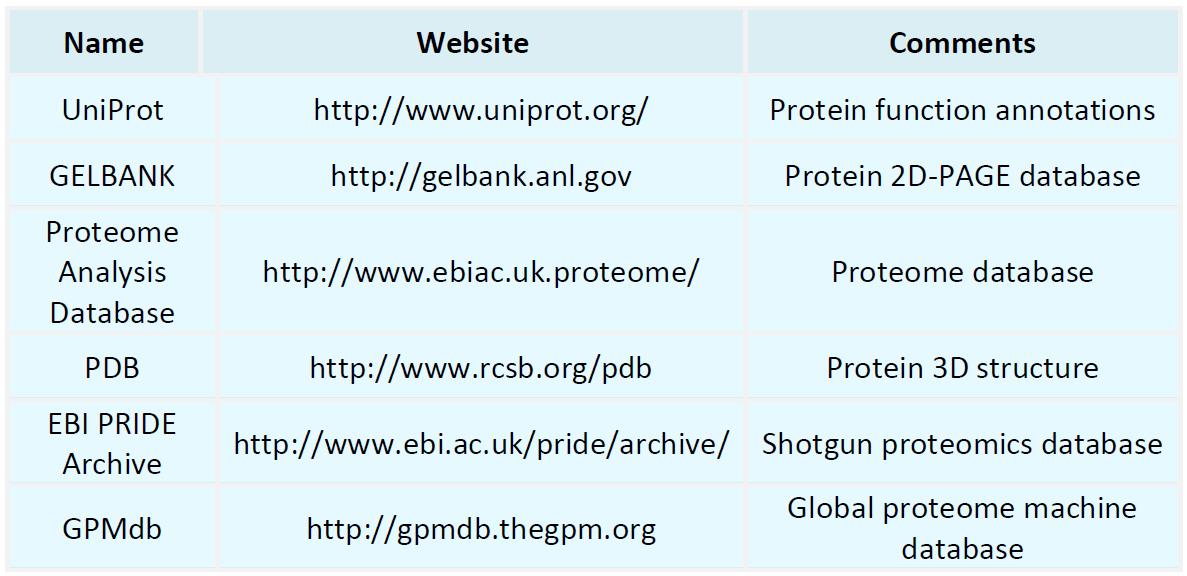
Proteomics Databases
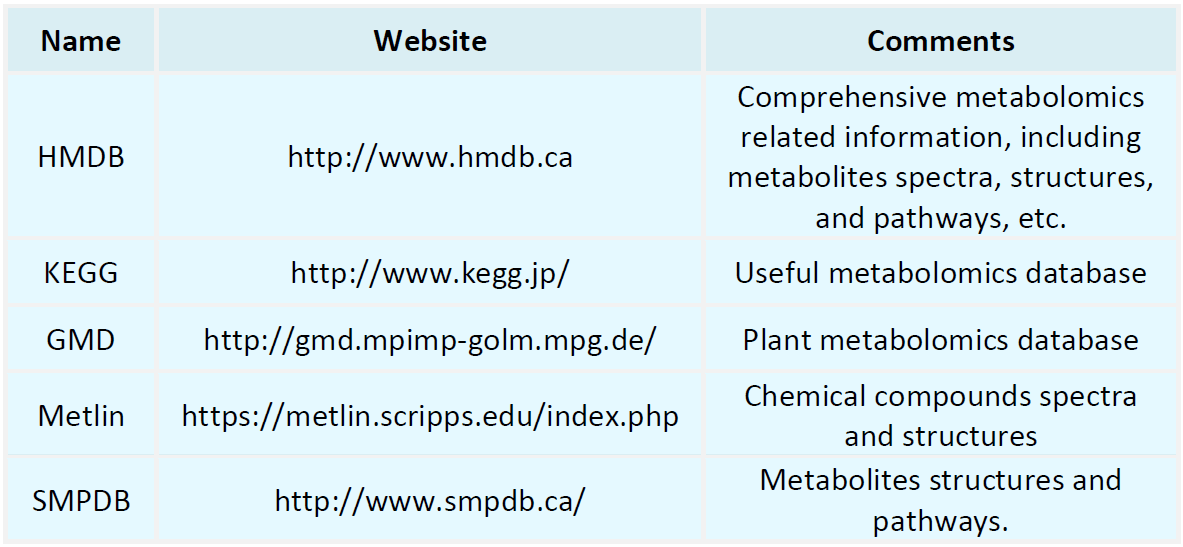
Metabolomics Databases
-
• Advantages and Disadvantages of De Novo Sequencing
De Novo sequencing refers to sequencing and assembling an unknown genome without a reference genome. With the rapid development of high-throughput sequencing technologies in recent years, De Novo sequencing has played an increasingly important role in life sciences research.
-
• Principle of De Novo Sequencing
With the advancement of genomics, genome sequencing technology has become a crucial tool in biological research. Among various sequencing technologies, De Novo sequencing is particularly significant because it does not rely on existing reference genomes and can reveal entirely new genomic information.
-
• Mechanism of Top-Down Protein Sequencing
Proteins are essential molecules in all biological processes. Understanding their structure and function is fundamental to biological research. Protein sequencing, which determines the amino acid sequence of proteins, is a crucial technique for studying the relationship between protein structure and function. Top-down proteomics is an emerging technique that is becoming a significant tool in protein sequencing.
-
• Application of Top-Down Protein Sequencing
Proteins are the primary executors of biological activities, and understanding their structure and function is crucial for uncovering biological mysteries. Protein sequencing, a vital research tool, helps scientists identify and analyze amino acid sequences of proteins, thereby inferring their functions and interactions. Top-Down Proteomics (TDP) is an advanced and precise protein sequencing technology developed in recent years.
-
• Workflow of Top-Down Protein Sequencing
Protein sequencing is a fundamental technique for understanding protein structure and function. Top-down protein sequencing, an important method in proteomics, efficiently determines the amino acid sequence and modification states of proteins. The detailed workflow of top-down protein sequencing is described below.
-
• Advantages and Disadvantages of Top-Down Protein Sequencing
Top-down proteomics (TDP) is a rapidly evolving technique in the fields of molecular biology and biochemistry, offering detailed insights into the structure and modifications of proteins. Unlike traditional bottom-up proteomics methods, TDP directly analyzes intact protein molecules, thereby preventing information loss during peptide reassembly.
-
• Principle of Top-Down Protein Sequencing
Protein sequencing is crucial for elucidating the primary structure of proteins, essential for understanding their function, structure, and role in biological systems. Top-down proteomics, which directly analyzes intact protein molecules, contrasts with the traditional bottom-up approach.
-
• Mechanism of SILAC-Based Co-IP-MS in Protein Interaction Detection
Protein-protein interactions are central to biological processes within cells, and their dynamic changes can illuminate the intricate regulatory mechanisms governing cellular functions and signaling pathways.
-
• Application of SILAC-Based Co-IP-MS in Protein Interaction Networks
Protein-protein interactions are central to numerous biological processes within cells. Understanding these interactions is critical for elucidating cellular functions, signal transduction, and disease mechanisms. The Co-IP-MS technique based on SILAC (Stable Isotope Labeling by Amino acids in Cell culture) offers a powerful tool for studying the dynamic changes in protein-protein interactions.
-
• Workflow of SILAC-Based Co-IP-MS for Protein Interaction Analysis
Protein-protein interactions are fundamental to biological processes within cells. Understanding these interactions is crucial for unraveling complex signaling pathways and molecular mechanisms. In proteomics research, the combination of SILAC (Stable Isotope Labeling by Amino acids in Cell culture), immunoprecipitation (Co-IP), and mass spectrometry (MS) has become a pivotal method for analyzing protein-protein interactions.
How to order?




