






Lysosome Isolation for Proteomics: When Is Enrichment Needed?
Introduction
Lysosomal projects often reach a routing decision before any LC-MS/MS run is booked. A team may ask whether whole-cell proteomics is enough to see lysosome-related changes. Another team may already know the biology is organelle-centered and need to decide whether to enrich lysosomes first. A third team may hold plasma or urine and wonder whether laboratory isolation can start from those matrices.
Lysosome isolation and proteomics are linked when the scientific claim depends on proteins recovered from lysosome-enriched material rather than from bulk lysate. Lysosome enrichment proteomics is the practical route for that claim. This article explains when enrichment is needed, when bulk proteomics may still be useful, and how to choose between laboratory isolation from cells or tissues and customer-side enrichment before proteomics.
What Enrichment Changes in a Proteomics Claim
Bulk cell or tissue proteomics measures proteins across many compartments at once. Lysosome-associated signals can be present, but they are often diluted by abundant cytosolic and other organelle proteins. That dilution is the main reason organelle claims are hard to defend from bulk lists alone.
Lysosome isolation concentrates lysosomal and lysosome-associated proteins before digestion and LC-MS/MS. The resulting dataset is still an enrichment profile, not a perfectly pure organelle proteome. Marker checks such as LAMP1 or LAMP2 Western blot positivity help confirm that enrichment is adequate for downstream analysis. After that check, quantitative designs can compare enriched fractions across conditions with clearer organelle context.
The decision is therefore claim-driven. If the question is organelle cargo, membrane-lysosome remodeling, or disease-linked lysosomal protein changes, enrichment is usually required. If the question is only a broad cellular response with a few lysosome-annotated proteins as secondary readouts, bulk proteomics may be sufficient.
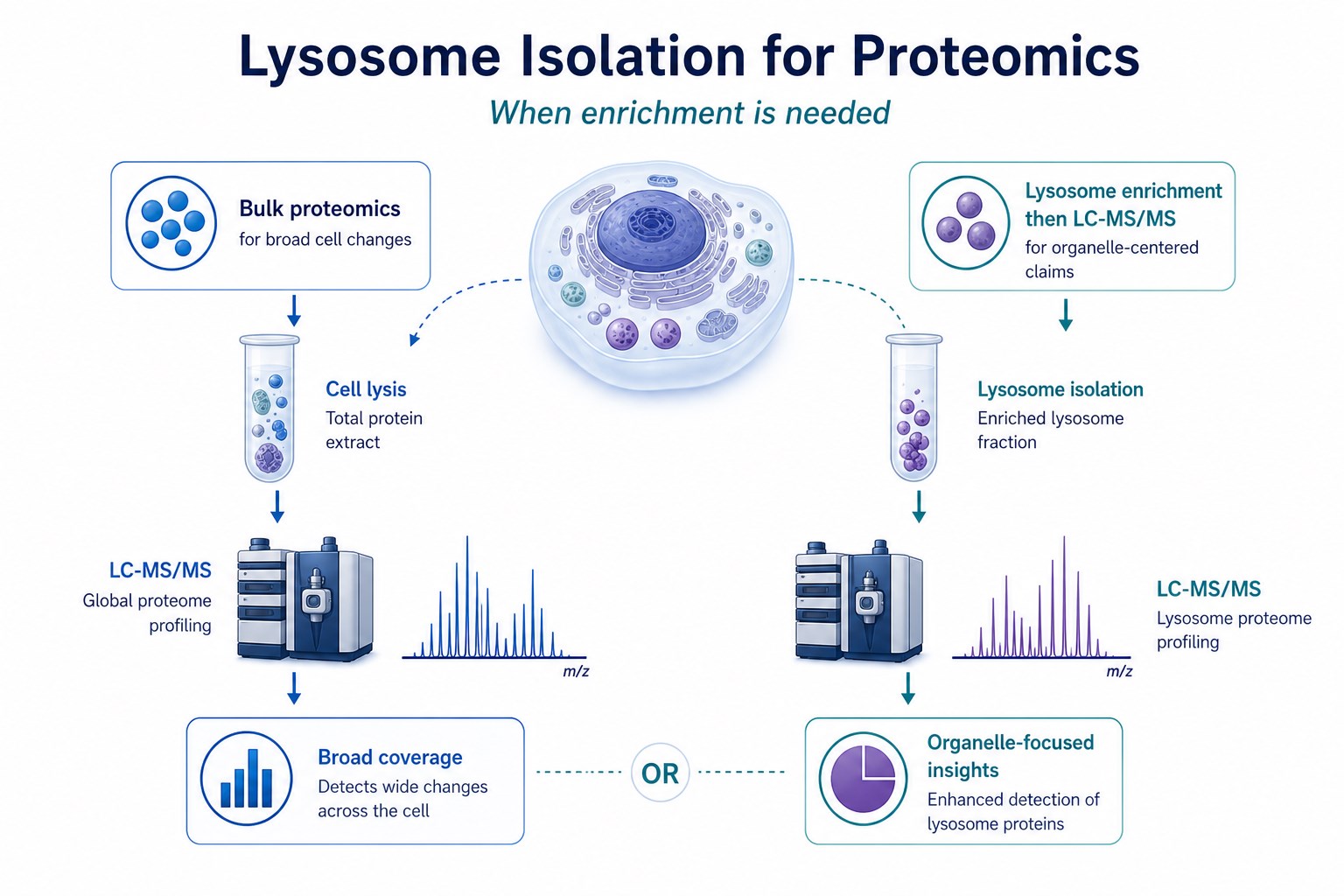
Figure 1. Enrichment is needed when the proteomics claim depends on lysosome-centered protein recovery rather than bulk lysate depth alone.
When Lysosome Enrichment Is Needed
When the primary claim is lysosome-centered
Use enrichment when the study asks which proteins change in lysosome-enriched fractions under disease, treatment, genotype, or autophagy-related conditions. Whole-cell lists rarely resolve that claim cleanly.
When low-abundance lysosomal proteins matter
Many lysosome-related proteins are difficult to interpret in bulk matrices. Enrichment improves the chance of detecting those proteins, although success still depends on input amount and enrichment quality.
When comparing organelle states across conditions
Matched isolation across arms supports differential organelle profiles. Without enrichment, condition effects can reflect total proteome shifts rather than lysosome-fraction changes.
When customer material is already an enriched fraction
If lysosomes or related subcellular fractions have already been prepared, proteomics can proceed from that fraction when protein amount and buffer compatibility meet submission needs. Re-running bulk proteomics on the parent lysate would answer a different question.
When Enrichment May Not Be the First Step
If the project only needs pathway-level changes in total cell or tissue proteomes, start with bulk proteomics and revisit enrichment later for prioritized targets.
If sample amount is too low for reliable isolation from cells or tissues, enrichment may fail before proteomics begins. In that case, increase input or narrow the claim before committing to lysosome isolation and proteomics.
If the available material is serum, plasma, CSF, urine, or certain special matrices, laboratory lysosome isolation from those starting materials is outside the current service boundary. Customers should complete enrichment themselves and submit the enriched fraction for proteomics.
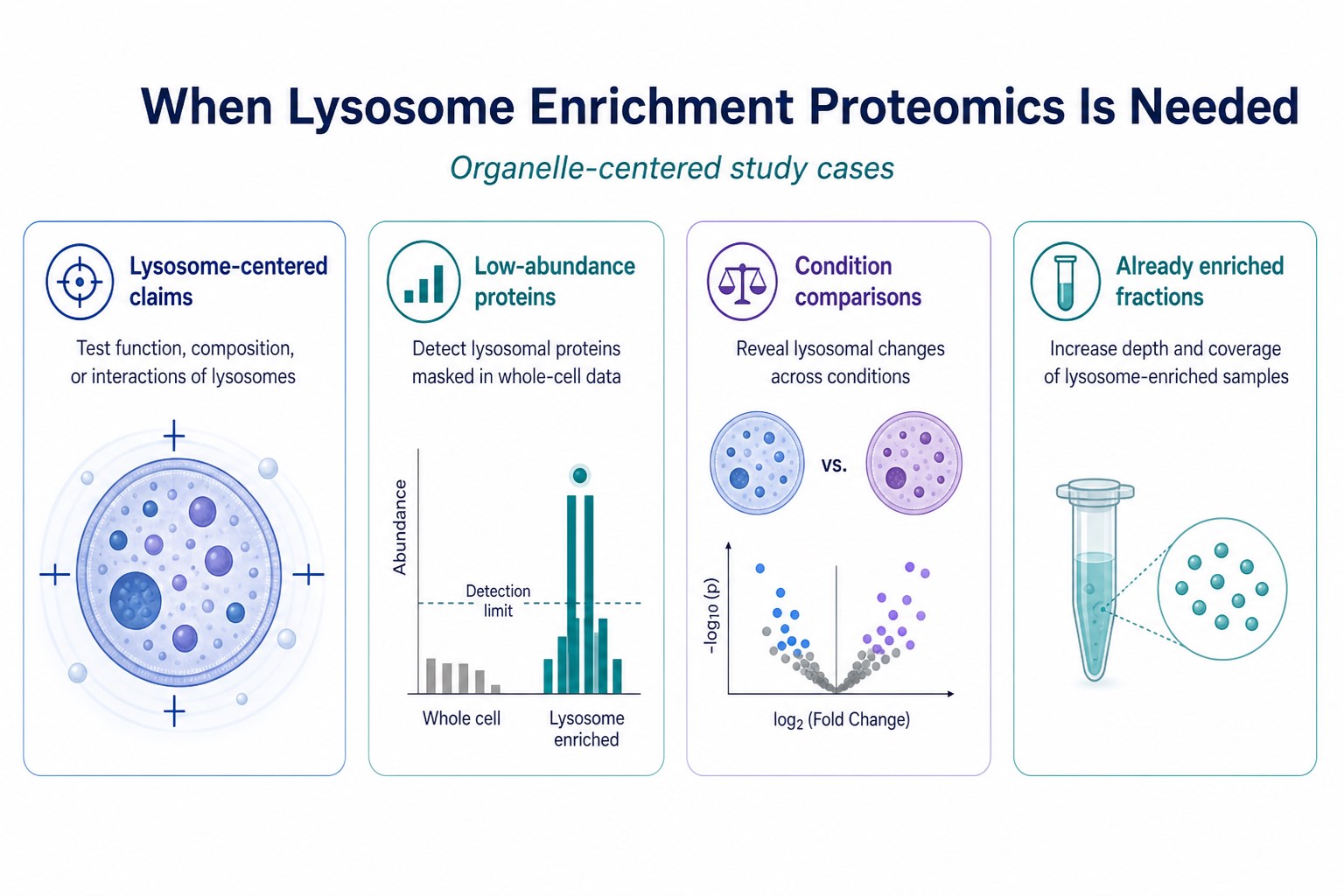
Figure 2. Enrichment is preferred for organelle-centered claims, low-abundance lysosomal proteins, and matched organelle comparisons.
Choosing the Sample Route: Laboratory Isolation vs Customer Enrichment
Route A. Cells or tissues into laboratory isolation, then proteomics
Cell lines, primary cells, and fresh or frozen tissues can enter laboratory lysosome isolation before proteomics. This route fits teams that want enrichment and LC-MS/MS planned as one package. Typical planning inputs are at least 1 x 10^7 cells per sample or 20 to 50 mg tissue per sample. Keeping harvest timing and storage history matched across arms is part of the isolation plan, not only a proteomics detail.
Route B. Customer-enriched fractions into proteomics
Customer-prepared lysosome or subcellular fractions can be submitted directly when isolation records, buffer composition, and QC evidence are available. Plan for 20 to 50 ug protein in the enriched fraction. Marker Western blot positivity for LAMP1 or LAMP2 is a practical enrichment check.
Route C. Biofluids and special matrices
For serum, plasma, CSF, urine, and related special sample classes, enrichment must be completed by the customer before shipment. The laboratory analyzes the enriched fraction and does not start lysosome isolation from those unfractionated matrices under this service scope.
Selecting the correct route early prevents mismatched sample preparation and delayed intake review. A short matrix-and-claim check before collection usually saves more time than correcting the wrong enrichment path after shipment.
Practical Design Points After Choosing Enrichment
Match isolation conditions across all comparison arms.
Keep freeze-thaw history and storage temperature consistent.
Use MS-compatible buffers for submitted fractions and avoid incompatible additives such as Tris, SDS, azide, or glycerol.
Define whether the proteomics mode is label-free, TMT, or DIA based on the comparison design.
Treat enrichment proteomics results as organelle-enriched profiles. Membrane versus luminal protein classes are not separated by the standard proteomics readout alone.
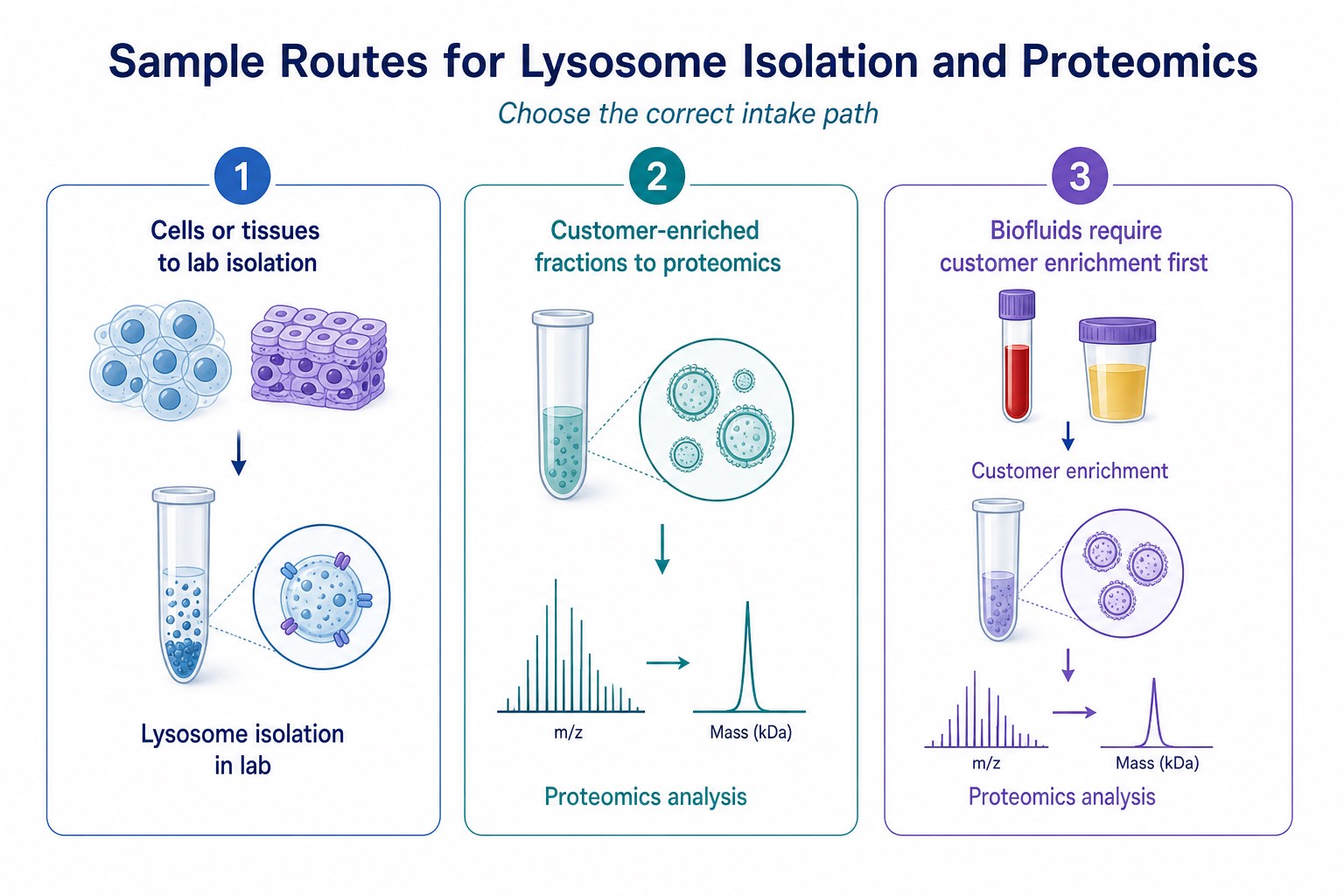
Figure 3. Choose laboratory isolation from cells or tissues, or submit customer-enriched fractions, according to matrix and claim.
Related Services
Subcellular Proteomics Service
Subcellular Structure and Organelle Proteomics Service
Organelle Isolation and Protein Purification Service
Protein Subcellular Localization Service
Label-Free Quantitative Proteomics Service, MS Based
Quantitative Proteomics Service
iTRAQ/TMT/MultiNotch Quantitative Proteomics Service
Teams designing organelle-focused studies can consult MtoZ Biolabs to decide whether lysosome isolation and proteomics should be combined in one workflow or whether an enriched fraction is already ready for analysis.
For projects that still need help choosing between bulk and enriched routes, MtoZ Biolabs can review the current claim, matrix, and input amount before enrichment begins.
Frequently Asked Questions
1. When is lysosome enrichment needed for proteomics?
When the primary claim depends on proteins recovered from lysosome-enriched material rather than from bulk cell or tissue lysate.
2. Can bulk proteomics replace enriched lysosome analysis?
It can support broad cellular questions, but it is usually insufficient for organelle-centered cargo or remodeling claims.
3. What starting materials can enter laboratory isolation?
Cell lines, primary cells, and fresh or frozen tissues are the standard starting points for laboratory isolation before proteomics.
4. What if only plasma or urine is available?
Complete lysosome-related enrichment on the customer side first, then submit the enriched fraction for proteomics.
5. How should teams decide between isolation-plus-proteomics and enriched-fraction submission?
Choose isolation-plus-proteomics when starting from cells or tissues. Choose enriched-fraction submission when isolation is already completed and protein amount plus buffer compatibility are adequate.
Conclusion
Lysosome Isolation for Proteomics is needed when the study claim is organelle-centered and bulk lysates are unlikely to resolve the relevant proteins. Lysosome isolation and proteomics form one route from cells or tissues. Lysosome enrichment proteomics also covers customer-prepared fractions when documentation and protein amount are sufficient.
The practical selection rule is simple: define the claim, check the matrix, then choose enrichment only when the organelle fraction is required for interpretation. A short routing review before collection usually prevents mismatched bulk or enriched requests. Teams planning lysosomal studies can contact MtoZ Biolabs to confirm whether enrichment is necessary and which sample route fits the current project.
How to order?




