






Subcellular Structure and Organelle Proteomics Service
Subcellular structures are the foundation of cellular function, with various organelles such as mitochondria, the endoplasmic reticulum, and ribosomes playing crucial roles in processes like energy metabolism and signal transduction. Subcellular structure and organelle proteomics analysis primarily utilizes high-resolution mass spectrometry combined with subcellular isolation and enrichment techniques to systematically analyze different organelles and their proteomes. This service helps researchers understand the roles of organelles within the cell and their critical functions in various biological processes.
The subcellular structure and organelle proteomics service is widely applied in fields such as cell biology, metabolic research, neuroscience, oncology, and plant biology. It can be used to study protein interactions between organelles, reveal the relationship between organelle dysfunction and diseases, and provide data support for plant organelle functions and adaptation mechanisms. This service helps to deepen the understanding of cellular functional networks, providing scientific insights for disease mechanism research and the discovery of new therapeutic targets.
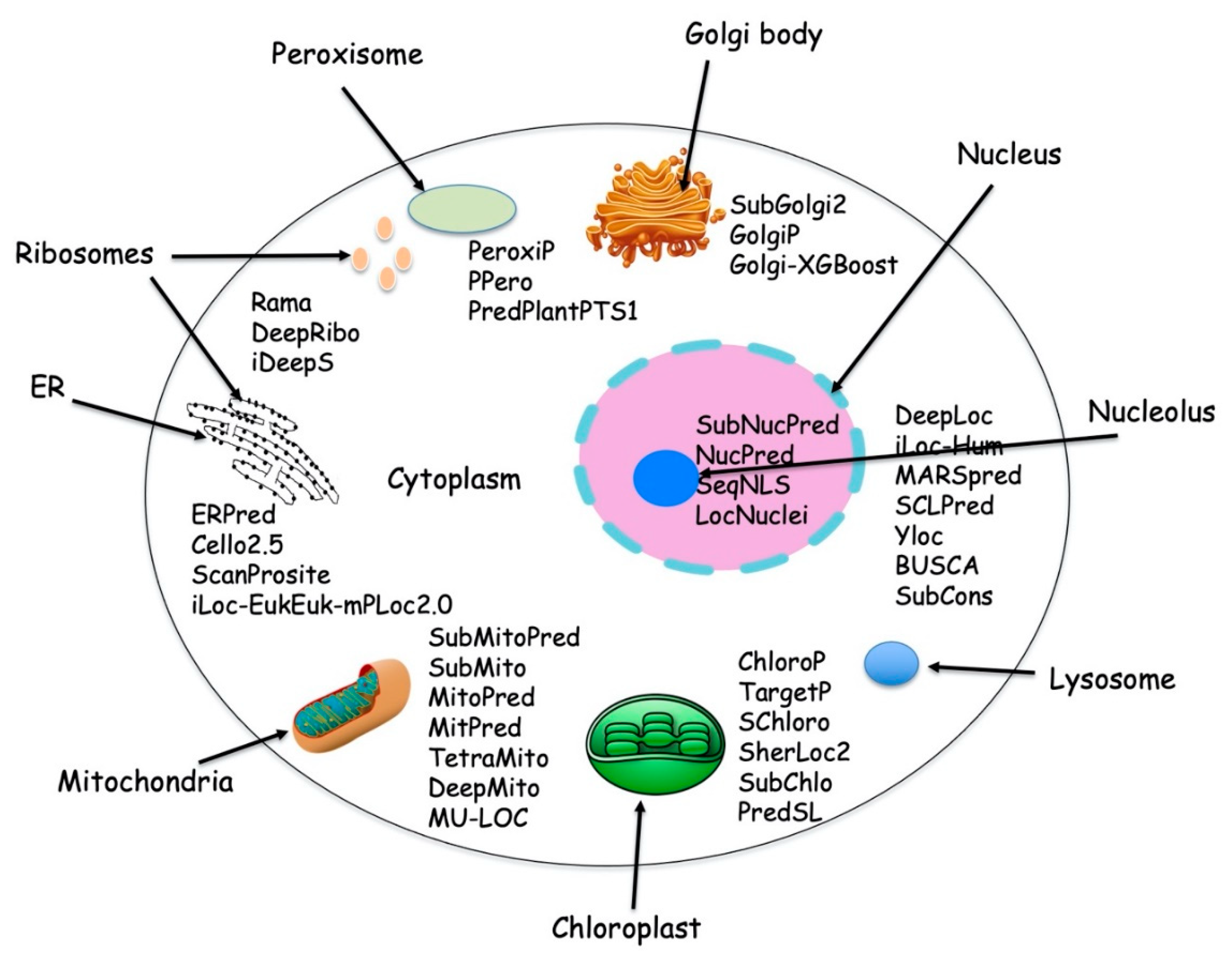
Kumar, R. et al. Life, 2020.
Figure 1. Typical Cells with Different Subcellular Locations.
Services at MtoZ Biolabs
Based on advanced analytical platforms, MtoZ Biolabs offers the subcellular structure and organelle proteomics service focusing on organelle structure and proteomics analysis. Through optimized separation technologies, this service efficiently extracts and isolates proteins from various organelles in cells or tissues. It allows for precise analysis of protein composition, abundance, post-translational modifications, and more, providing both qualitative and quantitative data support. This service enables researchers to explore organelle structure, function, interactions, and their key roles in cellular biological processes, offering crucial data for subsequent research. The service includes, but is not limited to, the following content:
1. Organelle Isolation and Protein Purification
We provide efficient organelle separation and protein extraction services to ensure high-purity protein samples, laying the foundation for subsequent analysis.
2. Subcellular Protein Identification
Using high-resolution mass spectrometry, we precisely identify and characterize proteins within subcellular structures, revealing their composition and function.
3. Subcellular Protein Localization
By studying protein localization across different organelles, we offer support for protein function studies, providing insights into their roles in various cellular processes.
4. Quantitative Analysis of Subcellular Proteins
MtoZ Biolabs offers quantitative analysis of proteins in various organelles, shedding light on their abundance and functional roles within the cell.
5. Post-Translational Modifications of Proteins
We analyze post-translational modifications such as phosphorylation, acetylation, and ubiquitination to explore their roles in cellular function regulation.
6. Subcellular Structural Analysis
Using high-resolution imaging technologies, we analyze morphological changes in organelles under different physiological and pathological conditions, revealing their roles in cellular function.
7. Protein Interaction Analysis
We provide protein interaction analysis, studying interactions among proteins within different organelles, helping to construct protein interaction networks and understand regulatory mechanisms within the cell.
Analysis Workflow
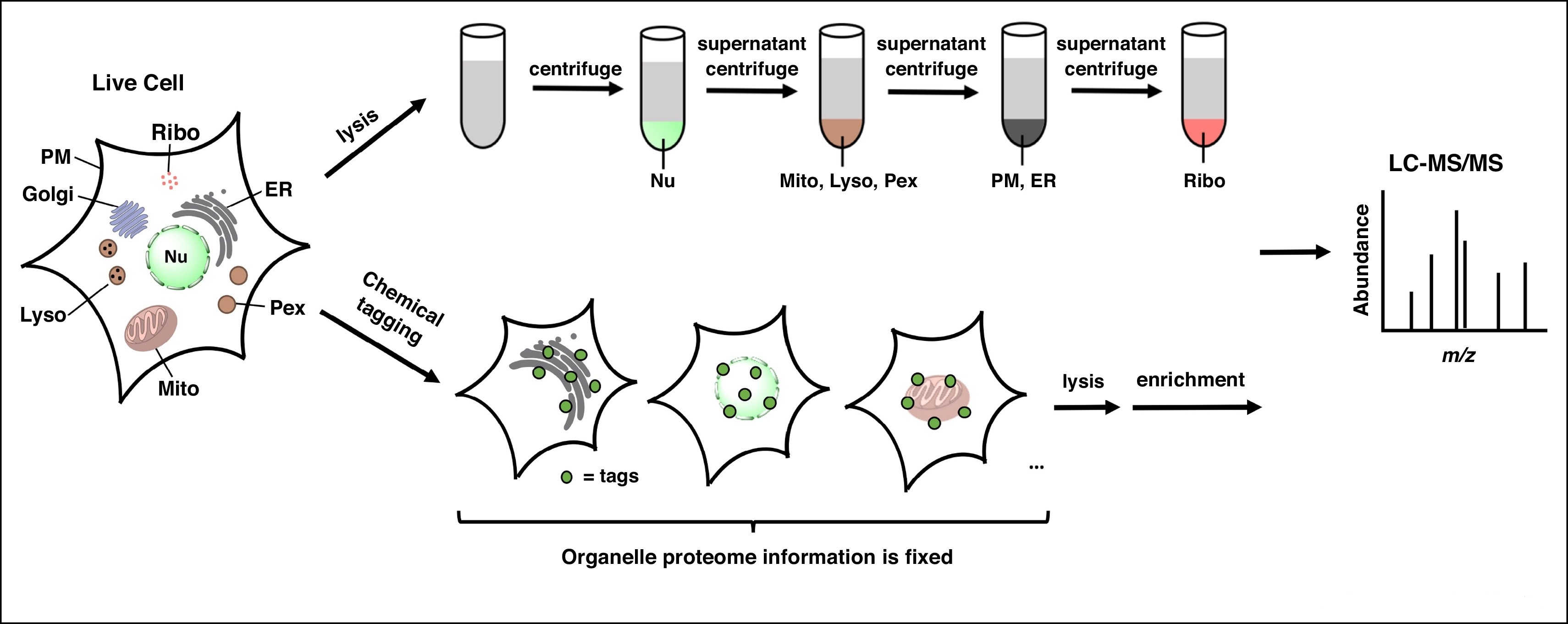
Zhu, H. et al. Current Opinion in Chemical Biology, 2019.
Figure 2. Organelle-Focused Proteomics Workflow.
Sample Submission Suggestions
1. Sample Types
We support various sample types, including mammalian cells, animal tissues, and plant tissues. We recommend providing sufficient sample quantities to ensure efficient organelle isolation and adequate protein content.
2. Sample Preservation and Transportation
Samples should be immediately frozen at −80°C after processing and transported using dry ice with a cold chain to avoid repeated freezing and thawing, ensuring the integrity of subcellular structures and protein quality.
3. Sample Processing Instructions
If the samples have undergone preliminary processing (e.g., homogenization, lysis), please provide detailed information on the processing steps to help us optimize the subsequent analysis process and enhance data consistency and reliability.
Service Advantages
1. Advanced Technology Platform
Leveraging advanced analytical platforms and stable subcellular separation systems, we ensure the accuracy and comprehensiveness of the data.
2. One-Stop Service
Covering the entire process from sample handling, separation, and purification to analysis and bioinformatics interpretation, simplifying workflows and enhancing project efficiency.
3. Multidimensional Data Interpretation
Combining bioinformatics analysis, we provide deep insights into protein function annotation, localization prediction, interaction networks, and pathway enrichment.
4. Flexible Custom Services
Offering personalized analysis plans tailored to research goals, supporting structural analysis, post-translational modification studies, subcellular proteomics quantification, and various other applications.
Applications
1. Cellular Mechanism Research
The subcellular structure and organelle proteomics service can reveal the synergistic interactions between different organelles, aiding in the analysis of key biological processes such as cell cycle regulation, signal transduction, and metabolic regulation.
2. Organelle Differentiation and Dynamics Research
Using proteomics to monitor the changes in organelles at different developmental stages or under external stimuli, this service supports cell biology and developmental biology research.
3. Drug Mechanism Research
The subcellular structure and organelle proteomics service can evaluate changes in organelle protein composition and functional states under drug intervention, supporting new drug development and safety evaluation.
4. Plant Stress and Development Research
By studying the dynamic responses of plant organelles to environmental stresses such as light, salinity, and drought, this service supports research on crop resistance and growth regulation.
FAQ
Q1: Is it Possible to Analyze the Proteome of A Single Organelle Only?
A1: Yes. We support proteomic analysis of individual organelles (such as mitochondria, endoplasmic reticulum, chloroplasts, peroxisomes, etc.) and can also conduct studies involving multiple organelles.
Q2: Can You Perform Proteomic Analysis on Plant Organelles?
A2: Yes. We have extensive experience with plant sample processing and support proteomics of plant-specific organelles like chloroplasts and peroxisomes.
Q3: Is it Possible to Provide Pre-isolated Organelles for Mass Spectrometry Analysis?
A3: Yes. If the organelles have already been isolated, you can submit the isolated fractions along with detailed background information to optimize the protein extraction and analysis workflow.
Deliverables
1. Comprehensive Experimental Details
2. Materials, Instruments, and Methods
3. Data Analysis, Preprocessing, and Estimation
4. Bioinformatics Analysis
5. Raw Data Files
How to order?




