






How to Assess Lysosome Enrichment Before Proteomics
Introduction
Lysosomal proteomics projects often fail before the first LC-MS/MS injection. A team may finish lysosome isolation and still be unsure whether the pellet is ready for digestion. Another team may see a weak Western blot and wonder whether to re-enrich or proceed anyway. A third team may hold a customer-prepared fraction and need a clear lysosome enrichment QC checklist before shipping.
How to assess lysosome enrichment before proteomics is a readiness question, not a purity competition. The practical goal is to confirm that the enriched fraction is suitable for LC-MS/MS, not to prove absolute organelle purity. This article explains what lysosome enrichment QC should include, how LAMP1 and LAMP2 Western blot results are used, and which checks should stay out of the default pre-omics path.
What Enrichment QC Is Trying to Answer
Lysosome enrichment QC answers one decision: is this fraction ready for proteomics.
That decision usually depends on three points:
- lysosome markers are detectable after enrichment
- protein amount in the enriched fraction is enough for the planned LC-MS/MS design
- buffer composition and sample history are compatible with digestion and mass spectrometry
A positive answer supports moving into proteomics. A negative answer should trigger re-enrichment, increased input, or buffer correction before LC-MS/MS. Marker positivity does not mean the fraction is free of every other organelle protein. It means enrichment is adequate to support an organelle-enriched proteome comparison.
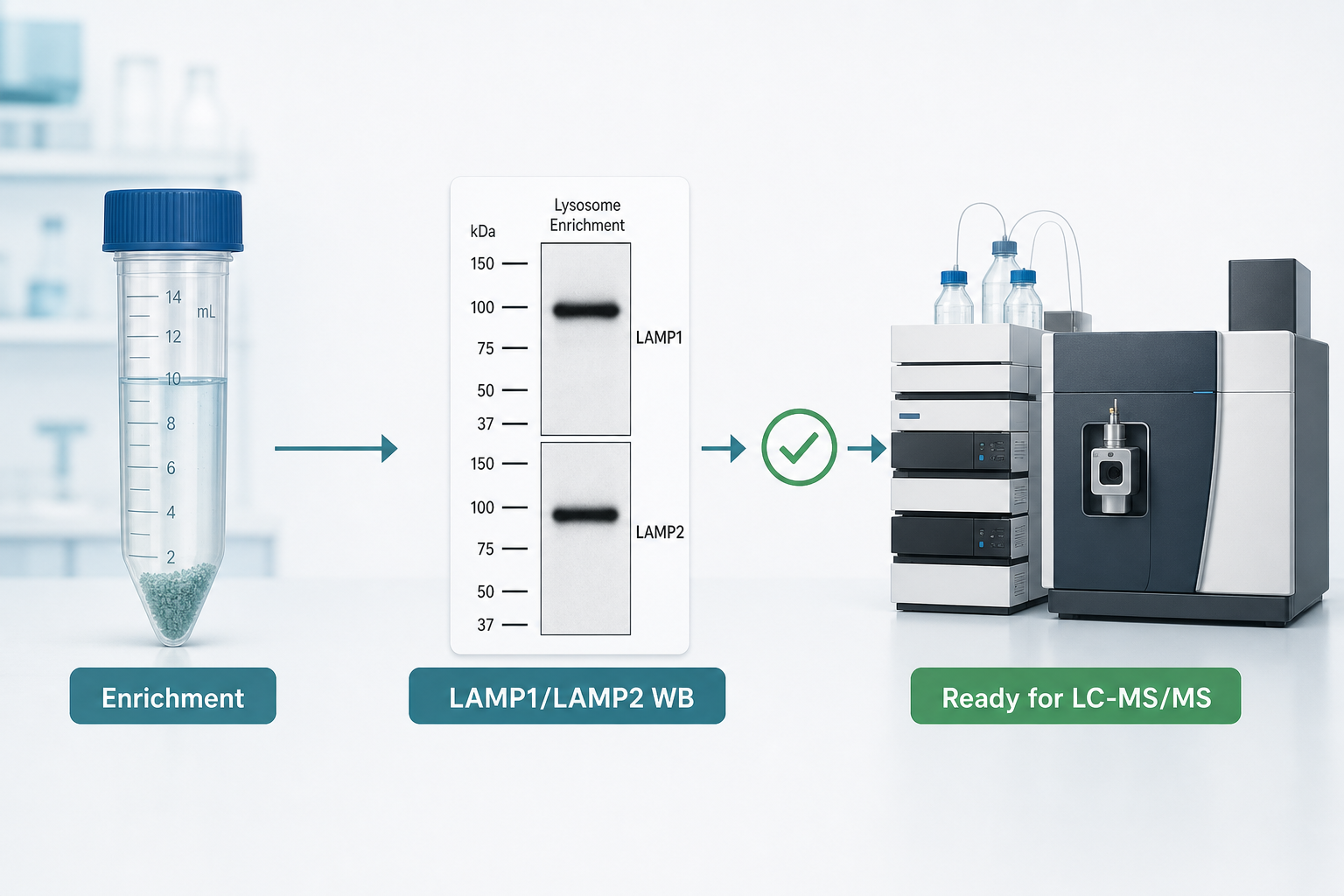
Figure 1. Pre-omics enrichment QC checks marker positivity, protein amount, and MS compatibility before LC-MS/MS.
LAMP1 and LAMP2 Western Blot as the Core Readiness Check
After lysosome isolation, Western blot for lysosome markers such as LAMP1 and LAMP2 is the practical enrichment check. LAMP1 LAMP2 lysosome isolation QC is used because these markers confirm that lysosomal membrane proteins remain detectable in the recovered fraction.
How to interpret the result
WB positive for LAMP1 or LAMP2 supports progression into proteomics.
WB negative or consistently weak signal suggests enrichment failure, excessive sample loss, or incompatible handling. Revisit input amount, isolation conditions, and freeze-thaw history before LC-MS/MS.
Matched enrichment across comparison arms matters as much as marker positivity. Disease and control fractions should share the same isolation chemistry and marker-check logic. Unequal enrichment efficiency can create false differential patterns later.
What marker positivity does not prove
LAMP1 or LAMP2 positivity does not separate membrane proteins from luminal proteins. It also does not guarantee detection of every low-abundance lysosomal target. Enrichment improves detection chance; it does not create a guarantee for difficult proteins.
Practical Pre-Proteomics Assessment Checklist
Use the checklist below before booking LC-MS/MS.
1. Confirm enrichment route and documentation
If enrichment was performed in the laboratory from cells or tissues, record input amount, isolation method, and storage history. Rapid centrifugal-column enrichment is a common laboratory route for cells and tissues when the project needs lysosome-enriched proteomics.
If the customer completed lysosome isolation, include the isolation workflow summary, buffer and detergent composition, protein concentration, and available QC evidence such as marker Western blot or electrophoresis documentation.
2. Confirm enriched protein amount
Plan for about 20 to 50 ug protein in the enriched fraction submitted for proteomics. Protein amount after enrichment, not the original cell count or tissue mass alone, determines readiness.
If starting from cells or tissues before laboratory enrichment, planning inputs of about 1 x 10^7 cells per sample or 20 to 50 mg tissue per sample help support workable enrichment.
3. Confirm LAMP1 or LAMP2 Western blot positivity
Treat LAMP1 or LAMP2 WB positivity as the default go or no-go marker check for lysosome enrichment QC.
4. Confirm storage and buffer compatibility
Store enriched fractions at -80°C and ship on dry ice. Avoid repeated freeze-thaw.
Prefer MS-compatible systems such as PBS or HEPES with non-ionic detergents when residual detergent remains compatible with digestion. Avoid Tris, SDS, azide, glycerol, and high residual reductant loads that interfere with proteomics.
5. Confirm that the claim matches an enriched-fraction readout
Proceed only when the study needs lysosome-enriched protein evidence. If the claim is still a bulk cellular question, enrichment QC is not the first bottleneck.
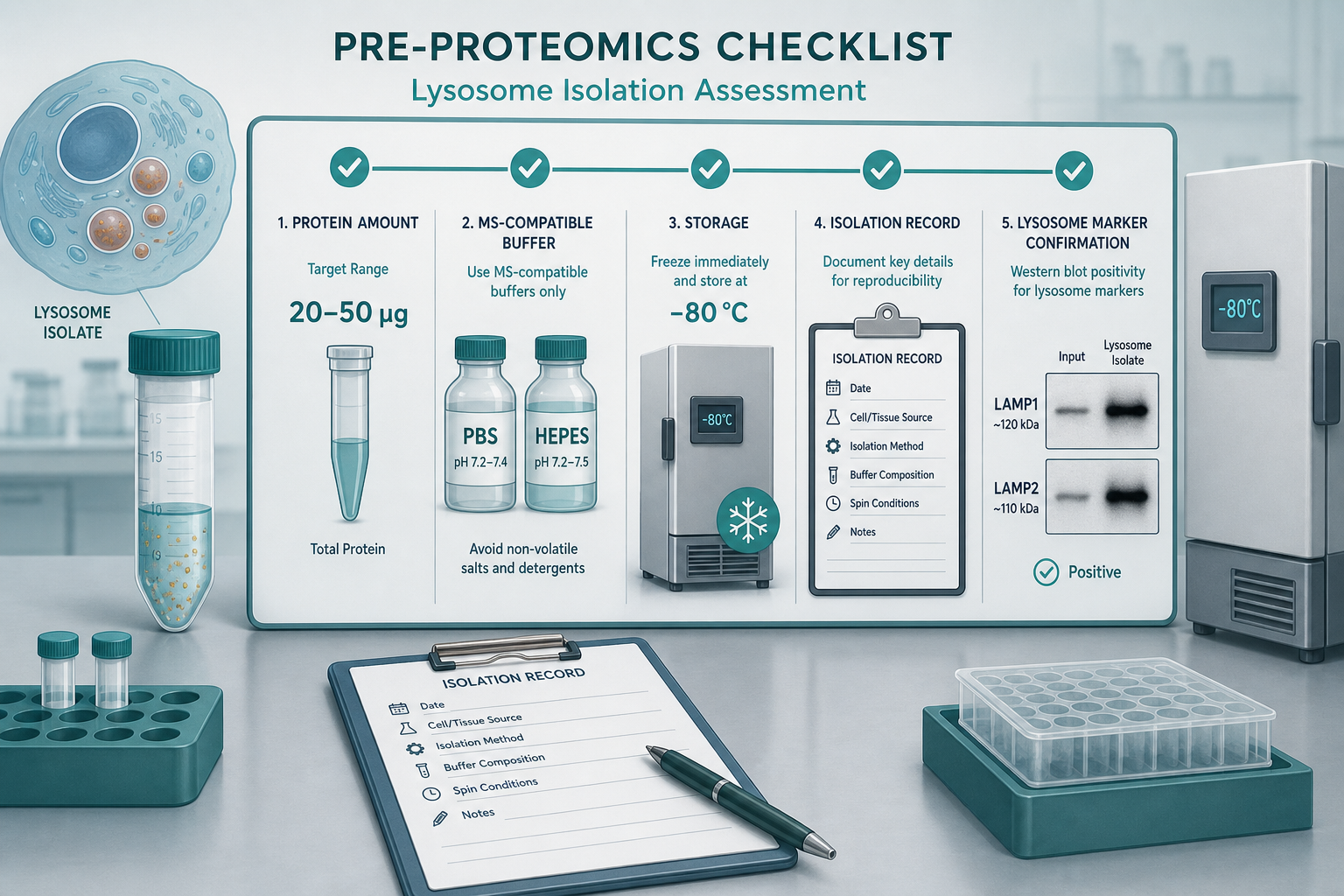
Figure 2. Readiness depends on enriched protein amount, MS-compatible buffers, isolation records, and LAMP1 or LAMP2 positivity.
What Not to Add by Default Before Omics
Teams sometimes expand enrichment QC into multi-organelle contamination panels before LC-MS/MS. Extra pre-omics purity panels are not recommended as a default requirement for this workflow. Broad contamination panels can consume material, delay the project, and still leave an incomplete purity picture.
If additional localization context is needed, consider subcellular localization analysis after proteomics rather than expanding the default pre-omics marker panel. The enrichment claim for proteomics remains marker-supported and fraction-based. Absolute organelle purity is not the acceptance criterion.
Related Services
Organelle Isolation and Protein Purification Service
Subcellular Proteomics Service
Subcellular Structure and Organelle Proteomics Service
Protein Subcellular Localization Service
Label-Free Quantitative Proteomics Service, MS Based
Quantitative Proteomics Service
iTRAQ/TMT/MultiNotch Quantitative Proteomics Service
Teams preparing enriched fractions can consult MtoZ Biolabs to confirm whether current LAMP1 or LAMP2 results, protein amount, and buffer composition support lysosomal proteomics intake.
Frequently Asked Questions
1. What is the minimum enrichment QC before lysosomal proteomics?
Confirm LAMP1 or LAMP2 Western blot positivity, enriched protein amount, and MS-compatible sample chemistry.
2. Is LAMP1 or LAMP2 positivity enough to proceed?
Yes. Marker positivity is the practical readiness check for moving into omics under this workflow.
3. Should teams also run multi-organelle contamination panels before LC-MS/MS?
Not by default. Extra pre-omics contamination panels are not recommended as a routine requirement.
4. What should customer-enriched fractions include with the shipment?
Include isolation records, buffer and detergent composition, protein concentration, and available QC evidence such as LAMP Western blot results.
5. Does enrichment QC guarantee deep coverage of every lysosomal protein?
No. Enrichment improves detection chance for lysosome-associated proteins, but low-abundance targets may still be missed.
Conclusion
Assessing lysosome enrichment before proteomics is a go or no-go readiness step. LAMP1 and LAMP2 Western blot positivity, workable enriched protein amount, and MS-compatible handling are the core checks. Expanding pre-omics contamination panels is usually unnecessary and can weaken the sample before LC-MS/MS.
Use enrichment QC to decide whether the fraction is ready, not to claim absolute organelle purity. Teams preparing lysosome isolation for proteomics can contact MtoZ Biolabs to review marker results, protein amount, and submission records before analysis begins.
How to order?




