






Affinity Purification Mass Spectrometry: How AP-MS Reveals Protein Interaction Networks from Bait-Enriched Samples
Introduction
Protein interaction projects often begin with a bait and end with a network figure, yet the path between those points is easy to oversimplify. A tagged kinase may return dozens of co-enriched proteins. A scaffold may recover condition-specific partners. A disease-associated bait may produce a dense candidate list that still needs filtering before any edge in a network diagram is justified.
Affinity purification mass spectrometry, commonly called AP-MS, reveals protein interaction networks by identifying proteins that co-enrich with a defined bait, then ranking those proteins against controls so candidate edges can be assembled into a bait-centered network. The method does not image every physical contact in the cell. It converts bait-enriched samples into scored interaction hypotheses that can be visualized, compared across conditions, and advanced to orthogonal validation. This article explains how bait enrichment becomes network information, what each analytical stage contributes, and where interpretation limits appear.
What Bait-Centered Enrichment Contributes to Network Mapping
Affinity purification mass spectrometry is a bait-centered interaction proteomics strategy. A bait protein is captured from lysate by an affinity handle, most often an epitope tag. Proteins that remain associated through wash conditions are eluted, digested, and identified by LC-MS/MS. Quantitative or semi-quantitative comparison with negative controls then separates candidate interactors from beads, tags, and abundant contaminants.
The network value comes from that filtered enrichment. Each retained prey becomes a candidate edge connected to the bait. When multiple baits, mutants, or conditions are analyzed under matched designs, those edges can be assembled into larger interaction maps. In practical terms, the workflow answers which proteins are recovered with this bait under these enrichment conditions, and which recoveries are specific enough to enter a network shortlist.
The method therefore supports network discovery at proteomics scale, while still requiring biological judgment before any edge is treated as a validated interaction.
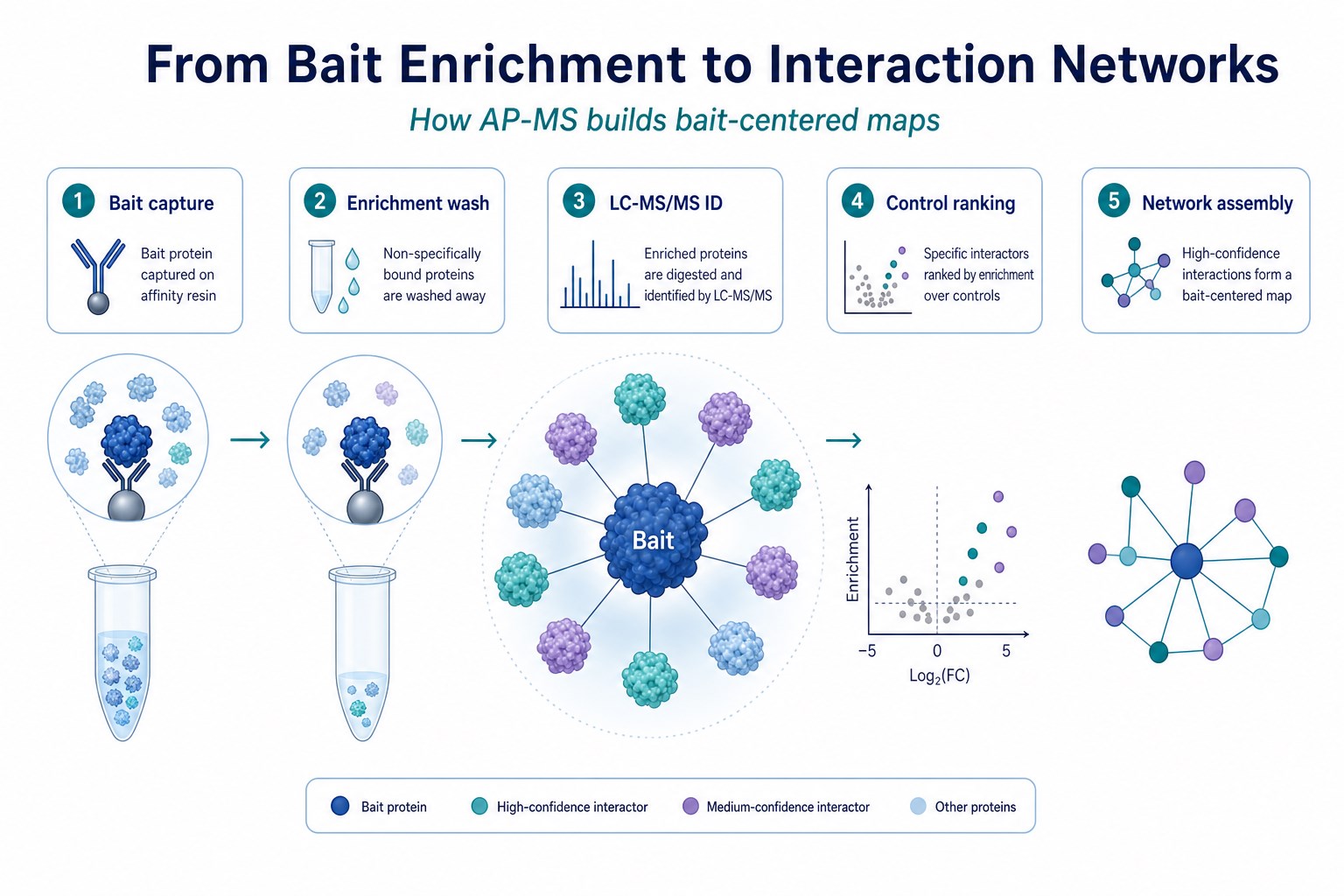
Figure 1. Bait enrichment, LC-MS/MS identification, and control-based ranking convert co-purifying proteins into candidate interaction-network edges.
How Bait-Enriched Samples Become Network Information
Bait definition sets the network center
Every enrichment-based network is organized around a bait. Tag choice, expression level, and cellular context determine which complexes are available for capture. If the bait is poorly expressed or the tag occludes binding surfaces, the resulting network will be incomplete for technical reasons rather than biological absence.
Enrichment chemistry shapes which edges survive
Lysis detergent, salt, and wash stringency decide which partners remain with the bait. Soft conditions preserve weak associations and increase background. Stringent conditions reduce sticky proteins and can erase transient edges. Network topology is therefore partly an experimental design product.
LC-MS/MS converts the eluate into protein identities
Digested peptides are identified and assigned to proteins. Depth, dynamic range, and quantification strategy affect whether low-abundance partners appear in the network. Missing values and shared peptides must be handled carefully when edges are ranked.
Controls turn identifications into candidate network edges
Empty-tag lines, bead-only controls, or unrelated baits define the background model. Prey proteins enriched relative to controls become candidate interactors. Without this step, abundant contaminants can dominate the network and hide meaningful structure.
Network assembly organizes ranked preys into interpretable maps
Candidate edges can be visualized as a bait-centered star, compared across conditions, or integrated with known pathway annotations. Community structure, condition-specific neighborhoods, and mutant-dependent edge loss are common readouts from these datasets.
Technical Value for Network Discovery
Affinity purification mass spectrometry scales bait-centered discovery beyond a handful of Western blot targets. One enrichment can nominate many candidate partners for network construction.
It supports systematic designs across mutants, stimuli, and time points when capture chemistry remains matched. Differential networks then highlight edges that appear, disappear, or change in abundance with biology.
It reduces dependence on prey-specific antibodies during discovery. Network hypotheses can be generated first, then validated with targeted assays on prioritized edges.
These strengths apply when bait recovery is robust, controls are matched, and edge claims remain proportional to enrichment evidence.
Limits That Affect Network Interpretation
Co-enrichment is not direct binary binding. Indirect partners, complex neighbors, and residual contaminants can all appear as edges if filtering is weak.
Weak or transient interactions may be lost during washing, so networks can under-represent dynamic contacts. Overexpression or tagging can also rewire neighborhoods relative to endogenous complexes.
Network figures can overstate certainty if every identified prey is drawn as an equal edge. Ranking, replicate support, and orthogonal confirmation remain necessary for high-confidence claims.
Related Services
Affinity Purification-Mass Spectrometry Service
MS-Based Protein-Protein Interaction Analysis Service
Protein Network Analysis Service
IP-MS Protein Interactomics Analysis Service
Co-Immunoprecipitation Protein Interaction Analysis Service
Pull Down based Protein Analysis Service with Mass Spectrometry
Teams planning bait-centered interaction networks can consult MtoZ Biolabs to review enrichment design, control strategy, and how outputs will be converted into ranked network candidates.
Application Scenarios for Network-Oriented Enrichment
Pathway neighborhood mapping around a signaling bait
Bait-centered enrichment is commonly used to map partners around kinases, receptors, and scaffolds. The resulting neighborhood supports pathway hypothesis generation before functional tests.
Condition-dependent network remodeling
Stimulus, inhibitor, or genotype contrasts can reveal edges that change with pathway state. Matched enrichments are essential so technical recovery differences are not mistaken for network biology.
Mutant or domain-driven edge loss
Truncations and point mutants can remove selected partners while retaining bait recovery. Differential analysis then localizes which network edges depend on specific bait features.
Shortlist generation for orthogonal validation
Network candidates are typically advanced to reciprocal IP, proximity labeling, pairwise binding assays, or functional readouts. Enrichment is most useful when it produces a ranked shortlist rather than an unfiltered protein dump.
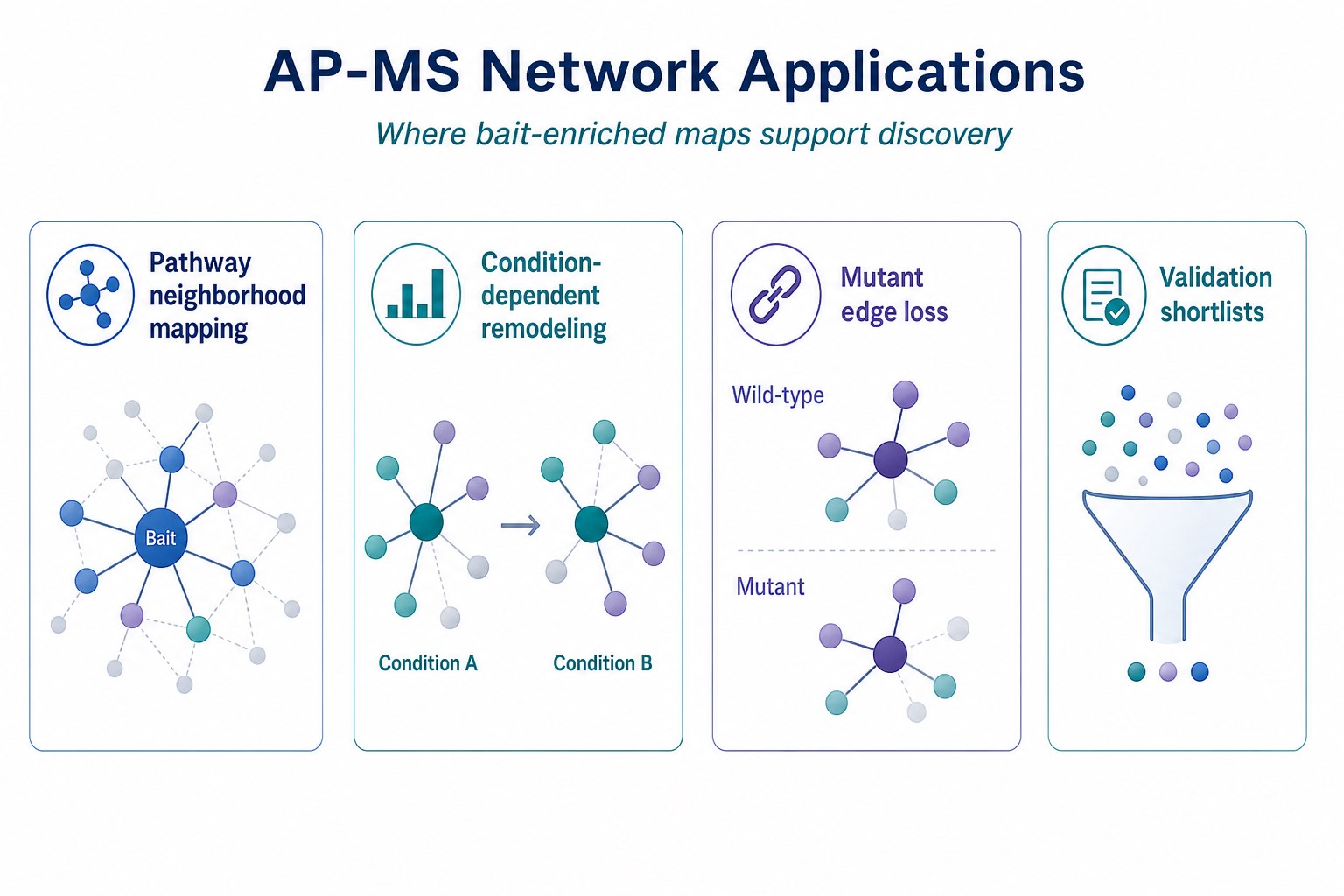
Figure 2. Network-oriented enrichment supports pathway neighborhood mapping, condition-dependent remodeling, mutant edge analysis, and validation shortlists.
Practical Design Points Before Network Claims
Define the network claim before purification. Decide whether the project needs a static neighborhood, a differential network, or a mutant-dependent edge map.
Match bait expression and capture across all arms that will be compared. Unequal bait recovery creates false differential edges.
Include negative controls that reflect the same tag, bead chemistry, and expression system. Background models determine which preys enter the network.
Report enrichment metrics with the network figure. Fold change, statistical support, and bait recovery help readers judge edge confidence.
Reserve orthogonal assays for edges that carry the biological claim. Network visualization is an interpretation aid, not a final proof of interaction.
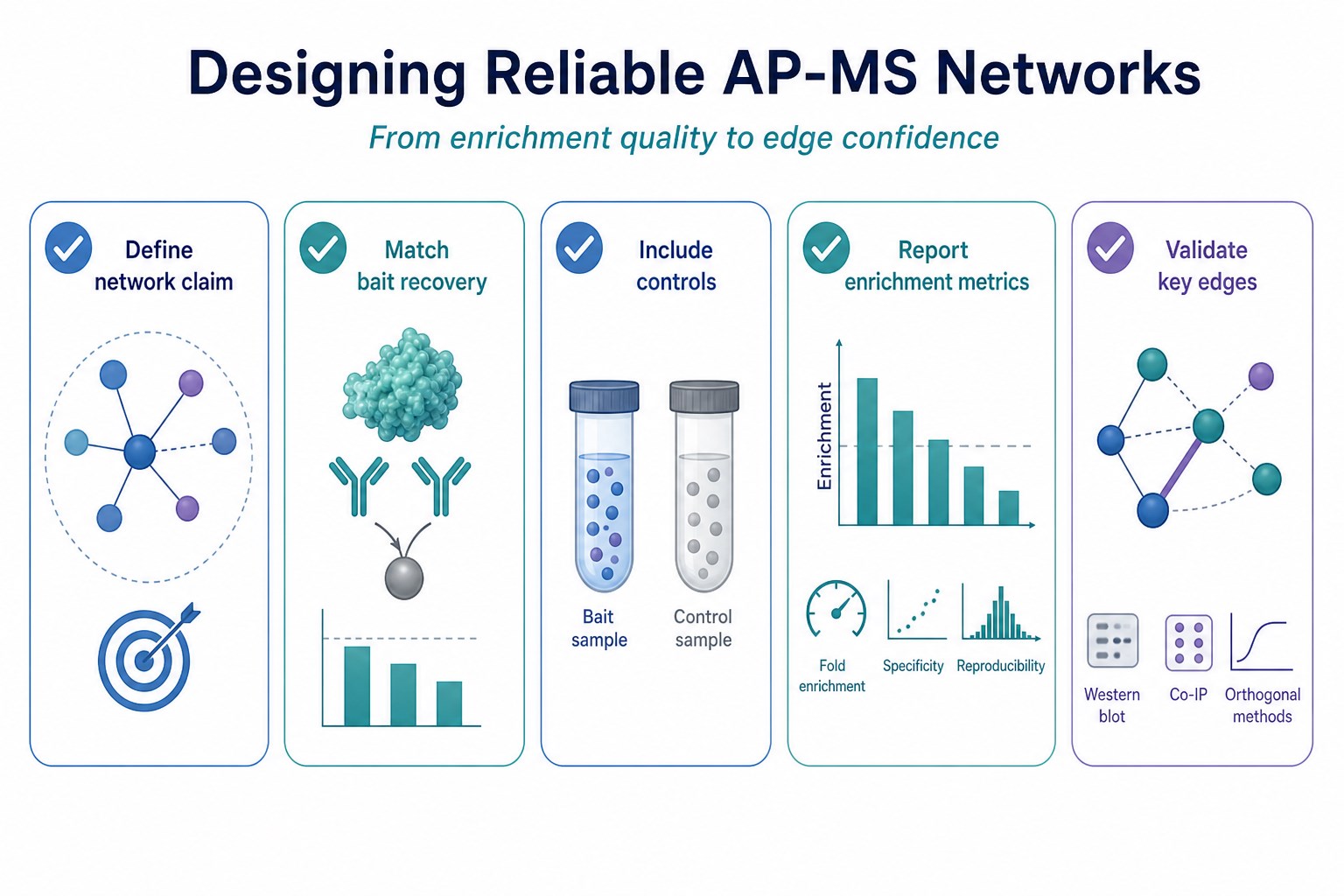
Figure 3. Reliable interaction networks depend on matched bait recovery, controls, ranked enrichment metrics, and orthogonal follow-up for key edges.
For projects that need both enrichment and network-oriented interpretation support, MtoZ Biolabs can help align bait strategy with interactome analysis goals for the current study phase.
Frequently Asked Questions
1. How does AP-MS reveal protein interaction networks?
It identifies proteins co-enriched with a bait, ranks them against controls, and assembles retained candidate edges into a bait-centered network for further analysis.
2. Does every protein in an enrichment-based network represent a direct interactor?
No. Co-enrichment can include indirect complex members and residual background. Direct binding requires orthogonal confirmation.
3. Why are controls essential for network construction?
Controls define which recoveries are bait-specific. Without them, sticky proteins can inflate the network and obscure meaningful neighborhoods.
4. Can these datasets compare interaction networks across conditions?
Yes, when enrichments are matched for bait recovery, capture chemistry, and analysis depth. Differential edges then become interpretable hypotheses.
5. How should AP-MS networks be used in a project plan?
Use them to prioritize candidates and generate pathway hypotheses, then validate key edges with targeted interaction or functional assays.
Conclusion
Affinity purification mass spectrometry reveals protein interaction networks by converting bait-enriched samples into ranked candidate edges. The scientific core is not only identification of co-purifying proteins, but controlled comparison that decides which recoveries deserve a place in the network. Enrichment chemistry, MS depth, and background models all shape the final map.
AP-MS is most effective when the bait is well defined, controls are matched, and network claims remain proportional to enrichment evidence. Pathway neighborhoods, condition-dependent remodeling, and mutant edge analysis are common uses, provided key edges are advanced to orthogonal validation. Teams preparing bait-centered interactome projects can contact MtoZ Biolabs to review whether the current enrichment design is ready to support reliable network interpretation.
How to order?




