






Sample Requirements for Lysosomal Proteomics Analysis
Introduction
Lysosomal proteomics projects often stall at sample submission rather than at data analysis. A team may have cell pellets ready but be unsure how many cells are needed. Another team may hold frozen tissue and ask whether lysosome enrichment must be completed before shipping. A third team may already have a lysosome-enriched fraction and need to know which buffers, protein amounts, and QC notes are acceptable for LC-MS/MS.
Lysosomal proteomics sample requirements cover sample type, starting amount, storage, shipping, and the submission information needed for reliable analysis. Clear requirements protect both enrichment quality and downstream proteomics depth. This article summarizes practical submission guidance for lysosome proteomics samples so project teams can decide what to prepare before contacting the laboratory.
Which Sample Types Are Suitable
Directly workable starting materials
Cell lines, primary cells, and fresh or frozen tissues are commonly accepted starting materials for lysosomal proteomics workflows. Subcellular fractions and customer-prepared lysosome-enriched fractions can also be submitted when enrichment records and buffer compatibility are documented.
Human, mouse, and rat samples are routinely accepted. Other species should be assessed before submission because enrichment behavior and database support may differ.
Materials that require customer-side lysosome enrichment first
Serum, plasma, CSF, urine, and several special sample classes such as dried blood spots, PBMCs, leukocytes, fibroblasts, and organoids are not accepted for lysosome isolation by the laboratory in this service scope. For these materials, customers should complete lysosome or lysosome-related fraction enrichment before shipping. Only the enriched fraction is then submitted for proteomics.
This boundary matters for planning. Whole biofluids are not interchangeable with enriched lysosome fractions unless enrichment has already been completed.
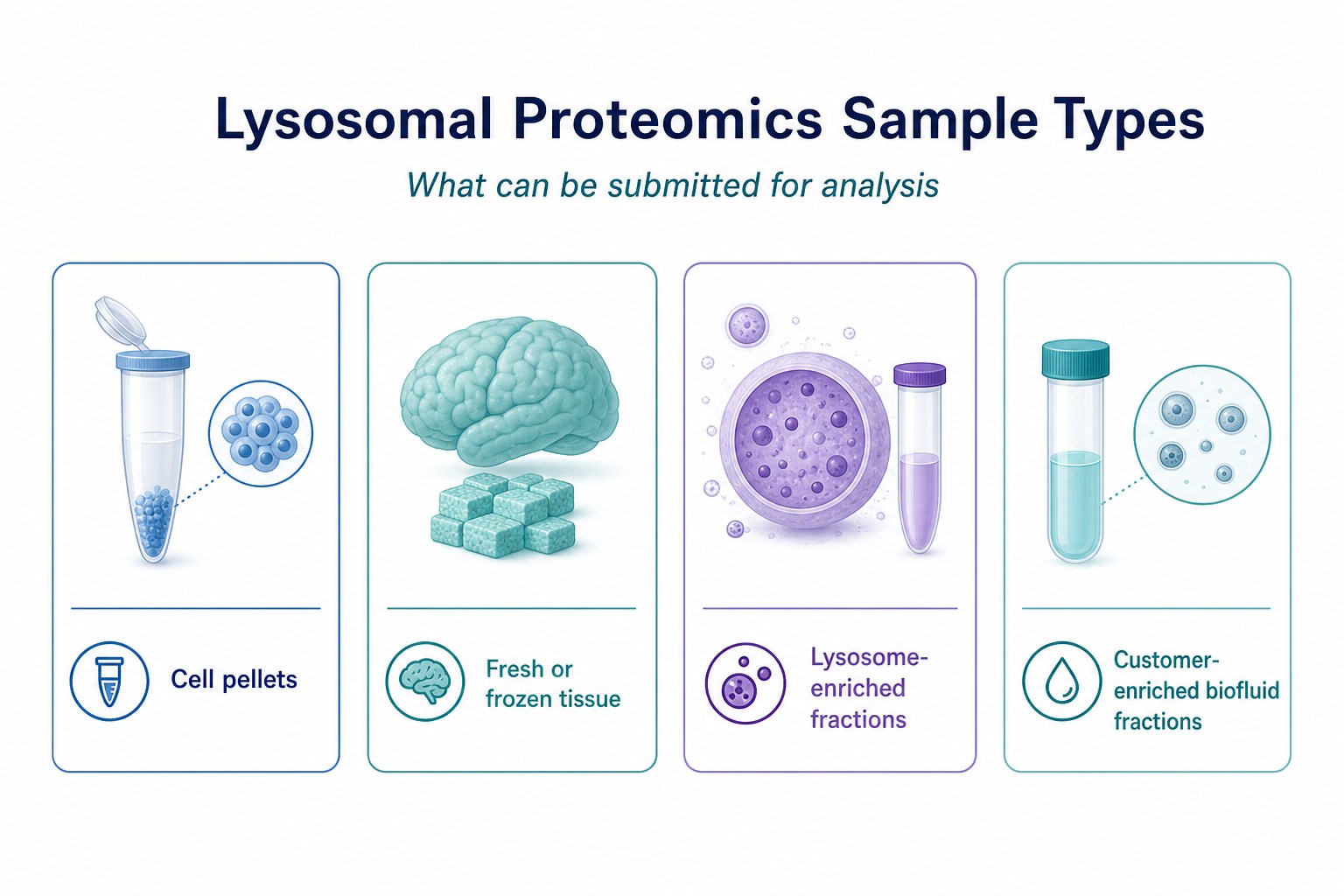
Figure 1. Suitable inputs include cells, tissues, and documented lysosome-enriched fractions; some biofluids require customer-side enrichment first.
Starting Amount Guidance
Starting amount is the most common intake question after sample-type selection. The values below are planning targets for standard lysosomal proteomics workflows. Projects with difficult matrices, PTM focus, or unusually low vesicle or organelle recovery may need a higher enriched-protein input and should be reviewed before collection begins.
Cells
Submit a cell pellet of at least 1 x 10^7 cells per sample when lysosome enrichment and proteomics are planned from cultured or primary cells. Lower inputs increase the risk of weak enrichment and shallow proteome coverage. Keep culture conditions and harvest timing matched when multiple groups will be compared.
Tissues
Submit 20 to 50 mg tissue per sample for typical tissue-based lysosomal proteomics workflows. Keep collection and freezing conditions matched across comparison groups.
Customer-enriched fractions
If lysosome enrichment, subcellular fractionation, or related fraction preparation is completed by the customer, the enriched fraction should provide 20 to 50 ug protein for proteomics. Protein amount after enrichment, not the original tissue or cell mass alone, determines readiness.
These amounts are planning targets for standard proteomics. Projects with PTM focus or unusually low-abundance targets may need higher enriched-protein input and should be reviewed case by case.
Storage, Shipping, and Buffer Compatibility
Storage and shipping
Store samples at -80°C whenever possible and ship on dry ice. Avoid repeated freeze-thaw cycles. Matched freeze-thaw history across study arms is part of comparative design for lysosome proteomics samples.
Acceptable buffer context
For processed fractions, MS-compatible systems are preferred. Physiological buffers such as PBS or HEPES and non-ionic detergents such as NP-40 or Triton X-100 are generally acceptable when residual amounts remain compatible with digestion and LC-MS/MS.
Components to avoid
Avoid Tris and other amine-based buffers that interfere with common digestion chemistries. Avoid SDS and strong ionic detergents. Avoid high concentrations of reductants such as DTT or beta-mercaptoethanol in submitted lysates when they are not required by an agreed protocol. Do not include stabilizers or preservatives such as sodium azide or glycerol that can interfere with proteomics.
Samples that should not be submitted
Degraded, contaminated, repeatedly freeze-thawed, buffer-incompatible, or non-inactivated infectious samples should not be submitted. Human, infection-model, and pathogen-related materials require inactivation and the corresponding ethics and safety documentation before shipment.
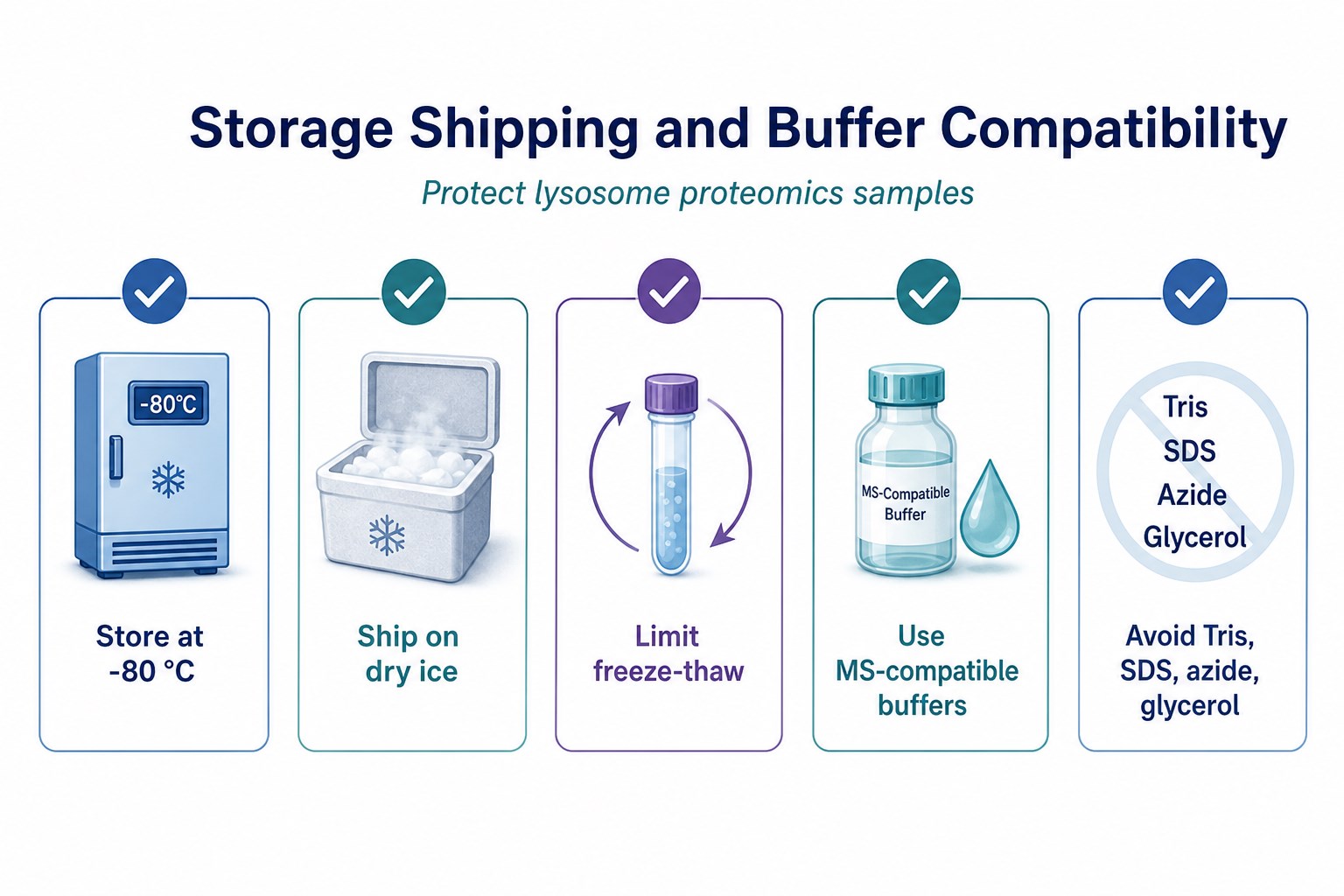
Figure 2. Submission readiness depends on -80°C storage, dry-ice shipping, MS-compatible buffers, and avoidance of incompatible additives.
Submission Information for Customer-Enriched Fractions
When customers ship already enriched lysosome fractions, include the isolation workflow summary, buffer and detergent composition, and key QC data such as protein concentration and available purity evidence. Western blot positivity for lysosome markers such as LAMP1 or LAMP2 is a practical enrichment check before proteomics.
Do not omit additive lists. Hidden Tris, SDS, glycerol, or azide content is a common reason processed fractions fail intake review. A short composition table attached to the packing list usually prevents back-and-forth after the shipment arrives.
If enrichment will be performed by the laboratory from cells or tissues, provide species, sample state, pellet or tissue mass, and the intended comparison design so isolation and proteomics can be planned together. Note whether fresh or frozen material will be shipped and whether any protease inhibitors were already added.
Related Services
Subcellular Proteomics Service
Subcellular Structure and Organelle Proteomics Service
Organelle Isolation and Protein Purification Service
Protein Subcellular Localization Service
Label-Free Quantitative Proteomics Service, MS Based
Quantitative Proteomics Service
Post-Translational Modifications Proteomics Service
Teams preparing submissions can consult MtoZ Biolabs to confirm whether current pellets, tissues, or enriched fractions meet lysosomal proteomics sample requirements before dry-ice shipment.
Practical Pre-Submission Checklist
Confirm that the sample type is accepted as a starting material or as a customer-enriched fraction.
Confirm cell count, tissue mass, or enriched-protein amount against the guidance above.
Confirm -80°C storage, dry-ice shipping, and limited freeze-thaw history.
Confirm buffer and additive compatibility for any processed fraction.
Confirm ethics, consent, and inactivation documents for human or pathogen-related materials when applicable.
Confirm sample IDs, species, matrix, and comparison grouping on the submission form.
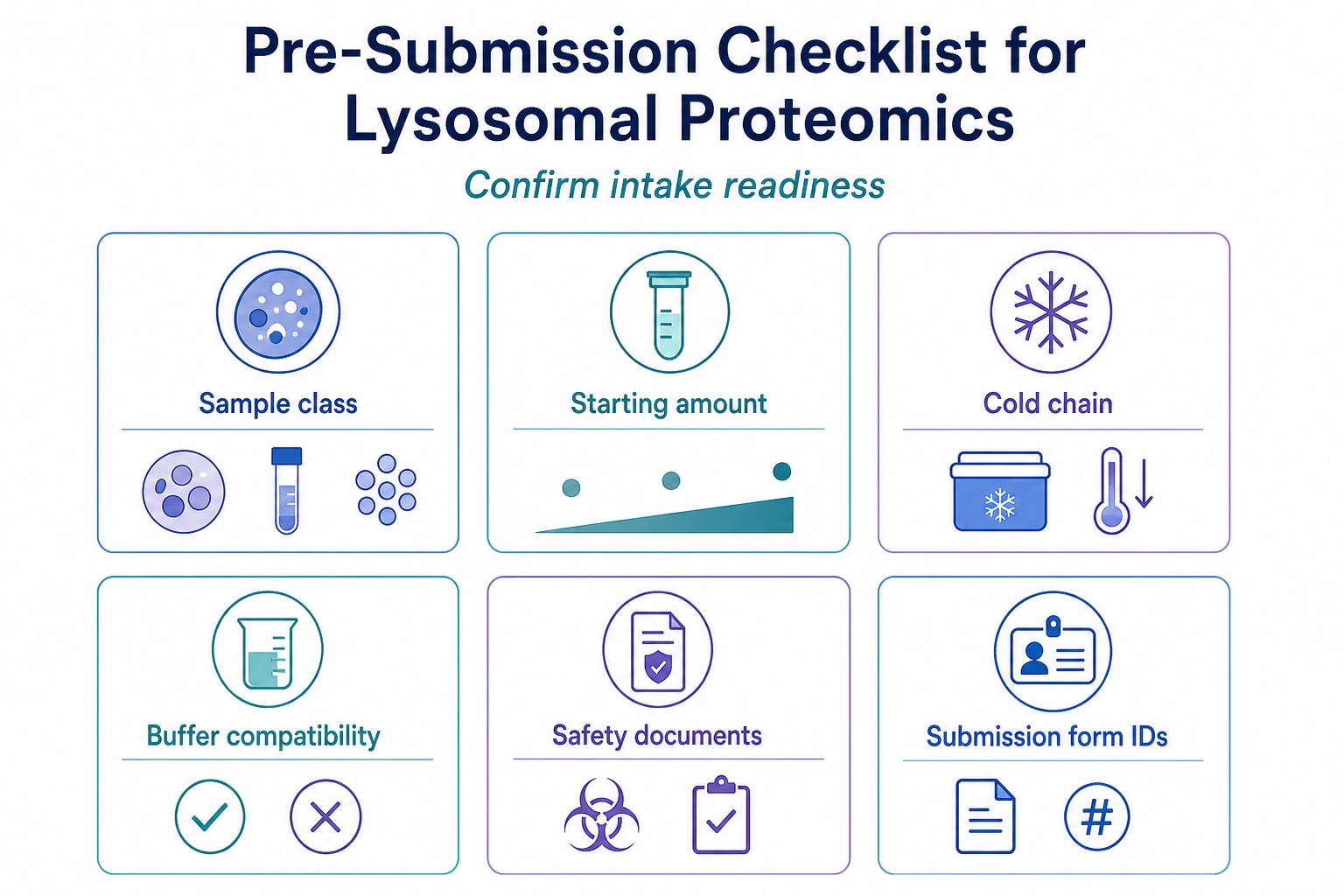
Figure 3. Before shipping, confirm sample class, amount, cold chain, buffer compatibility, and required documentation.
For projects that still need help classifying starting materials versus enriched fractions, MtoZ Biolabs can review the planned inventory against intake criteria.
Frequently Asked Questions
1. What are the basic lysosomal proteomics sample requirements?
Provide an accepted sample type, adequate starting amount, -80°C storage with dry-ice shipping, MS-compatible buffers for processed fractions, and complete submission documentation.
2. How many cells or how much tissue are typically needed?
Plan for at least 1 x 10^7 cells per sample or 20 to 50 mg tissue per sample when enrichment starts from cells or tissues.
3. Can plasma or urine be shipped directly for lysosome isolation?
Not under this service boundary. Customers should enrich lysosome-related fractions first and submit the enriched material for proteomics.
4. What protein amount is needed for customer-enriched lysosome fractions?
Plan for 20 to 50 ug protein in the enriched fraction submitted for proteomics.
5. What information should accompany submission?
Include sample IDs, species, sample form, amounts, storage history, buffer composition for processed fractions, and QC notes for customer-enriched material.
Conclusion
Sample Requirements for Lysosomal Proteomics Analysis center on matching sample class, amount, cold chain, and buffer compatibility to the intended workflow. Cells and tissues can enter laboratory enrichment routes, while selected biofluids and special matrices require customer-side enrichment before proteomics. Enriched fractions need documented composition and sufficient protein amount for LC-MS/MS.
Clear preparation reduces intake delays and protects comparative designs from avoidable technical noise. Teams ready to submit lysosome proteomics samples can contact MtoZ Biolabs to confirm lysosomal proteomics sample requirements against the current inventory before shipping.
How to order?




