






Plasma Proteomics Workflow: Sample Processing and LC-MS/MS Analysis
Plasma proteomics analysis converts complex plasma protein samples into protein-level datasets through integrated experimental and computational procedures. The workflow connects sample preparation, peptide generation, LC-MS/MS measurement, and data processing to transform plasma samples into interpretable proteomics results.
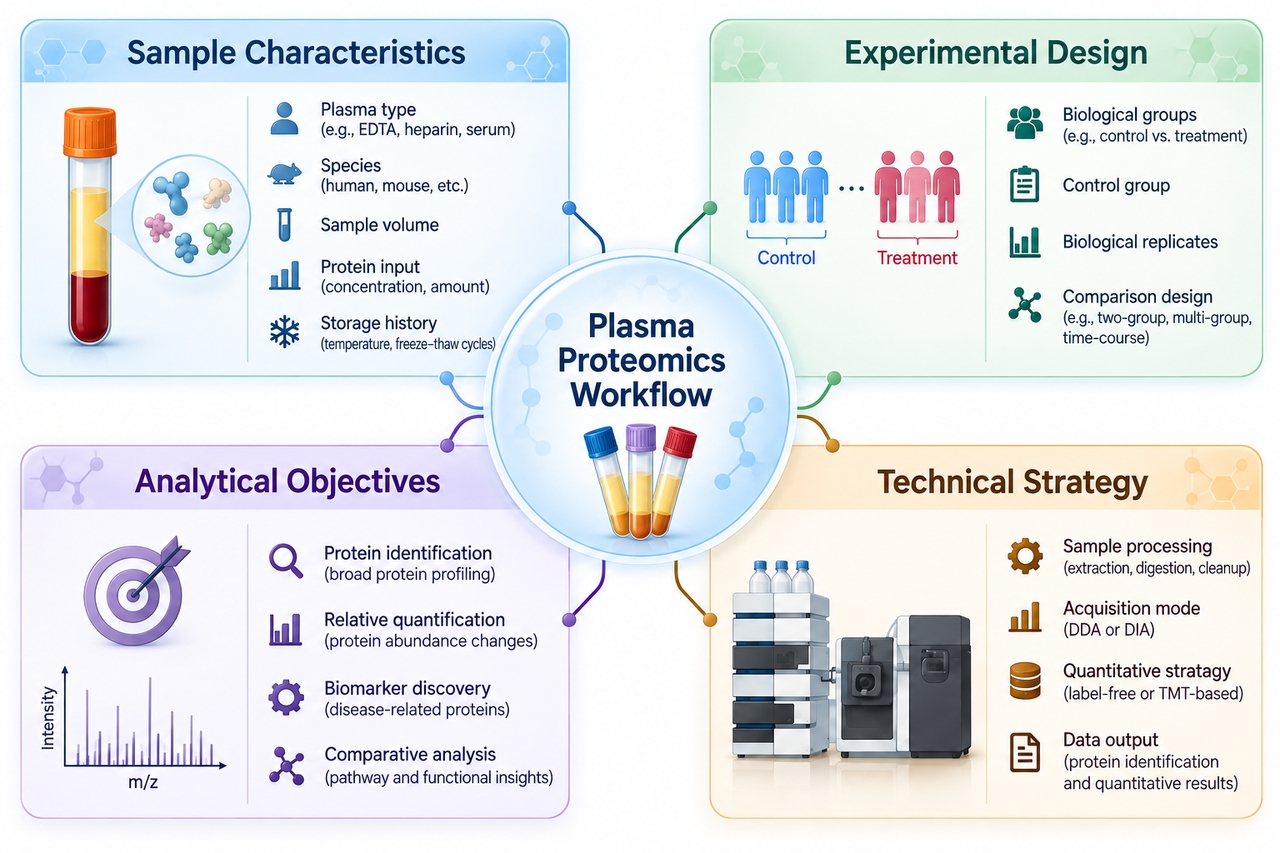
A plasma proteomics workflow is designed according to sample characteristics, analytical objectives, and expected data output. The overall strategy determines how plasma proteins are processed, how peptides are measured by mass spectrometry, and how the resulting data are converted into protein identification and quantitative information.
Designing a Plasma Proteomics Workflow
Workflow design determines how laboratory processing and computational analysis are organized according to the objectives of a plasma proteomics study. Before experimental processing begins, sample information, analytical requirements, and expected results should be considered together.
1. Sample Evaluation
Sample evaluation includes reviewing key characteristics before laboratory processing. Important information includes plasma species, sample type, available plasma volume, protein concentration, total protein input, storage conditions, freeze-thaw history, and other relevant sample records.
These factors help determine whether the available sample material is suitable for the planned proteomics workflow. For information about plasma sample collection, storage, and submission requirements, refer to Plasma Sample Collection, Storage, and Shipping for Proteomics.
2. Experimental Group Design
Experimental group design defines how samples will be compared during quantitative analysis. Important factors include biological groups, control groups, treatment conditions, biological replicates, and comparison objectives. A well-designed grouping strategy supports appropriate quantitative analysis and statistical evaluation of protein abundance differences.
3. Analysis Objectives
Analysis objectives determine the type of dataset generated from plasma proteomics analysis. Protein identification analysis focuses on detecting proteins represented by measured peptide signals, while relative quantification analysis compares protein abundance patterns between samples or experimental groups. The selected analytical workflow should match the expected data type required for the study.
Plasma Protein Processing and Sample Preparation
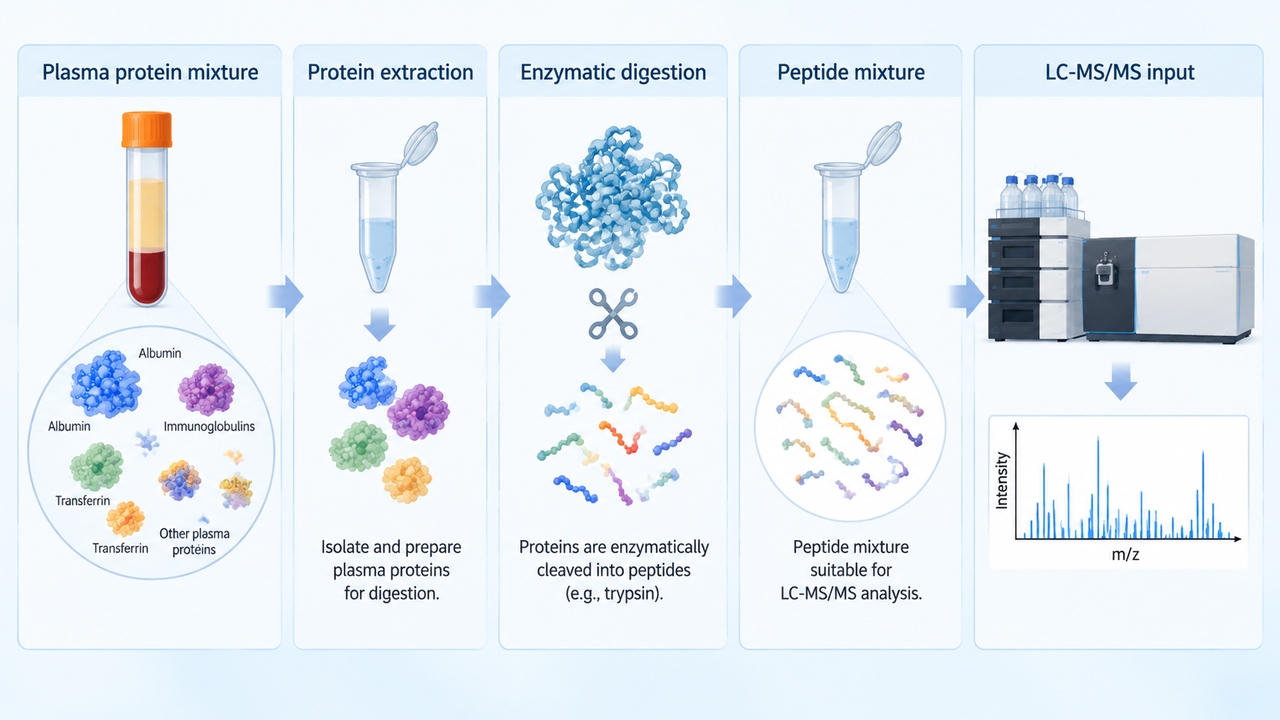
After plasma samples enter laboratory analysis, proteins are processed into peptide samples suitable for LC-MS/MS measurement. Protein extraction, enzymatic digestion, and peptide preparation connect the original plasma protein mixture with downstream mass spectrometry analysis.
1. Sample Processing Considerations
Plasma contains proteins with a broad abundance range and complex matrix characteristics. The appropriate sample processing strategy depends on sample characteristics, analytical objectives, and expected data output.
Routine plasma proteomics workflows generally use non-depleted plasma samples, followed by protein extraction, digestion, peptide preparation, and LC-MS/MS analysis. Additional preprocessing strategies, such as depletion of selected high-abundance proteins or other enrichment approaches, may be considered for specific research objectives requiring enhanced access to selected protein populations.
The influence of plasma sample characteristics on proteomics analysis is further discussed in Plasma Proteomics Challenges: Sample Quality and Analysis Considerations.
2. Protein Extraction
Protein extraction prepares plasma proteins for downstream digestion and peptide analysis. Extracted proteins are quantified to determine available protein input and support consistent sample processing across experimental groups. Standardized protein preparation helps improve comparability between samples before LC-MS/MS analysis.
3. Protein Digestion
Protein digestion converts extracted plasma proteins into peptide mixtures that can be analyzed by LC-MS/MS. In mass spectrometry-based proteomics, peptides rather than intact proteins are measured because peptide sequences provide the molecular information required for protein identification. Enzymatic digestion generates peptide fragments from the extracted protein pool, creating the peptide composition that enters subsequent separation and mass spectrometry acquisition.
4. Peptide Preparation
Following digestion, peptide mixtures undergo preparation before LC-MS/MS analysis. Peptide preparation focuses on generating samples compatible with chromatographic separation and mass spectrometry measurement.
Before injection, peptide quality can be evaluated based on peptide concentration, sample cleanliness, and compatibility with LC-MS/MS acquisition.
LC-MS/MS Acquisition for Plasma Proteomics
LC-MS/MS acquisition measures peptide mixtures generated during sample preparation. Chromatographic separation and mass spectrometry measurement together generate the raw spectral information used for protein identification and quantitative analysis.
1. Selection of Acquisition Mode
Acquisition mode selection depends on study objectives and expected data requirements.
- Data-dependent acquisition (DDA) selects precursor ions for fragmentation based on measured signals and is widely used for discovery-oriented proteomics studies and protein identification.
- Data-independent acquisition (DIA) systematically collects fragment information across defined mass ranges and supports reproducible quantitative analysis across comparative studies.
2. Selection of Quantitative Strategy
Quantitative strategy selection depends on sample number, experimental design, required quantitative performance, and study objectives. Common strategies for plasma proteomics include label-free quantification and TMT-based quantification.
(1) Label-Free Quantification (LFQ)
LFQ measures peptide signals directly from LC-MS/MS acquisition without isotope labeling. It provides flexible sample processing and is commonly applied to comparative plasma proteomics studies, biomarker discovery projects, and large sample cohorts.
(2) TMT-Based Quantification
TMT-based quantification uses isotope labeling reagents to multiplex multiple samples within a single LC-MS/MS workflow. It supports relative protein abundance comparison across multiple experimental groups and is suitable for studies requiring multiplexed analysis.
3. LC-MS/MS Acquisition
After peptide preparation, the peptide mixture is separated by liquid chromatography before mass spectrometry detection, and then the peptide ions are introduced into the mass spectrometer for tandem mass spectrometry analysis. MS/MS acquisition records precursor ion information and fragment ion spectra generated from peptide fragments. The collected spectral information reflects the mass characteristics and fragmentation patterns of the detected peptides and serves as the raw measurement basis for subsequent computational processing.
4. Raw Data Generation
LC-MS/MS acquisition produces raw spectral files containing precursor and fragment ion information collected during the analytical run. The raw files preserve the experimental signals obtained from peptide measurements and are used as input for subsequent database searching, peptide assignment, and quantitative processing.
From Raw Data to Protein Identification
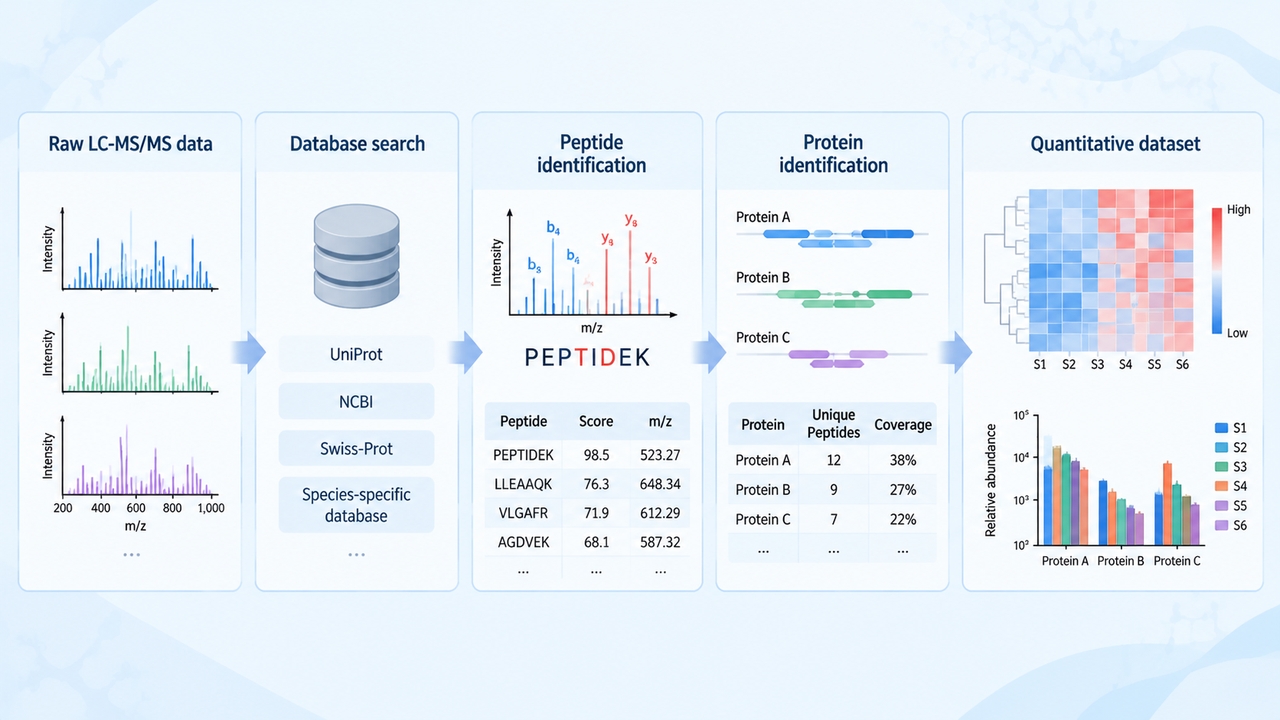
Raw LC-MS/MS data are processed through computational analysis to convert peptide spectral information into protein-level datasets. The processing workflow includes database searching, peptide assignment, protein identification, and quantitative processing, linking measured MS/MS signals with protein information generated from plasma proteomics analysis.
1. Database Search and Peptide Assignment
Raw LC-MS/MS files contain precursor ion information and fragment ion spectra generated during peptide measurement. Database searching compares experimental MS/MS spectra with reference protein sequence databases and assigns matched spectra to peptide sequences, generating peptide-level evidence for subsequent protein identification.
| Data Processing Step | Generated Information |
| Database search | Matching MS/MS spectra with reference protein sequence databases |
| Peptide assignment | Generating peptide-level evidence from detected spectra |
| Protein identification | Mapping identified peptides to corresponding protein entries |
| Quantitative processing | Generating relative protein abundance information across samples |
2. Protein Identification
Protein identification is based on peptide-level evidence generated during LC-MS/MS data processing. Identified peptides are mapped to corresponding protein entries, and multiple peptide assignments are used to determine protein-level identification information for plasma samples.
3. Quantitative Results
Quantitative processing generates relative abundance information for detected proteins across samples. Plasma proteomics datasets can provide relative protein abundance information for comparison between samples or experimental groups according to the study design.
Further interpretation of protein identification and quantitative results is discussed in How to Interpret Plasma Proteomics Results.
4. Quality Control and Data Evaluation
Quality control evaluates the reliability and consistency of generated proteomics datasets. Common evaluations include sample correlation, data consistency, identification confidence, and quantitative reliability.
Frequently Asked Questions
1. How long does plasma proteomics analysis take?
The timeline for plasma proteomics analysis depends on factors such as sample processing requirements, analytical workflow arrangement, and project design. The specific analysis schedule should be evaluated based on the number of samples, experimental requirements, and data processing procedures.
2. What data are generated from plasma proteomics analysis?
Plasma proteomics analysis generates protein identification information and relative quantitative datasets based on LC-MS/MS measurements. The generated data can be used to compare protein abundance patterns across samples or experimental groups according to the study design.
3. Can multiple plasma groups be analyzed together?
Yes. Multiple plasma groups can be included in the same proteomics study when the experimental design requires comparison between different conditions or biological groups. Consistent sample processing and analytical procedures across groups help generate comparable proteomics datasets.
Conclusion
Plasma proteomics workflow integrates protein preparation, peptide generation, LC-MS/MS acquisition, and computational processing to convert plasma samples into protein-level datasets. The workflow links experimental processing with mass spectrometry analysis, resulting in protein-level datasets generated from plasma samples. For a complete overview of the plasma proteomics framework, refer to Plasma Proteomics: Workflow, Sample Requirements, and Research Applications.
MtoZ Biolabs provides Plasma Proteomics Analysis Service for research projects requiring plasma protein identification and relative quantitative analysis. Plasma proteomics projects can be planned according to study objectives, sample characteristics, and expected data requirements. For further assessment of a plasma proteomics project, please contact us.
How to order?




