






Plasma Sample Collection, Storage, and Shipping for Proteomics
Plasma sample preparation is an important step before plasma proteomics analysis. Information including plasma type, anticoagulant selection, available volume, storage conditions, and sample history provides important context for reviewing sample characteristics and planning downstream proteomics analysis.
Before submission, sample information should be confirmed to ensure that the available plasma material matches the analytical requirements of proteomics analysis.
Plasma Sample Types for Proteomics Analysis
Plasma samples used for proteomics analysis may come from human or animal sources. The biological source, collection procedure, and anticoagulant information should be recorded before submission because these factors define important characteristics of the plasma sample.
1. Plasma from Different Sources
Human plasma is widely used in biomarker discovery, population-based studies, and comparative proteomics research. Due to the complex composition and large dynamic range of plasma proteins, standardized sample collection and processing procedures are important to minimize technical variation.
Animal plasma, such as plasma collected from commonly used laboratory models, is frequently applied in preclinical research and experimental studies. Compared with human plasma, animal plasma samples often allow better control of experimental conditions and are commonly used for investigating molecular changes associated with specific interventions or biological processes.
2. Plasma Collected with Different Anticoagulants
Plasma is obtained from anticoagulated blood to prevent coagulation before plasma separation. The choice of anticoagulant may influence plasma matrix characteristics and downstream proteomics analysis. Common anticoagulants used for plasma proteomics studies include:
| Plasma Type | Application Consideration |
| EDTA plasma | Commonly used in mass spectrometry-based proteomics studies due to its broad compatibility with sample preparation and LC-MS/MS analysis. |
| Citrate plasma | Frequently used in studies following citrate-based blood collection protocols. Differences in anticoagulant composition may influence sample matrix properties and should be considered during data comparison. |
| Heparin plasma | Can be used for proteomics analysis but requires careful consideration of downstream analytical compatibility due to potential effects of residual heparin on analysis. |
For comparative plasma proteomics studies, samples should preferably be collected using the same anticoagulant type to minimize technical variation between experimental groups.
Plasma Sample Requirements for Proteomics Analysis
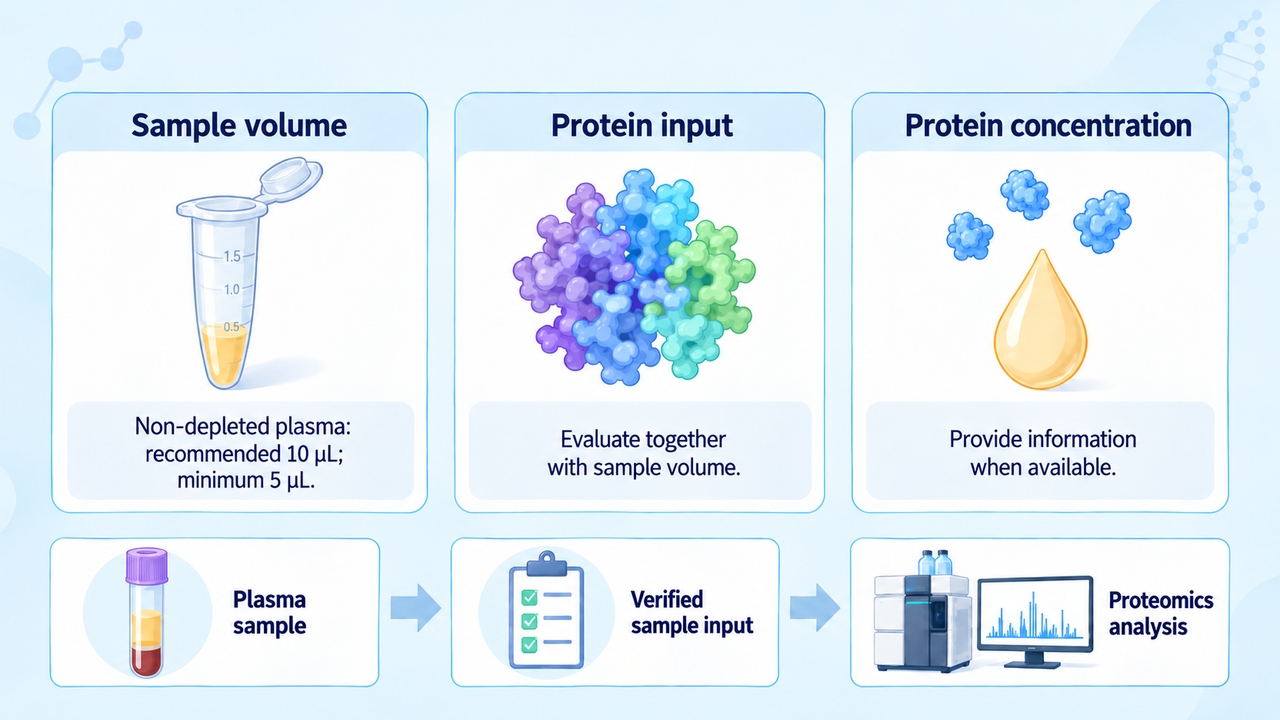
The available plasma material determines the amount of protein input entering sample preparation and LC-MS/MS detection. Sample volume, protein input, and protein concentration provide different aspects of sample information and should be considered together.
1. Sample Volume
Available plasma volume is one of the first factors to evaluate before proteomics analysis. The required volume depends on plasma type, sample processing strategy, and analytical objectives. For conventional plasma proteomics analysis, non-depleted plasma samples are generally recommended at 20–50 μL, with a minimum of 15 μL. However, sample volume alone does not directly indicate the amount of protein available for analysis because plasma samples with identical volumes may contain different total protein levels.
2. Protein Input
Protein input determines the amount of peptide material available for LC-MS/MS detection after sample preparation. Plasma samples with sufficient volume may still provide limited analytical material when protein concentration is low. Therefore, protein input should be evaluated together with plasma volume to understand whether the available sample can support protein identification and quantitative analysis.
3. Sample Concentration
Protein concentration reflects the amount of protein material present in a given plasma volume and provides important information for estimating available input before proteomics analysis. Concentration differences between plasma samples can influence peptide yield and the number of detectable proteins, particularly in quantitative studies where consistent protein input is important for comparing protein abundance across experimental groups.
How to Collect Plasma Samples for Proteomics
Plasma sample collection requires confirmation of sample source, collection conditions, anticoagulant type, and sample identification information before submission. The collected plasma information should be recorded together with the corresponding sample IDs to ensure consistency between sample tubes and submission records.
After collection, sample identification information and collection records should be retained together with the plasma samples. Relevant records should include sample source, plasma type, anticoagulant information, and collection details.
How to Store Plasma Samples Before Proteomics Analysis
Plasma samples for proteomics analysis require appropriate storage conditions before submission. Storage temperature, long-term preservation conditions, and freeze-thaw history should be recorded as part of the sample information.
1. Storage Temperature and Long-Term Storage
Plasma samples should be stored at -80°C for long-term preservation before proteomics analysis. Stable storage conditions should be maintained before sample submission, and relevant storage information should be recorded with the sample records.
2. Freeze-Thaw Control
Repeated freeze-thaw cycles should be minimized during plasma sample storage and handling. Freeze-thaw history should be recorded before submission, including the number of freeze-thaw events when available.
Samples with potential quality concerns can be further evaluated in Plasma Proteomics Challenges: Sample Quality and Analysis Considerations.
How to Ship Plasma Samples for Proteomics Analysis
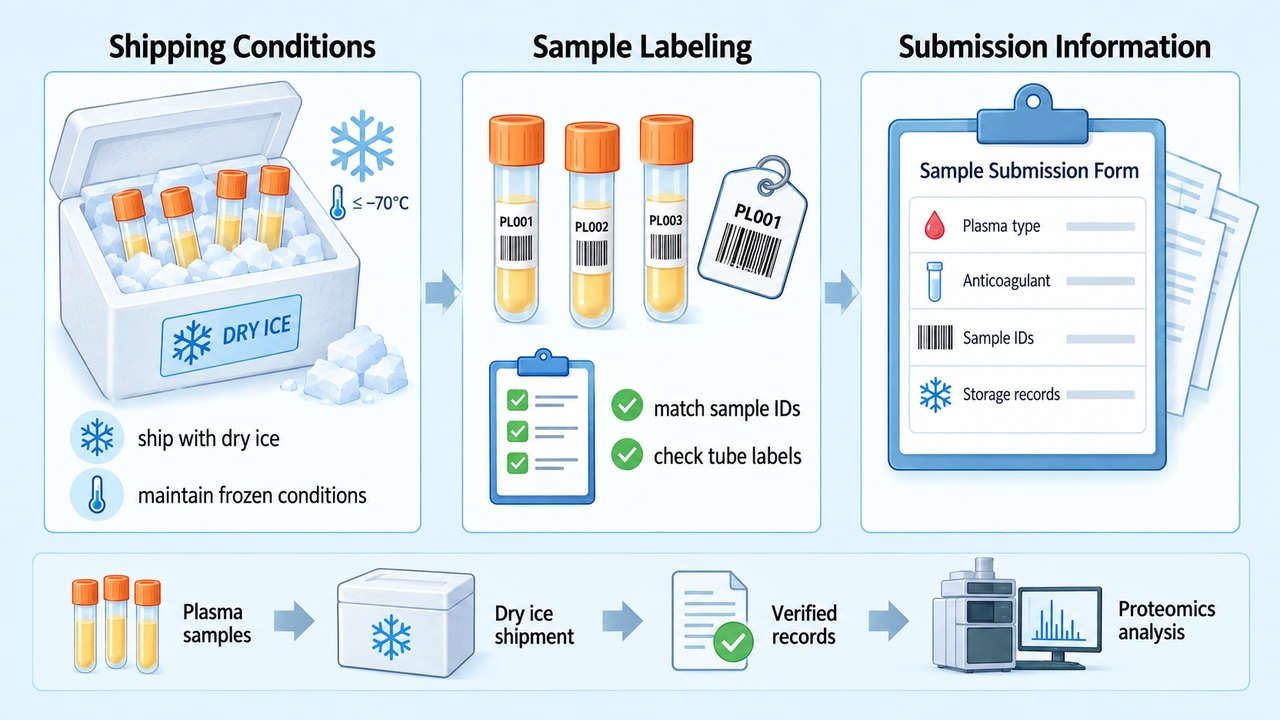
Plasma sample shipment should maintain frozen storage conditions and include clear sample identification and submission records. Sample labels should match the submitted records, including sample IDs and basic sample information.
1. Shipping Conditions
Plasma samples should be shipped with dry ice to maintain frozen conditions during transportation. Before shipment, sample tubes should be labeled with sample IDs that correspond to the submitted records. Sample IDs should match the provided information, including plasma type, anticoagulant information, and storage records.
2. Sample Information for Submission
Submission records should include plasma type, anticoagulant information, sample IDs, and relevant storage records. Complete sample information should be submitted together with plasma samples to support sample review before proteomics analysis.
Frequently Asked Questions
1. Can previously frozen plasma samples be used for proteomics analysis?
Previously frozen plasma samples can be considered for proteomics analysis when storage conditions and freeze-thaw history are available.
2. Can plasma samples collected with different anticoagulants be compared?
Plasma samples collected with different anticoagulants should be compared carefully because anticoagulant type is part of the sample characteristics. When comparing plasma samples from different groups, the anticoagulant type should be consistent or clearly recorded as part of the experimental design.
3. Should plasma samples be pooled before proteomics analysis?
Plasma pooling depends on the purpose of sample preparation. Individual samples are generally retained when differences between samples need to be compared, while pooled samples may be used for specific experimental designs.
4. How should plasma samples with limited volume be submitted?
Plasma samples with limited volume should provide information on available volume and protein concentration before submission. Available volume and protein concentration should be provided before submission for sample suitability assessment.
Conclusion
Plasma sample preparation is an important step in plasma proteomics project planning. Before sample submission, plasma type, collection and processing conditions, available sample volume, storage conditions, freeze-thaw history, and shipping requirements should be confirmed to determine sample suitability for plasma proteomics analysis. For a complete overview of plasma sample preparation requirements, refer to Plasma Proteomics: Workflow, Sample Requirements, and Research Applications.
After sample submission, plasma samples enter downstream analytical procedures, including protein preparation, peptide generation, LC-MS/MS acquisition, and computational processing, as described in Plasma Proteomics Workflow: Sample Processing and LC-MS/MS Analysis. For projects requiring plasma proteomics analysis, MtoZ Biolabs provides Plasma Proteomics Analysis Service according to sample characteristics, research objectives, and expected data requirements.
How to order?




