






Plasma Proteomics Challenges: Sample Quality and Analysis Considerations
Plasma Proteomics projects may involve samples with limited volume, abnormal characteristics, previous freeze-thaw exposure, or increased background components. These conditions do not always prevent analysis, but they may influence protein input, low-abundance protein detection, and quantitative consistency.
The impact of challenging plasma samples depends on the degree of sample alteration, the proteins of interest, and the expected analytical depth. Understanding these factors helps determine whether additional optimization or risk consideration is required before LC-MS/MS analysis.
Low-Input Plasma Samples
1. Low Volume Plasma
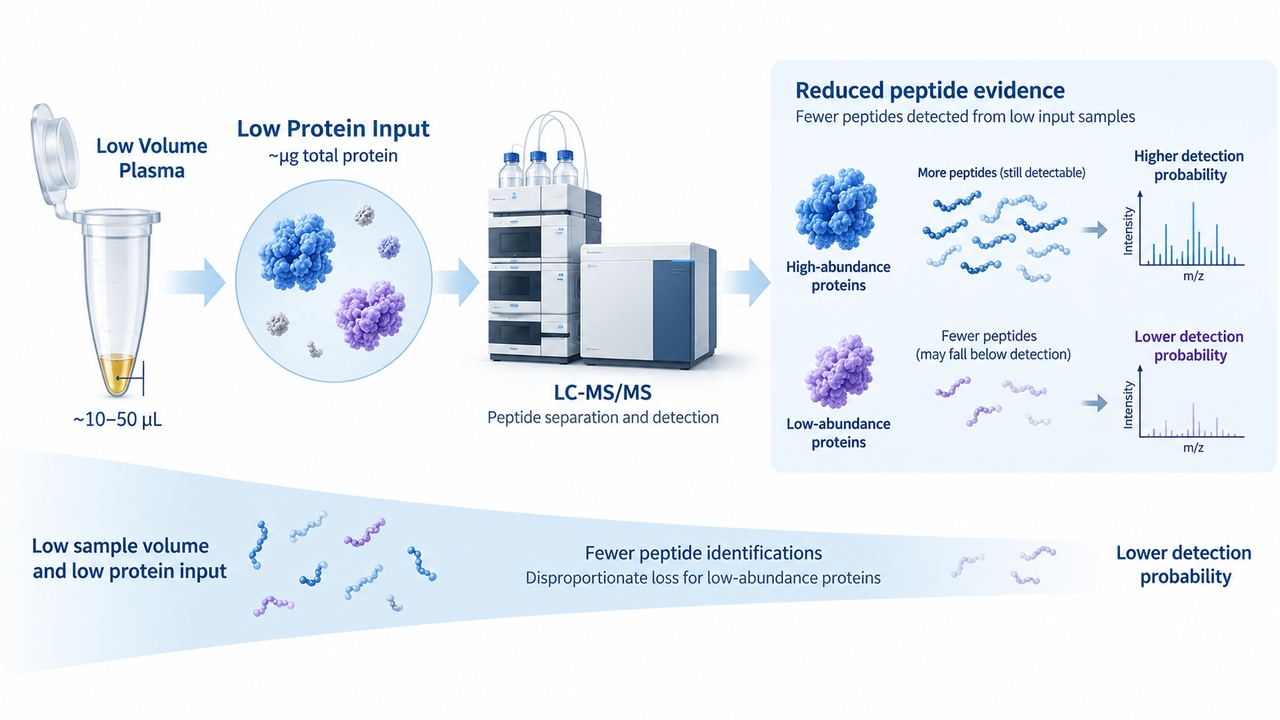
Limited plasma volume is frequently encountered in clinical cohorts, longitudinal studies, and animal experiments where sample availability is restricted. For plasma proteomics analysis, samples with a processing volume of approximately 5–10 μL can be considered under appropriate conditions.
However, reduced sample volume decreases the total amount of protein material available for analysis. Because plasma proteins cover a broad abundance range, low-volume samples may affect the detection of low-abundance proteins more strongly than highly abundant proteins.
2. Low Protein Input
Low protein input mainly affects proteins near the detection limit, where insufficient peptide signals may result in fewer identified proteins, reduced quantitative confidence, or increased variability between samples.
For plasma proteomics analysis, approximately 20 μg protein can generally support one analysis, with approximately 20–50 μg total protein corresponding to common low-input processing conditions. These levels represent feasible processing ranges rather than guaranteed detection depth, as final results also depend on plasma complexity and protein abundance distribution.
Hemolyzed, Lipemic, and Other Abnormal Plasma Samples
1. Hemolyzed Plasma
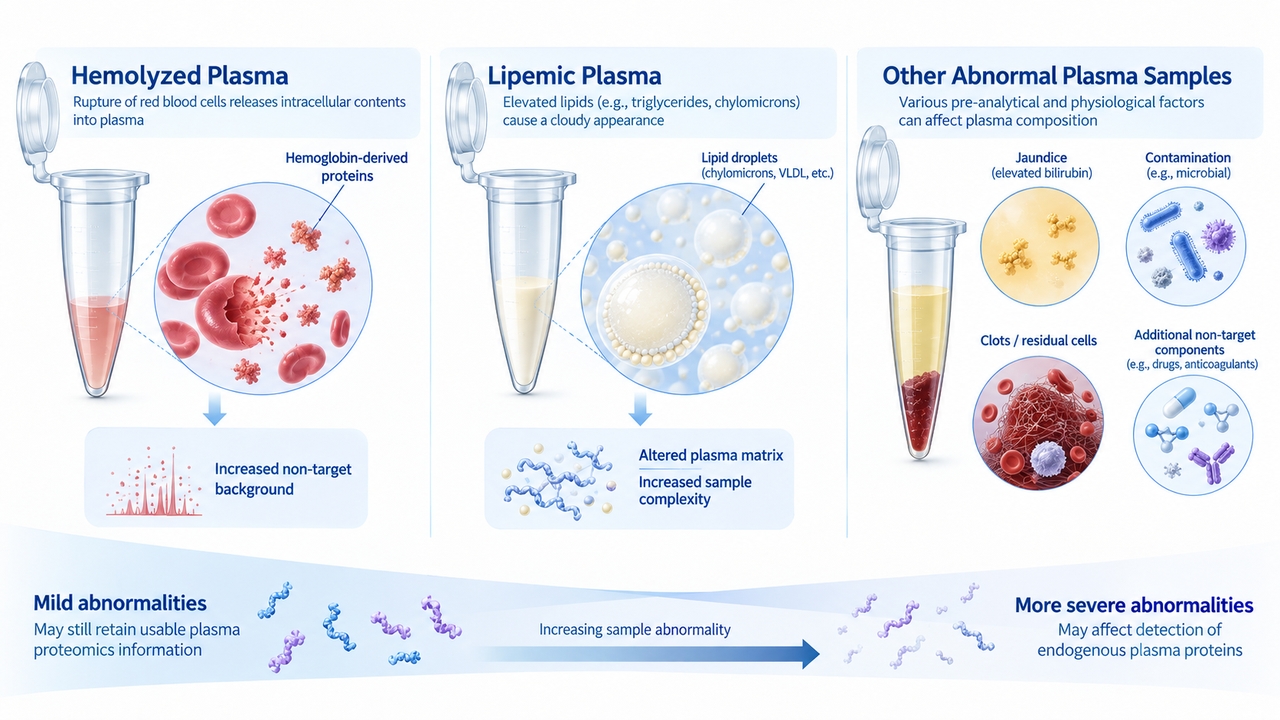
Hemolysis introduces intracellular components from blood cells into plasma and changes the composition of plasma proteins. Hemoglobin-derived proteins are major non-target components in hemolyzed plasma because hemoglobin peptides can generate strong signals during mass spectrometry analysis and increase background interference.
The degree of hemolysis influences the extent of non-target protein contribution. Samples with mild hemolysis may still retain sufficient plasma protein information for proteomics analysis, while severe hemolysis may increase interference from blood cell-derived proteins and reduce the relative detection of endogenous plasma proteins.
2. Lipemic Plasma
Lipemic plasma contains increased lipid components that modify plasma matrix characteristics. Changes in plasma matrix composition may influence the relative contribution of different protein signals during proteomics analysis.
The influence of lipemia varies with the level of lipid alteration and the protein populations investigated in the study. Higher levels of lipid interference may increase sample complexity and affect the detection of lower-abundance plasma proteins.
3. Other Abnormal Plasma Samples
Abnormal plasma conditions, including jaundice, contamination, clots, white blood cell layers, and residual blood cells, may introduce additional non-target components into plasma samples. Additional components can alter the protein composition available for proteomics analysis and increase background signals from non-target sources.
The influence of abnormal plasma conditions varies with the extent of sample alteration and the protein information required from the study. Mild sample abnormalities may be compatible with proteomics analysis, while severe abnormalities require additional assessment before analysis.
High-Abundance Protein Background and Complex Matrix Interference
Plasma proteins span a wide abundance range. Albumin, immunoglobulins, and other dominant proteins generate strong peptide signals during LC-MS/MS analysis and may reduce the relative visibility of lower-abundance proteins.
The plasma matrix further increases analytical complexity because multiple protein populations with different abundance levels coexist in the same sample. When lower-abundance proteins are the focus of analysis, high-abundance protein background and plasma matrix complexity become important factors affecting protein detection. Insufficient peptide evidence may reduce protein coverage even when target proteins are biologically present.
High-abundance protein depletion is not required for all plasma proteomics projects. The need for depletion, enrichment, or fractionation depends on whether the study aims for broad plasma profiling or improved detection of specific protein populations.
Plasma Sample Stability and Handling Issues
1. Freeze-Thaw Plasma and Protein Stability
Repeated freeze-thaw cycles can affect plasma protein stability by promoting protein degradation, aggregation, or precipitation of unstable components. These changes may reduce the consistency of protein signals detected during plasma proteomics analysis, particularly for proteins sensitive to structural changes.
Samples with limited freeze-thaw exposure may retain sufficient protein information for analysis. Extensive freeze-thaw exposure that causes visible sample changes or substantial protein instability may reduce the value of the sample for representing the original plasma proteome.
2. Plasma Stability Changes During Sample Handling
Extended room temperature exposure may accelerate protein degradation and affect the preservation of plasma protein integrity. Unstable proteins may lose detectable peptide information over time, leading to changes in the protein signals observed during proteomics analysis.
Short-term exposure does not always prevent sample analysis, but samples with apparent degradation or significant quality changes may require re-collection when accurate representation of the original plasma state is required.
3. Clots, Fibrin, and Residual Cellular Components
Clots, fibrin residues, platelets, and residual blood cells introduce additional biological components into plasma samples. Fibrin-associated components and cellular proteins may interfere with the representation of plasma proteins during proteomics analysis.
Minor residual components may have limited influence, while extensive clot formation or substantial cellular residues may change the sample composition and affect the suitability of the sample for proteomics analysis. Information related to plasma sample collection, storage, and shipping requirements is available in Plasma Sample Collection, Storage, and Shipping for Proteomics.
Optimization Strategies for Challenging Plasma Samples
When plasma proteomics analysis is affected by limited access to specific protein populations, optimization strategies can be considered to improve the detection of proteins relevant to the research objective.
For samples with strong high-abundance protein interference, approaches such as high-abundance protein depletion may reduce the contribution of selected dominant proteins and increase the relative visibility of lower-abundance proteins. However, depletion changes the original plasma protein composition, and the resulting dataset represents the processed sample profile.
For complex plasma samples, enrichment or fractionation approaches can provide additional separation of protein populations and improve access to specific components that are difficult to observe in the original mixture. The selection of an optimization approach should be based on the proteins of interest and the expected information required from the study. The downstream analytical process after sample preparation is described in Plasma Proteomics Workflow: Sample Processing and LC-MS/MS Analysis.
Frequently Asked Questions
1. Can plasma proteomics be performed with a small amount of plasma?
Yes. Low-volume plasma samples may still be suitable for proteomics analysis when sufficient protein input is available. Limited sample volume mainly affects the amount of protein material available for detecting lower-abundance proteins.
2. Can hemolyzed plasma be used for proteomics analysis?
Hemolyzed plasma may still provide proteomics information depending on the degree of hemolysis. Hemoglobin-derived proteins can contribute strong signals and increase background interference, which may affect the detection of other plasma proteins.
3. Does lipemic plasma affect plasma proteomics analysis?
Lipemic plasma can increase matrix complexity and influence protein signal distribution. The influence is related to the extent of lipid interference and the type of proteins being investigated.
4. Do freeze-thaw cycles influence plasma proteomics analysis?
Repeated freeze-thaw cycles may affect protein stability and change detectable protein signals. Samples with substantial degradation or visible changes may require further assessment before analysis.
5. Can high-abundance protein interference in plasma samples be reduced?
High-abundance protein interference can be reduced through approaches such as protein depletion, enrichment, or fractionation. The appropriate strategy depends on whether the study focuses on broader plasma profiling or improved detection of specific protein groups.
Conclusion
Challenging plasma samples can affect plasma proteomics analysis through limited protein input, increased background interference, or changes in protein stability. Low-volume samples, abnormal plasma characteristics, and complex matrix conditions require assessment based on sample status and the type of protein information required from the study.
Plasma sample characteristics are an important part of plasma proteomics study planning. For a broader overview of plasma sample challenges and analytical considerations, refer to Plasma Proteomics: Sample Preparation, Analysis, and Research Applications. For projects involving identified plasma samples, MtoZ Biolabs' Plasma Proteomics Analysis Service can provide further evaluation based on specific research needs.
How to order?




