



Parallel reaction monitoring (PRM) and multiple reaction monitoring (MRM) both quantify predefined proteotypic peptides on liquid chromatography-tandem mass spectrometry (LC-MS/MS), but they acquire fragment evidence differently (Peterson et al. 2012; Lange et al. 2008). In project language, the PRM versus MRM choice is a selectivity and scheduling decision on a closed panel, not a discovery platform choice and not proof that one instrument line is superior in every matrix. The guide below compares PRM and MRM for targeted quantitation, links comparison to workflow, parameters, limits, and fit tables. It is not a vendor catalog, not a throughput contest, and not a clinical validation promise.
Both routes need a frozen peptide list, matched pretreatment, retention scheduling, and contrast statistics on predefined groups. Relative fold change and calibrated amount with stable isotope-labeled internal standard (SIS) peptides remain separate claim units on either route (Gerber et al. 2003).
In MtoZ Biolabs targeted offerings, MRM methods are commonly built on triple quadrupole schedules when transitions are clean in the study matrix, and PRM methods when high-resolution product-ion review is required after pilot interference.
Comparison depth appears in PRM vs MRM: Comparative Analysis in Quantitative Proteomics. PRM principle appears in From Principles to Applications: A Comprehensive Overview of PRM Technology.
When PRM Versus MRM Becomes a Project Decision
The comparison usually appears after candidates are named and before full cohort acquisition.
Discovery handoff from label-free quantification (LFQ), data-independent acquisition (DIA), or tandem mass tag (TMT) supplies peptides; the targeted route must be chosen per matrix pilot.
Plasma, tissue, and formulation matrices often show co-elution that destabilizes predefined MRM transitions.
Panel expansion stresses cycle time on both platforms; the limit is scheduling, not panel ambition alone.
Assay transfer or repeated quality control (QC) across batches favors routes with documented transition or fragment rules that stay stable in the local matrix.
Answer PRM versus MRM during matrix pilot on the closed list, not after the full cohort fails integration.
Mechanism context appears in Mechanism of MRM/PRM in Protein Quantification. Tradeoffs appear in PRM and MRM in Targeted Proteomics: Advantages and Limitations.
PRM and MRM Compared on Acquisition and Selectivity
Comparison should use decision dimensions, not platform labels alone.
Dimension |
MRM / SRM on triple quadrupole |
PRM on high-resolution MS/MS |
|---|---|---|
Acquisition unit |
Predefined precursor-product transition |
Isolated precursor, HR product-ion spectrum |
Selectivity source |
Dwell on chosen transitions |
Multiple fragment ions from one MS/MS |
Typical strength |
Efficient focused panels with clean transitions |
Fragment review when transitions drift |
Common bottleneck |
Matrix-dependent transition interference |
Cycle time and data volume at large panels |
Post-acquisition change |
Limited to predefined transitions |
Re-integration of alternate fragments when documented |
Absolute amount |
Requires SIS and curve on either route |
Same; HR readout does not auto-calibrate |
MRM selected reaction monitoring (SRM) names the same triple-quadrupole logic as MRM in many workflows.
PRM does not replace panel design, digestion parity, or frozen contrasts.
Detection context appears in Detection of Proteins Using Parallel Reaction Monitoring. MRM services appear in SRM-MRM Quantitative Proteomics Services.
Shared Workflow Steps After the Route Is Chosen
PRM and MRM share a targeted spine once the route is locked.
- Freeze contrast, replicates, and relative versus absolute intent.
- Close peptide panel version and proteotypic peptide rules.
- Match extraction, digestion, and load across all arms.
- Build retention windows and inclusion list with realistic cycle time.
- Optimize MRM transitions or PRM isolation and fragment extraction on matrix pilot.
- Acquire scheduled targeted runs with QC pools when design allows.
- Integrate peaks; review interference against prespecified rules.
- Normalize with declared method; test predefined contrast only.
- Archive method files, panel version, and software with deliverables.
Steps 5 and 7 differ by route. Steps 1 through 4 and 6 through 9 are shared targeted discipline.
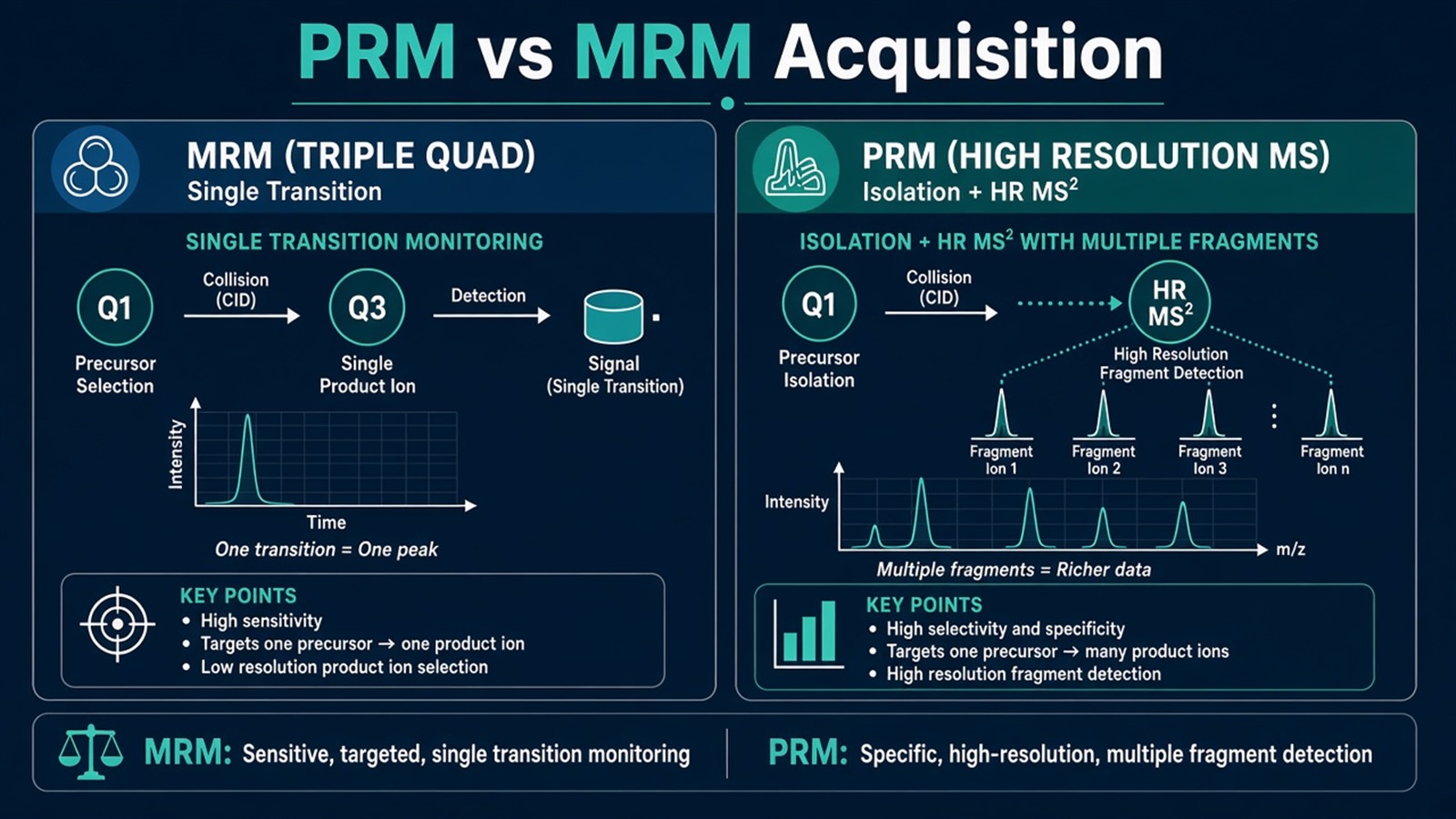
Figure 1. Route choice sits on matrix pilot; after lock, PRM and MRM follow the same targeted workflow spine.
Bench detail appears in From Sample to Result: A Detailed PRM Quantitative Proteomics Workflow. Validation design appears in How to Plan a Targeted Proteomics Validation Study.
Parameters That Differ Between PRM and MRM Methods
Layer |
MRM parameter to lock |
PRM parameter to lock |
|---|---|---|
Panel |
Transition list per peptide |
Precursor list and fragment extraction rules |
Schedule |
Dwell times and cycle table |
Isolation width and MS/MS cycle |
Optimization |
Collision energy per transition |
Collision energy and product-ion choice |
Selectivity QC |
Transition ratio stability |
Co-isolation and fragment co-elution review |
Data processing |
Peak integration on transitions |
Chromatograms from selected product ions |
Standards |
SIS spike plan if amount claimed |
Same |
Hybrid panels |
Document which peptides stay on MRM |
Document peptides moved to PRM after pilot |
Limits follow the same table. MRM failure on one peptide does not force whole-panel PRM unless scheduling and economics allow a hybrid. PRM does not remove suppression or digestion variance. Neither route validates biomarkers without study design.
Processing appears in PRM Proteomics Data Processing Workflow. Advantage framing appears in Advantages and Disadvantages of Parallel Reaction Monitoring.
Limits of PRM Versus MRM Claims
Neither route proves mechanism, drug target engagement, or diagnostic performance from peak areas alone.
Discovery detection of a peptide does not prove either route will quantify it reproducibly in the study matrix.
Large panels may exceed cycle capacity on both platforms; split batches need documented bridging if contrasts span batches.
Absolute concentration requires calibration on either route; HR MS/MS alone does not create amount units.
Open proteome questions remain on LFQ or DIA until the panel closes (LFQ).
Route map with AQUA appears in Absolute Protein Quantification or Relative Quantitation? Matching AQUA, MRM/PRM, and Label-Free Routes to Your Reporting Goal.
How to Choose PRM Versus MRM for Your Panel
Use matrix pilot, panel size, selectivity evidence, and reporting unit together.
Project signal from pilot |
Route that often fits |
Recheck before committing |
|---|---|---|
Clean transition ratios in matrix |
MRM on triple quadrupole |
Force PRM without interference evidence |
Transition drift or co-elution |
PRM with multi-fragment integration |
Retain MRM for clean peptides in hybrid |
Small panel, high throughput |
Optimized MRM schedule |
Panel growth without cycle review |
Plasma biomarker panel with stable legacy MRM |
MRM with documented transitions |
PRM when ratios fail QC |
Formulation matrix with isobaric interferences |
PRM fragment confirmation |
Assume MRM failure without pilot |
Discovery follow-up, matrix untested |
Matrix pilot on full panel |
Route choice before pilot |
Amount units required |
MRM or PRM plus SIS calibration |
Relative peaks as concentration |
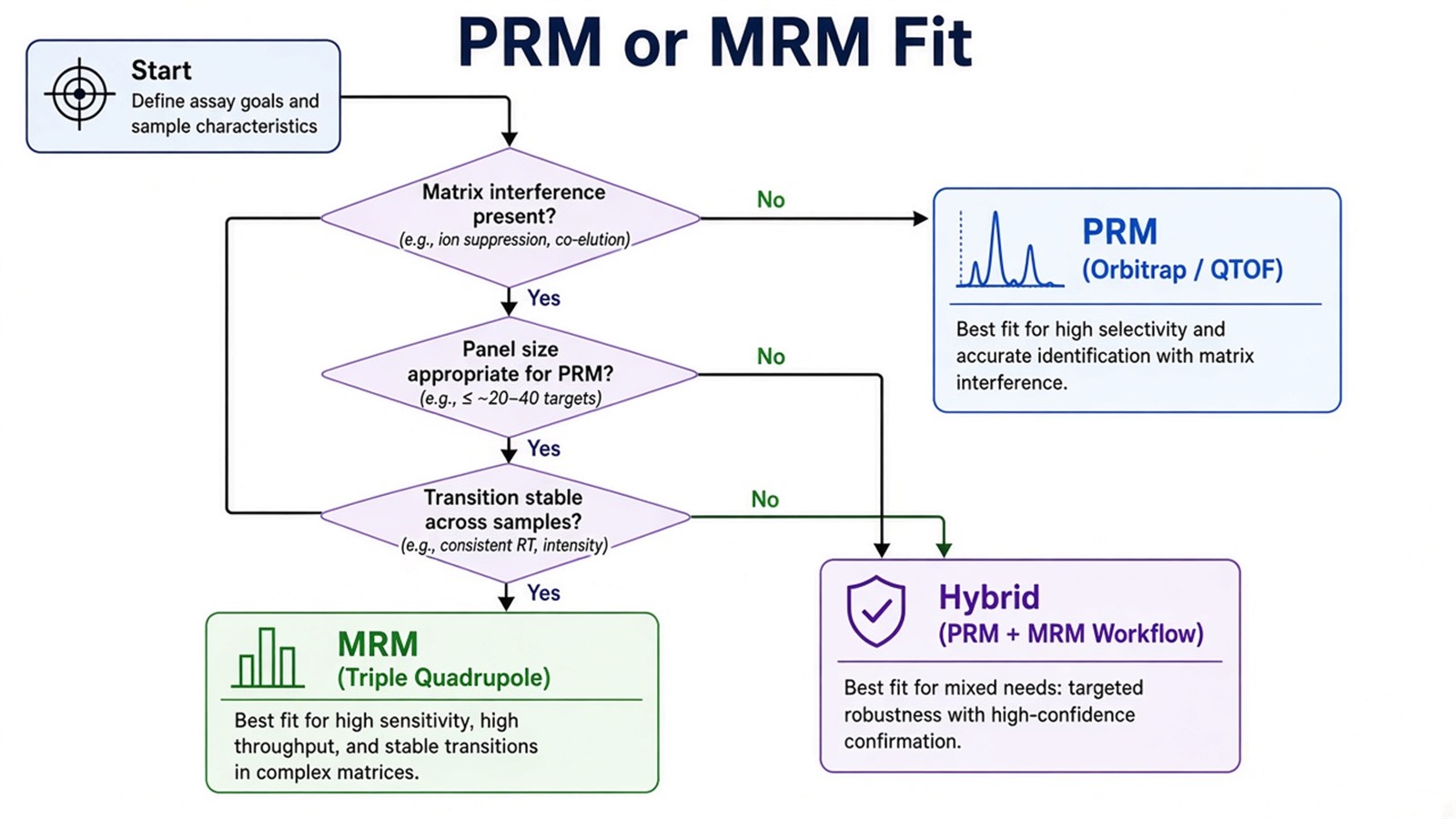
Figure 2. MRM fits clean transitions and focused throughput; PRM fits interference-heavy matrices needing fragment-level review.
Targeted portfolio appears in Targeted Proteomics Service. PRM service intake appears in Parallel Reaction Monitoring (PRM) Service.
Teams with closed panel, matrix pilot results, and reporting intent can review MtoZ Biolabs SRM-MRM Quantitative Proteomics Services and Parallel Reaction Monitoring (PRM) Service when the PRM versus MRM choice is declared in the project record.
Frequently Asked Questions
1. Is PRM always more selective than MRM?
Not in every matrix. MRM with well-optimized transitions can be selective and efficient in clean backgrounds. PRM helps when multiple fragments support assignment after MRM interference.
2. Can one project use both PRM and MRM?
Yes. Hybrid panels are common when most peptides stay on MRM and a subset moves to PRM after pilot review.
3. Should the discovery instrument dictate PRM versus MRM?
No. Discovery and targeted quantitation serve different goals. Targeted route follows panel performance in the study matrix.
4. Does PRM replace MRM for plasma validation?
Both are used. Established MRM panels with stable transitions often remain on triple quadrupole systems. PRM is considered when pilot data show transition instability.
5. When should teams run a head-to-head pilot?
When panel size is moderate, matrix is complex, and reporting intent is fixed, a short pilot on the same digests often clarifies route faster than assuming one platform for every peptide.
MtoZ Biolabs can compare PRM and MRM fit when peptide panel, matrix type, and pilot metrics are documented.
If further evaluation of hybrid panel design, SIS calibration need, or discovery-to-targeted handoff is required, project details can be submitted for a feasibility review.
Reference
- A.C. Peterson, J.D. Russell, A.A. Klammer, P.F. Doubleday, H. Liu, J.N. Anderson, M.J. MacCoss (2012). Parallel reaction monitoring for high resolution and high mass accuracy quantitative, targeted proteomics. Mol. Cell. Proteomics, 11, 1475-1488. https://doi.org/10.1074/mcp.O112.020271
- V. Lange, P. Picotti, B. Domon, R. Aebersold (2008). Selected reaction monitoring for quantitative proteomics: a tutorial. Mol. Syst. Biol., 4, 222. https://doi.org/10.1038/msb.2008.61
- S.A. Gerber, J. Rush, O. Stemman, M.W. Kirschner, S.P. Gygi (2003). Absolute quantification of proteins and phosphoproteins from cell lysates by tandem MS. Proc. Natl. Acad. Sci. U.S.A., 100, 6940-6945. https://doi.org/10.1073/pnas.0832254100
- S. Gallien, E. Duriez, A. Crone, M. Kellmann, T. Moehring, T. Domon (2012). Targeted proteomic quantification on quadrupole-orbitrap mass spectrometers. Mol. Cell. Proteomics, 11, 1709-1723. https://doi.org/10.1074/mcp.O112.019232
- M. Bantscheff, S. Lemeer, H.U. Haab, B. Kuster (2012). Quantitative mass spectrometry in proteomics: a critical review. Anal. Bioanal. Chem., 404, 939-965. https://doi.org/10.1007/s00216-012-5892-4
