






How EV Purity Affects LC-MS/MS Exosome Proteomics Results
-
consume sequencing time and suppress detection of lower-abundance vesicle-associated proteins
-
inflate identification lists with proteins that are not selectively packaged in EVs
-
create apparent differential signals that track isolation efficiency rather than biology
-
make batch or method comparisons look biological when they are process-driven
-
incomplete removal of soluble biofluid proteins
-
culture-medium supplements carried into conditioned-medium isolates
-
co-isolating non-vesicle particles or protein aggregates
-
cell debris remaining after insufficient clarification
-
process contaminants introduced by tubes, resins, or incomplete buffer exchange
-
disclosing all major resuspension components before submission
-
avoiding last-minute additive changes across a comparative cohort
-
reviewing whether cleanup or buffer exchange is needed before digestion
-
keeping formulation identical for all groups in a differential study
-
Recheck isolation method and whether it was matched across groups.
-
Review QC particle and marker data against protein yield.
-
Inspect buffer and additive records for cohort inconsistencies.
-
Determine whether the study goal can still be supported as preparation-associated profiling.
-
Decide whether additional purification, re-isolation, narrowed claims, or process controls are required before another comparative run.
-
isolation and purification method details
-
resuspension buffer composition
-
particle and protein yield estimates
-
available QC files
-
group design and whether isolation was matched
-
the exact claim the proteomics result must support
Introduction
LC-MS/MS can identify hundreds of proteins from an extracellular vesicle preparation and still leave the biologist uncertain. Were the strongest signals true EV cargo, co-isolated soluble proteins, medium contaminants, or buffer-related artifacts? That uncertainty is why EV purity proteomics and exosome proteomics quality control matter as much as acquisition depth.
EV purity affects which proteins dominate the spectrum, which candidates survive comparative filtering, and whether group differences can be attributed to vesicle biology. This article explains how purity, background protein load, and buffer compatibility change LC-MS/MS exosome proteomics results, and what practical QC checks reduce overinterpretation.
The Core Problem: MS Reports the Preparation, Not Only the Vesicles
Mass spectrometry analyzes the protein content of the submitted material. If an exosome or EV isolate contains vesicles plus abundant soluble proteins, both enter digestion and LC-MS/MS. High-abundance background proteins can:
For projects in which EV purity, background proteins, or buffer compatibility may affect downstream interpretation, the Exosome / Extracellular Vesicle Proteomics Service supports integrated evaluation from EV preparation and characterization through LC-MS/MS proteomics.
How EV Purity Changes Proteomics Readouts
1. Identification Depth and Cargo Visibility
Lower-purity preparations often yield long protein lists dominated by plasma, serum, urine, or culture-medium proteins. Higher-purity preparations do not guarantee complete cargo recovery, but they usually improve the chance that vesicle-relevant proteins are visible above background.
2. Comparative Analysis Stability
In comparative exosome proteomics, purity imbalance between groups is a major confounder. If one group isolates more cleanly than another, differential proteins may reflect enrichment efficiency. Matched isolation chemistry and process controls are required before ranking biology-driven candidates.
3. Marker Interpretation
Expected EV-associated markers can appear even in imperfect preparations, and unexpected abundant proteins can appear even when particles look reasonable by size analysis. Marker presence alone does not prove high purity. Marker evidence should be interpreted together with particle data, isolation metadata, and the overall protein background profile.
4. Claim Strength
A profiling study can tolerate more background if the report clearly states that proteins are associated with the EV preparation. Biomarker or mechanism claims require stronger purity context and orthogonal validation.
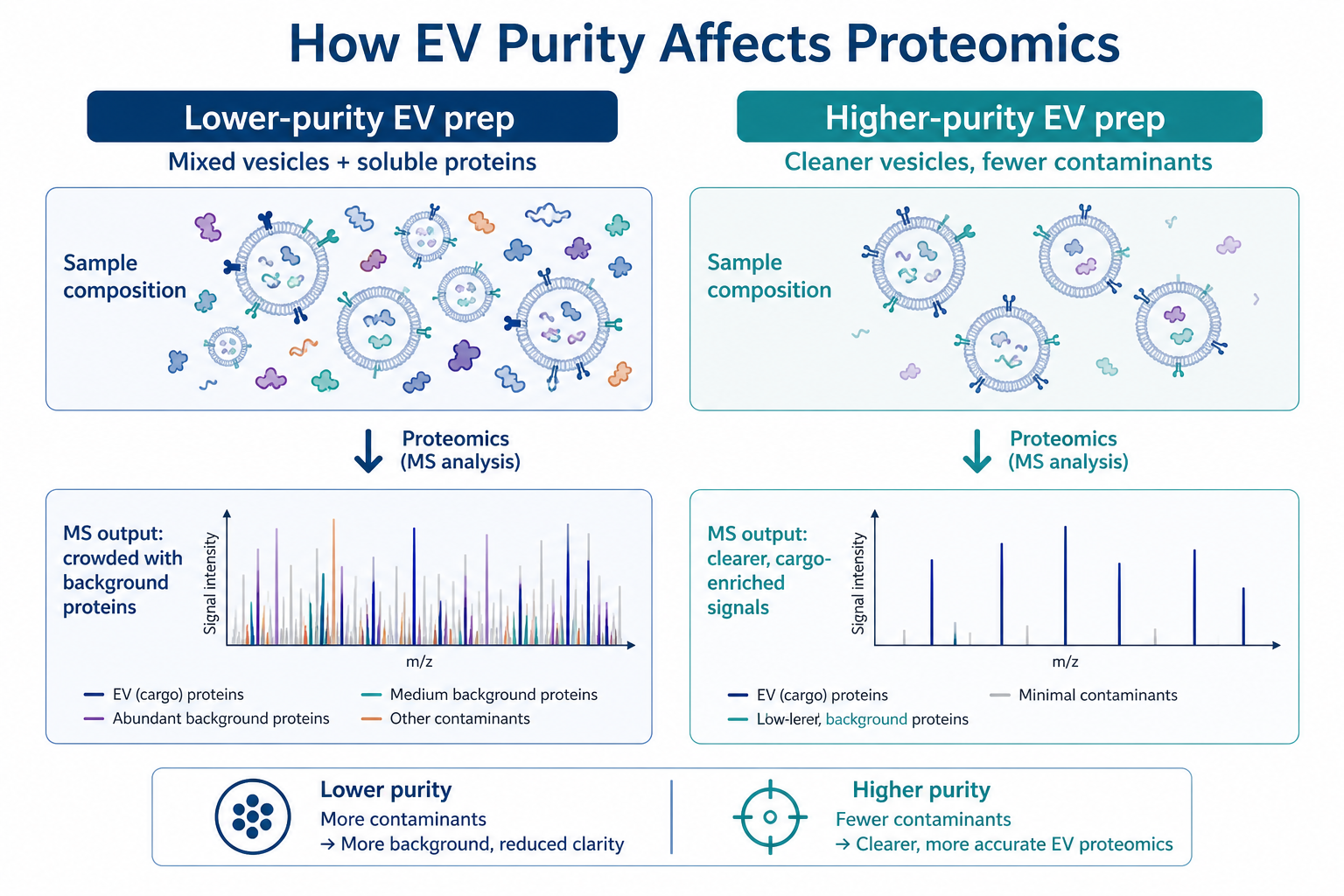
Figure 1. Lower-purity EV preparations increase background protein dominance in LC-MS/MS, while cleaner isolates improve cargo-focused interpretation.
Background Proteins: Where They Come From
Common background sources in exosome and EV proteomics include:
Not every abundant protein is automatically a contaminant. Some frequent proteins can also associate with vesicles biologically. The reliability problem arises when background is undocumented and then treated as selective EV cargo.
Buffer and Formulation Effects on LC-MS/MS Reliability
Buffer chemistry is part of exosome proteomics quality control.
Detergents, high salt, glycerol, stabilizers, and proprietary kit components can affect digestion efficiency, peptide recovery, or chromatography. Even when vesicles are acceptably pure, incompatible formulation can distort results or delay intake.
Practical buffer controls include:
Purity and buffer compatibility are separate issues. Both must be acceptable for reliable LC-MS/MS interpretation.
Exosome Proteomics Quality Control That Supports Result Reliability
Useful QC for EV purity proteomics is multimodal and should stay within routine EV characterization options.
Particle size and concentration estimates from NTA help confirm that a vesicle-sized population is present.
Morphology evidence from TEM or cryo-EM can support vesicle-like structures when available.
Western blot marker data for proteins such as CD9, CD63, or CD81 can support enrichment of expected vesicle-associated proteins.
Total protein yield paired with particle yield can flag preparations that are protein-rich but particle-poor.
Isolation method metadata explains likely co-isolation patterns and should travel with every proteomics cohort.
No single QC assay fully defines EV purity. NTA, morphology, and marker WB provide complementary characterization context, but they do not by themselves establish that an EV preparation is highly pure. Purity interpretation should also consider the sample source, isolation method, protein background, and potential co-isolates.
Diagnostic Sequence When Results Look Background-Heavy
When proteomics outputs appear dominated by unexpected soluble proteins, use a structured review.
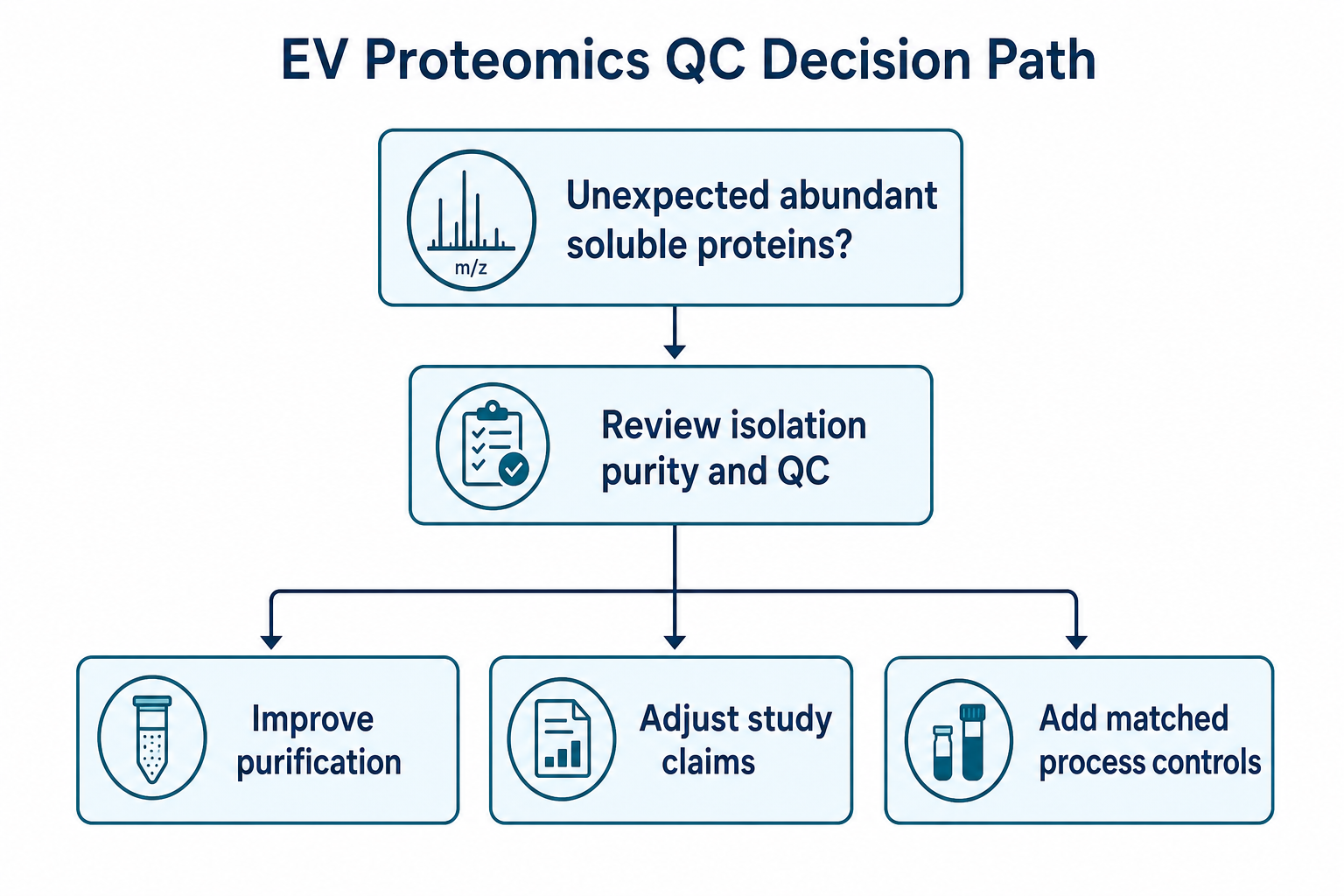
Figure 2. Background-heavy EV proteomics results should trigger purity review, purification adjustment, or claim recalibration before stronger biological conclusions.
Corrective Strategies That Improve Reliability
Improve isolation or add a purification step when soluble protein carryover is the main issue.
Add process controls and matched handling when comparative claims are needed.
Narrow the question to preparation profiling when purity is limited and cannot be improved immediately.
Disclose QC gaps explicitly in interpretation rather than overstating cargo selectivity.
Confirm priority candidates with orthogonal assays such as Western blot, ELISA, or targeted proteomics follow-up when biological claims depend on specific proteins. PRM can be considered for selected candidates; MRM feasibility should be assessed by project.
What to Prepare When Purity Is a Concern
Before LC-MS/MS or before reanalysis planning, assemble:
Researchers concerned about EV purity, background proteins, or buffer compatibility can submit isolation details, QC information, and study design through the Exosome / Extracellular Vesicle Proteomics Service page. MtoZ Biolabs can review whether current EV preparations are suitable for the intended LC-MS/MS design or whether additional purification or characterization should be considered first.
Frequently Asked Questions
1. Does higher EV purity always mean better proteomics?
Higher purity usually improves interpretability for vesicle-focused claims. It does not automatically maximize protein counts, and over-stringent purification can also lose material. The target is purity matched to the scientific claim.
2. Can QC prove that every identified protein is EV cargo?
No. QC supports readiness and context. LC-MS/MS still reports proteins present in the preparation. Cargo selectivity claims need careful design and often orthogonal evidence.
3. Why do buffer details matter if particles look good by NTA?
Particle metrics do not guarantee MS-compatible formulation. Detergents, salts, and stabilizers can affect digestion and chromatography independently of particle count.
4. What is the first practical check when comparative results look suspicious?
Verify that isolation chemistry, handling, and buffer conditions were matched across groups, then compare background protein patterns against QC and yield data.
5. Should I delay proteomics until purity is perfect?
Not always. Limited-purity samples can still support preparation-level profiling if limitations are stated. Comparative biomarker-style claims usually need stronger purity and process control.
Conclusion
EV purity shapes LC-MS/MS exosome proteomics results by controlling background dominance, comparative stability, and the strength of biological claims. Exosome proteomics quality control is therefore not optional decoration. Particle data, marker evidence, isolation metadata, and buffer transparency jointly determine whether protein lists can be read as vesicle-associated findings or only as preparation inventories.
Teams that diagnose purity issues before overinterpreting candidates produce more reliable next steps. For projects concerned about background proteins or formulation effects, MtoZ Biolabs can help align purity status, QC evidence, and proteomics design to the claim the study actually needs to support.
Related Services
Exosome / Extracellular Vesicle Proteomics Service
Nanoparticle Tracking Analysis-based Exosome Characterization Service
Transmission Electron Microscope (TEM) based Exosome Characterization Service
Exosomal Surface Marker-based Exosome Characterization Service
How to order?




