






What is Polyclonal Antibody Sequencing?
Introduction
Polyclonal antibodies are used throughout research, diagnostics, and reagent production, yet the term polyclonal often describes function rather than molecular identity. A serum-derived reagent may perform well in Western blot or ELISA while its underlying clonal composition remains unknown. A purified antigen-specific polyclonal product may contain many immunoglobulin sequences targeting the same antigen. A production lot may differ from an earlier batch in ways that titer alone cannot reveal.
Polyclonal antibody sequencing is the process of extracting amino acid sequence information from these mixed antibody populations. Unlike monoclonal antibody sequencing, which starts from one dominant clone, polyclonal sequencing must work with overlapping peptide signals from multiple clonotypes. Mass spectrometry-based de novo sequencing, middle-down analysis, intact mass profiling, and hybrid sequence assembly are commonly used to recover dominant variable region sequences and document batch composition.
This article explains what polyclonal antibody sequencing is, how it differs from monoclonal sequencing, what outputs it produces, and when it is used.
Definition: What Polyclonal Antibody Sequencing Is
Polyclonal antibody sequencing is the determination of immunoglobulin amino acid sequence information from a heterogeneous antibody mixture produced by many B-cell clones.
The mixture may come from immunized animal serum, antigen-affinity-purified polyclonal IgG, immune repertoire samples, or other polyclonal reagent formats. The sequencing goal is usually to identify one or more dominant clonotypes, document major sequence components, or compare sequence profiles between batches rather than to enumerate every low-abundance clone in the sample.
In practice, polyclonal antibody sequencing relies on protein-level analysis because a single stable genetic clone is often unavailable. Peptides generated from the antibody sample are analyzed by LC-MS/MS, and sequence tags or full peptide sequences are assembled into heavy and light chain variable region candidates. When genetic material from sorted B cells or transcriptome data is available, hybrid workflows may combine MS evidence with sequencing databases to improve confidence.
Polyclonal antibody sequencing is therefore a specialized form of antibody sequence analysis designed for mixed populations rather than homogeneous monoclonal materials.
How Polyclonal Antibodies Differ from Monoclonal Materials
Understanding polyclonal antibody sequencing requires understanding what makes the starting material different.
A monoclonal antibody derives from one clone and contains one dominant pair of heavy and light chain variable sequences. A polyclonal antibody derives from many clones and contains multiple variable region sequences that may bind the same antigen through different epitopes. Monoclonal sequencing can often use hybridoma RNA or DNA directly. Polyclonal sequencing usually depends on mass spectrometry or mixed-source genetic material because no single clone defines the sample.
This difference affects every step of the workflow, from sample enrichment to peptide assignment and final reporting.
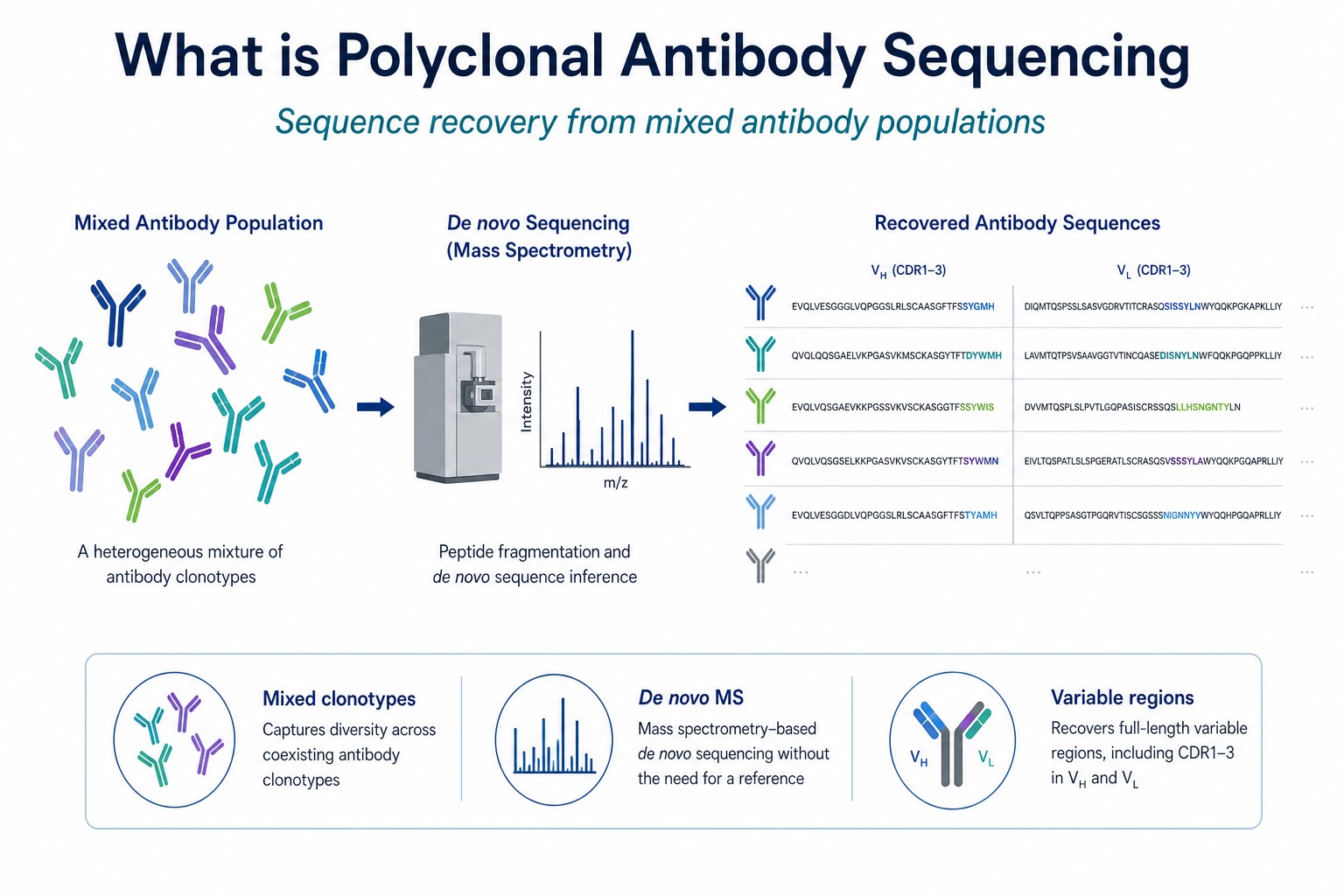
Figure 1. Polyclonal antibody sequencing extracts sequence information from mixed antibody populations rather than from a single monoclonal clone.
How Polyclonal Sequencing Differs from Monoclonal Sequencing
Monoclonal and polyclonal antibody sequencing answer related but not identical questions.
Monoclonal sequencing confirms the sequence of one defined antibody product. Polyclonal sequencing characterizes major sequence components within a mixed reagent. Monoclonal workflows often use PCR or hybridoma transcript sequencing with straightforward assembly. Polyclonal workflows must separate overlapping peptide evidence from multiple clonotypes. Monoclonal deliverables are usually one confirmed heavy and light chain pair. Polyclonal deliverables may include several dominant clonotypes, batch comparison summaries, or sequence tiers with different confidence levels.
Monoclonal sequencing defines a product. Polyclonal sequencing documents a population.
Main Technical Approaches Used
Polyclonal antibody sequencing can use several linked technical approaches.
De novo bottom-up mass spectrometry digests antibodies into peptides and interprets MS/MS spectra to derive sequence without a prior template. Middle-down mass spectrometry analyzes larger fragments to reduce peptide overlap while retaining CDR-proximal information. Intact mass analysis profiles whole antibody or subunit masses and supports batch comparison but does not provide full variable region sequence by itself. Hybrid sequence-guided assembly combines peptide evidence with immunoglobulin databases or transcriptome data to improve clonotype assignment.
Most projects use more than one layer when sequence confidence must support redevelopment or lot comparison.
Related Services
Mass Spectrometry Based Antibody Sequencing Service
Antibody De Novo Sequencing Service
Mono Poly Clonal Antibody De Novo Sequencing for Drug R&D
Antibody Sequence Analysis Service
Researchers evaluating polyclonal antibody sequencing can consult MtoZ Biolabs to review sample type, enrichment options, and the workflow best matched to the project goal.
Typical Workflow Overview
A standard polyclonal antibody sequencing workflow follows a defined sequence of steps.
Sample intake defines whether serum, purified polyclonal IgG, or antigen-affinity-enriched material is used. Enrichment improves results by reducing non-antibody protein background and concentrating antigen-specific immunoglobulins when possible. Digestion generates peptides or larger fragments suitable for LC-MS/MS analysis. LC-MS/MS acquisition produces fragmentation data used for de novo peptide sequencing. Clonotype assembly groups peptide evidence into heavy and light chain variable region candidates and assigns confidence tiers.
Expert review is essential because overlapping peptides from related clones can create ambiguous assignments if filtering and assembly rules are weak.
Expert review is essential because overlapping peptides from related clones can create ambiguous assignments if filtering and assembly rules are weak.
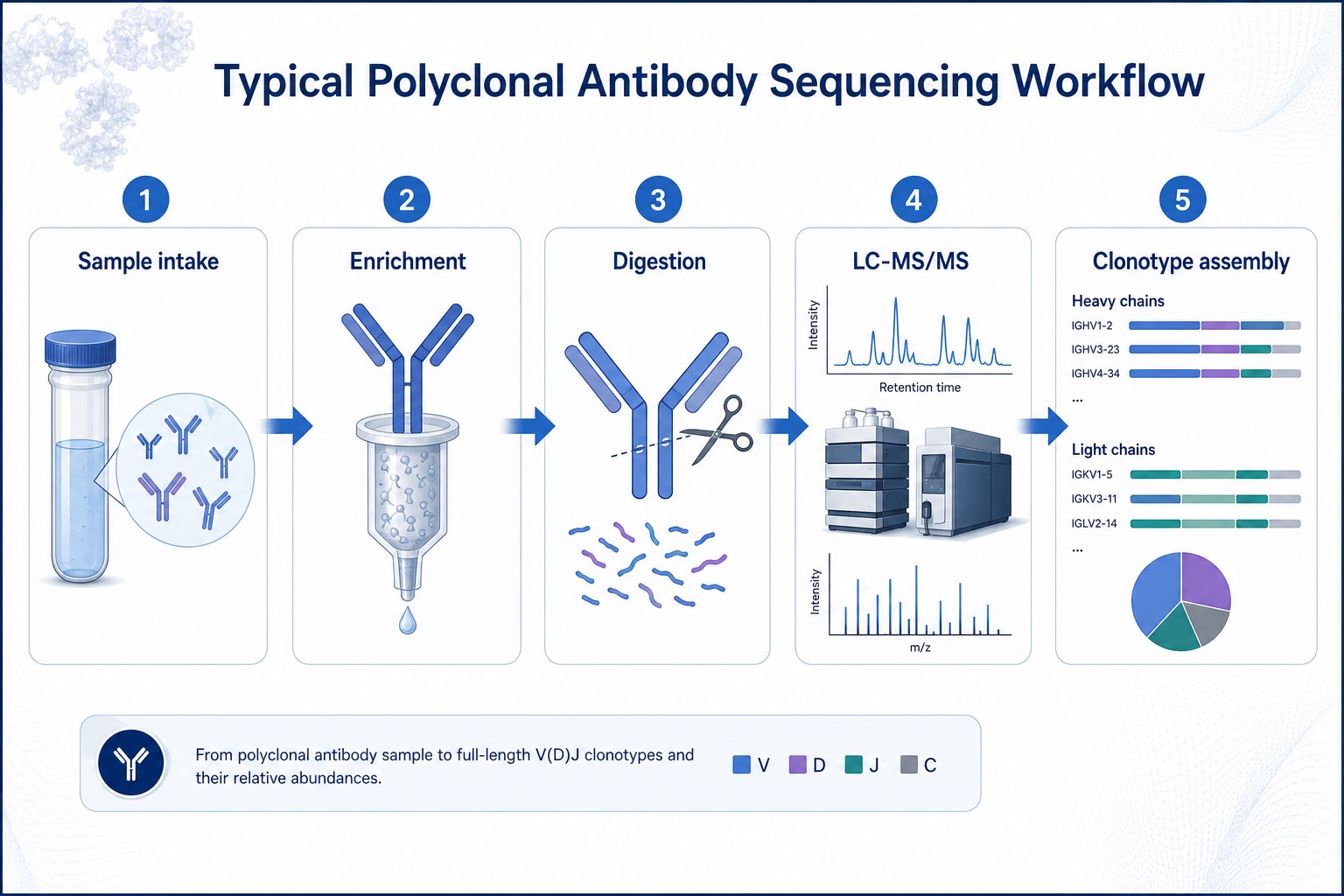
Figure 2. A typical polyclonal antibody sequencing workflow includes sample intake, enrichment, digestion, LC-MS/MS, and clonotype assembly.
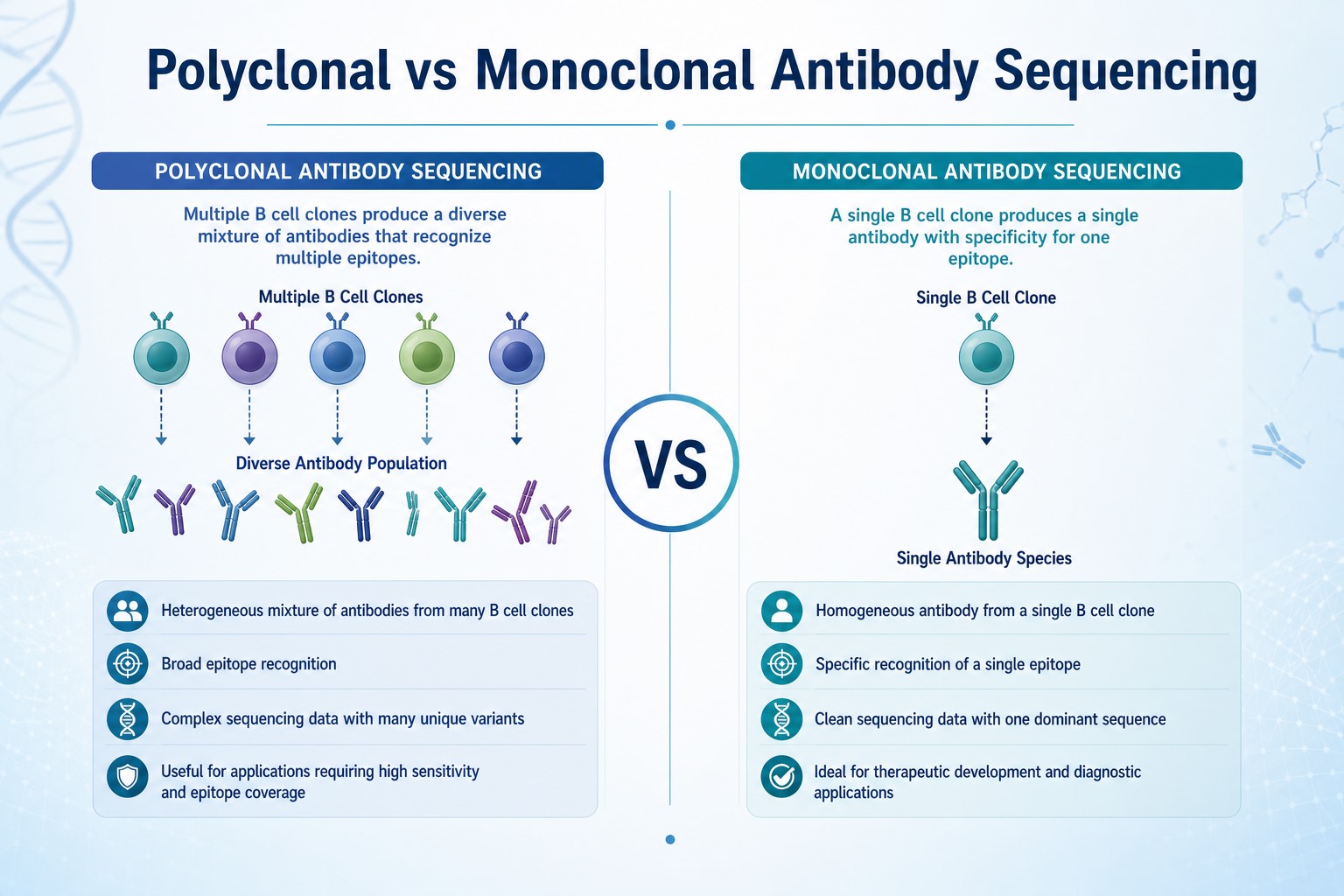
Figure 3. Polyclonal antibody sequencing differs from monoclonal sequencing in sample complexity, workflow design, and reporting format.
What Outputs Polyclonal Antibody Sequencing Produces
Polyclonal antibody sequencing produces several types of deliverables depending on project scope.
Dominant clonotype sequences report the most abundant or most relevant heavy and light chain variable regions identified in the sample. Batch comparison summaries document sequence or mass differences between production lots. Intact mass profiles support QC when full peptide-level sequencing is not required. Confidence-tiered sequence lists separate high-confidence clonotypes from provisional assignments that need additional data. Method summaries describe enrichment, digestion, and assembly logic for internal documentation.
The output is not always a single definitive antibody sequence. It is structured sequence evidence for a mixed reagent.
When Polyclonal Antibody Sequencing Is Used
Polyclonal antibody sequencing is used when molecular identity is needed for a reagent that is not monoclonal.
Common use cases include documenting custom polyclonal reagents used in long-running research programs, comparing new and old production lots after performance change, recovering sequence from immune sera when hybridoma generation is not available, preparing for recombinant redevelopment of a polyclonal binder, and characterizing antigen-specific antibody pools in immunology studies.
It is most valuable when the reagent is critical, custom, or repeatedly used across time and collaborators.
Comparison Summary
|
Feature |
Polyclonal Antibody Sequencing |
Monoclonal Antibody Sequencing |
|---|---|---|
|
Starting material |
Mixed clonotypes |
Single dominant clone |
|
Typical method |
De novo MS, middle-down MS, hybrid assembly |
Hybridoma PCR, transcript sequencing, MS confirm |
|
Main output |
Dominant clonotypes or population profile |
One defined heavy and light chain pair |
|
Common goal |
Documentation, comparison, redevelopment |
Clone confirmation and expression |
|
Complexity |
Higher due to overlapping peptides |
Lower due to homogeneous sample |
Method choice follows sample type and the decision the sequence must support.
Core Technical Advantages and Current Limitations
Core Technical Advantages
Sequence evidence from mixed antibody reagents.
Polyclonal sequencing provides molecular information that functional QC alone cannot supply.
Support for lot documentation and comparison.
Sequence or mass profiles help evaluate batch drift.
Pathway to recombinant redevelopment.
Dominant clonotypes can guide engineering of defined antibodies.
Applicability when hybridoma material is unavailable.
Protein-level MS can recover sequence directly from purified polyclonal samples.
Current Limitations
Full repertoire coverage is usually not practical.
Low-abundance clones may be missed.
Ambiguity increases with clonal similarity.
Related sequences can share overlapping peptides.
Sample enrichment strongly affects success.
Unfractionated complex samples reduce confidence.
Functional validation remains necessary.
Sequence recovery does not by itself prove binding specificity.
Frequently Asked Questions
1. What is polyclonal antibody sequencing in simple terms?
It is the process of determining antibody amino acid sequence information from a mixed population of antibody clones rather than from one monoclonal clone.
2. Is polyclonal antibody sequencing the same as monoclonal sequencing?
No. Monoclonal sequencing defines one clone. Polyclonal sequencing characterizes major sequence components in a mixed reagent.
3. What methods are used for polyclonal antibody sequencing?
De novo mass spectrometry, middle-down MS, intact mass profiling, and hybrid sequence assembly are commonly used.
4. Can every clone in a polyclonal mixture be sequenced?
Usually no. Most workflows recover dominant or most relevant clonotypes rather than the entire repertoire.
5. When is polyclonal antibody sequencing worth doing?
When reagent documentation, lot comparison, immune characterization, or redevelopment requires sequence-level evidence.
Conclusion
Polyclonal antibody sequencing is the extraction and assembly of immunoglobulin sequence information from heterogeneous antibody mixtures. It differs from monoclonal sequencing in sample complexity, workflow design, and reporting format, and it is most often used to document, compare, or recover sequence from polyclonal reagents that lack a single defined clone. De novo mass spectrometry and related approaches make it possible to turn mixed antibody populations into actionable sequence evidence for research and redevelopment.
Programs that define enrichment strategy and expected deliverables before analysis obtain clearer polyclonal sequencing results. Researchers exploring polyclonal antibody sequencing can contact MtoZ Biolabs to review sample requirements, method options, and reporting suited to their project. For teams moving from polyclonal reagents toward defined recombinant antibodies, MtoZ Biolabs can also help connect sequencing output with downstream development planning.
How to order?




