






What Is Lysosomal Proteomics Analysis and When Is It Useful?
Introduction
Lysosomes are often discussed as degradation organelles, yet many research questions require a protein-level view of lysosome-enriched material rather than bulk cell or tissue proteomes. A neurodegeneration team may ask which lysosomal proteins change under disease stress. A storage-disease project may need cargo inventories from lysosome-enriched fractions. An autophagy study may need to compare lysosomal protein profiles across treatments.
Lysosomal proteomics analysis addresses these organelle-centered questions by combining lysosome enrichment with LC-MS/MS identification or quantification. This article explains what lysosomal proteomics covers, which research problems it fits, and when bulk proteomics is a weaker substitute.
What Lysosomal Proteomics Analysis Means
Lysosomal proteomics analysis is the mass spectrometry measurement of proteins recovered from lysosome-enriched preparations. The analytical goal is organelle-associated protein composition and, when study design supports it, comparative abundance changes between groups.
A typical project path includes:
- lysosome enrichment from suitable starting material, or intake of client-prepared lysosome-enriched fractions
- protein extraction and digestion
- Label-free, TMT, or DIA LC-MS/MS acquisition
- protein identification, quantification, and bioinformatics such as differential analysis, GO, KEGG, and PPI
The method reports proteins present in the lysosome-enriched preparation. It does not by itself prove exclusive lysosomal localization for every identified protein, and it does not distinguish membrane proteins from luminal proteins as separate analytical classes.
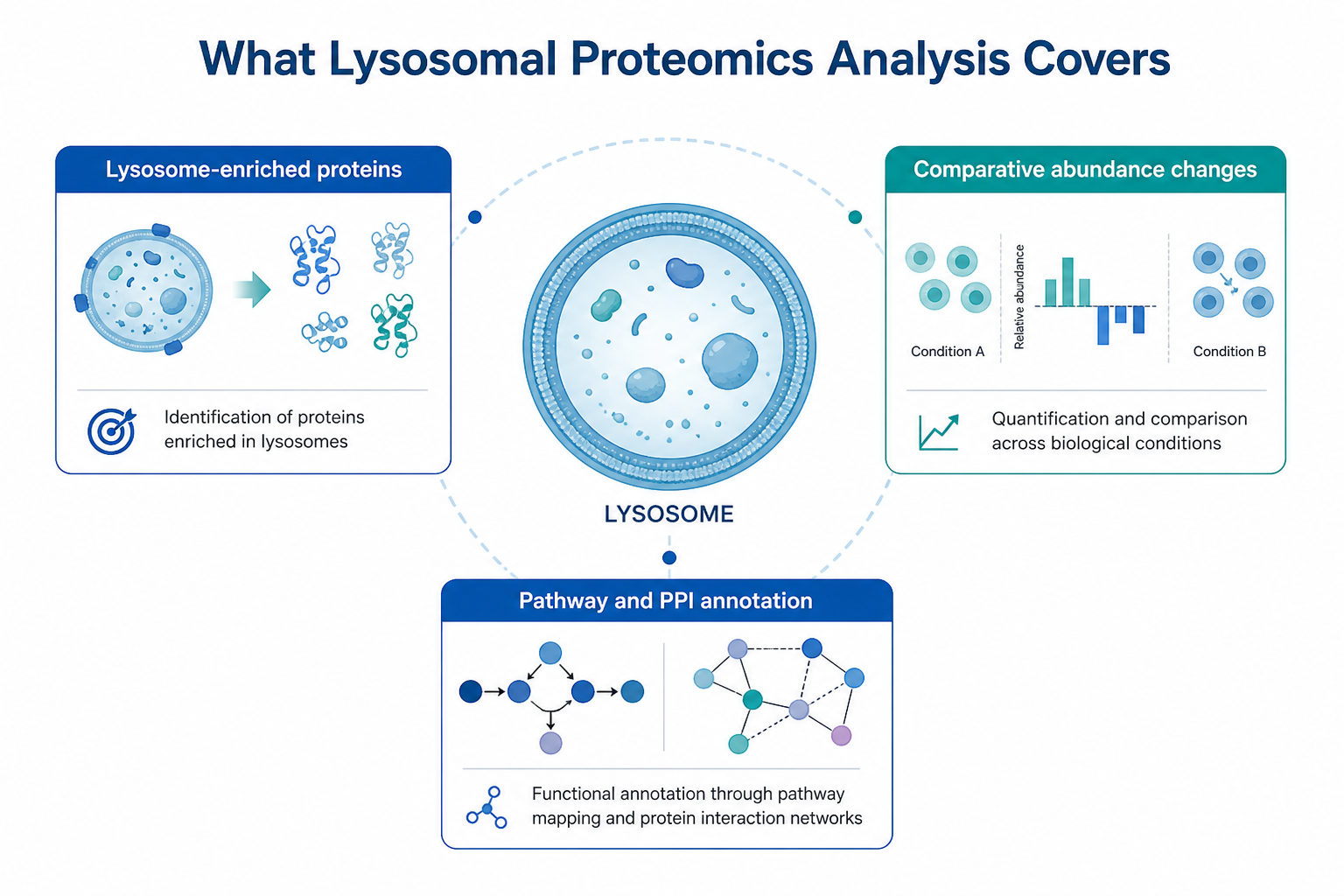
Figure 1. Lysosomal proteomics analysis links lysosome-enriched protein measurement to comparative profiles and pathway-level interpretation.
What Questions Lysosomal Proteomics Can Answer
Lysosomal proteomics is useful when the scientific claim depends on proteins associated with lysosome-enriched fractions.
It can inventory proteins detected in lysosome-enriched preparations from cell lines, primary cells, or tissue samples after enrichment.
It can compare lysosome-associated protein abundance across disease, genotype, treatment, or autophagy-related conditions when groups are matched.
It can support candidate ranking for follow-up in neurodegeneration, lysosomal storage disease, tumor biology, immune inflammation, and autophagy research.
It can provide standard bioinformatics outputs such as differential protein lists, GO and KEGG annotation, and PPI views to organize candidates.
These outputs remain exploratory until orthogonal validation is completed outside or through separately scoped follow-up work.
When Lysosomal Proteomics Is Useful
Organelle-focused cargo questions
Choose lysosomal proteomics when bulk proteomics is likely to dilute or miss lysosome-associated signals. Enrichment increases the chance that organelle-relevant proteins are visible above whole-cell background.
Disease and pathway contexts centered on lysosomes
Lysosomal proteomics is commonly considered for lysosomal storage disease research, neurodegeneration studies with lysosomal dysfunction hypotheses, tumor or immune projects involving lysosome remodeling, and autophagy-related mechanism work.
Comparative designs with matched enrichment
The method is most informative when comparison arms share matched lysosome enrichment chemistry, handling, and acquisition design. Unequal enrichment efficiency can create false differential signatures.
Projects that need discovery before targeted follow-up
Discovery lysosomal proteomics can prioritize candidates for later Western blot or other orthogonal assays. Targeted follow-up should be planned as a separate decision rather than assumed as an automatic next package.
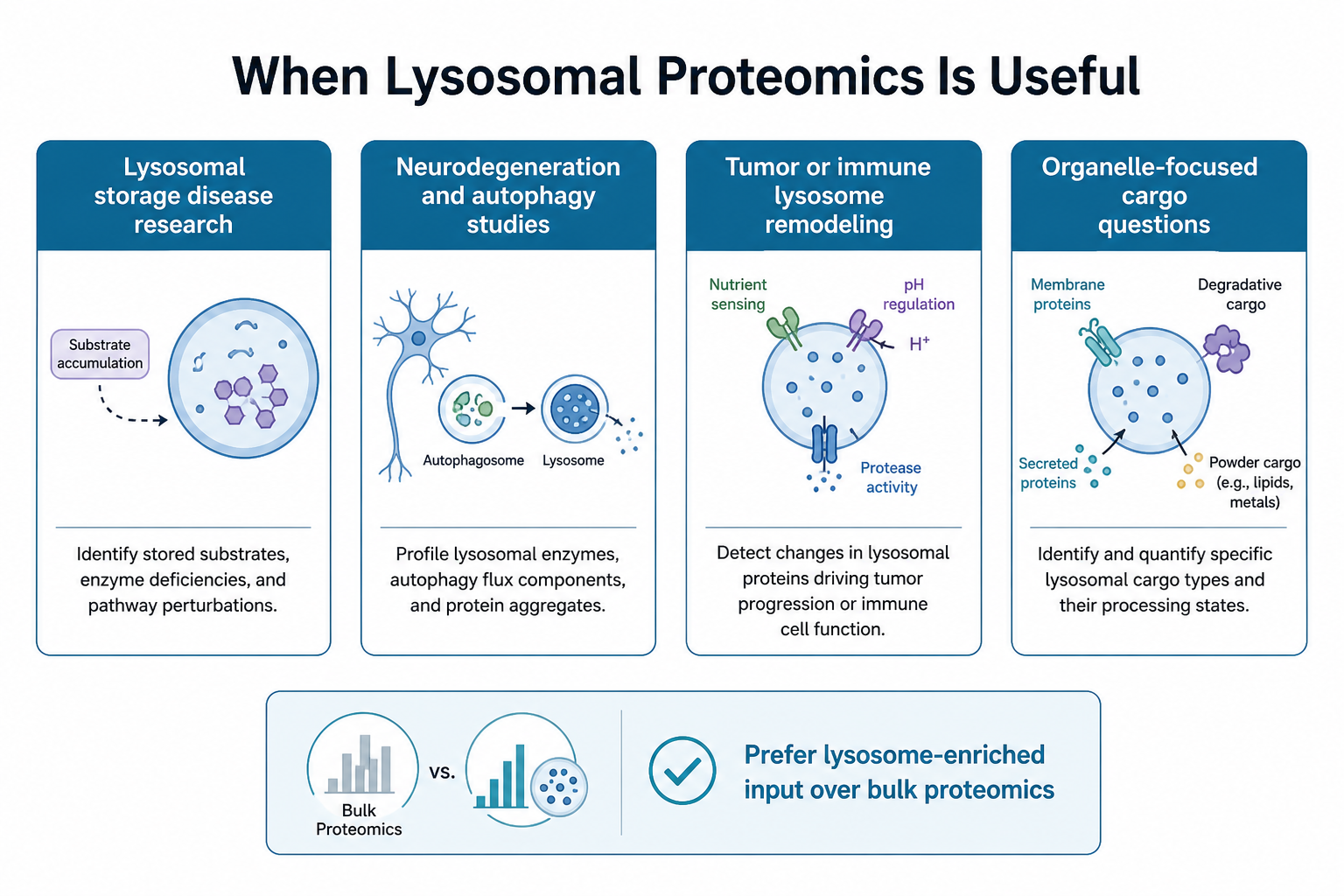
Figure 2. Lysosomal proteomics is most useful when the research question depends on lysosome-enriched protein cargo rather than bulk proteome composition.
When Another Approach May Fit Better
If the question is whole-cell or whole-tissue protein composition, bulk proteomics is usually more direct.
If the project only needs a few marker checks such as LAMP1 or LAMP2 by Western blot, full lysosomal proteomics may be unnecessary.
If the starting material is serum, plasma, CSF, urine, or another body-fluid matrix, lysosome enrichment must already be completed by the client before submission. Lysosome isolation from these fluids is outside the standard enrichment service path described here.
If ultrastructural lysosome morphology or lysosome colocalization imaging is the primary need, proteomics is not the matching assay.
Sample and Enrichment Context That Affect Usefulness
Lysosomal proteomics usefulness depends on input quality.
For cell lines, primary cells, fresh tissue, and frozen tissue, lysosome enrichment can be included in the service path. A commonly used enrichment approach is centrifugal column-based rapid isolation suitable for downstream proteomics.
For already enriched lysosome fractions or other client-prepared subcellular fractions, proteomics can proceed when protein amount, buffer compatibility, and basic QC are adequate. Western blot positivity for lysosome markers such as LAMP1 or LAMP2 is a practical readiness check before omics.
Human, mouse, and rat samples are routinely considered. Other species should be assessed case by case.
Typical planning ranges include about 1 x 10^7 cells per sample, 20 to 50 mg tissue per sample, or 20 to 50 ug protein from client-enriched fractions. Store samples at −80°C and ship on dry ice. Avoid repeated freeze-thaw and mass spectrometry-incompatible additives.
Subcellular Proteomics Service
Organelle Isolation and Protein Purification Service
What the Analysis Delivers, and What It Does Not
Typical deliverables
Lysosomal proteomics projects commonly deliver protein identification tables, quantitative matrices when designed for quantification, differential analysis for comparative studies, GO, KEGG, and PPI outputs, and a full analysis report with result interpretation support.
Under favorable conditions, cell-derived projects may reach about 1,000 or more proteins, and tissue-derived projects may reach about 3,000 or more proteins. These ranges are planning references, not fixed guarantees for every matrix or enrichment quality.
Important limits
Membrane and luminal lysosomal proteins are not reported as separately resolved classes.
Lysosome-specific annotation packages beyond standard GO, KEGG, and PPI are not part of the standard analysis set.
Low-abundance lysosomal proteins may require enrichment and still may not be recovered robustly.
PTM-focused lysosomal projects such as glycosylation, ubiquitination, or phosphorylation are possible only when lysosome material is sufficient and should be scoped separately.
Downstream experimental validation such as Western blot is not an automatic continuous package after proteomics and should be evaluated separately when needed.
Related Services
Mitochondrial Proteomics Services
What to Confirm Before Requesting Lysosomal Proteomics
Define whether the claim is lysosome-enriched cargo inventory, comparative abundance change, or candidate discovery for later validation.
Confirm starting material type: cells, tissue, or client-enriched lysosome fractions.
Confirm whether enrichment should be performed by the laboratory or has already been completed.
Confirm species, approximate sample amount, storage history, and buffer compatibility.
Confirm quantification mode needs: Label-free, TMT, or DIA.
Confirm whether standard differential analysis and GO, KEGG, and PPI outputs are sufficient for the current decision stage.
MtoZ Biolabs provides lysosomal proteomics analysis covering lysosome enrichment for suitable cell and tissue inputs, QC-oriented marker checks, LC-MS/MS, and bioinformatics interpretation. The technical team can help determine whether a lysosome-enriched proteomics design fits the current research question better than bulk proteomics.
To discuss a lysosomal proteomics project, contact MtoZ Biolabs with your sample type, species, enrichment status, study groups, and the organelle-level protein question you need to answer.
Frequently Asked Questions
What is lysosomal proteomics analysis?
It is LC-MS/MS analysis of proteins from lysosome-enriched preparations, used to identify or quantify organelle-associated protein cargo and compare profiles across conditions.
When is lysosomal proteomics more useful than bulk proteomics?
It is more useful when the hypothesis depends on lysosome-associated proteins that may be diluted or obscured in whole-cell or whole-tissue proteomes.
Can body-fluid samples be used?
Serum, plasma, CSF, urine, and similar fluids can be considered only after the client completes lysosome-component separation. Lysosome enrichment from these fluids is not part of the standard laboratory enrichment path described here.
Which quantification strategies are supported?
Label-free, TMT, and DIA workflows are supported for lysosome-enriched proteomics designs.
Does the analysis separate lysosomal membrane proteins from luminal proteins?
No. Standard lysosomal proteomics analysis does not distinguish those two classes as separate reported categories.
Conclusion
Lysosomal proteomics analysis is useful when research questions depend on proteins associated with lysosome-enriched fractions rather than bulk proteomes. It supports cargo inventory, comparative profiling, and candidate discovery in lysosome-centered disease and autophagy studies, provided enrichment quality and study design are matched to the claim.
The practical decision is claim-first: use lysosomal proteomics for organelle-focused protein questions, and use bulk or non-proteomic assays when those questions fall outside lysosome-enriched MS scope. Teams evaluating this route can contact MtoZ Biolabs to confirm whether current samples and study aims fit a lysosomal proteomics analysis design.
How to order?




