






What is LC-MS in bioactivity screening and proteomics?
Introduction
LC-MS appears in two research settings that are often discussed separately. A drug discovery team may use LC-MS to identify bioactive components in a natural product extract or to confirm binding targets from a compound screen. A proteomics laboratory may use LC-MS to profile proteins in a cell lysate or quantify peptide abundance across treatment groups. Both groups rely on liquid chromatography coupled to mass spectrometry, but the experimental goals, sample types, and reporting formats differ.
In bioactivity screening, LC-MS is used to detect, identify, and quantify active peptides, proteins, or small-molecule-related targets that may explain a biological effect. In proteomics, LC-MS is used to measure the protein complement of a sample for identification, comparison, or modification mapping. The same analytical platform supports both fields when sample preparation and acquisition mode are matched to the screening or proteomics question.
This article explains what LC-MS means in bioactivity screening and proteomics, how the technique is applied in each setting, and where the two workflows overlap in drug discovery and protein analysis projects.
What LC-MS Means in Both Fields
LC-MS combines liquid chromatography with mass spectrometry. Liquid chromatography separates analytes in time before they enter the mass spectrometer. Mass spectrometry records the mass-to-charge ratio and signal intensity of ions, and in LC-MS/MS mode also captures fragment ions that support structural or sequence assignment.
In both bioactivity screening and proteomics, LC-MS provides a sensitive way to analyze complex biological mixtures without requiring an antibody for every analyte. The difference lies in what is being screened or measured and what conclusion the data must support. Bioactivity screening seeks candidates linked to a functional effect. Proteomics seeks comprehensive or targeted protein-level information about a biological system.
LC-MS in Bioactivity Screening
Bioactivity screening identifies molecules or macromolecules responsible for an observed biological effect. LC-MS supports this process by detecting candidate analytes in complex mixtures and providing mass and structural evidence for their identity.
In natural product or biopharmaceutical screening, LC-MS can profile peptide and protein components in extracts, fractions, or purified preparations. Active peptide or protein components can be identified and quantified by comparing LC-MS/MS data across fractions with different bioactivity. Intact protein analysis by LC-MS can reveal mass differences among isoforms or modified forms that may correlate with activity.
Affinity selection mass spectrometry links compound screening to protein target identification. A ligand or drug candidate is incubated with a protein mixture, bound targets are isolated, and LC-MS/MS identifies the proteins retained by the selection step. This approach is used to nominate drug targets, compare compound selectivity, and prioritize hits from phenotypic screens.
LC-MS also supports confirmation of screening results. When a bioactive fraction contains multiple molecular classes, LC-MS/MS can assign peptide sequences, detect modified forms, and quantify candidate components across active and inactive fractions. The output supports decisions about which molecule class to pursue in follow-up assays.
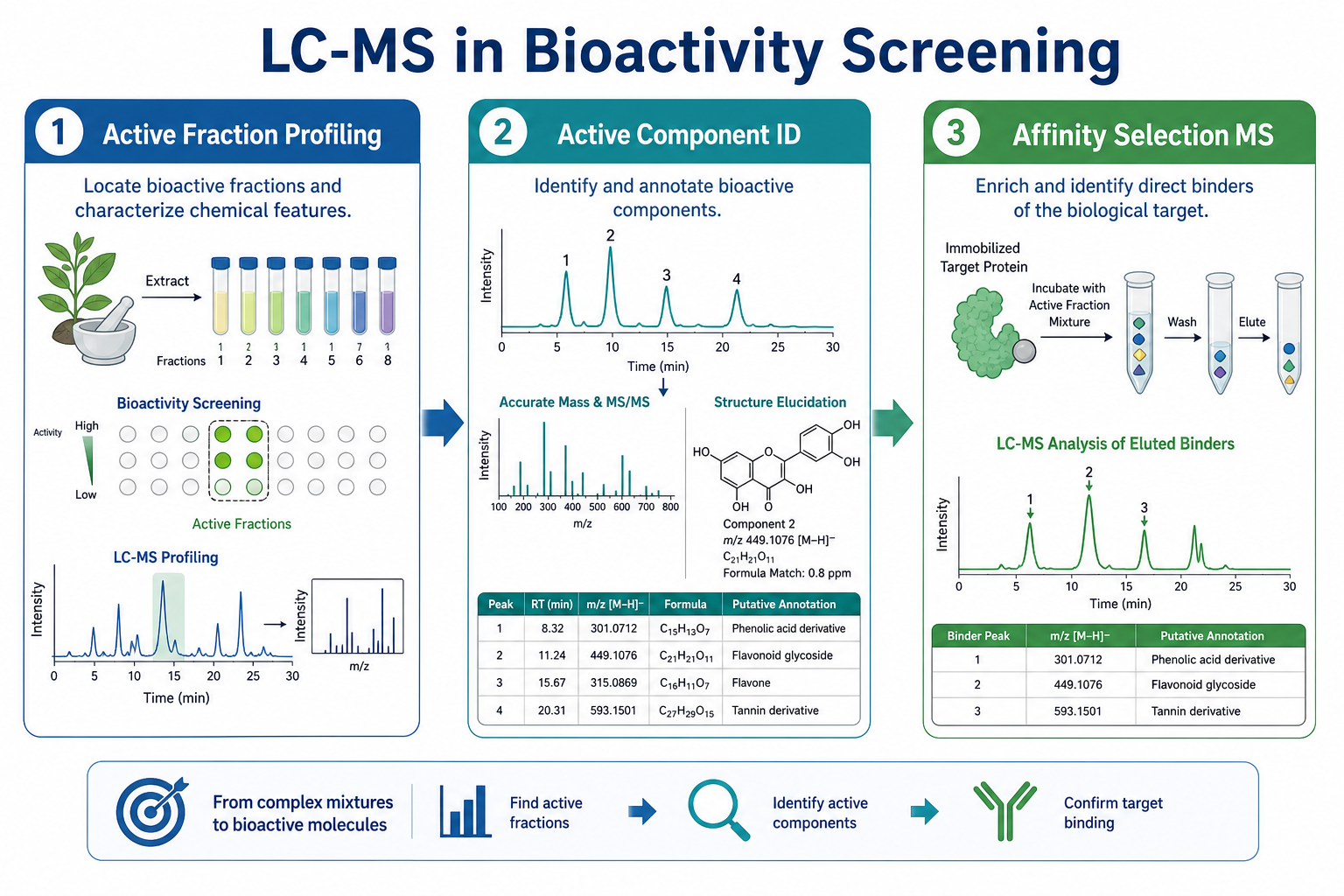
Figure 1. LC-MS in bioactivity screening supports active component identification, fraction profiling, and affinity selection mass spectrometry for target nomination.
LC-MS in Proteomics
In proteomics, LC-MS is the standard platform for protein and peptide measurement in complex biological samples. Proteins are typically digested into peptides, separated by reversed-phase liquid chromatography, and analyzed by mass spectrometry.
Discovery proteomics uses LC-MS/MS to identify hundreds to thousands of proteins in cell lysates, tissues, or biofluids. Quantitative proteomics compares peptide ion intensities across sample groups to detect proteins that change in abundance after treatment, disease, or genetic perturbation. PTM proteomics uses enrichment and LC-MS/MS to map phosphorylation, glycosylation, and other modifications at specific sites. Targeted proteomics monitors selected peptide panels by PRM or MRM for reproducible quantitation.
The proteomics output is usually a protein identification list, a differential abundance table, a modification map, or a targeted panel report. LC-MS provides the measurement layer that converts prepared samples into protein-level evidence.
Related Services
Active Substances Screening Service
Affinity Selection-Mass Spectrometry Analysis Service
Protein Active Component Identification and Quantification
Active Ingredients Identification and Screening Service
LC-MS Based Intact Protein Analysis Service
Researchers working at the interface of bioactivity screening and proteomics can consult MtoZ Biolabs to review sample type, screening goal, and whether LC-MS identification or quantitative LC-MS/MS analysis is the appropriate next step.
How Bioactivity Screening and Proteomics Use LC-MS Differently
Both fields rely on LC-MS, but the analytical priorities differ.
|
Aspect |
Bioactivity Screening |
Proteomics |
|---|---|---|
|
Primary goal |
Link activity to a molecular candidate |
Identify or quantify proteins in a sample |
|
Sample context |
Active fractions, extracts, target pulldowns |
Lysates, tissues, biofluids, purified proteins |
|
Typical question |
Which component drives the effect? |
Which proteins are present or changed? |
|
Common LC-MS role |
Active component ID, target nomination |
Discovery profiling, quantitation, PTM mapping |
|
Key workflow |
Fractionation plus AS-MS or component ID |
Digestion plus LC-MS/MS database searching |
|
Typical output |
Active peptide or protein candidate, target list |
Protein list, abundance table, modification map |
Bioactivity screening often uses LC-MS to narrow a complex mixture toward a candidate responsible for an effect. Proteomics uses LC-MS to characterize the broader protein landscape or measure defined protein changes across conditions.
Shared Technical Elements
Despite different goals, bioactivity screening and proteomics share several LC-MS workflow elements.
Sample preparation quality determines detection depth in both settings. Salts, detergents, and contaminants that suppress ionization reduce sensitivity regardless of project type. Chromatographic separation improves measurement consistency by reducing ion competition during electrospray ionization. LC-MS/MS fragmentation provides sequence or structural evidence needed for confident identification in both active component analysis and standard proteomics. Database searching and spectral matching convert raw MS data into interpretable identifications.
Laboratories that perform both screening and proteomics benefit from consistent LC-MS platforms because method development, instrument maintenance, and data review skills transfer across project types.
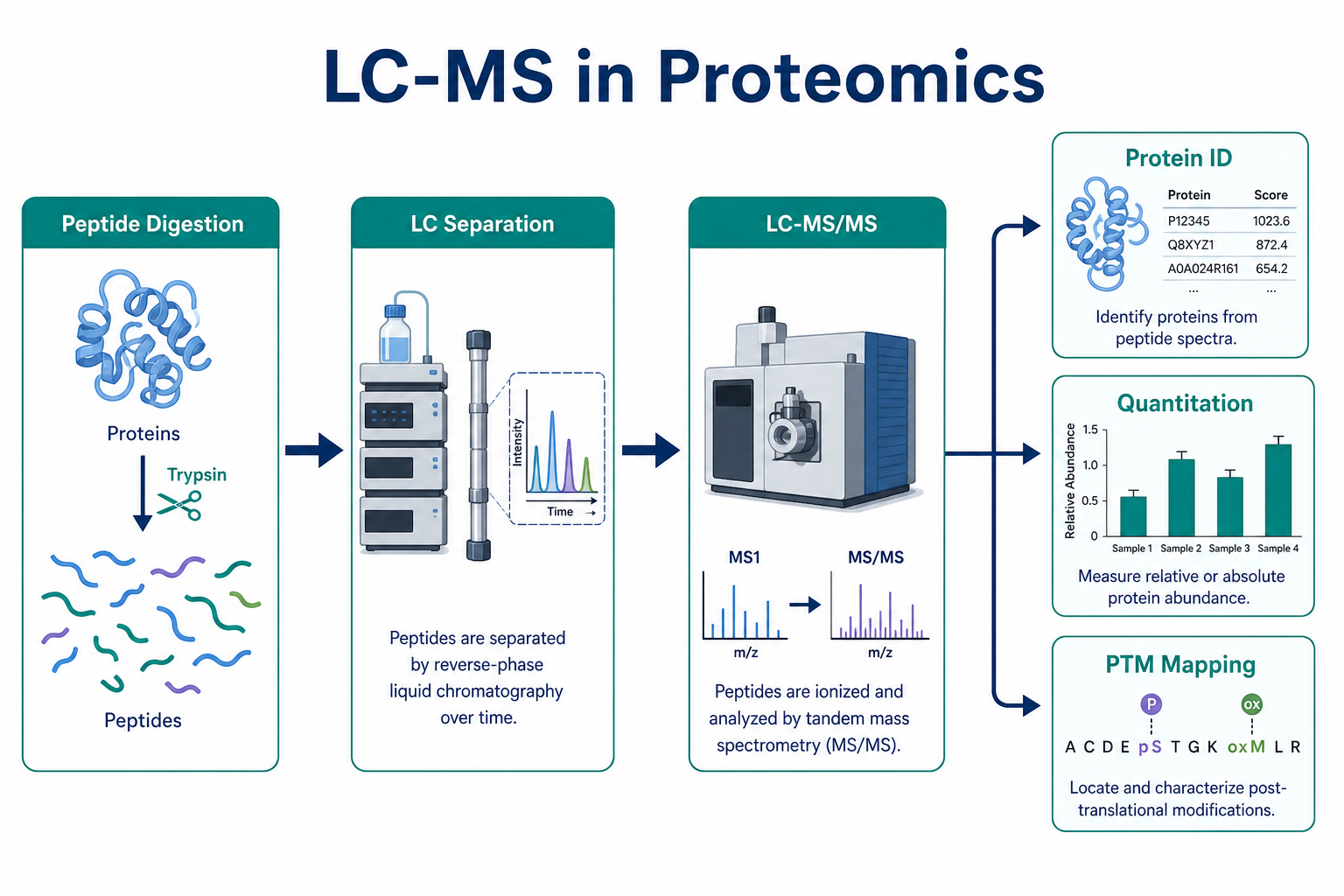
Figure 2. LC-MS in proteomics supports peptide separation, LC-MS/MS identification, and protein-level quantitation across complex biological samples.
Where Bioactivity Screening and Proteomics Overlap
The two fields converge in several project types.
Drug target discovery combines compound screening with proteomics-style LC-MS/MS identification of captured proteins. Mechanism-of-action studies use quantitative proteomics to measure pathway-level protein changes after compound treatment, linking phenotypic screening data to molecular targets. Bioactive peptide discovery uses LC-MS/MS to sequence peptides from active fractions and then applies proteomics quantitation to compare abundance across sources. Biomarker programs may begin with activity-driven fractionation and transition to targeted LC-MS monitoring of nominated proteins.
In these hybrid projects, bioactivity screening provides the functional filter and proteomics LC-MS provides the molecular evidence layer.
LC-MS Outputs in Each Setting
The deliverables from LC-MS analysis differ by project design.
|
Project Type |
LC-MS Application |
Typical Deliverable |
|---|---|---|
|
Natural product screening |
Fraction profiling and component ID |
Active peptide or protein candidate |
|
Affinity selection MS |
Target pulldown and LC-MS/MS ID |
Protein target nomination list |
|
Cell treatment study |
Label-free quantitative proteomics |
Differential protein abundance table |
|
Biologics active component |
Intact mass and peptide mapping |
Confirmed active protein form |
|
Targeted follow-up |
PRM monitoring of nominated peptides |
Panel intensity values across samples |
Understanding the expected deliverable helps teams specify whether LC-MS survey measurement, LC-MS/MS identification, or quantitative acquisition is required.
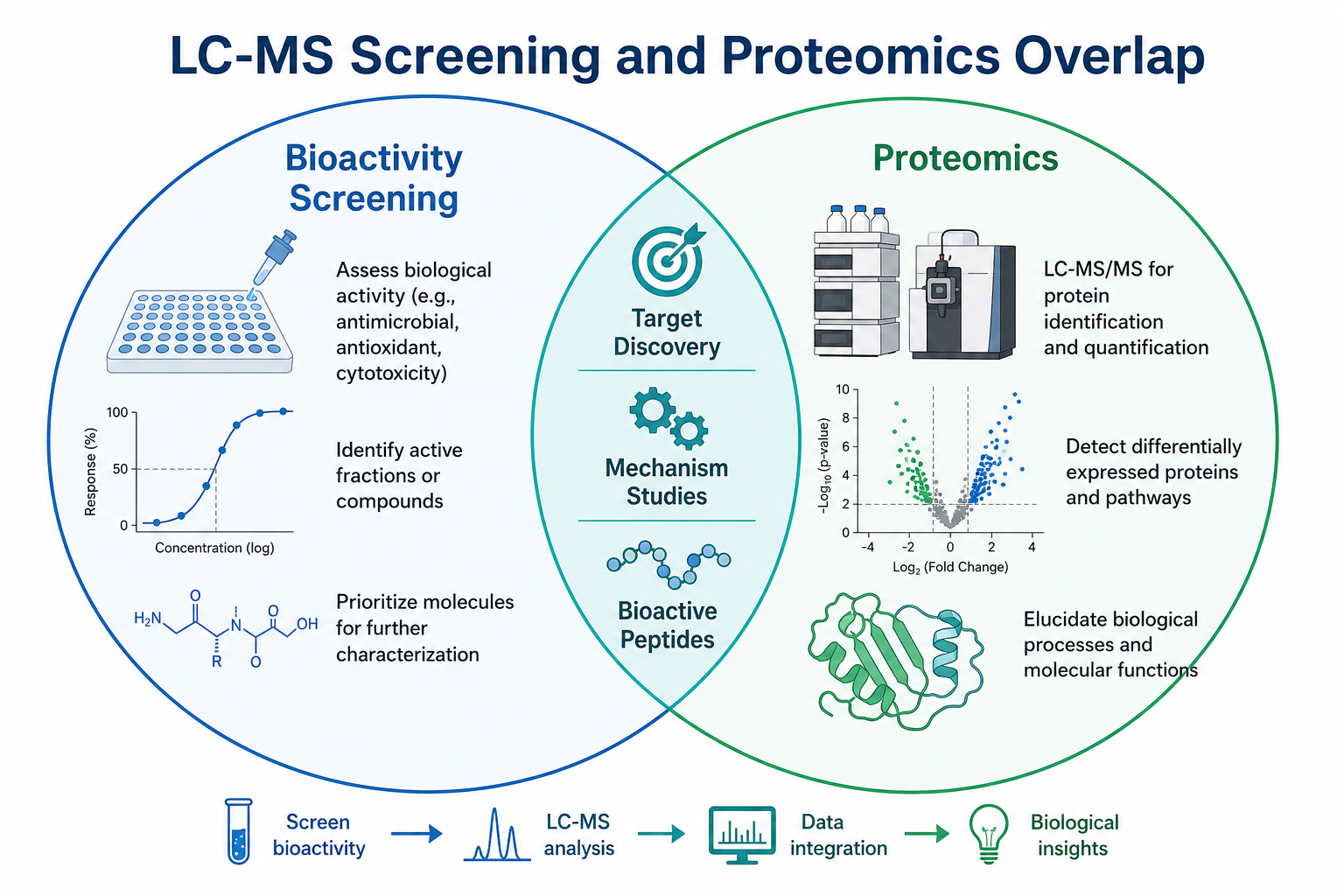
Figure 3. LC-MS connects bioactivity screening and proteomics in drug target discovery, mechanism studies, and bioactive component identification.
Practical Considerations
LC-MS project success in both fields depends on aligning the workflow with the biological question.
Bioactivity screening requires careful fractionation design so active and inactive fractions can be compared by LC-MS. Controls for nonspecific binding are essential in affinity selection workflows. Proteomics projects require replication, appropriate normalization, and false discovery rate control during database searching. Hybrid projects should define whether the priority is candidate nomination, pathway characterization, or both, because this determines whether intact mass analysis, discovery LC-MS/MS, or targeted quantitation is the primary acquisition mode.
Sample amount, complexity, and the required reporting standard should be reviewed before analysis begins.
Frequently Asked Questions
1. What is LC-MS in bioactivity screening?
In bioactivity screening, LC-MS is used to detect, identify, and quantify peptide, protein, or target candidates in active fractions or affinity selection experiments that may explain a biological effect.
2. What is LC-MS in proteomics?
In proteomics, LC-MS is used to separate and measure peptides or proteins for identification, quantitation, and post-translational modification mapping in biological samples.
3. Is LC-MS/MS used in both bioactivity screening and proteomics?
Yes. LC-MS/MS provides fragment ion evidence for sequence identification in proteomics and for active component or target protein identification in bioactivity screening workflows.
4. How does affinity selection mass spectrometry relate to proteomics?
Affinity selection mass spectrometry uses a screening step to capture binding targets and then applies LC-MS/MS proteomics identification to assign protein identities to the captured material.
5. Can one LC-MS platform support both screening and proteomics projects?
Yes. The same LC-MS or LC-MS/MS instrument can support bioactivity screening and proteomics when sample preparation and acquisition parameters are configured for the specific project goal.
Conclusion
LC-MS is a shared analytical platform with distinct roles in bioactivity screening and proteomics. In screening, it helps identify active components and nominate molecular targets linked to biological effects. In proteomics, it measures proteins for identification, comparison, and modification analysis across complex samples. The techniques overlap in drug discovery, mechanism studies, and bioactive molecule characterization where functional screening and protein-level evidence must be combined.
Teams planning LC-MS work in either field can contact MtoZ Biolabs to review whether the project requires active component screening, proteomics profiling, or an integrated workflow that connects both approaches.
How to order?




