



What affects AQUA peptide assay development costs is better read as which resource drivers expand absolute assay build—not as a single flat fee per injection. Absolute quantification with AQUA-style stable isotope-labeled internal standard (SIS) peptides reports amount units against a calibration model on liquid chromatography-tandem mass spectrometry (LC-MS/MS), usually by multiple reaction monitoring (MRM) or parallel reaction monitoring (PRM) (Gerber et al. 2003; Lange et al. 2008; Peterson et al. 2012). In project language, development effort scales with how many labeled peptides must be specified and qualified, how hard the matrix is, how deep calibration and spike optimization must go, how large the cohort plus quality control (QC) set is, and how complete the concentration deliverable must be. The guide below maps those AQUA cost drivers into workflow, locked parameters, limits, and project fit. It is not a commercial rate card, not a purchasing checklist, and not a claim that every SIS spike creates a validated absolute assay.
Relative targeted ratios without calibrators answer a different claim unit. Ordering labeled peptides before matrix-matched pilots often forces resynthesis or curve redesign (Bantscheff et al. 2012).
In MtoZ Biolabs absolute offerings, AQUA assay development is scoped after peptide list, units, expected range, matrix, synthesis needs, and deliverable depth are written in the brief. Service framing appears in Absolute Protein Quantification.
What AQUA Development Effort Must Cover
Four layers belong in the brief and stay separated.
SIS layer names sequences, labeling pattern, purity or identity checks when required, and whether standards already exist or must be newly made.
Calibrator layer names spike step (pre- versus post-digest when declared), level count, matrix matching, and expected sample range to bracket.
Build layer names new versus transferred MRM/PRM methods, interference review, and whether unlabeled surrogate pilots precede synthesis.
Cohort-and-deliverable layer names study plus QC injections and whether the package needs curves, recovery notes, and out-of-range flags—or only a concentration table.
AQUA “cost” drivers are synthesis scope, calibration depth, matrix difficulty, cohort load, and report depth. Sample count alone does not define the build.
Comprehensive absolute scoping appears in Scoping an Absolute Protein Quantification Project: Calibrators, Panel Size, and Validation Deliverables. This page stays on what expands AQUA development effort.
How Synthesis, Calibration, and Matrix Drive Load
Five drivers explain why two “AQUA” requests are not equivalent.
Labeled-standard scope. More peptides, dense labeling, or higher qualification checks expand synthesis and incoming QC before any cohort runs.
Calibration and spike design. Multi-level matrix-matched curves and spike-step optimization add pilots that neat-buffer curves skip.
Assay build status. New transitions or PRM windows in a difficult matrix outweigh acquisition-only work on a transferred absolute method.
Matrix class. Plasma, tissue, and formulation usually need more recovery and interference work than clean lysates.
Deliverable standard. Curve fits, recovery summaries, and method archives require more review than an exploratory concentration sheet.
Platform choice still matters when interference appears: MRM fits many stable channels; PRM helps selected tough peptides. Fit guidance appears in Parallel Reaction Monitoring vs MRM: Which Fits?.
End-to-End Workflow That Controls AQUA Development Load
A practical effort-control spine usually runs as follows.
- Freeze reporting units, expected concentration range, and the decision concentration must support.
- Tier peptides; keep only tier-one sequences in the first synthesis and calibration lock.
- Prefer unlabeled matrix detectability checks before committing full SIS orders when sequences are new.
- Specify labeling, purity needs, and spike step; document what already-qualified stocks can reuse.
- Build matrix-matched calibrator levels that bracket the expected range from pilots.
- Develop or transfer MRM/PRM methods; stop and redesign peptides if interference persists.
- Size study samples with blanks, calibrators, and QC levels into one acquisition plan.
- Run a small absolute pilot; expand synthesis or cohort only after heavy–light behavior passes declared rules.
- Archive curve, method, and SIS documentation with the concentration deliverable.
Steps 1 through 4 limit unnecessary synthesis. Steps 5 through 9 prevent full-cohort load on an unready calibration model.
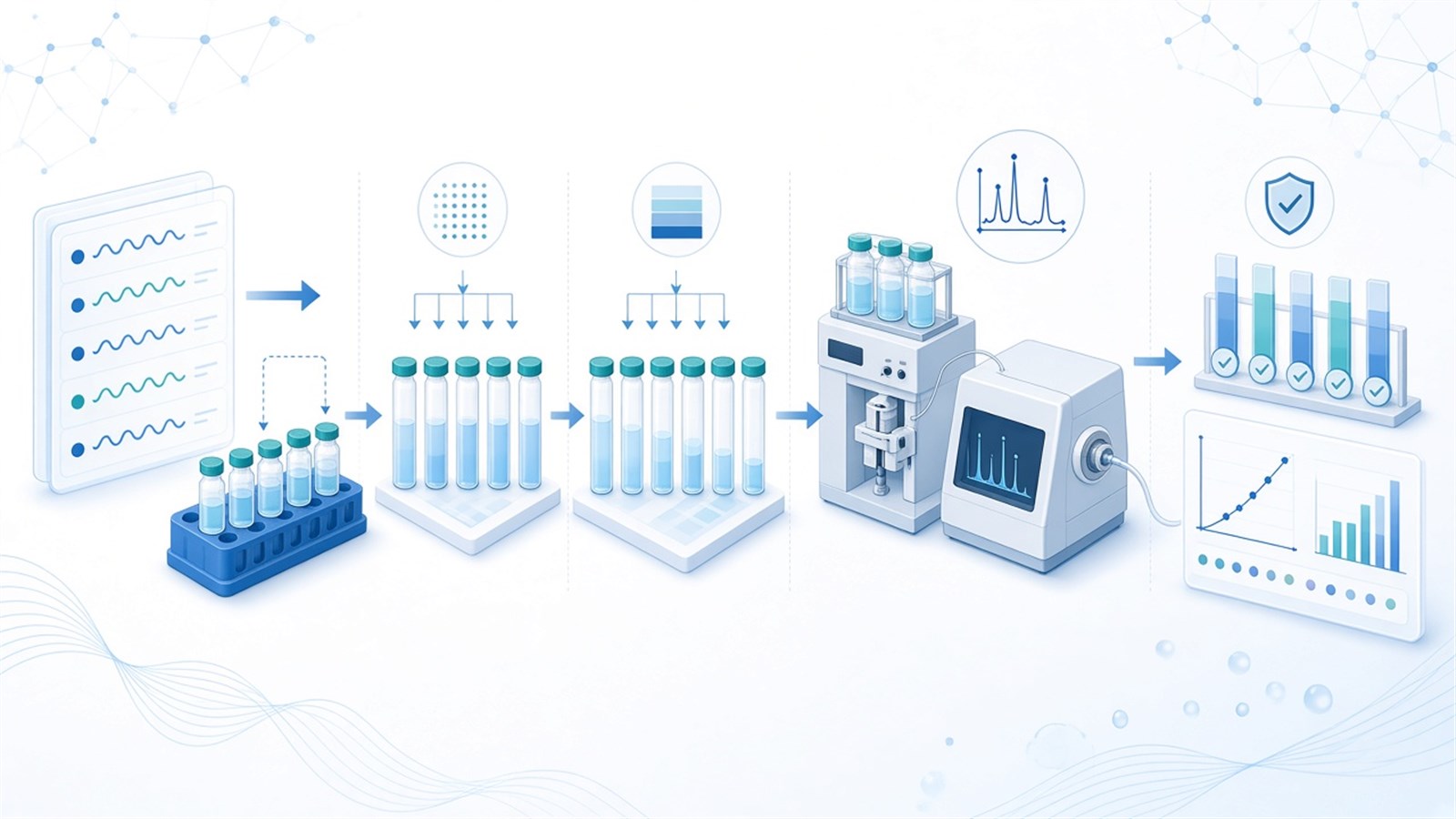
Figure 1. AQUA development effort shrinks when synthesis, calibration, and cohort phases are gated by matrix pilots.
Parameters That Lock Effort Before Synthesis Orders
Layer |
Parameter that must be declared |
Failure mode if ignored |
|---|---|---|
Units / range |
Reporting unit and expected amounts |
Calibrators that miss samples |
Peptide tiers |
Tier-one vs later expansion |
Oversized first synthesis |
SIS design |
Sequence, label pattern, purity need |
Resynthesis after weak performance |
Spike step |
Pre- vs post-digest (as declared) |
Recovery misattributed |
Calibrator levels |
Count and matrix matching |
Buffer curves fail in study matrix |
Build status |
New absolute method vs transferred |
Acquisition-only plan on new peptides |
Platform |
MRM, PRM, or mixed |
Interference unread |
Cohort + QC |
Study and QC injection plan |
Under-diagnosed drift |
Deliverables |
Curve / recovery / flags required |
Incomplete absolute package |
Phase gate |
Pilot before full synthesis or cohort |
Rework on locked reagents |
Limits follow the same table. AQUA development does not create clinical or release decisions by itself. Higher purity specification is a quality choice, not automatic accuracy. Formal regulatory validation needs a quality system beyond the research effort table.
How to Choose AQUA Development Scope
Use synthesis need, matrix risk, claim readiness, and deliverable depth together.
Project need |
Scope that often fits |
Recheck before committing |
|---|---|---|
1–3 peptides, clean matrix, existing SIS |
Lower-scope absolute pilot |
Full multi-peptide synthesis pack |
New SIS + medium cohort + basic curves |
Moderate staged build |
Skip matrix-matched calibrators |
Multi-peptide plasma/tissue, full QC pack |
Higher-scope phased design |
Acquisition-only on new standards |
Sequences unproven in matrix |
Unlabeled detectability then SIS |
Order all labels first |
Interference on subset |
PRM subset or peptide redesign |
Force every channel on unstable MRM |
Fold change only |
Relative targeted—not AQUA build |
Absolute synthesis without unit need |
Panel still growing |
Lock tier-one only |
One synthesis for a moving list |
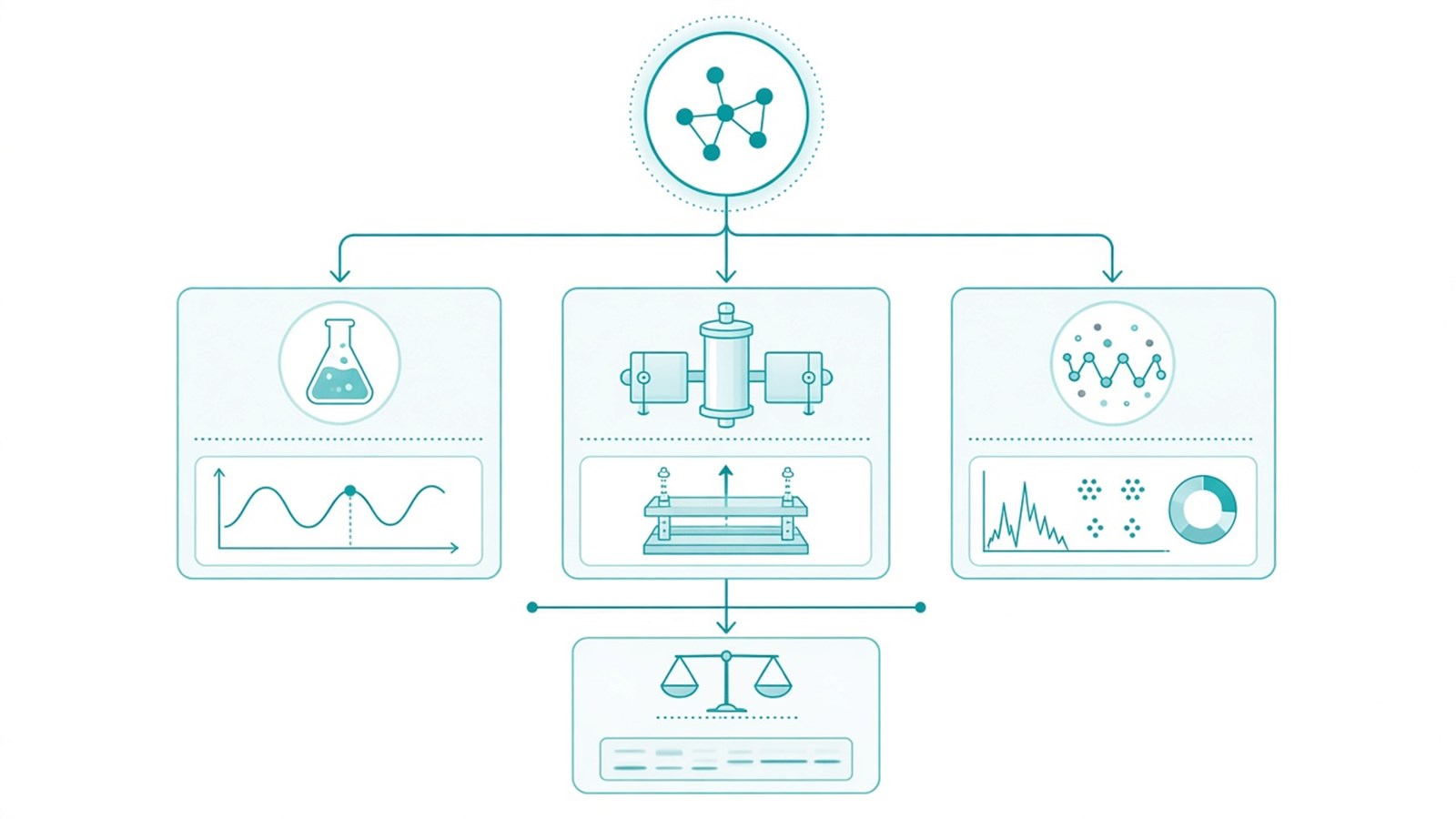
Figure 2. Match AQUA build depth to synthesis and calibration need; keep relative routes when amount units are not required.
Targeted acquisition entries appear in SRM-MRM Quantitative Proteomics Services. Teams with peptide tiers, units, and matrix ranges can review MtoZ Biolabs absolute and targeted entries when those fields are declared in the project record.
Frequently Asked Questions
1. Is there one standard effort level for every AQUA assay?
No. Synthesis count, matrix difficulty, calibration depth, cohort plus QC load, and deliverable depth change the build. Pilots and large absolute cohorts should not share the same plan.
2. What usually expands AQUA development effort the most?
New multi-peptide SIS orders plus matrix-matched calibration build in difficult matrices. Large cohorts dominate only after the assay exists.
3. How can teams limit effort without weakening the absolute claim?
Tier peptides, test detectability before full synthesis when needed, gate cohort acquisition behind absolute pilots, and request only the deliverable depth the decision requires.
4. Is labeled-standard synthesis always required?
No. If qualified AQUA peptides and a transferred absolute method already exist for the same matrix and panel, work may focus on acquisition and QC. New targets or matrices usually need development.
5. What should be locked before starting synthesis?
Target sequences or proteins, matrix, units and expected range, labeling and purity needs, spike strategy, calibration goal, study plus QC counts, and intended report contents.
MtoZ Biolabs can discuss AQUA peptide assay development scoping when synthesis needs, calibrators, and matrix evidence are documented.
If further evaluation of staged SIS orders, MRM versus PRM, or absolute versus relative fit is needed, project details can be submitted for a feasibility review.
Reference
- S.A. Gerber, J. Rush, O. Stemman, M.W. Kirschner, S.P. Gygi (2003). Absolute quantification of proteins and phosphoproteins from cell lysates by tandem MS. Proc. Natl. Acad. Sci. U.S.A., 100, 6940-6945. https://doi.org/10.1073/pnas.0832254100
- V. Lange, P. Picotti, B. Domon, R. Aebersold (2008). Selected reaction monitoring for quantitative proteomics: a tutorial. Mol. Syst. Biol., 4, 222. https://doi.org/10.1038/msb.2008.61
- A.C. Peterson, J.D. Russell, A.A. Klammer, P.F. Doubleday, H. Liu, J.N. Anderson, M.J. MacCoss (2012). Parallel reaction monitoring for high resolution and high mass accuracy quantitative, targeted proteomics. Mol. Cell. Proteomics, 11, 1475-1488. https://doi.org/10.1074/mcp.O112.020271
- M. Bantscheff, S. Lemeer, H.U. Haab, B. Kuster (2012). Quantitative mass spectrometry in proteomics: a critical review. Anal. Bioanal. Chem., 404, 939-965. https://doi.org/10.1007/s00216-012-5892-4
