






Top-Down vs. Bottom-Up Proteomics: Key Differences and When to Use Each
Introduction
A proteomics project can stall at the strategy selection stage long before a sample reaches the mass spectrometer. A discovery team may need broad protein identification across a complex lysate, yet the principal investigator also wants direct readout of intact proteoforms. A biologics group may rely on peptide mapping for routine comparability, then encounter a clipped variant or unexpected mass difference that peptide tables alone cannot explain. A structural biology lab may prioritize residue-level modification mapping, while another group needs to know whether two co-occurring modifications exist on the same protein molecule.
Top-down and bottom-up proteomics answer different levels of the same structural problem. Bottom-up proteomics digests proteins into peptides and infers protein identities from peptide-spectrum matches. Top-down proteomics analyzes intact proteins or large fragments to characterize proteoforms directly. Choosing between the two routes affects sample preparation, instrument time, data analysis, and the type of evidence that can support the next research or quality decision.
When Researchers Compare Top-Down and Bottom-Up Proteomics
This comparison usually appears when a laboratory needs protein-level evidence but has not yet defined the required structural resolution.
Common scenarios include global proteome profiling of cell or tissue lysates, where the immediate goal is protein identification and quantification across many samples; proteoform analysis of purified proteins, antibodies, or histones, where co-occurring modifications on one molecule matter; biologics comparability review, where peptide mapping is routine but intact mass differences suggest a new variant; membrane protein or large enzyme characterization, where digestion leaves persistent coverage gaps; and follow-up after a bottom-up discovery run, when specific proteins require intact-level confirmation.
In each case, the decisive factor is whether peptide-level inference is sufficient or whether intact protein evidence is required to answer the biological or quality question.
Four Comparison Dimensions That Matter Most
A useful comparison should focus on the analytical question rather than instrument brand alone.
Analyte size and structural resolution.
Bottom-up proteomics measures digested peptides and reconstructs protein-level conclusions. Top-down proteomics measures intact proteins or large fragments and reports proteoforms more directly.
Throughput and sample complexity tolerance.
Bottom-up proteomics is designed for complex mixtures and larger sample sets. Top-down proteomics usually requires cleaner inputs or more extensive separation before intact analysis.
Protein inference requirement.
Bottom-up proteomics depends on protein inference from shared peptides. Top-down proteomics reduces inference steps when a defined proteoform can be assigned from intact mass and fragmentation data.
Quantification and reporting conventions.
Bottom-up proteomics supports established label-free, isobaric, metabolic labeling, and DIA workflows. Top-down quantification is growing but is often more specialized and qualitative in many current project settings.
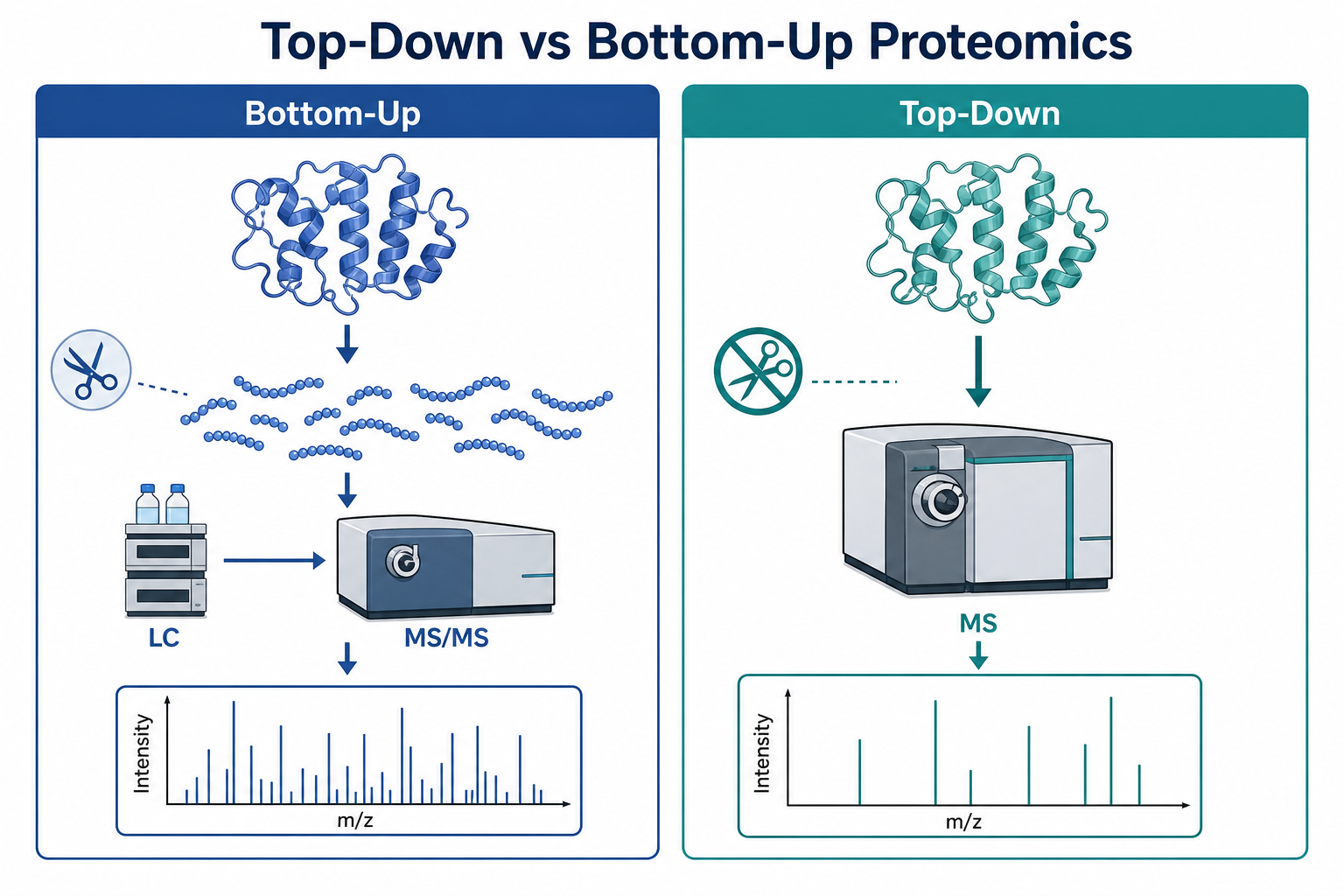
Figure 1. Top-down and bottom-up proteomics differ in analyte size, mixture tolerance, protein inference needs, and reporting conventions.
How Bottom-Up Proteomics Works
Bottom-up proteomics is a peptide-centric workflow. Proteins are extracted, digested, separated by liquid chromatography, fragmented by tandem mass spectrometry, and identified by database searching or spectral library matching. Protein groups are then inferred from the peptides detected.
The technical value of bottom-up proteomics lies in its ability to analyze complex mixtures at scale. Trypsin digestion produces peptides suited to LC-MS/MS, and search engines can process large spectral datasets with false discovery rate controls. Quantification modes such as label-free intensity comparison, TMT or iTRAQ labeling, SILAC, and SWATH or DIA can be added to the same digestion-based sample format.
The main technical limitation is structural fragmentation. Digestion destroys the original proteoform context, so co-occurring modifications on one molecule must be reconstructed from overlapping peptide evidence. Shared peptides can also create protein inference ambiguity in redundant databases.
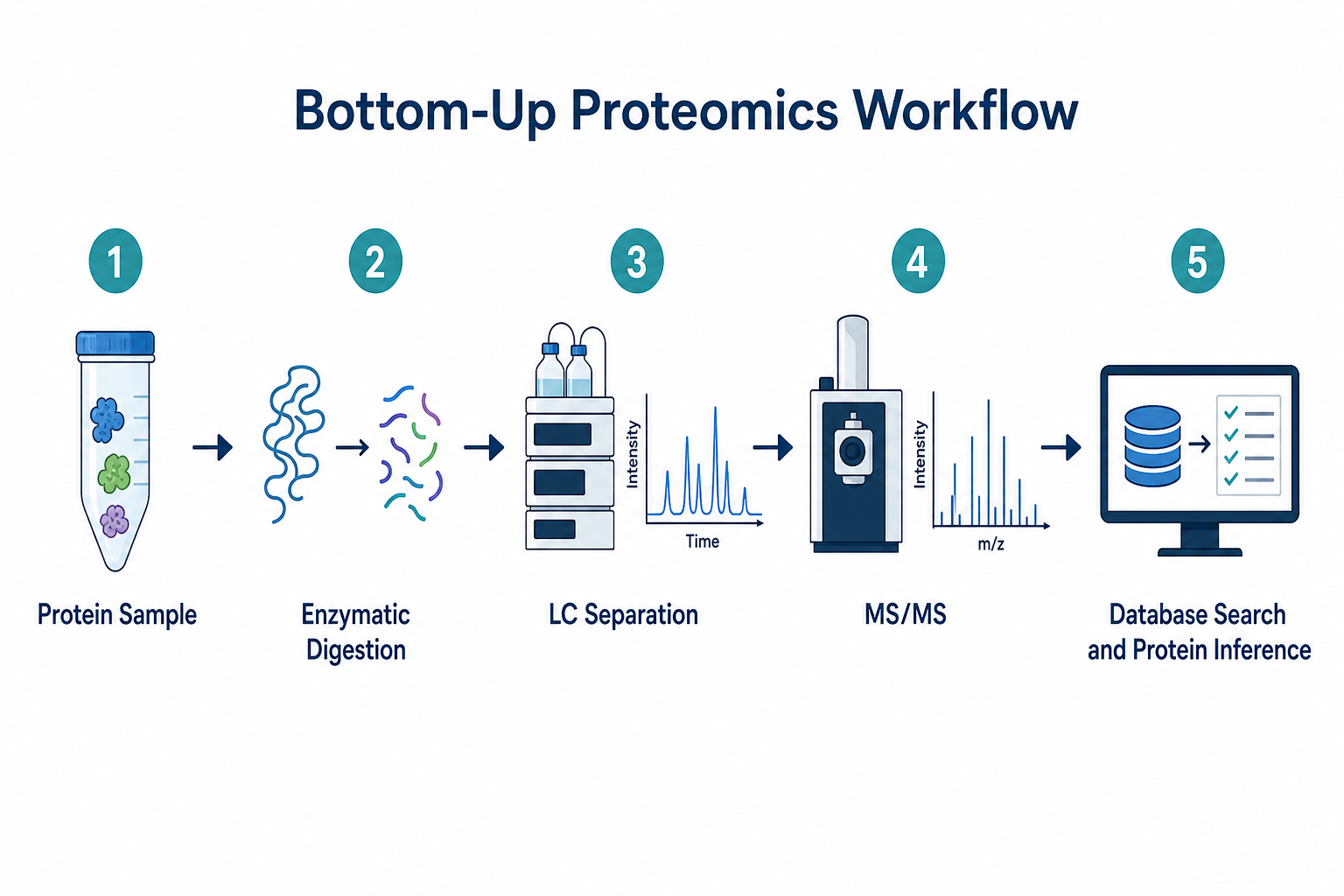
Figure 2. Bottom-up proteomics converts proteins into peptides before LC-MS/MS identification and protein inference.
How Top-Down Proteomics Works
Top-down proteomics analyzes intact proteins or large protein fragments with minimal digestion. After extraction and often extensive fractionation or purification, proteins are introduced into a high-resolution mass spectrometer. Intact mass measurement defines proteoform families, and fragmentation of selected intact ions provides sequence and modification information at the proteoform level.
The technical value of top-down proteomics is direct proteoform readout. When sample complexity is controlled, a laboratory can determine whether multiple modifications occur on one molecule, identify truncated forms, and connect mass differences to specific structural features without relying on peptide inference alone.
The main technical limitation is sample complexity and instrumental demand. Intact proteins produce more complicated spectra than peptides, and mixture analysis requires stronger separation and longer acquisition planning. Software and reporting standards exist, but project design is often more customized than in routine bottom-up discovery pipelines.
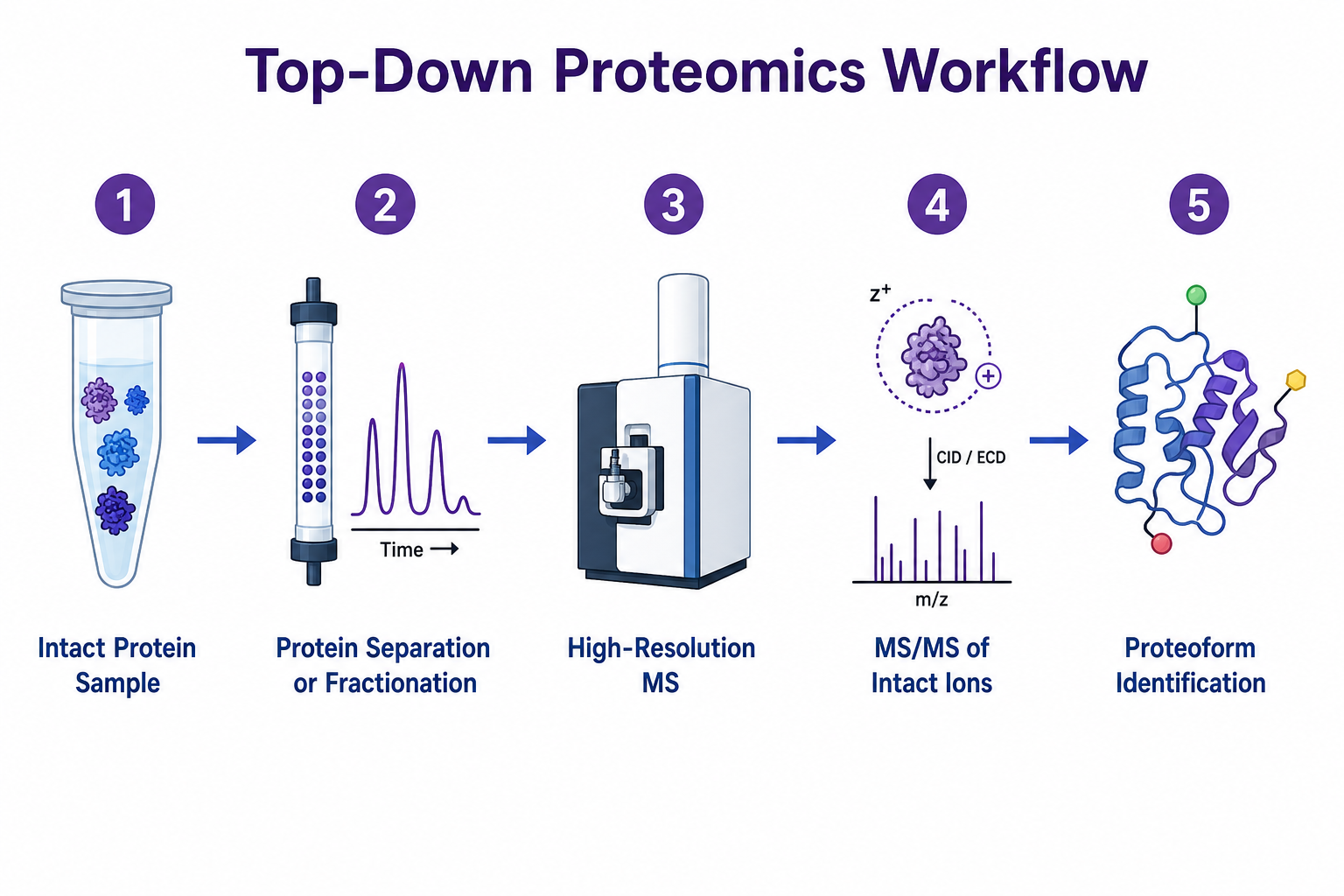
Figure 3. Top-down proteomics preserves intact proteins or large fragments for direct proteoform characterization by high-resolution MS.
Related Services
Teams comparing top-down and bottom-up proteomics often evaluate both service routes before defining project scope. Relevant options include:
Protein Identification Service
Label-Free Quantitative Proteomics Service, MS Based
LC-MS Based Intact Protein Analysis Service
Protein Full-Length Sequencing Service
Quantitative Proteomics Service
Researchers comparing top-down and bottom-up proteomics should define sample complexity, structural resolution needs, and reporting format before selecting a service scope.
Side-by-Side Comparison
The workflows above show why the two strategies are not interchangeable. The table below summarizes practical differences that influence project design.
|
Dimension |
Bottom-Up Proteomics |
Top-Down Proteomics |
|---|---|---|
|
Core question |
Which proteins are present, and how do peptides support that inference? |
Which proteoforms are present on intact or near-intact proteins? |
|
Starting analyte |
Digested peptides |
Intact proteins or large fragments |
|
Mixture tolerance |
High with fractionation |
Lower without extensive separation |
|
Protein inference |
Usually required |
Reduced for defined proteoforms |
|
Throughput |
High for discovery cohorts |
Lower in many current workflows |
|
PTM context |
Reconstructed from peptides |
Observed on the same molecule when resolved |
|
Quantification options |
Label-free, TMT, SILAC, DIA widely used |
More specialized, often qualitative first |
|
Typical deliverable |
Protein groups, peptide tables, quant matrices |
Proteoform list, intact mass profile, fragment evidence |
|
Common fit |
Discovery, PTM mapping, biologics peptide mapping |
Proteoform QC, clipped variant review, histone analysis |
|
Main limitation |
Inference ambiguity and coverage gaps |
Sample complexity and separation demand |
This comparison explains why many laboratories use bottom-up proteomics for screening and reserve top-down proteomics for follow-up on proteins that need intact-level evidence.
Which Strategy Fits Different Study Goals
Choose bottom-up proteomics when
the priority is broad protein identification across complex lysates, the project requires established quantitative workflows across many samples, peptide-level PTM mapping is sufficient for the decision, or the report must follow standard discovery or biologics peptide mapping conventions.
Choose top-down proteomics when
proteoform resolution is required, co-occurring modifications on one molecule must be demonstrated directly, intact mass differences suggest clipped or modified variants not explained by peptide tables, or the sample is a purified protein, antibody, enzyme, or histone preparation suited to intact analysis.
Use both in sequence when
a bottom-up discovery run identifies candidate proteins or modified regions, and top-down analysis is then used to confirm intact proteoforms for selected targets; or when a biologics program uses peptide mapping for routine monitoring and intact protein analysis for investigative review of unexpected mass features.
Researchers should define whether the next decision depends on peptide-level coverage or intact proteoform evidence. That distinction usually clarifies the strategy faster than instrument selection alone.
Decision Recommendations by Project Type
|
Project Type |
More Suitable First Strategy |
Why |
|---|---|---|
|
Cell or tissue discovery cohort |
Bottom-up proteomics |
Broad mixture coverage and quantitative comparison are the primary needs |
|
Phosphoproteomics signaling study |
Bottom-up proteomics |
Enrichment and peptide-level site mapping are well supported |
|
mAb comparability with known sequence |
Bottom-up proteomics |
Peptide mapping remains the standard reporting route |
|
Unexpected intact mass in biologic |
Top-down proteomics |
Direct proteoform readout helps explain mass differences |
|
Histone proteoform profiling |
Top-down proteomics |
Co-occurring modifications are often the central question |
|
Purified enzyme quality review |
Either, often both |
Bottom-up confirms peptide coverage; top-down resolves intact variants |
|
Membrane protein characterization |
Bottom-up first |
Digestion improves detectability, with top-down follow-up if needed |
|
Clinical biofluid biomarker screen |
Bottom-up proteomics |
Throughput and established quant workflows are usually required |
These recommendations are starting points. Sample purity, modification pattern, database quality, and reporting urgency can shift the final plan.
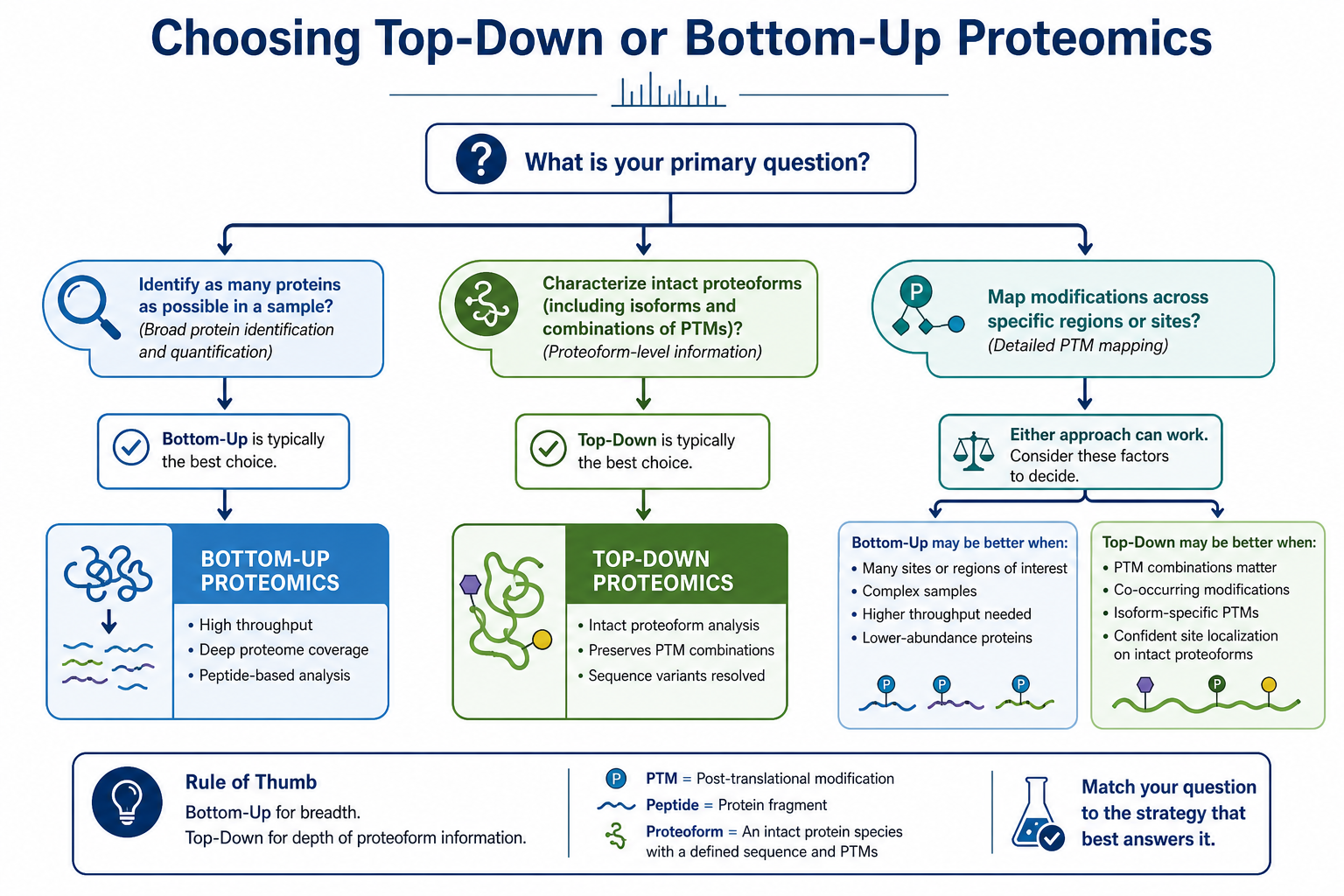
Figure 4. Structural resolution needs and sample complexity are the main factors in choosing top-down or bottom-up proteomics.
Combined Use Cases and Practical Limits
Top-down and bottom-up proteomics are not always mutually exclusive. A common combined pattern starts with bottom-up analysis to define the protein list, modification sites, and quantitative changes across conditions, then applies top-down analysis to selected proteins that require intact proteoform confirmation. Another pattern uses bottom-up peptide mapping for routine biologics monitoring while top-down intact analysis supports investigative review of clipped forms, mass shifts, or modification clustering.
Bottom-up proteomics is not a substitute for intact proteoform assignment when the decision depends on modification coexistence on one molecule. Top-down proteomics is not the default first step for large discovery cohorts when established peptide-centric quantification and protein inference pipelines are already the accepted reporting route. The better strategy is the one that produces the evidence level required for the next decision with the least rework.
Frequently Asked Questions
What is the main difference between top-down and bottom-up proteomics?
Bottom-up proteomics analyzes digested peptides and infers protein identities from peptide evidence. Top-down proteomics analyzes intact proteins or large fragments to characterize proteoforms more directly.
Is bottom-up proteomics the same as shotgun proteomics?
In current usage, shotgun proteomics usually refers to analyzing complex peptide mixtures without isolating individual proteins first. That description aligns with bottom-up proteomics because both are peptide-centric workflows built on digestion and LC-MS/MS.
When is top-down proteomics the better first choice?
Top-down proteomics is often the better first choice when proteoform resolution is central, when intact mass differences must be explained, or when the sample is a purified protein preparation suited to intact analysis.
Can top-down proteomics replace bottom-up discovery studies?
Not usually. Bottom-up proteomics remains the standard route for large-scale discovery and quantitative comparison because it handles complex mixtures and established reporting workflows more efficiently.
Can a project use both approaches?
Yes. Many projects use bottom-up proteomics for screening or routine peptide mapping, then apply top-down proteomics to selected proteins that need intact-level confirmation.
Conclusion
Top-down and bottom-up proteomics are complementary ways to extract structural information from proteins, not simple substitutes for one another. Bottom-up proteomics offers scalable peptide-level identification, quantification, and modification mapping across complex samples. Top-down proteomics provides direct proteoform evidence when intact mass and fragmentation data are needed to answer questions that peptide inference cannot settle alone.
For most discovery and biologics peptide mapping programs, bottom-up proteomics remains the practical starting point. Top-down proteomics becomes valuable when intact proteoforms, clipped variants, or modification coexistence define the next decision. Teams that match strategy to structural resolution needs generally avoid costly rework and produce evidence better aligned with publication, comparability, or follow-up validation goals.
Teams deciding between top-down and bottom-up proteomics can contact MtoZ Biolabs to review sample complexity, structural resolution needs, and the reporting format required for the study.
If a project requires intact proteoform confirmation after peptide-level discovery, MtoZ Biolabs can help design a staged workflow that aligns bottom-up screening with top-down follow-up.
Researchers planning proteomics service scope for publication or quality review can request a project assessment from MtoZ Biolabs to define phase 1 strategy selection and phase 2 reporting depth.
How to order?




