






Targeted vs Discovery Proteomics: When Should You Use Each?
Discovery proteomics and targeted proteomics answer different research questions. Discovery looks broadly for protein changes you have not fully named. Targeted measurement watches a predefined protein or peptide list. The practical question is therefore not which strategy is more advanced, but how much is already known about the proteins you need to measure and what question the next experiment must answer.
If your protein targets are already defined, review the MtoZ Biolabs Targeted Proteomics Service for project-specific feasibility.
What Is the Difference Between Discovery and Targeted Proteomics?
The core distinction is measurement scope.
Discovery Proteomics for Broad Protein Profiling
Discovery proteomics examines a broad range of proteins without restricting the experiment to a predefined target list. It is commonly used to identify protein changes between biological conditions, generate candidate proteins, and provide broader proteome-level context.
Targeted Proteomics for Predefined Protein Measurement
Targeted proteomics starts from the opposite position. Specific proteins or peptides have already been selected before measurement, and the analysis focuses on those predefined targets. The objective is therefore not to search broadly for additional proteins, but to obtain quantitative information about proteins that are already relevant to the research question.
This distinction also means that the two strategies should not be viewed simply as competing analytical methods. They answer different questions:
Discovery proteomics asks: “Which proteins may be changing or involved?”
Targeted proteomics asks: “How do these selected proteins behave across the samples or conditions being studied?”
For a broader understanding of how targeted proteomics supports predefined protein measurement, quantitative strategies, and different research applications, see Targeted Quantitative Proteomics: Principles, Strategies, and Applications. If your study requires a broader comparison of quantitative proteomics approaches beyond targeted analysis, see Quantitative Proteomics: Methods, Strategies, Workflow, and Applications.
When Should You Choose Discovery Proteomics?
Discovery proteomics is generally the better starting point when the protein-level question remains open. This does not necessarily mean that nothing is known about the biology. A pathway, phenotype, treatment response, or disease process may already be well defined while the proteins responsible for the observed changes remain uncertain.
Exploring Unknown Protein Changes
Consider a study in which a treatment produces a clear biological phenotype, but the proteins associated with that response have not yet been identified. Restricting the experiment to a small predefined panel could exclude relevant proteins that were not anticipated before analysis. Discovery proteomics allows the study to examine protein changes more broadly and determine which proteins or pathways should be investigated further.
The same reasoning applies when researchers already have several proteins of interest but still need to identify unexpected protein changes outside that initial list. Having a few candidate proteins does not automatically mean that a study should move to a targeted strategy if broader discovery remains part of the scientific objective.
Generating Candidate Protein Lists
Discovery proteomics is also appropriate when the immediate objective is to generate or prioritize candidates for subsequent investigation. For example, comparative proteomics may identify proteins associated with different treatment groups, phenotypes, disease states, or experimental conditions. These results can then be evaluated together with biological relevance, pathway information, previous literature, and other experimental evidence to establish a smaller candidate list.
Importantly, discovery does not always have to be followed by targeted proteomics. If the study objective is limited to broad proteome profiling, differential protein analysis, or pathway-level interpretation, the discovery dataset itself may address the research question.
The decision to proceed further should depend on what needs to be demonstrated next, rather than treating targeted measurement as an automatic second stage.
When Should You Choose Targeted Proteomics?
Targeted proteomics becomes appropriate when a scientifically justified protein list already exists and the research question concerns those specific proteins rather than the broader proteome.
Candidate Verification After Discovery
After discovery analysis identifies a large number of protein changes, researchers may prioritize a smaller subset based on statistical evidence, biological relevance, pathway involvement, previous knowledge, or the objectives of the next experiment.
Quantifying Known Targets
Researchers can also proceed directly to targeted proteomics when the targets are already supported by sufficient prior evidence. Target proteins may come from published literature, known signaling pathways, established biological mechanisms, transcriptomic studies, previous experiments, or an existing hypothesis.
However, having a list of protein names is not by itself sufficient to establish a targeted proteomics experiment. The targets must also be suitable for mass spectrometry-based measurement. Factors such as protein identity, species, representative peptide availability, sample matrix, expected target abundance, and the intended quantitative output can affect whether a proposed target list is technically feasible. These considerations become especially important when moving from a biological hypothesis to an executable targeted assay. Detailed planning considerations are discussed in Targeted Proteomics Experimental Design.
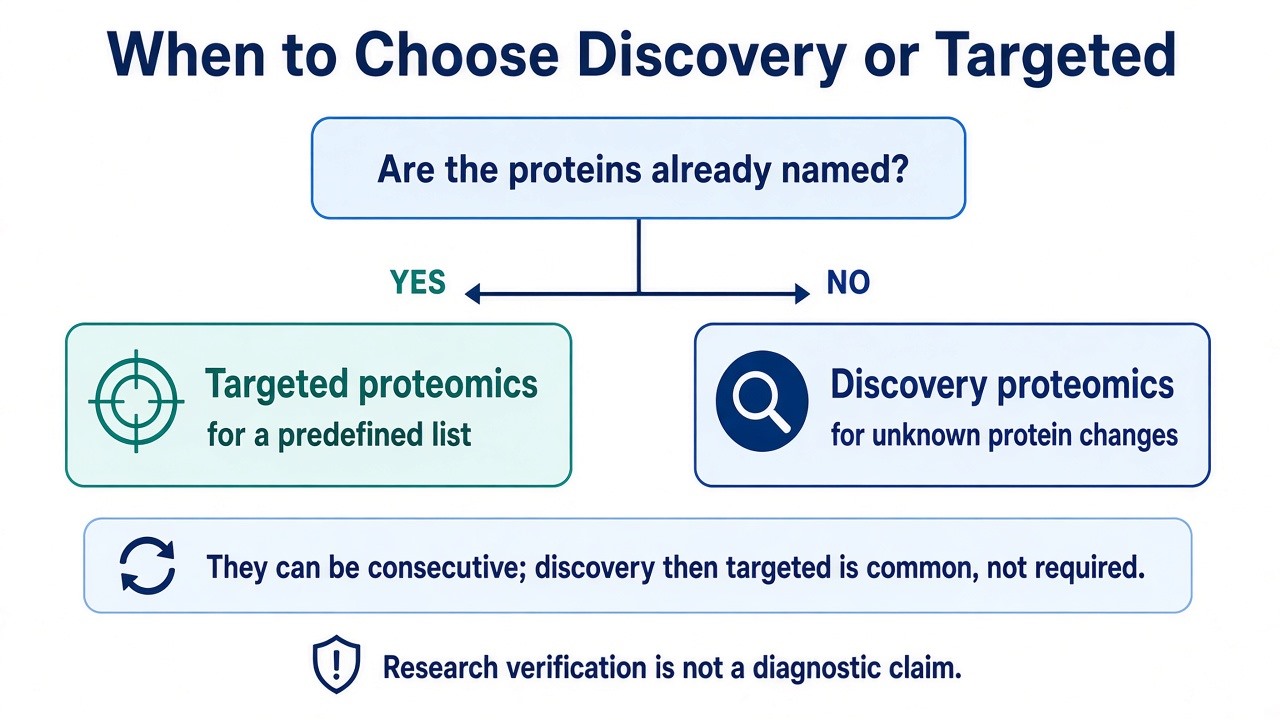
Figure 2. Discovery proteomics is the typical first choice when protein identities are still open; targeted proteomics fits when a named list already exists.
How Do Discovery and Targeted Proteomics Work Together?
Discovery and targeted proteomics are often complementary rather than competing strategies. A project can use discovery to establish what should be investigated and targeted proteomics to focus subsequent measurement on the candidates that matter most (Lange et al. 2008).
Discovery-to-Validation Workflow
A common research sequence is:
1. Discovery Proteomics
2. Candidate Prioritization
3. Targeted Proteomics
A discovery experiment may identify tens, hundreds, or more proteins showing quantitative differences. Moving every identified protein directly into a targeted experiment would usually defeat the purpose of targeted analysis. Instead, researchers should determine which candidates are important enough to answer the next research question.
Transition From Candidates to Targeted Measurement
Once a candidate list has been prioritized, the next step is to define what the targeted experiment needs to measure and what type of quantitative evidence is required. Candidate proteins need to be translated into measurable peptide targets, while the quantitative strategy should reflect the intended research outcome. For studies focused on confirming whether selected proteins increase or decrease across conditions, relative targeted quantification may be sufficient. When the objective is to determine an actual amount or concentration, isotope-labeled internal standards and an appropriate absolute quantification design may be required. Defining this objective before assay development helps ensure that the targeted measurement is aligned with the biological question rather than simply extending the discovery experiment.
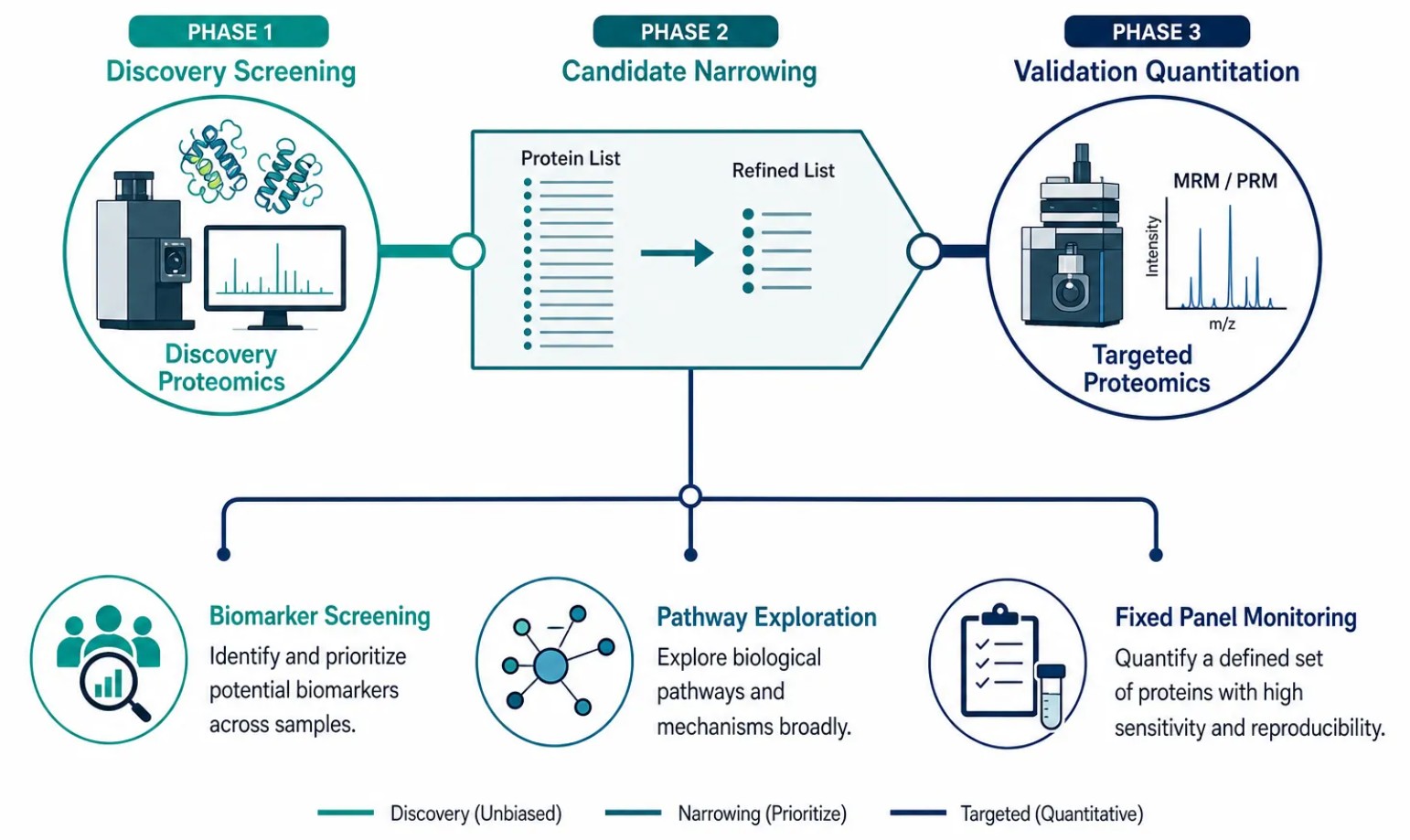
Figure 2. Many projects begin with discovery screening and move to targeted quantitation once the protein panel is defined
Frequently Asked Questions
1. If RNA-seq already named the changing genes, is discovery proteomics still required?
Not always. If the protein question is only whether those named products change, a targeted panel can be evaluated first. If you still need protein changes that the transcripts did not predict, discovery proteomics remains the more typical protein-level survey. Many projects use both: discovery or RNA-seq to nominate, targeted assays to remeasure a shortlist.
2. The study needs a few known serum proteins and also unknown associated proteins. Can one method do both?
Usually not as a single undifferentiated assay. Discovery can search for unknown associated proteins. Targeted methods measure the named few more directly. Plan the two claims separately, then decide whether they run as consecutive stages or as two complementary datasets.
3. After a discovery run, can later samples be added on the same discovery method instead of switching to targeted?
They can, when the remaining claim is still about the broad proteome under a controlled discovery design. Switching to targeted is more typical when the list is now short, the same names must be followed more consistently, or later samples should not reopen an open search. The later-sample constraint should be stated before the first acquisition block when possible.
4. Is targeted proteomics always the validation step after discovery?
No. Validation here means research verification of named proteins, not a required pipeline stage. Some studies stop at discovery. Some start with a targeted panel. Discovery-then-targeted is a common option when both a candidate list and later focused quantities are needed.
5. Can targeted proteomics identify the unknown protein bound by a drug or antibody?
Not directly. Targeted proteomics requires predefined protein or peptide targets, so it is not the appropriate starting point when the binding protein is still unknown. In this situation, the first step is typically to identify or screen candidate binding proteins using an appropriate discovery-based protein identification or interaction analysis strategy. Once candidate proteins have been identified, targeted proteomics can be used for focused quantitative follow-up when needed.
MtoZ Biolabs supports both protein identification and interaction analysis for unknown-target studies and targeted quantitative proteomics for subsequent measurement of defined candidates. Contact us and we can help develop a suitable strategy based on your research objective, target information, and sample type.
Conclusion
Use discovery proteomics when protein identities are still open, and targeted proteomics when a named list is ready for selective measurement. The two can work in sequence, but they do not have to. Once the research question and the named-versus-open scope are clear, researchers can review the MtoZ Biolabs Targeted Proteomics Service for project-specific sample evaluation and workflow planning.
Reference
- V. Lange, P. Picotti, B. Domon, R. Aebersold (2008). Selected reaction monitoring for quantitative proteomics: a tutorial. Mol. Syst. Biol., 4, 222. https://doi.org/10.1038/msb.2008.61
How to order?




